What's the difference?
Brand Finance self-effacingly describes itself as "the world's leading independent branded business valuation and strategy consultancy". And adds that it regularly picks apart the current and future value of more than 3500 brands across multiple market sectors around the world.
These London-based boffins reckon Delta trumps American Airlines, Real Madrid has knocked off Manchester United, and Haval is a more powerful SUV brand than Land Rover or Jeep. So, no surprise Haval promotes the research on its Australian website.
Just to split hairs, Land Rover leaps to the top of the rankings when it comes to overall value, but in terms of an upward trajectory and potential for future growth, Brand Finance says Haval is the one.
The irony is you probably wouldn't know a Haval if it ran into you, which obviously isn't good in any sense, but a factor of the Chinese Great Wall subsidiary's relatively brief time, and so far, limited sales in the Australian market.
One of three models released in late 2015 to launch the Haval brand locally, the H2 is a small, five-seat SUV competing against a hot bed of more than 20 established players including the segment-leading Mitsubishi ASX, ever-popular Mazda CX-3, and recently arrived Hyundai Kona.
So, is Haval's potential reflected in its current product offering? We spent a week living with the sharply priced H2 City to find out.
Don’t let people talk you into buying a tiny car just because you live in the city. That’s what I’ve learnt from being a car reviewer and living about eight kilometres from the CBD.
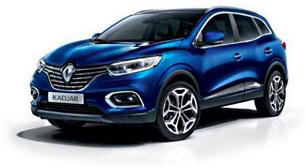
Yes, car spaces are small, or almost non existent, but the people that live there are as full-sized as people elsewhere and they often carry around just as much gear. What you need is a big, little car and the Renault Kadjar is that – a small SUV which is actually bigger than most.
The Kadjar is also French, and that’s appealing to us city folk because even though there are millions of us living in one square metre we like to think of ourselves as different, as individuals, cosmopolitan, metropolitan.
So the Kadjar looks perfect then, right?
Well, it’s good yes… in some ways, but after reading this you might prefer its Japanese cousin, the Nissan Qashqai. Let me explain...
How you define value will determine whether the Haval H2 City is the right small SUV for you. In terms of metal for money it delivers heaps of space, a reasonable standard features list and adequate safety. But it's let down by mediocre performance, sub-par dynamics and a surprising thirst for (premium) unleaded. Brand Finance may rank Haval high on the power index, but the product needs to climb a few rungs higher before that potential's realised.
The Renault Kadjar Intens ticks a lot of the urban boxes. It’s small, which is good for navigating narrow city streets and parking in tight spaces, but it’s also spacious and practical. The Kadjar is fuel efficient for a four-cylinder petrol engine and it has that sophisticated French styling.
The Intens is expensive, though, and unless you absolutely have to have leather seats, a glass roof, and the Bose stereo I’d go for the mid-range Zen grade and save yourself $5K but still have all the same safety tech. That said the Intens has auto parking as standard which is a nice convenience for the city.
Safety could be better. The AEB system doesn’t have pedestrian and cyclist detection, rear cross traffic alert, or reverse emergency braking.
Finally, the dual-clutch automatic and 1.3-litre turbo-petrol engine while a fuel efficient combination, isn’t all that easy to live with and can make driving a less-than-smooth experience. The Nissan Qashqai’s combination of CVT auto and four-cylinder naturally aspirated engine is better suited to the urban jungle - something to think about there.
Now the scores, the Kadjar Intens gets the same mark for daily driving and its urban talents – it could be smoother to drive, but there’s still lots to like.