What's the difference?
About a decade has passed since the Fiat Scudo mid-size (2.5-3.5 tonne GVM) van was last sold in Australia, when it shared its underpinnings with the Peugeot Expert before Fiat-Chrysler and PSA (Peugeot-Citroën) merged to become the giant Stellantis group in 2021.
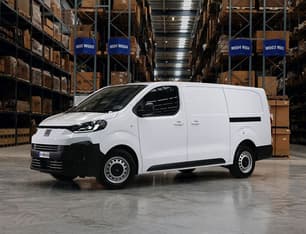
In 2026 the Scudo (which means ‘shield’ in Italian) has returned under the Fiat Professional Australia banner as the Series 3 or third-generation, again sharing its underpinnings and core styling with the Peugeot Expert but now based on the latest Stellantis 'EMP2' platform.
We recently spent a working week aboard Fiat’s new commercial offering to see how it measures up from a tradie’s perspective in this popular van segment.
Traditionally, offering a smaller engine in a particular make or model has been a manufacturer’s way of stripping a few dollars out of the price-tag. In the case of the ute market, that’s more often than not an attempt to rope price-sensitive fleet customers into the family. Not to mention responding to the cut-throat pricing of some of the Chinese newcomers.
A handful of years ago, we saw Mazda do just that with a 1.9-litre turbo-diesel variant for its BT-50 range to give us the XS, entry-level trim specification. But it seems Mazda has had a bit of a rethink about that strategy (in line with Isuzu’s plans, given the BT-50 and D-Max share their major structures and drivelines) and has now upgraded the small-engine variant of the BT-50 with a new engine and the return of the 4X4 option (which was dropped after about 12 months in the previous XS model due to lack of demand).
But perhaps most importantly, the engine in this base-spec BT-50 has now grown from the original 1.9 litres to 2.2 litres. As a result, there’s more torque, more power and an extra couple of gears in the transmission. And with the option of four-wheel drive again, the new XS BT-50 might just get a look in where the previous XS didn’t.
In the end, of course, the XS closes the gap to the other BT-50s in the line-up, perhaps muddying further the question of whether you need to stump up for the full 3.0 litres in the other BT-50s, or take an enough-is-enough stance and save some coin.
The Fiat Scudo LWB Primo offers a large payload rating, excellent fuel economy, peppy performance and practical features like its load-through flap. However, it also has shortcomings like a tiny tow rating and no sequential manual-shifting. So, only a potential buyer can determine if the positives outweigh the negatives when deciding if this largely badge-engineered European van is the right fit for their business.
Key to the success of the BT-50 XS will be acceptance by fleet buyers. The vehicle, however, seems to be pretty well considered as far as that goes, although as with any stripped-down model, there are features that will be missed. Things like the manual air-conditioning probably won’t make much difference, but the lack of a tyre pressure monitoring system is a bigger issue for a working vehicle. Performance from the smaller engine is still well within acceptable parameters, but we reckon any buyer considering using much of the 3500kg touring capacity would be better off with the 3.0-litre engine offered in the rest of the BT-50 range.
The Mazda is not the best riding of its ilk, and there are competitors with bigger cabins, although, notably, at this point on the pricing ladder, these are often from China rather than Thailand where the Mazda is built. Ultimately it will come down to whether the smaller engine and reduced performance is an issue and also whether the money saved over the bigger-engined BT-50 is enough to justify that and the loss of some creature comforts. But since fleet managers are notoriously hard-nosed about this stuff, there’s a good chance to BT-50 XS will find a market.
Note: CarsGuide attended this event as a guest of the manufacturer, with meals provided.