What's the difference?
James Cleary road tests and reviews the new Ferrari 488 Spider with specs, fuel consumption and verdict.
It’s almost inevitable. Tell someone you’re a motoring journo and the first question will be, ‘So, what’s the best car you’ve ever driven?’
Without getting into an esoteric analysis of what the word 'best' actually means in this context, it’s clear people want you to nominate your favourite. The fastest, the fanciest, the car you’ve enjoyed the most; the one that’s delivered a clearly superior experience.
And if I enter the room of mirrors (where you can always take a good hard look at yourself) the answer is clear. From the thousands of cars I’ve had the privilege of sliding my backside into, the best so far is Ferrari’s 458 Italia, an impossibly pure combination of dynamic brilliance, fierce acceleration, howling soundtrack and flawless beauty.
So, the opportunity to steer the open-roof Spider version of its successor, the 488, is a significant one. By rights, the best should be about to get better. But does it?
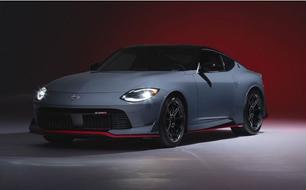
The Nissan Z is a real blueblood.
With Datsun, Nissan introduced the world to Japanese cars via a gruelling round-Australia rally in 1958 that had the country captivated. Within 10 years the 1600 made them respectable, but it was the 240Z of 1970 that also made them desirable.
Seven generations later, today’s RZ34-series Z – along with the Toyota/Subaru GR86/BRZ and Mazda MX-5 – embodies that nation’s tradition of affordable yet charismatic sports cars.
They’ve always been ripe for modifying as well, with Nissan leaning on its performance arm Nismo for 40 years. Which is exactly what the Z Nismo is all about, stepping up to take on the Toyota GR Supra, BMW M240i and Ford Mustang GT.
The old 370Z Nismo was a true corker. Let’s find out if this one does the family proud.
The Ferrari 488 Spider is a brilliant machine. It's properly supercar fast, in a straight line and around corners. It looks stunning, and attention to design detail, engineering refinement and overall quality oozes from its every pore.
Is it the best car I’ve ever driven? Close, but not quite. Others may disagree, but for what it’s worth, I think the Ferrari 458 Italia, in all its high-revving, naturally aspirated glory is still the sweetest ride of all.
The Nismo turns up the wick just enough to justify its $20K premium over the brilliant regular Z.
Visual changes inside and out are one thing, but with tangible boosts in performance, handling and braking – with no detriment to ride quality or comfort – as a result of properly engineered upgrades, the RZ34 version deserves its place in Nissan’s sports car hall of fame.
Note, though, that good as it is, the Nismo is also a potent reminder of how solid a foundation the standard Z also is… especially in manual gearbox guise.
Launched in 2015, the 488 is the fourth mid-engine V8 Ferrari based on the aluminium space-frame architecture unveiled with the 360 Modena back in 1999, and unlike its Pininfarina-penned predecessors, was designed in-house at the Ferrari Styling Centre, under the direction of Flavio Manzoni.
The key focus this time around was aero performance, including the additional breathing and cooling needs of the 488’s 3.9-litre twin-turbo V8 (relative to the 458’s 4.5-litre naturally aspirated unit); hence the car’s most obvious visual identifiers - substantial air intakes in each flank.
Measuring 4568mm nose-to-tail, and 1952mm across, the 488 Spider is marginally longer (+41mm) and wider (+15mm) than its 458 equivalent. That said, it’s exactly the same height at just 1211mm tall, and the 2650mm wheelbase is unchanged.
Ferrari is a past master when it comes to sneaky concealment of spectacular aero trickery, and the 488 Spider is no exception.
Inside, the design is all about simplicity and focus for the person with the steering wheel in their hands.
Upper elements of its F1-inspired double front spoiler direct air to the two radiators, while the larger lower section subtly pulls flow under the car where carefully tuned ‘vortex generators’ and a yawning rear diffuser (incorporating computer-controlled, variable flaps) dial up downforce without a significant drag penalty.
The ‘blown’ rear spoiler manages air from intakes at the base of the rear screen, its specific geometry allowing a more pronounced (concave) profile for the main surface to increase upward deflection and maximise downforce without the need for an oversize or raised wing.
Those side intakes are divided by a central, horizontal flap, with air from the upper section directed to exits over the tail, pushing the low-pressure wake directly behind the car further back to again reduce drag. Air flowing into the lower section is sent to the turbo engine’s air-to-air intercoolers to optimise intake charge. All brilliantly efficient and tastefully incognito.
Putting the engine in the centre of the car and fitting only two seats doesn’t just pay off dynamically, it delivers the perfect platform for visual balance, and Ferrari has done a superb job of evolving its ‘junior supercar’ with a nod to the line’s heritage and an eye on extending its reach.
The tension across its multiple curved and contoured surfaces is beautifully managed, and the Spider’s crouching stance screams power and single-minded purpose.
Inside, while the passenger might be enjoying the ride, the design is all about simplicity and focus for the person with the steering wheel in their hands.
To that end, the slightly angular wheel houses a host of controls and displays including a very red start button, driving mode ‘Manettino’ dial, within-thumb’s-reach buttons for indicators, lights, wipers and ‘bumpy road’ (more on that later), as well as sequential max rpm warning lights across the top of the rim.
The steering wheel, dash, doors and console are (optionally) carbon-rich, with the familiar buttons for Auto, Reverse and Launch Control, now housed in a dramatic arching structure between the seats.
The compact instrument binnacle is dominated by a central rev-counter with digital speedo inside it. Readout screens for on-board info across audio, nav, vehicle settings, and other functions sit either side. The seats are grippy, lightweight, hand-crafted works of art, and the overall feeling inside the cockpit is an amazing mix of cool functionality and special event anticipation.
Reinterpreting a classic via retro styling isn’t always successful – hello, 2001 Ford Thunderbird – but what Nissan has achieved with the RZ34, given it’s a pastiche of several Z greatest hits from the ‘70s, ‘80s, ‘90s and today, is truly masterful design.
Take the cab-backward silhouette, long nose and short wheelbase; it somehow manages to deftly capture the spirit of previous Z generations, without looking like a bad caricature.
Points especially go to the stunning nose and tail treatments that evoke both the ‘70s 240/260/280 as well as the sadly long-forgotten Mid-4 II concept car of 1987.
Slightly longer than the regular model, the Nismo’s nose is meant to evoke the early ‘70s Japan domestic market Fairlady ZG, with the G denoting “Grand Nose”. Fun fact: Fairlady first appeared on the 1960 Datsun roadster as deference to the Broadway musical (and later Audrey Hepburn film, presumably) ‘My Fair Lady’.
Anyway, besides scraping speed humps and driveways, the Nismo’s elongated front bumper promotes improved engine cooling and better aero flow, as do the side sills, larger wraparound three-piece spoiler and redesigned rear bumper/diffuser. The wider-yet-lighter back wheels are 10mm wider. And a glossy red stripe runs along the underside like Anna Nicole Smith’s lipstick.
Does it all look better than the simpler, purer regular Z? No. But they perform better. And isn’t that the point of a Nismo?
Okay, so how do you approach practicality in a car that’s so obviously not engaged with the concept?
Best to say there’s cursory consideration in terms of cabin storage, with a modest glovebox, small pockets in the doors, and a pair of piccolo-sized cupholders in the console. There’s also a net and some general oddments space along the bulkhead behind the seats.
But the saving grace is a generous, rectangular boot in the nose, offering 230 litres of easy-to-access load space.
Another attribute fitting broadly under the heading of practicality is the retractable hardtop which smoothly unfolds/retracts in just 14 seconds and operates at speeds up to 40km/h.
So, just as the exterior is an anthology of past Z car stylings, the same also applies inside.
A mishmash of new and old as well, they also marry together harmoniously – after you’ve bent and contorted yourself inside nice and snug, on the racy yet not-too-unforgiving set of Recaro bucket seats.
The Z’s signature sloping roof and rising window line; a trio of dials that have been a hallmark of the series since the 240Z, a thin three-spoke steering wheel; a physical hand brake and a pair of old-school seat base angle adjuster knobs just like in sports cars from 20 years ago betray the Nissan’s ageing DNA.
But they set the mood, like hearing a favourite old track, though one remixed by a contemporary DJ to a modern beat.
Which means that you’ll be able to view whichever artist you like through the 8.0-inch touchscreen, either via Bluetooth audio streaming, Spotify or some such app.
Easy to decipher and simple to navigate (though no imbedded GPS is fitted), the Z’s dashboard also offers the essential surround-view parking camera (given how limited vision is as you’re sat so low with not much glass to peer out through), amongst a host of vehicle functions. You’re also privy to extremely useful blind-spot alert thoughtfully placed inside the car by the mirror mounts, four cupholders if you count the door-sited ones and surprisingly generous storage. Practicality, thy name is Fairlady.
For lightness and sensible packaging, we understand why Nissan’s sports coupe is strictly a two-seater proposition – and certainly a roomy enough one for the lucky pair at that.
However, it’s a shame Nissan doesn’t offer a 2+2-seater option in the form of a pair of occasional jump seats behind, as per the old Datsun days, as there seems to be just enough space for smaller folk – though as a pair of shelves, that area did prove very useful during our week with the Nismo.
Issues? Along with a sheer lack of grace entering and exiting the Z, poor overall vision and 350Z-era switchgear that are now old enough to drive themselves, finding the right driving position eluded this particular 178cm tester. The seats do a great job keeping you firmly fixed in place, and of course the wheel tilts and telescopes, but those pair of knobs were forever being twirled and fiddled with.
Oh, and simultaneously unlocking and opening the doors was also confounding, due to exterior door handles and pressure sensor not designed for Homo Sapien hands.
Further back, and as in the two previous generations Zeds, a brace bisects the luggage area. Rated at 241 litres VDA, it is wide and flat but a wee bit shallow. At least it adds another level of practicality and is big enough for those weekends away.
There’s no cover (though seeing what’s inside isn’t easy) and no spare wheel of any size is fitted.
Meanwhile, on the other side of the Nismo…
Let’s get the big number out of the way. The Ferrari 488 Spider costs $526,888 before on-road costs.
Included in that not inconsequential figure is the ‘E-Diff3’ electronically-controlled differential, ‘F1-Trac’ traction control, ASR & CST, ABS, an anti-theft system, carbon-ceramic brakes, Magnaride shock absorbers, dual-zone climate control, racy leather seats, bi-xenon headlights with LED running lights and indicators, keyless start, Harman multimedia (including 12-speaker, 1280-watt JBL audio), 20-inch alloy rims, tyre pressure and temperature monitoring, and… a car cover.
But that’s just the starting point. Any self-respecting Ferrari owner will need to put a personal stamp on their new toy and the prancing horse is happy to oblige.
If you want an exterior colour to match your favourite polo pony’s eyes, no problem, the Ferrari Tailor-Made program will do whatever it takes. But even the standard options list (if that makes sense) offers more than enough scope to make an already spectacular four-wheel statement even more distinctive.
Our test car featured six new Mazda3’s worth of extras. That’s just under $130k, with the highlights being more than 25 grand in exterior carbon-fibre, $22k for the special, two layer, iridescent effect ‘Blue Corsa’ paint, over $10k for chrome painted forged rims, and $6790 for Apple CarPlay (standard on the Hyundai Accent).
But you’ve got to remember an inverse logic applies here. While some may see $3000 for cavallino rampante shields on the front wings as somewhat pricey, to a proud Ferrari owner they’re badges of honour. In the yacht club carpark, showing off their latest acquisition, you can script the satisfied boast - ‘That’s right. Two grand. Just for the floor mats!’
Nismo is short for Nissan Motorsport. It’s like what AMG means to Mercedes or HSV was to Holden. Which means, of course, that Australians love this sort of thing.
Last year, as limited editions, the first 100 Z Nismos sold out in under an hour, according to Nissan. Now it’s back more permanently, still from $94,000 before on-road costs, but without quite the exclusivity.
But, don’t worry. You still get the Nismo body kit and leather/Alcantara-clad cabin treatments, stronger performance and track-focused chassis upgrades, which include extra bracing, sharper steering, beefier suspension, bigger brakes and GT-R-spec wider wheels, compared to the regular Z. More on the engineering changes later on.
There are also Recaro sports seats, Nismo-branded digital instrumentation and steering wheel, additional drive modes and red trim highlights.
These come above the regular Z items like keyless entry/start, an 8.0-inch touchscreen, surround-view reverse camera, (wired-only) Apple CarPlay/Android Auto, Bluetooth connectivity, an eight-speaker Bose premium audio, active noise cancellation tech, dual-zone climate control, artificially amplified exhaust note and wider-yet-lighter 19-inch alloy wheels.
Note, however, that going Recaros means ditching the regular Z’s seat heating and electric adjustment including lumbar support. And there’s no spare wheel in either grade… just a tyre-repair kit. Boo.
For your $100K-driveaway, from an equipment perspective anyway, the Nismo does stretch the value argument almost to breaking point, so it’s a good thing that the Z still looks so good. And there’s lots of beautiful engineering underneath that pretty skin too.
The 488 Spider is powered by an all-alloy, mid-mounted 3.9-litre, twin-turbo V8, featuring variable valve timing and dry sump lubrication. Claimed outputs are 492kW at 80000rpm and 760Nm at a usefully low 3000rpm. Transmission is a seven-speed 'F1' dual clutch driving the rear wheels only.
Nissan sure knows how to make a great six-cylinder engine.
The Nismo’s internal combustion engine in question is the VR30DDTT – a twin-turbo V6 making four per cent more power and around 10 per cent more torque compared to the one found in the regular Z.
Power jumps 11kW and torque a handier 45Nm to 309kW @ 6400rpm and 520Nm between 2000rpm and 5200rpm respectively, providing extra punch as well as a slightly superior power-to-weight ratio of around 184kW per tonne.
That’s up 2kW/tonne, despite the Nismo gaining around 50 kilos, to 1680kg.
This has been possible thanks to extra turbo boost, revised ignition timing, improved cooling systems and updated engine management software.
Driving the rear wheels is a Mercedes-Benz based nine-speed torque-converter auto. Upgraded and retuned for track use, it includes a Sport+ mode providing speedier shift responses. Aided by the new launch control function, we managed a tidy 4.5 seconds from standstill to 100km/h.
Sadly, though, there’s no manual option as per the regular Z.
What else is unique here? Underneath, the platform might date all the way back to the 350Z of 2003, but Nismo has really worked some of its magic.
Along with the retuned dampers, everything else has been stiffened up – including the anti-roll bars, springs, bushes and even the steering rack mounts – to help deliver more controlled and linear steering. There’s extra underfloor bracing at the front, centre and rear of the car, thicker brake rotors and model-specific Dunlop SP Sport Maxx GT600 tyres that are wider at the back, on gloss-black RAYS alloys.
Continuing to use a double-wishbone front and multi-link rear suspension set-up, the Z’s front/rear weight distribution is 56/44 front/rear.
Now, the Nismo was our favourite version of the previous 370Z by some margin. How does it all square up in RZ34 guise?
Not surprisingly, the Z Nismo needs to drink from the 98 RON premium unleaded petrol fountain.
Nissan reckons owners should expect to average 10.4L/100km (for 242 grams per kilometre of carbon dioxide emissions) on the combined cycle (and 15.0 and 7.7 L/100km for the urban and extra-urban ratings respectively.
This figure is almost half a litre worse than the non-Nismo Z’s 9.8L/100km result, but still substantially better than the six-speed manual base grade’s 10.8L, despite the latter being some 33kg lighter.
With a sizeable 62L tank, you might be able to average just under 600km between refills.
For the record, we achieved 11.9 litres per 100km in a mix of urban, freeway and performance driving which is not too bad at all given how often we fanged this thing.
We had the rare opportunity of driving the 488 Spider on road and track with Ferrari Australasia handing us the keys for a rural run from Sydney to Bathurst, followed by some private bonding time on the roads around town, then a batch of unrestricted hot laps on the Mount Panorama circuit in the lead up to this year’s 12 Hour race (which the scuderia won in emphatic style with the 488 GT3).
On the freeway, cruising at 110km/h with roof open, the 488 Spider is civilised and comfortable. In fact, Ferrari claims normal conversation at speeds over 200km/h isn’t a problem. Top tip (no pun intended) is to keep the side glass and small electric rear window raised to minimise turbulence. With the roof up, the 488 Spider is every bit as quiet and refined at the fixed roof GTB.
The 458 Italia atmo V8’s rising fortissimo howl is one of the world’s greatest mechanical symphonies.
Even with the multi-mode Manettino in its regular ‘Sport’ setting and the seven-speed ‘F1’ dual-clutch gearbox in auto, all it takes is a gentle crank of the right ankle to despatch pesky road users with the temerity to impede the 488’s progress.
On the quiet, open and twisting roads around the outskirts of Bathurst we may have flicked the switch to ‘Race’, slipped the gearbox into manual and given the 488 Spider a nudge. In some sweeping corners on Mount Panorama we might have even tested Einstein’s theory that matter bends the fabric of space and time. In short, we were able to get a good feel for the car’s dynamic abilities, and they are monumental.
Relative to the 458, power is up a lazy 17 per cent (492 v 418kW), and turbo-fed torque leaps a staggering 41 per cent (760 v 540Nm), while kerb weight is trimmed by 10kg (1525 v 1535kg).
The result is 0-100km/h in 3.0 seconds (-0.4sec), 0-400m in 10.5 (-0.9sec), and a maximum velocity of 325km/h (+5km/h).
If you must know, given fuel efficiency and emissions performance was the key driver behind Ferrari’s move to a turbo powerplant, all this is balanced by claimed 11.4L/100km combined economy (down from 11.8 for the 458).
A full blown launch in this car is like lighting the wick on an Atlas rocket, with a seemingly never-ending surge of thrust pinning your back to the seat, and each pull of the column-mounted carbon gear paddle delivering a seamless and near instantaneous shift. Ferrari claims the 488’seven-speed ‘box shifts up 30 per cent quicker, and down 40 per cent faster than the 458’s.
The lofty summit of the twin turbo’s torque mountain arrives at just 3000rpm, and once you’re up there it’s a table top rather than a peak, with more than 700Nm still on call at close to 7000rpm.
Maximum power arrives at 8000 (perilously close to the V8’s 8200rpm rev ceiling), and the delivery of all this brute force is impressively refined and linear. To improve throttle response, the compact turbos incorporate ball-bearing-mounted shafts (rather than the more common sleeve bearing type), while the compressor wheels are made from TiAl, a low-density titanium-aluminium alloy. As a result, turbo lag simply isn’t in the 488’s vocabulary.
And what about the sound? On its way to 9000rpm the 458 Italia atmo V8’s rising fortissimo howl is one of the world’s greatest mechanical symphonies.
Maranello’s exhaust engineers allegedly spent years fine-tuning the 488’s aural output, developing equal length tubes in the manifold to optimise harmonics before gas flow reaches the turbos, to get as close as possible to the high-pitch wail of a naturally aspirated Ferrari V8.
All we can say is the 488’s sound is amazing, immediately turning heads on contact... but it ain’t no 458.
Using the 488 Spider’s incredible dynamic ability to translate forward momentum into lateral g’s is one of life great pleasures.
Supporting the double wishbone front and multi-link rear suspension set-up is a host of high-tech widgets including the tricky E-Diff3, F1-Trac (stability control), High-Performance ABS with Ferrari Pre-Fill, FrS SCM-E (magnetorheological shock absorbers), and SSC (side-slip control).
Combine that with the active aero quietly turning the car into a four-wheel suction cup, plus ultra-high performance Pirelli P Zero rubber, and you have amazing grip (the front end especially, is incredible), perfect balance and stunning corner speed.
Our Mount Panorama blat confirmed the 488 Spider remains poised and throttle steerable through corners and curves at ludicrous speeds.
Chasing gears into the top of the ‘box up mountain straight made the lights on the upper rim of the steering wheel look like a fireworks display. The Spider transmitted its every move across the top of the circuit through the lightweight seat, and the very fast blast into The Chase at the bottom of Conrod Straight was other-worldly. Set the car up on entry, keep squeezing the throttle, grease in just a fraction of steering lock, and it just blazes through like a high-speed hovercraft, at 250km/h-plus.
More time back outside Bathurst confirms feel from the electro-hydraulic rack and pinion steering is brilliant in the real world, although we did notice the column and wheel shaking in our hands over bumpy backroads.
The quick fix there is a flick of the ‘bumpy road’ button on the steering wheel. First seen on the 430 Scuderia (after then Ferrari F1 hero Michael Schumacher pushed for its development), the system de-links the shock absorbers from the Manettino setting, providing extra suspension compliance without sacrificing engine and transmission response. Brilliant.
Stopping power comes courtesy of a ‘Brembo Extreme Design’ system derived from the LaFerrari hypercar, which means standard carbon-ceramic rotors (398mm front, 360mm rear) clamped by massive calipers - six piston front, four piston rear (our car’s were black, for $2700, thank you). After multiple stops from warp speed to walking pace on the circuit they remained firm, progressive, and hugely effective.
Nissan does plenty of things really well, and the Nismo is no exception.
Firing up the VR30DDTT 3.0-litre twin-turbo V6 is also a reminder of how brilliant the brand’s six-cylinder engines are. They tingle all the right sensory areas, starting with the baritone rumble at idle.
What a portent of what’s to come!
Nismo’s massaging of the engine, combined with upgraded clutch packs and a retune of the nine-speed auto’s software, results in stronger, hungrier and angrier acceleration, no matter which of the three driving modes you’ve selected. Even in Normal, the Nissan leaps off the line. In Sport, its appetite for speed is palpable. In Sport+, this thing is eating up the tarmac. Somehow, in an EV era where 4.5s to 100 is ho-hum, the (electronically enhanced but who cares) guttural exhaust bellow seems to amplify the action and thrills.
And spills. For five of our seven days together, the heavens poured. Now, in Normal mode, the Nismo was as benign and controlled as you’d hope in wet conditions, the driver-assist tech metering out just enough torque and braking to seamlessly keep the car humming along. Ever-present but always nuanced, they’ll help make your commute a safer and more relaxing one.
Selecting Sport loosened things up markedly, with the driver needing to be ready to counteract with steering, seating and throttle, though still with a safety net to keep the car from going totally out of whack; Sport+, meanwhile, is not for amateurs or the distracted. This is serious, tail-wagging waywardness that should only be fully explored with experience and care.
Later in the week, Launch Mode in Sport+ on cold but dry bitumen also requires super concentration, as we discovered attempting to extract the fastest acceleration time. Sideways in a straight line at 100km/h-plus is not for the faint hearted.
Beyond all-out performance and drama, the Nismo soars with weighty yet linear and precise steering, resulting in satisfying, hunkered-down handling that is the hallmark of a great sports car. Really tight turns can be taken at impressive speeds, but there’s about 1.7 tonne of muscle to manipulate, so the real fun can be found blasting along a snaking set of more open corners, where the Z’s inherent thrust, poise and grip come into play, all to the symphony of that bi-turbo V6.
That the suspension can feel both firm and supple at the same time is another arrow in the Nismo’s bow.
Nissan isn’t pretending this is anything but a rousing and rapid grand tourer with track aspirations, so the fact there’s also comfort and sophistication to be enjoyed just shows the sheer bandwidth of this particular Z.
Downsides? There’s always a wall of sound, be it mechanical or noise intrusion from the rubber and/or bitumen. The Nismo is rarely quiet. The extended front spoiler seems to summon up speed humps and bumps you never knew existed. The adaptive cruise control’s inability to resume in heavy stop/start traffic betrays this car’s 350Z-era tech. And the lack of a manual transmission, we reckon, is a missed opportunity for an even greater degree of interactive sports car driving.
Still, the Nismo delivers exactly what the brand promises, and continues to improve a firm favourite for speed and drama.
But the gap between Nismo and regular model is smaller than the one that existed in the preceding 370Z, which means that – if $100K driveaway is too steep – you’re already driving something elevated in the standard Z. Particularly if you yearn for a manual.
It’s all good.
In terms of active safety the various driver aids mentioned above do their part to avoid a crash, and if the worst comes to worst dual front and side airbags are in place.
The 488 Spider has not been rated for safety performance by ANCAP.
There is no Euro NCAP or ANCAP crash-test rating for the Nissan Z Nismo
Standard safety features include AEB with pedestrian detection (though no operating parameters could be found about this system), 'Predictive Forward Collision Warning', lane departure warning, blind spot warning, rear cross-traffic alert, high beam assist, tyre pressure monitoring sensor, traffic sign recognition and adaptive cruise control with full-stop (but no resume) functionality.
What’s missing? There is no active lane-keep assist tech to nudge you into line, and you won't find parking sensors nor a front-centre airbag.
But the Z does have dual frontal, side chest and head-protecting airbags, a surround-view camera, anti-lock brakes with electronic brake-force distribution and brake assist, stability control, traction control, hill-start assist, front and rear parking sensors, LED headlights with light sensitivity and rain-detecting wipers.
There is also a child seat tether point on the passenger seat, but the Nismo ditches the other Z’s ISOFIX alternative.
The Ferrari 488 Spider is covered by a three year/unlimited km warranty, and purchase of any new Ferrari via the authorized Australian dealer network includes complimentary scheduled maintenance, through the ‘Ferrari Genuine Maintenance’ program for the first seven years of the vehicle’s life.
Recommended maintenance intervals are 20,000km or 12 months (the latter with no km restrictions).
Genuine Maintenance attaches to the individual vehicle, and extends to any subsequent owner within the seven years. It covers labour, original parts, engine oil and brake fluid.
Your wallet’s pretty secure as well.
Like all Zs, the Nismo is subject to a warranty period of five years with unlimited kilometres, while service intervals are fixed at every 12 months or 10,000km – whichever occurs first. There is also five years of roadside assistance.
Nissan also provides pre-paid maintenance plans that can save up to $245 over three years, as well as capped-price servicing. At the time of publishing, the capped-price service appointments cost between $347 and $950 depending on the year of ownership.