What's the difference?
I know, picture Ferrari and you'll likely be conjuring images of potent V12 or V8 engines, a scenery-shaking exhaust bark on start-up and a fuel bill that would make a Sheikh wince.
But this one, the 296 GTS, doesn't have, or do, any of those things. In fact, it doesn’t so much explode into life as it does kind of whirr gently, as though you’ve just switched on a photocopier.
And yet, people I trust on these matters reckon this just might be the best Ferrari to have ever worn the badge. So, I guess we better get to figuring out what the hell is going on with this plug-in Prancing Horse.
In any other super car, it would seem deeply strange, wrong even, to loll (and LOL) in the back seats while a colleague blasts you around a race track at insane speeds, and not just because cars with V12 engines making 575kW and 1000Nm don’t normally have more than two seats.
The Bentley Flying Spur Speed is, of course, no ordinary car, it is a super sedan, a luxe limousine crossed with a rocket ship, and if Sir wants to get to the rooftop helipad in a spectacular hurry, then these are the back seats to be sitting in.
We flew to Japan, and the spectacular setting of the Magarigawa Club, a members-only race track carved out of the rolling hills outside Tokyo at a rumoured cost of $US2 billion, to try the back seats, and the driver’s seat, of the new and very impressive Flying Spur Speed.
Anyone who says electrification somehow muddies the Ferrari formula is wrong. This plug-in Prancing Horse is among the most potent and direct vehicles I’ve ever driven, and the electric motor only adds to the experience.
The Bentley Flying Spur Speed is a whole lot of car, for a whole lot of money. Sure, I’d rather have a Ferrari or a Porsche with similar power (and the Panamera shares the same V8 and hybrid set up), but then if you’re in the market for a Bentley like this you already have a garage full of other options. And I can see why you’d add one of these to your collection. Because you can.
Note: CarsGuide attended this event as a guest of the manufacturer, with travel, accommodation and meals provided.
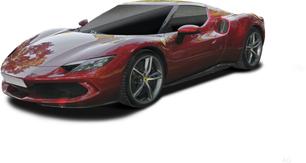
It is hard not to swoon when you gaze upon the 296 GTS, and I say that with no bias - I don’t think all Ferraris have looked this good.
But this is Ferrari at its dreamy, sweeping best, from the tarmac-kissing front — which generates so much downforce and cooling it negates the need for active aero — to its swollen haunches and the glass-topped engine window.
So what’s the difference between this and the GTB? Largely it is the ability to drop the folding roof, meaning you can feel the wind in your hair and that exhaust in your soul. To be honest, though, I reckon it looks better top up...
It’s a cockpit-style driver’s set-up inside, and there’s lots I love and some things I don’t. But let’s start with the steering wheel, which might be one of the best in existence.
It feels magic under the touch, as do the giant flappy paddles which remain fixed in place as you turn the wheel.
It’s also surprisingly comfortable in the figure-hugging sports seats, though climbing in and out of them is not necessarily something you want to do in front of a crowd.
Downsides? There is plenty of tech in the 296 cabin, but it’s all controlled from the steering wheel, making it fiddly and annoying to use.
Also, there are F1-levels of complexity on the control-everything steering wheel, and if I’m being honest, there are some buttons or switches, the function of which I still don’t fully understand.
Bentley seems to have spent the design budget on the Continental GT Speed, which was launched at the same time and gets the same new engine under its slightly sexier bonnet. The big move there has been going from Bentley’s traditional four headlight face to a smoother more modern one with just two lights, or eyes.
The Flying Spur, by comparison, sticks with the more traditional look, and four eyes, but that doesn’t necessarily mean it looks nerdier. Indeed, it’s still an impressive and handsome beast and does a mighty fine job of making this much metal and mass look bold and desirable.
Truly, vehicles this large tend to look lumpen and making one look as good this Flying Spur Speed does is an impressive feat. Look at the photos and be impressed.
The interior fit out and fittings are stunning, with Bentley boldly claiming it makes the best car cabins in the world. It’s not an outrageous claim, either.
What do you want to know around practicality? We’re talking two seats, about 200 litres of cargo space total and a couple of smallish storage spaces in the cabin. And… that’s about it.
Next question, please.
I’m not going to pretend that I had my laptop out taking notes while we were hitting 200km/h down the back straight at Magarigawa, but at more sane speeds there’s no doubt the rear seats of this car would be a very relaxing, plush, cosseting and pleasant smelling place to sit and work.
That’s at least partly what the Flying Spur Speed is for, a limousine for those who don’t like, or perhaps can’t quite afford, a Rolls-Royce, but still want great British solidity, class and that sense of obscene wealth, probably inherited.
The bonus of the Flying Spur is that it’s also a lovely place to be should you choose either of the front seats, with hugely comfortable seats that are more like couches, endless adjustability and many soothing massage settings for your heated and ventilated pews.
The spinning central 12.3-inch display remains the highlight, offering you a modern touch screen, which can disappear to reveal either three classic analogue dials or a plan piece of dashboard, if you prefer a “digital detox”.
Okay, hold your breath for a moment. The 296 GTS lists at $668,146, which is a sizeable jump over the hard-top GTB, which is more like $551,800. But what price a little open-air freedom?
What you get for that investment is a two-part (solid) folding roof, of course, but also what might be Ferrari’s most high-tech offering to date, with a plug-in hybrid system delivering potent performance rather than a usable EV driving range, a mega-clever braking system and an almost telepathic six-way 'Chassis Dynamic Sensor' designed to link the car’s key functions to make the experience, and the driver, somehow better.
Elsewhere, there are sports seats, Matrix LED headlights, 20-inch alloys, keyless entry and a very cool engine start touch-button on the even cooler steering wheel.
Oh, and there's wireless charging and Apple CarPlay, both thankfully standard in Australia, the latter controlled through the steering wheel and digital driver display.
It's all beautifully finished and a joy to behold and sit in.
Is “value” even a word that people use when they can afford to shop for a Bentley that costs $581,900, and will not be their only car? At very least, it’s a term that means something different to the people who breathe that kind of rarefied air.
The kind who have memberships to the exclusive Magarigawa Club where the Flying Spur Speed was launched. When just being a member costs a rumoured $1 million a year (and there’s a waiting list to get in), then half that much for a car probably isn’t so much.
The Flying Spur Speed comes with everything you would expect from a Bentley, incredible levels of comfort, a modern hybrid system that allows you to pretend you’re an eco-warrior while driving through the zero-emission zones of big cities like London and plenty of space and shiny things to look at.
The stereo is a Naim for Bentley audio system "arguably the finest in-car hi-fi available in any production car", while you also score a panoramic sunroof and mood lighting and even lovely deep-pile mats in the footwells. Ahh.
Sure, you could buy Ferraris and Lamborghinis for that kind of money, but they don’t have comfortable back seats like this Bentley, for those days when you really need to get to the chopper (parked on your personal helipad) in a hurry.
Now we're talking. The powertrain here is both tremendous and terrifying, pairing a 3.0-litre twin-turbo-petrol V6 with a rear mounted electric motor, and a 7.5kWh battery, to deliver a total 610kW and 740Nm. That power is fed through an eight-speed dual-clutch auto transmission.
Those are, frankly, scary numbers, and enough, Ferrari says, to dispatch 100km/h in just 2.9 seconds, and to push on to a top speed of 330km/h.
If you’re going to put the word “Speed” in the title of your car, you really can’t mess about when it comes to the powerplant, and Bentley also has a proud history of making hugely powerful V12 engines to live up to. That’s a history that has now ended, with the announcement that the new 4.0-litre twin-turbo V8 in this Flying Spur Speed will be the one and only in all Bentleys, henceforth, including the Continental and the Bentayga SUV.
Bentley’s W12 engine is, sadly, no more, which might well make some older Flying Spurs quite collectable.
The V8 will come in different flavours, of course, and it’s also a hybrid, as is the modern way. Bentley calls the 140kW electric motor attached to the engine an “e-machine”.
Using that machine, the Speed can whisk you around in silent, EV-only mode for up to 81km. With such a stupendous sounding V8 on offer, it’s hard to see why you’d bother, but it’s an option, and the hybrid system is cleverly set up so that the harder you drive, the quicker the battery recharges, so effectively you’d almost never have to actually plug this PHEV in.
With the engine and e-machine combined, you’re looking at a staggering 575kW and 1000Nm, enough to propel all 2646kg of this Flying Spur Speed to 100km/h in just 3.5 seconds.
It might not sound quite as orchestrally moving as the big, sassy W12, but it’s still a hell of a replacement, as it is, in fact, “the most powerful Bentley engine ever”. That will do nicely.
As well as the ability to start up and slink away silently, the Ferrari 296 GTS’s little battery will deliver a 25km EV-only driving range, and contribute to the overall claimed fuel use of just 6.5L/100km.
Charging is AC only, and the the brand reckons it takes around 90mins to top up using an 11kW charger. The self-charging is on-point, though, with the Ferrari able to quickly recoup energy from braking and the like to top up the battery without needing to plug in.
So, if you were very careful to use your 81km of EV-only range, as often as possible, and you drove very slowly and treated the accelerator pedal with great care, you might, possibly, achieve the Flying Spur Speed’s claimed fuel-economy of 10.7 litres per 100km.
That’s the great thing about hybrids like this, they are theoretical fuel misers of the highest order. But if you aren’t careful and you care more about enjoying that twin-turbo V8 engine you’ve paid so much money for, you’re never, ever going to get it under 15L/100km, and you’ll quite likely exceed 20L/100km, as we did, with ease, by driving it around a track all day.
Theoretically, again, this Bentley will emit just 33 grams of CO2 per kilometre.
The engine is undoubtedly a highlight, and we’ll get to that in a moment, but I first want to talk about the steering in this car.
It might sound like a weird point to get hung up on, but it is sensational, and maybe the best I’ve ever experienced. Generally speaking, super-responsive steering can risk feeling overly sharp and uncomfortable when cruising, but somehow the 296 manages to feel super natural, super responsive, and super engaging, without every feeling sharp or darty. It’s just predictable, responsive, and spectacular.
Honestly, it is a highlight of a drive experience filled with highlights, with another being the dual-nature of this drop-top supercar. Long before I got anywhere near a twisting road I needed to navigate the usual nightmare that is Sydney, tackling traffic, suburbia, freeways, tunnels and expansion joints galore, and the 296 never felt uncomfortable.
Instead, the 296 slipped into a comfortable kind of lope, never jarring or rough, and eminently easy to get along with. And yet, when you arrive on the right road that veil of sensibility drops, and the Ferrari quickly reminds you of its potential.
For a start, the acceleration is properly, startlingly aggressive. Engage the 'Qualification' drive mode (which unlocks the full might of the Ferrari's electrified powertrain) and flatten your right foot, and you'll find the world suddenly hurtling past your windows, and your knuckles will no doubt whiten as you feel the rear tyres fighting for traction against the onslaught should you try it on anything but the straightest of roads.
It's addictive, but it's just one element of a near-perfect combination on offer here, with the 296 GTS the stiffest Ferrari drop-top to date, which becomes immediately clear as you start to attack corners with ever-growing confidence.
Grip, stability and stiffness in spades, the GTS delivers. And all accompanied by an exhaust howl so angry and evil it’s hard to believe it’s being generated by a V6.
It’s a thing of very near perfection.
Any car with a whopping 575kW and 1000Nm is going to be interesting, even invigorating to drive, but you’d have to say the smaller and lighter it is, the more excitement, and even fear, you’re going to be faced with.
In the case of the Bentley Flying Spur Speed, you’re talking about an enormous, and enormously luxurious and comfortable, sedan that’s designed to carry more than two people, and weighs a hefty 2646kg.
It’s a limousine powered by a rocket, as I said earlier, but looking at the size, and pondering the weight of it, you really don’t expect too much in the way of thrills. Effortless performance, sure, titanic overtaking thrust, perhaps, but then you read the fine print and note that this Flying Spur Speed can hit 100km/h in 3.5 seconds.
That’s seriously fast in anything, but in a car this big, and filled with as much luxury as a mid-sized super yacht, it feels other worldly.
Hammering the big Speed around a tight, intense race track feels strange at first and then strangely comfortable. Even sitting in the back wasn’t so much frightening as amusing, as the big Bentley simply slopes through any challenge you throw at it.
Sure, I’d like it to be louder, and you do miss the sound of the old 12-cylinder engine (and Bentley fans in particularly might find its absence upsetting), but the V8 is still throaty enough to please your ears, and it’s important to consider that it’s actually more powerful than the old W12, which is no mean feat.
Compared to the shorter, sharper Continental GT Speed we drove on the same day, the Flying Spur does have a bit more body roll, a bit more pitch and dive under braking from 200km/h, or when accelerating ballistically out of slow corners, but it’s still stupendously impressive for what it is.
And that is a luxury limousine that can turn itself into a race track weapon if you, and your three passengers, want it to.
Not much chance of the 296 GTS being crash-tested in Australia — you’d be able to hear the Italians weeping across the ocean.
You do get front and side airbags parking sensors, a reversing camera, auto high beam and tyre pressure monitoring.
The Flying Spur Speed comes with 10 airbags and it has not been crash tested. Bentley also has its own 'Safeguard' suite of technologies including auto emergency braking, 'Swerve Assist' and 'Turn Assist'.
Other tech includes 'Predictive Adaptive Cruise Assist with Lane Guidance', lane departure warning, emergency assist, remote park assist and 3D surround-view monitor.
Standard is a three year warranty, but you can extend that for up to five years. Then, if your car has less than 90,000km on the clock, you can opt into the 'New Power15', which gives you up to 15 years total warranty coverage and is fully transferable.
The first seven years scheduled maintenance is free-of-charge.
The Bentley Continental GT Speed comes with a five-year, all-inclusive servicing plan as standard.
That sounds good, but stunningly, Bentley still only offers a three-year manufacturer warranty, albeit one with no mileage limitations. That's way below industry standard these days.
The battery that forms part of the hybrid system is, however, warrantied for eight years, or 160,000km.