What's the difference?
I know, picture Ferrari and you'll likely be conjuring images of potent V12 or V8 engines, a scenery-shaking exhaust bark on start-up and a fuel bill that would make a Sheikh wince.
But this one, the 296 GTS, doesn't have, or do, any of those things. In fact, it doesn’t so much explode into life as it does kind of whirr gently, as though you’ve just switched on a photocopier.
And yet, people I trust on these matters reckon this just might be the best Ferrari to have ever worn the badge. So, I guess we better get to figuring out what the hell is going on with this plug-in Prancing Horse.
For those merely gazing up to the lofty, ivory-tipped towers of high society, it would be easy to think that the mere ownership of a plush, premium vehicle, like the Lexus LC 500h for example, is a reward in and of itself.
The truth, though, is that Australia's premium manufacturers then sweeten the ownership pot even further, often inviting new owners into a secret club filled with tickets to exclusive events, seats at the fanciest of dining tables and concierge-style car maintenance, to name but a few of the perks on offer.
Lexus, though, sits atop the pile when it comes to offering ownership perks to its owners, and now more than ever, with the brand's existing Encore Club today welcoming a new and more-exclusive tier, called Encore Platinum.
We'll circle back to all of this under our 'Ownership' sub heading, but the short answer is that anyone who has bought a RC F, GS F, LX, LS or LC, like this 500h, since January 1 this year is automatically signed up, and is in line for some serious goodies.
Perhaps the most pressing question, though, is will it be the new ownership program that lures customers into a LC 500h? Or can the luxurious Lexus performance coupe stand on its own four wheels?
Let's find out.
Anyone who says electrification somehow muddies the Ferrari formula is wrong. This plug-in Prancing Horse is among the most potent and direct vehicles I’ve ever driven, and the electric motor only adds to the experience.
A truly fuel-efficient performance car, who’d have thought? There are some obvious trade-offs for trying to exist in two seperate worlds, but the Lexus LC 500h largely handles its dual roles with aplomb.
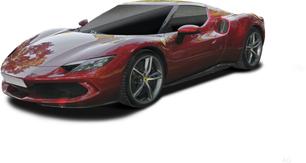
It is hard not to swoon when you gaze upon the 296 GTS, and I say that with no bias - I don’t think all Ferraris have looked this good.
But this is Ferrari at its dreamy, sweeping best, from the tarmac-kissing front — which generates so much downforce and cooling it negates the need for active aero — to its swollen haunches and the glass-topped engine window.
So what’s the difference between this and the GTB? Largely it is the ability to drop the folding roof, meaning you can feel the wind in your hair and that exhaust in your soul. To be honest, though, I reckon it looks better top up...
It’s a cockpit-style driver’s set-up inside, and there’s lots I love and some things I don’t. But let’s start with the steering wheel, which might be one of the best in existence.
It feels magic under the touch, as do the giant flappy paddles which remain fixed in place as you turn the wheel.
It’s also surprisingly comfortable in the figure-hugging sports seats, though climbing in and out of them is not necessarily something you want to do in front of a crowd.
Downsides? There is plenty of tech in the 296 cabin, but it’s all controlled from the steering wheel, making it fiddly and annoying to use.
Also, there are F1-levels of complexity on the control-everything steering wheel, and if I’m being honest, there are some buttons or switches, the function of which I still don’t fully understand.
It's a little curious, the LC 500h. For mine, it's stunning from a distance. All gleaming alloys and bulging rear arches and sharp snout angled downward like its caught the scent of its prey.
But weirdly, it can start to look a little less impressive the closer you get to it - a little swollen and vague in its lines. It's very likely it's eye-of-the-beholder stuff (fellow CarsGuide scribe Richard Berry adores it from every angle, for example).
Inside, the front of the cabin is a busy but stylish space, with multiple textures layered on top of each other to produce a premium-feeling, sporty space. The low-feeling dash juts out, giving the front passengers an ensconced, cockpit feel.
Everything is predictably leather-wrapped and lovely, and while it's not as streamlined as, say, an Audi interior, it's not without a genuine sense of Japanese charm in the cabin.
What do you want to know around practicality? We’re talking two seats, about 200 litres of cargo space total and a couple of smallish storage spaces in the cabin. And… that’s about it.
Next question, please.
It's not really. Especially in the backseats, which would make more sense if they were painted on. I'm no giant, but even my 175cm-tall head was pushed into the ceiling, and while there’s ample shoulder space for two adults, you’re unlikely to be able to convince two to get back there.
Lexus has included something called the "Easy Access" function for 2020, which sees the front seats slide forward automatically to help with accessing the rear seats, and they do lower the Cirque du Soleil antics required to get back there, but this realistically not a car for carrying more than two adults, save an emergency. There are two ISOFIX attachment points in the rear, so child seats can be locked in there.
That's not necessarily a drawback, though. This is a two-door sporty coupe, after all, and elsewhere, the sizeable dimensions (4770mm length x 1920mm width x 1345mm height) provide plenty of space for up-front riders.
You'll also find hidden cupholders, bottle holders in the doors, and all the power and connection points you need.
A word on the tech, though. The LC 500h is crying out for a touch screen, though the brand's traditional mousepad system is improving.
Okay, hold your breath for a moment. The 296 GTS lists at $668,146, which is a sizeable jump over the hard-top GTB, which is more like $551,800. But what price a little open-air freedom?
What you get for that investment is a two-part (solid) folding roof, of course, but also what might be Ferrari’s most high-tech offering to date, with a plug-in hybrid system delivering potent performance rather than a usable EV driving range, a mega-clever braking system and an almost telepathic six-way 'Chassis Dynamic Sensor' designed to link the car’s key functions to make the experience, and the driver, somehow better.
Elsewhere, there are sports seats, Matrix LED headlights, 20-inch alloys, keyless entry and a very cool engine start touch-button on the even cooler steering wheel.
Oh, and there's wireless charging and Apple CarPlay, both thankfully standard in Australia, the latter controlled through the steering wheel and digital driver display.
It's all beautifully finished and a joy to behold and sit in.
Value is all about perspective, of course, and viewed the right way, the $195k sticker price of the Lexus LC 500h does provide a certain amount of value.
Yes, it's a lot of money. But Lexus' flagship coupe doesn't just get a performance-focused hybrid setup (pairing with a thumping V6 engine), but also just about every high-end feature the brand has in its deep bag of tricks.
It starts outside with giant 21-inch alloys, a glass roof with a sun blind, LED headlights with cornering lights, hidden door handles, keyless entry, and rain-sensing wipers.
Inside, you'll find leather-accented seats, a colour head-up display, a 10.3-inch multimedia screen with Apple CarPlay and Android Auto, another 8.0-inch screen in the driver's binnacle, a heated steering wheel, heated and cooled front seats, DAB+, satellite navigation system with live traffic, and a killer 13-speaker, 918-watt Mark Levinson stereo.
Now we're talking. The powertrain here is both tremendous and terrifying, pairing a 3.0-litre twin-turbo-petrol V6 with a rear mounted electric motor, and a 7.5kWh battery, to deliver a total 610kW and 740Nm. That power is fed through an eight-speed dual-clutch auto transmission.
Those are, frankly, scary numbers, and enough, Ferrari says, to dispatch 100km/h in just 2.9 seconds, and to push on to a top speed of 330km/h.
The LC 500h is powered by a hybrid setup that combines a 3.5-litre V6 engine with a 650-volt "Lexus Hybrid Drive" system and a lithium-ion battery. That setup delivers 264kW of power, and somewhere north of 350Nm in torque when the engine and motor outputs combine.
That power is sent to the rear wheels via a CVT automatic, and will produce a sprint to 100km/h of around 5.0 seconds.
According to Lexus, 10 clear improvements were made the way the 2020 LC 500h drives, including a new transmission tune, more structural bracing added for rigidity, new suspension components and spring rates, and altered stabiliser bars.
Has it made a difference? Read on.
As well as the ability to start up and slink away silently, the Ferrari 296 GTS’s little battery will deliver a 25km EV-only driving range, and contribute to the overall claimed fuel use of just 6.5L/100km.
Charging is AC only, and the the brand reckons it takes around 90mins to top up using an 11kW charger. The self-charging is on-point, though, with the Ferrari able to quickly recoup energy from braking and the like to top up the battery without needing to plug in.
Lexus says the LC 500h will sip 6.8 litres per hundred kilometres on the combined cycle - very impressive for what is ostensibly a performance coupe - and emit 152g/km.
The LC 500h is equipped with an 82-litre fuel tank.
The engine is undoubtedly a highlight, and we’ll get to that in a moment, but I first want to talk about the steering in this car.
It might sound like a weird point to get hung up on, but it is sensational, and maybe the best I’ve ever experienced. Generally speaking, super-responsive steering can risk feeling overly sharp and uncomfortable when cruising, but somehow the 296 manages to feel super natural, super responsive, and super engaging, without every feeling sharp or darty. It’s just predictable, responsive, and spectacular.
Honestly, it is a highlight of a drive experience filled with highlights, with another being the dual-nature of this drop-top supercar. Long before I got anywhere near a twisting road I needed to navigate the usual nightmare that is Sydney, tackling traffic, suburbia, freeways, tunnels and expansion joints galore, and the 296 never felt uncomfortable.
Instead, the 296 slipped into a comfortable kind of lope, never jarring or rough, and eminently easy to get along with. And yet, when you arrive on the right road that veil of sensibility drops, and the Ferrari quickly reminds you of its potential.
For a start, the acceleration is properly, startlingly aggressive. Engage the 'Qualification' drive mode (which unlocks the full might of the Ferrari's electrified powertrain) and flatten your right foot, and you'll find the world suddenly hurtling past your windows, and your knuckles will no doubt whiten as you feel the rear tyres fighting for traction against the onslaught should you try it on anything but the straightest of roads.
It's addictive, but it's just one element of a near-perfect combination on offer here, with the 296 GTS the stiffest Ferrari drop-top to date, which becomes immediately clear as you start to attack corners with ever-growing confidence.
Grip, stability and stiffness in spades, the GTS delivers. And all accompanied by an exhaust howl so angry and evil it’s hard to believe it’s being generated by a V6.
It’s a thing of very near perfection.
There’s something very strange about hitting the start button in what is ostensibly a sports car, and being greeted not by the bark of an exhaust, but by the gentle whirring on the car’s electronics coming to life.
But then, the Lexus LC500h is not your average performance car.
It essentially trades the out-and-out grunt of its V8-powered sibling (which produces a monstrous 351kW and 540Nm) for a kind of best-of-both-worlds approach that pairs the punch of the V6 engine with the fuel efficiency of a hybrid powertrain.
If that sounds like an compromised approach to pure performance, you're right. But reframe the way you look at the LC 500h and it all starts to make a bit more sense.
Remember, this isn't a track-attack weapon, but a potent on-road bruiser, and the flow of power on offer always feels ample, and you never want for too much more off-the-line pace on public roads.
Among the biggest selling points of the LC 500h is the sheer distance between its various personalities. Engage Eco, or even Normal, drive modes, and it’s a quiet, mostly very comfortable (though it can be unsettled by bigger bumps) kilometre-eater, but engage Sport or Sport Plus and it rightly transforms into something significantly angrier.
It might not be the absolute sharpest tool in the performance car shed, but the LC 500h does bristle nicely when those modes are engaged, the hybrid factor seemingly replaced by a satisfyingly meaty exhaust note and an accelerator that’s suddenly far more sensitive to the touch.
The steering feel is nice and the inputs direct, but there is something about the car’s 1980kg weight that doesn’t inspire the deepest of confidence, at least not on the rain-slicked roads we were travelling along .
A pure performance coupe? Perhaps not. But a sporty, stylish and, when you want it to be, comfortable cruiser with the ability to turn the volume up when you come across a twisting road? Bingo.
Not much chance of the 296 GTS being crash-tested in Australia — you’d be able to hear the Italians weeping across the ocean.
You do get front and side airbags parking sensors, a reversing camera, auto high beam and tyre pressure monitoring.
The Lexus LC 500h is yet to be ANCAP tested (the price would likely prove a sticking point), but the Japanese brand has fine form in attracting top marks, and there's certainly no shortage of safety features on offer here.
There's a total eight airbags and a reversing camera and parking sensors, as well as a host of high-tech kit like AEB, Lane Keep Assist, Blind Spot Monitoring, active cruiser control and a bonnet that will sense pedestrian and pop up before impact in an attempt to minimise injury.
Standard is a three year warranty, but you can extend that for up to five years. Then, if your car has less than 90,000km on the clock, you can opt into the 'New Power15', which gives you up to 15 years total warranty coverage and is fully transferable.
The first seven years scheduled maintenance is free-of-charge.
So, to ownership. Let's start with the basics first, before we move onto the new Encore Platinum benefits.
The LC 500h is covered by a four-year/100,000km warranty, and servicing (capped for three years at $595 a pop) is required every 15,000km.
You will know already the Lexus's stellar Encore ownership program includes handy features like valet (pick-up and drop-off) servicing, but the new Encore Platinum level for owners of its more exclusive models unlocks some seriously cool stuff.
One is a new On Demand service, which allows owners to book a different style of car when heading off on a holiday or business trip. So, say you own the LC 500h, but want to take the family to the snow and need a seven-seat 4WD like the RX L, then Lexus will lend you one at no charge, which you can keep for eight days.
The loans are available in your state or somewhere else in Australia if you're travelling, with your car waiting for you at Qantas Valet for you when you arrive.
The One Demand service is available on four occasions over your first three years of ownership (which is also the length of the Encore Platinum membership).
The Platinum level also provides eight examples of free valet parking at select shopping centres, as well as hotel and restaurant benefits, and invitations to Lexus' drive days around the country.