What's the difference?
I know, picture Ferrari and you'll likely be conjuring images of potent V12 or V8 engines, a scenery-shaking exhaust bark on start-up and a fuel bill that would make a Sheikh wince.
But this one, the 296 GTS, doesn't have, or do, any of those things. In fact, it doesn’t so much explode into life as it does kind of whirr gently, as though you’ve just switched on a photocopier.
And yet, people I trust on these matters reckon this just might be the best Ferrari to have ever worn the badge. So, I guess we better get to figuring out what the hell is going on with this plug-in Prancing Horse.
Lamborghini is a brand built on madness, excess and eye-searing design. Its cars don’t have to make sense, and indeed its owners probably prefer it if they don’t - they have other vehicles to use for the real world.
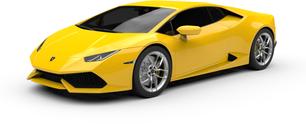
So, the existence of the new Lamborghini Huracan Sterrato, the world’s first 'All-terrain Supercar', a V10-engined mad machine built to drive sideways at high speed on dirt, should not come as a surprise.
And yet it really does, because there’s never been anything like it before (yes, Porsche has built the 911 Dakar, but it’s more of a sand-dune-climbing, desert-crossing motorsport tribute), for the very good reason that no one ever considered it would be a good idea.
It also sounds just a touch intimidating, the kind of driving experience that would require pro rally driver skills to survive, so it was with some trepidation that we headed to Palm Springs, USA, to test out the new Huracan Sterrato.
Anyone who says electrification somehow muddies the Ferrari formula is wrong. This plug-in Prancing Horse is among the most potent and direct vehicles I’ve ever driven, and the electric motor only adds to the experience.
Not just a spectacularly stupid idea made real, the Lamborghini Sterrato is by far the best, or at least most hilarious, of the many Huracan variants the company has produced.
It makes you feel like a hero, even when you’re going sideways on dirt like a nutter. It could just be my new favourite supercar.
Note: CarsGuide attended this event as a guest of the manufacturer, with travel, accommodation and meals provided.
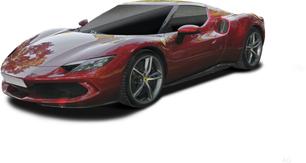
It is hard not to swoon when you gaze upon the 296 GTS, and I say that with no bias - I don’t think all Ferraris have looked this good.
But this is Ferrari at its dreamy, sweeping best, from the tarmac-kissing front — which generates so much downforce and cooling it negates the need for active aero — to its swollen haunches and the glass-topped engine window.
So what’s the difference between this and the GTB? Largely it is the ability to drop the folding roof, meaning you can feel the wind in your hair and that exhaust in your soul. To be honest, though, I reckon it looks better top up...
It’s a cockpit-style driver’s set-up inside, and there’s lots I love and some things I don’t. But let’s start with the steering wheel, which might be one of the best in existence.
It feels magic under the touch, as do the giant flappy paddles which remain fixed in place as you turn the wheel.
It’s also surprisingly comfortable in the figure-hugging sports seats, though climbing in and out of them is not necessarily something you want to do in front of a crowd.
Downsides? There is plenty of tech in the 296 cabin, but it’s all controlled from the steering wheel, making it fiddly and annoying to use.
Also, there are F1-levels of complexity on the control-everything steering wheel, and if I’m being honest, there are some buttons or switches, the function of which I still don’t fully understand.
Oh yes, it’s pretty interesting, all right, because it breaks new dusty ground for Lamborghini, and its Huracan in particular.
To cope with its intended use, the Sterrato has been raised 44mm higher than the ground-hugging normal version and it’s also had giant, bolt-on style guards attached to make it look a bit wilder.
Also quite noticeable is the huge roof scoop - which renders rear vision from the driver’s seat a complete zero, they may as well throw the mirror away - which has to be there to help the V10 engine breathe.
The side air intakes through which air usually gets to the mid-mounted power plant have been blocked up, because they would have sucked in too much dirt and gravel.
I’m happy to report the silly looking rally style headlights stuck to the Huracan’s shark nose are optional, although again, no doubt every buyer has gone for them, because they stand out in a crowd.
The Huracan Sterrato has no problem doing that on its own, of course, because it already looks extremely aggressive, and its knobbly, all-terrain tyres finish off that style flourish.
What do you want to know around practicality? We’re talking two seats, about 200 litres of cargo space total and a couple of smallish storage spaces in the cabin. And… that’s about it.
Next question, please.
Next question, please. You don’t get cupholders, there’s not really anywhere to put your phone and the cabin generally feels as roomy as a phone box that’s been through the wash and shrunk quite badly.
There’s a frunk that can barely hold two small backpacks and that’s about it. If you want practical space, buy an Urus. The Huracan Sterrato is not a practical car, but that’s not part of its design brief.
Okay, hold your breath for a moment. The 296 GTS lists at $668,146, which is a sizeable jump over the hard-top GTB, which is more like $551,800. But what price a little open-air freedom?
What you get for that investment is a two-part (solid) folding roof, of course, but also what might be Ferrari’s most high-tech offering to date, with a plug-in hybrid system delivering potent performance rather than a usable EV driving range, a mega-clever braking system and an almost telepathic six-way 'Chassis Dynamic Sensor' designed to link the car’s key functions to make the experience, and the driver, somehow better.
Elsewhere, there are sports seats, Matrix LED headlights, 20-inch alloys, keyless entry and a very cool engine start touch-button on the even cooler steering wheel.
Oh, and there's wireless charging and Apple CarPlay, both thankfully standard in Australia, the latter controlled through the steering wheel and digital driver display.
It's all beautifully finished and a joy to behold and sit in.
Well, considering every Lamborghini Huracan Sterrato will almost certainly go up in value and become a collector’s item you’d have to consider them good value, at least in investment terms.
On the other hand, any car with a price tag of $503,949, before on-road costs, sits somewhat adjacent to the word “value”.
That large number has not put enthusiasts off, however, with all 1499 of the limited-run Sterrato Huracans already sold, and a long list of people with their names down hoping that someone gets scared and changes their mind, apparently.
Our vehicle came with two built-in cameras, which you could operate through the touchscreen to record Tik Tok-length videos of your driving.
This is almost certainly a cost option, but no one could tell us exactly, and all of the cars are already sold, no doubt to people who ticked every single option box.
Oh, and you do get aluminium floor mats. Nice.
Now we're talking. The powertrain here is both tremendous and terrifying, pairing a 3.0-litre twin-turbo-petrol V6 with a rear mounted electric motor, and a 7.5kWh battery, to deliver a total 610kW and 740Nm. That power is fed through an eight-speed dual-clutch auto transmission.
Those are, frankly, scary numbers, and enough, Ferrari says, to dispatch 100km/h in just 2.9 seconds, and to push on to a top speed of 330km/h.
The Sterrato is powered by a Lamborghini engine that’s on its way into the history books, a 5.2-litre V10 that will die with this, the last variant of the Huracan.
Its replacement will be powered by a V8 hybrid, which will no doubt be more powerful but simply will not sound as amazing.
The version in the Sterrato has been detuned slightly, partly because of the breathing issues - you just can’t get as much air into an engine when it’s driving through its own self-propelled dust storm - and because of its all-terrain tyres, the first ever to be speed rated to 260km/h.
It still makes an impressive, and very loud, 449kW (602hp) and 560Nm, however. I’d describe it as “more than enough”.
That monster engine is matched with a seven-speed dual-clutch automatic and a very, very clever all-wheel drive system.
As well as the ability to start up and slink away silently, the Ferrari 296 GTS’s little battery will deliver a 25km EV-only driving range, and contribute to the overall claimed fuel use of just 6.5L/100km.
Charging is AC only, and the the brand reckons it takes around 90mins to top up using an 11kW charger. The self-charging is on-point, though, with the Ferrari able to quickly recoup energy from braking and the like to top up the battery without needing to plug in.
So, Lamborghini claims the Huracan Sterrato will deliver a fuel "economy" figure of 14.9 litres per 100km, which seems like a lot, until you consider it probably won't get anywhere near that, if you drive it the way you're supposed to, particularly foot flat and wheels spinning on dirt.
Again, fuel economy is not a core value for this car, nor its buyers.
An 80-litre tank means a theoretical range of around 480km.
The engine is undoubtedly a highlight, and we’ll get to that in a moment, but I first want to talk about the steering in this car.
It might sound like a weird point to get hung up on, but it is sensational, and maybe the best I’ve ever experienced. Generally speaking, super-responsive steering can risk feeling overly sharp and uncomfortable when cruising, but somehow the 296 manages to feel super natural, super responsive, and super engaging, without every feeling sharp or darty. It’s just predictable, responsive, and spectacular.
Honestly, it is a highlight of a drive experience filled with highlights, with another being the dual-nature of this drop-top supercar. Long before I got anywhere near a twisting road I needed to navigate the usual nightmare that is Sydney, tackling traffic, suburbia, freeways, tunnels and expansion joints galore, and the 296 never felt uncomfortable.
Instead, the 296 slipped into a comfortable kind of lope, never jarring or rough, and eminently easy to get along with. And yet, when you arrive on the right road that veil of sensibility drops, and the Ferrari quickly reminds you of its potential.
For a start, the acceleration is properly, startlingly aggressive. Engage the 'Qualification' drive mode (which unlocks the full might of the Ferrari's electrified powertrain) and flatten your right foot, and you'll find the world suddenly hurtling past your windows, and your knuckles will no doubt whiten as you feel the rear tyres fighting for traction against the onslaught should you try it on anything but the straightest of roads.
It's addictive, but it's just one element of a near-perfect combination on offer here, with the 296 GTS the stiffest Ferrari drop-top to date, which becomes immediately clear as you start to attack corners with ever-growing confidence.
Grip, stability and stiffness in spades, the GTS delivers. And all accompanied by an exhaust howl so angry and evil it’s hard to believe it’s being generated by a V6.
It’s a thing of very near perfection.
I could give you the short version of what it was like to drive the Lamborghini Huracan Sterrato at speed on a specially prepared dirt race track, which would be to say that I have never, ever had so much fun in a car, but that would be selling it short.
While the Sterrato is clearly built to do one insensible thing brilliantly, while somehow not imperilling the life of its driver, what is most incredible about it is how good it is at everything else, as well.
To create this Huracan, Lamborghini had to increase the ride height significantly, soften up the suspension and increase its amount of travel.
It also had to ask Bridgestone nicely to produce a tyre unlike anything the world has ever seen, an all-terrain tread capable of dealing with dirt and gravel and yet also grippy enough to be used on a sealed race track, or to carve up your favourite mountain pass.
It also had to be capable of being speed rated to 260km/h, or about 100km/h faster than any all-terrain tyre Bridgestone has ever produced before.
Looking at the unique Dueler All-Terrain AT002s, with their chunky tread, you would assume that the Sterrato is going to be noisy, slippery and possibly a little rough on public roads, but that’s not the case at all.
This Huracan rides more smoothly - largely thanks to those suspension tweaks - and more quietly than its forebears, and it’s actually more practical around town as well, thanks to the ride height. So, no more flinching at speed bumps.
The tyres also provide proper supercar levels of grip on public roads, even those dusted with a bit of desert sand.
There’s a bit of squirm at the rear and under hard braking, but overall the experience is typically Lamborghini Huracan wonderful, all playing out to a soundtrack that is beyond beautiful from that howling V10.
The first part of our track experience at the Chuckwallah Raceway was also familiarly fantastic, the Huracan ripping around the sealed track at astonishing speed; it certainly doesn’t feel detuned.
Lamborghini had gone to the trouble of mirroring the sealed circuit with a specially constructed dirt track in the infield, so that 50 per cent of our lap would be spent sideways in ankle deep, dust, sand and rocks, much of it through long, long bends, with the occasional chicane set up specially for Scando flicking action.
Now, I am not, by any means, an expert at drifting, nor an accomplished rally driver, so I was, to put it mildly, shit scared of getting this half-million-dollar, limited-edition, 449kW monster on to the dirt section.
I feared I would spin around, or flip upside down, or find some other way to embarrass myself, but what happened when I got there was beyond inexplicable, and beyond joy.
This car is so clever, so easy to drive, so beautifully balanced, that it can turn a total newb into Colin McRae. His name comes to me because the whole experience reminded me of driving a rallying video game, it felt unreal, and yet overpoweringly visceral at the same time.
I could start a drift with the slightest flex of the throttle, then balance the car as it pivoted around a bend before nailing the throttle and haring off to the next fantastic drifting opportunity.
When we got back on the sealed stuff, the car would shake like mad, at 200km/h, as the dust attempted to get its way out of the wheels, but that just added to the excitement.
The secret wasn’t that I’d somehow become a better driver, it was what Lamborghini engineers call, accurately, “the hero maker”.
It’s a software and hardware package called LDVI, or 'Lamborghini Dinamica Veicolo Integrata', which, when you put the Sterrato in 'Rally' mode, uses many sensors combined with torque vectoring and selective braking to keep you going where you want to go, with minimal intervention.
Or at least minimal intervention that you can feel, which makes you feel like a hero.
I kind of understand how it works, but I totally relate to how it makes you feel. Like a genius. And you’d pay $500K for that, surely?
Not much chance of the 296 GTS being crash-tested in Australia — you’d be able to hear the Italians weeping across the ocean.
You do get front and side airbags parking sensors, a reversing camera, auto high beam and tyre pressure monitoring.
In a V10-engined supercar you’re meant to drive on dirt? You’ve come to the wrong place.
Okay, so there’s no crash rating, and there won’t be, but you do get AEB, driver, passenger, and side airbags along with knee airbags as well as front and rear-specific collapsible areas, reinforcement bars in the doors. Oh, and Electronic Stability Control.
Standard is a three year warranty, but you can extend that for up to five years. Then, if your car has less than 90,000km on the clock, you can opt into the 'New Power15', which gives you up to 15 years total warranty coverage and is fully transferable.
The first seven years scheduled maintenance is free-of-charge.
The Huracan Sterrato comes with a Lamborghini warranty good for three years with unlimited kilometres.
It also comes with 24/7 roadside assist for an unspecified amount of time. It is also offered with pre-paid scheduled maintenance service for three or five years.