What's the difference?
I know, picture Ferrari and you'll likely be conjuring images of potent V12 or V8 engines, a scenery-shaking exhaust bark on start-up and a fuel bill that would make a Sheikh wince.
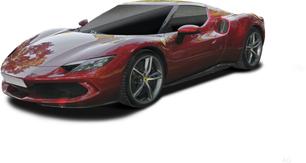
But this one, the 296 GTS, doesn't have, or do, any of those things. In fact, it doesn’t so much explode into life as it does kind of whirr gently, as though you’ve just switched on a photocopier.
And yet, people I trust on these matters reckon this just might be the best Ferrari to have ever worn the badge. So, I guess we better get to figuring out what the hell is going on with this plug-in Prancing Horse.
Driving a whopping great SUV down the straight on a race track at more than 200km/h sounds like fun, but it actually feels a bit wrong, like entering a baby elephant in a dog show.
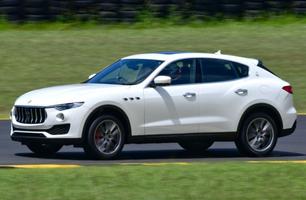
These are strange times, of course, and the Maserati Trofeo Levante is a suitably strange vehicle - stylish, classy, expensively appointed family hauler that also has the heart and soul of a race car.
Indeed, while performance SUVs are an increasingly commonplace vehicle, the Levante - which was actually getting along in the tooth as a model before this significant upgrade - has higher performance credibility than most.
That's because it has a big Ferrari V8 driving all four of its wheels and delivering a properly supercar-like 433kW and 730Nm.
It's not what you might call a typical Maserati buyer's car, but then only those who know what the Trofeo badge stands for - shouty insanity, basically - will be interested in this end of town. It is a lot of car, but is it worth the large load of money on the sticker ($330,000)?
Anyone who says electrification somehow muddies the Ferrari formula is wrong. This plug-in Prancing Horse is among the most potent and direct vehicles I’ve ever driven, and the electric motor only adds to the experience.
Maseratis are built for a fairly specific niche buyer; someone with a lot of money, someone slightly older and certainly someone who likes the finer things in life and appreciates Italian style, quality and heritage.
They are not, typically, the kind of buyers who want to tear around race tracks like fiends in big, shouty SUVs. But apparently there is a niche within the niche of Maserati fans who do, and they are willing to invest big dollars in vehicles wearing the Trofeo badge, like this Levante.
It might seem a slightly strange creation, a track-mad SUV with a screaming Ferrari engine, but surprisingly, it really does work.
It is hard not to swoon when you gaze upon the 296 GTS, and I say that with no bias - I don’t think all Ferraris have looked this good.
But this is Ferrari at its dreamy, sweeping best, from the tarmac-kissing front — which generates so much downforce and cooling it negates the need for active aero — to its swollen haunches and the glass-topped engine window.
So what’s the difference between this and the GTB? Largely it is the ability to drop the folding roof, meaning you can feel the wind in your hair and that exhaust in your soul. To be honest, though, I reckon it looks better top up...
It’s a cockpit-style driver’s set-up inside, and there’s lots I love and some things I don’t. But let’s start with the steering wheel, which might be one of the best in existence.
It feels magic under the touch, as do the giant flappy paddles which remain fixed in place as you turn the wheel.
It’s also surprisingly comfortable in the figure-hugging sports seats, though climbing in and out of them is not necessarily something you want to do in front of a crowd.
Downsides? There is plenty of tech in the 296 cabin, but it’s all controlled from the steering wheel, making it fiddly and annoying to use.
Also, there are F1-levels of complexity on the control-everything steering wheel, and if I’m being honest, there are some buttons or switches, the function of which I still don’t fully understand.
While the other two Maseratis to get the Trofeo treatment - the Ghibli and Quattroporte sedans - are undeniably lovely, the Levante is not quite as pretty.
Admittedly, for an SUV, it looks very good, and the Trofeo touches - that big, nostrilled bonnet, the red gills on the sides, the carbon, the badges - really do lift its game to another level.
Overall, though, the Levante has just never felt beautiful enough to me to be a Maserati. These guys really do style well, as you'd expect from a premium Italian brand, but making an SUV sexy is beyond even them.
I'll grant you, it does look good from front on, but at the rear they just seem to have run out of ideas.
Credit is due for feeling properly special inside, however.
What do you want to know around practicality? We’re talking two seats, about 200 litres of cargo space total and a couple of smallish storage spaces in the cabin. And… that’s about it.
Next question, please.
If you've got to move five people in a genuine hurry, the Levante is a pleasant way to go about it.
There's plenty of head and shoulder room, the seats, while firm in the front, are pleasant to the touch and supportive and there's a 580-litre boot with an electric tailgate and split-folding seats.
The boot feels properly spacious, too, with a 12-volt power outlet and four tie-down points. You won't, however, find a spare wheel out there, so serious off-roading is out (although it probably was already if you look at those expensive wheels).
There are huge door pockets with room for bottles and two big cup holders in the front. The centre-console bin looks lovely, it's all carbon fibre, but is quite small.
There are also three USB points, one in the front and two in the rear, and Apple CarPlay and Android Auto connectivity.
Okay, hold your breath for a moment. The 296 GTS lists at $668,146, which is a sizeable jump over the hard-top GTB, which is more like $551,800. But what price a little open-air freedom?
What you get for that investment is a two-part (solid) folding roof, of course, but also what might be Ferrari’s most high-tech offering to date, with a plug-in hybrid system delivering potent performance rather than a usable EV driving range, a mega-clever braking system and an almost telepathic six-way 'Chassis Dynamic Sensor' designed to link the car’s key functions to make the experience, and the driver, somehow better.
Elsewhere, there are sports seats, Matrix LED headlights, 20-inch alloys, keyless entry and a very cool engine start touch-button on the even cooler steering wheel.
Oh, and there's wireless charging and Apple CarPlay, both thankfully standard in Australia, the latter controlled through the steering wheel and digital driver display.
It's all beautifully finished and a joy to behold and sit in.
I'm sorry, but $330,000 for an SUV, of any kind? Personally I can't see the value, but then personally, as we'll discuss below in the Design section, I can't see the attraction.
This is one of the most expensive SUVs money can buy, well above things like Range Rover Sport SVR ($239,187) or even Porsche Cayenne Turbo Coupe ($254,000), although a pricier Ferrari one is surely on the way.
You'd want a lot for that, and the way it drives and sounds, thanks to that Ferrari engine, accounts for quite a few dollars.
There's also an undeniably high-quality feel to everything you touch on the car, inside and out, and a vast quantity of carbon fibre everywhere as well.
Other highlights include the 21-inch machine polished wheels, an 8.4-inch touchscreen with Navigation and DAB radio, full matrix LED headlights, and incredible Pieno Fiore natural leather, “the best the world has ever seen”, as Maserati says.
The lovely if firm front seats are heated and ventilated, sporty and 12-way adjustable, with Trofeo logos stitched into the headrests. The rooflining is lovely Alcantara, the steering wheel is sporty and features carbon-fibre shift paddles, ad the stereo system is Harman Kardon Premium and has 14 speakers.
And even the rear seats are heated. It feels expensive, and it should. But still, $330K?
Now we're talking. The powertrain here is both tremendous and terrifying, pairing a 3.0-litre twin-turbo-petrol V6 with a rear mounted electric motor, and a 7.5kWh battery, to deliver a total 610kW and 740Nm. That power is fed through an eight-speed dual-clutch auto transmission.
Those are, frankly, scary numbers, and enough, Ferrari says, to dispatch 100km/h in just 2.9 seconds, and to push on to a top speed of 330km/h.
This will be the last time Maserati gets a proper Ferrari engine like this a 3.8-litre twin-turbo V8 shouty monster, which is good for 433kW and 730Nm.
The future, as is the case everywhere, is going to be more electric and less noisy. For now, anyone who can should enjoy this V8 masterpiece, which drives all four wheels through Maserati's Q4 on-demand all-wheel drive system via a limited-slip rear differential and uses an eight-speed automatic transmission.
Its claimed 0 to 100km/h time is 3.9 seconds, which puts it in what used to be super-car territory, and is still very quick indeed, while top speed is an unimaginable 304km/h.
As well as the ability to start up and slink away silently, the Ferrari 296 GTS’s little battery will deliver a 25km EV-only driving range, and contribute to the overall claimed fuel use of just 6.5L/100km.
Charging is AC only, and the the brand reckons it takes around 90mins to top up using an 11kW charger. The self-charging is on-point, though, with the Ferrari able to quickly recoup energy from braking and the like to top up the battery without needing to plug in.
The official claimed fuel economy for the Maserati Levante Trofeo is 13.5 litres per 100km, but good luck with that.
A more realistic number would probably sit somewhere above 17 litres per 100km, and we would have easily exceeded 20 litres while driving it like lunatics around a track.
But you just paid $330K for an SUV, what do you care about fuel economy?
The engine is undoubtedly a highlight, and we’ll get to that in a moment, but I first want to talk about the steering in this car.
It might sound like a weird point to get hung up on, but it is sensational, and maybe the best I’ve ever experienced. Generally speaking, super-responsive steering can risk feeling overly sharp and uncomfortable when cruising, but somehow the 296 manages to feel super natural, super responsive, and super engaging, without every feeling sharp or darty. It’s just predictable, responsive, and spectacular.
Honestly, it is a highlight of a drive experience filled with highlights, with another being the dual-nature of this drop-top supercar. Long before I got anywhere near a twisting road I needed to navigate the usual nightmare that is Sydney, tackling traffic, suburbia, freeways, tunnels and expansion joints galore, and the 296 never felt uncomfortable.
Instead, the 296 slipped into a comfortable kind of lope, never jarring or rough, and eminently easy to get along with. And yet, when you arrive on the right road that veil of sensibility drops, and the Ferrari quickly reminds you of its potential.
For a start, the acceleration is properly, startlingly aggressive. Engage the 'Qualification' drive mode (which unlocks the full might of the Ferrari's electrified powertrain) and flatten your right foot, and you'll find the world suddenly hurtling past your windows, and your knuckles will no doubt whiten as you feel the rear tyres fighting for traction against the onslaught should you try it on anything but the straightest of roads.
It's addictive, but it's just one element of a near-perfect combination on offer here, with the 296 GTS the stiffest Ferrari drop-top to date, which becomes immediately clear as you start to attack corners with ever-growing confidence.
Grip, stability and stiffness in spades, the GTS delivers. And all accompanied by an exhaust howl so angry and evil it’s hard to believe it’s being generated by a V6.
It’s a thing of very near perfection.
We got to drive all three Trofeo-fettled Maseratis on track at Sydney Motorsport Park, and before that on the road, where the Levante felt very pleasant, and pleasantly expensive at all times.
As you might expect, a vehicle with 433kW is difficult to fully appreciate on public roads, although there was the occasional and exciting change to give it a quick, loud blat between gears.
It only takes hearing that engine note, and feeling that torque surge, a few times to see why someone might fall in love with this car, or at least this engine.
Out on the track, the rear-driven Ghibli and Quattroporte, which share the Levante's engine, were surely the more fun and frenetic things to drive, but there were those who chose the Levante as their best of the three, even for circuit driving.
There's no doubt that its on-demand all-wheel-drive system, which is biased towards the rear but asks the front wheels for help when required, made it feel the most planted, and the safest, through fast and slow bends.
There's a definite sense that its engine is being asked to work the hardest, though, to push all that bulk through the air (although its brakes never seemed to fade, which is impressive with more than two tonnes of SUV to stop).
While the big, deafening V8 is willing and keen to rev all the way to 7000rpm (where it bangs on the redline waiting for your upshift, if you're driving in manual mode - I do like that), it started to make large sucking sounds towards the top of each gear, as if it was desperately trying to get more oxygen in.
It genuinely sounded different to the other two Trofeo cars, which is odd, but perhaps they just weren't as near their limits. That bulk also slowed it slightly in terms of top speed down the straight, but it still exceeded 220km/h with ease.
What should be said is that I was genuinely shocked at how good the Levante Trofeo was around a track. So much so I asked to have a second go, just to make sure I wasn't going mad.
Sure, it makes no sense to me personally, and I don't know why anyone needs an SUV that's good on a track, but if you do, I can recommend the Levante for sure.
That hugely enjoyable engine is just too much fun, although it's even better in a sedan like the Ghibli...
Not much chance of the 296 GTS being crash-tested in Australia — you’d be able to hear the Italians weeping across the ocean.
You do get front and side airbags parking sensors, a reversing camera, auto high beam and tyre pressure monitoring.
Maserati's safety offering on the Levante includes six airbags, a reversing camera and 360-degree overhead camera, parking sensors front and rear, adaptive cruise control and Blind Spot Detection, Forward Collision Warning Plus, Pedestrian Detection, Lane Keep Assist, Active Driver Assist and Traffic Sign Recognition.
There is no ANCAP rating for the Levante as it's not been crash tested here.
Standard is a three year warranty, but you can extend that for up to five years. Then, if your car has less than 90,000km on the clock, you can opt into the 'New Power15', which gives you up to 15 years total warranty coverage and is fully transferable.
The first seven years scheduled maintenance is free-of-charge.
Maserati offers a three-year, unlimited kilometre warranty, but you can choose to buy 12-month or two-year warranty extensions, and even a sixth or seventh-year drive-train warranty extension.
When much, much cheaper Japanese and Korean cars are offering seven and even 10-year warranties, this is so far off the pace that such a fast vehicle should be embarrassed. And if you're buying something Italian, a better, longer warranty would seem like a must. I'd be negotiating at sale for them to throw the longer warranty offer in.
Maserati says servicing for the Ghibli has a "ball park costing of $2700.00 for the first three years of ownership" with a service schedule of every 20,000km or 12 months (whichever occurs first)
Also, "please note that the above is indicative only of the manufacturers basic routine service maintenance schedule and does not include any consumable items such as tyres, brakes etc or additional dealership charges such as environmental levies etc."