What's the difference?
Cupra is not trying to fit in.
In a car market that is getting more and more crowded the Volkswagen Group-owned Spanish performance brand is looking to stand out. Which is why its refreshed Leon hatchback range has added the most unlikely of new models - a small wagon.
The conventional hatchback is struggling to survive against the onslaught of SUVs, and almost every brand has abandoned the wagon in all its sizes, but not Cupra. It has added the Leon Sportstourer to its facelifted Leon hatchback range, giving buyers looking for something different a new alternative.
This new compact wagon is powered by a plug-in hybrid powertrain and joins the Leon hatch in a three-pronged line-up initially, with the Leon S mild-hybrid and VZx hot hatch. A red hot VZx version of the Sportstourer and plug-in hybrid hatch are locked in to join the local Cupra range in 2026, but for now we’ll focus on this trio.
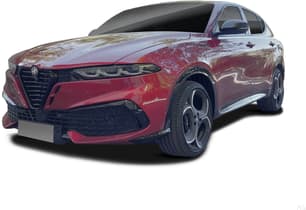
This is the first hybrid Alfa Romeo, and its most efficient model yet - two things those historically loyal to the brand might be hesitant to embrace - but like the Giulia and Stelvio it joins in the line-up, this plug-in hybrid Tonale is extremely important to the Milanese brand.
The Tonale, still a relatively new nameplate, must establish itself as a new ‘accessible’ point to the brand in the popular small SUV segment.
But this, the Veloce plug-in hybrid (PHEV), must prove that even in the more attainable small SUV segment, the brand can still produce something to gain the tick of approval from the rusted-on ‘Alfisti’ - Alfa Romeo’s loyalists.
On top of keeping Alfa’s existing fans happy, the Tonale must also contend with existing segment favourites like the BMW X1, Volvo XC40 and Audi Q3.
Alfa surely knows it won’t reach sales figures to contend with those mentioned, but what the brand can aim for is to be a sexier, desirable alternative.
So, is the Tonale PHEV the right piece of kit for the job?
There's a lot to like about the updated Leon line-up, but probably not by lots of people. It won't be a best-seller, Cupra doesn't need or even want it to be. What it will do is offer something different, and in the case of the Sportstourer something very rare.
The S and VZx will face stiffer competition in the hatchback markets, primarily from Volkswagen, Audi and even Skoda, and it's hard to pick an area where they really stand out from the competition, apart from the unique styling. Not that they aren't pleasant cars to drive, it's just a crowded market.
Which is why the Sportstourer, especially with its plug-in hybrid powertrain, has a chance to be something that really sets Cupra apart from its rivals. Dynamic, efficient and different, it won’t fit in - and that’s exactly what the brand is hoping for.
Note: CarsGuide attended this event as a guest of the manufacturer, with meals provided.
If you’re an ‘Alfa Romeo person’, or even just an ‘Italian car person’, you’ve got this on your short list and there’s little I can say that will change your mind.
And you wouldn’t be making a bad decision if you did pick up a Tonale.
But if $80,000 sounds like a lot for a small SUV and you still want something that looks stylish and feels special, the mild-hybrid Tonale Veloce should do, if the likes of the X1, Q3, or XC40 don’t scratch that left-of-centre itch.
And a fun small SUV? A Mini Countryman JCW, Audi SQ2 or VW T-Roc R are all different sizes, but all more powerful than the Alfa and all fall below the $70,000 mark.
But, if you’re keen on that plug-in hybrid drivetrain and have a day-to-day lifestyle that’ll allow you to make the most of its electric range (and most major city-dwelling Australians do to some extent), then the outlay might just be worth it to be able to check out the Tonale in your garage or driveway every day.
Design is a key tenet of Cupra’s ethos, because while it may share Volkswagen mechanical DNA, the Spanish brand wants to really stand apart when you look at or sit inside the Leon.
While it may be the same size as a VW Golf, it certainly doesn’t look or feel like one. Yes, there’s the typical Volkswagen build quality to the fit and finishes, but overall it has a unique Spanish style to it.
On the exterior, Cupra has given the Leon a major visual overhaul with the front end featuring a new-look grille, bumper and headlights. At the rear the tail-lights have been redesigned and now incorporate the logo into a single horizontal light bar that runs the width of the rear.
Inside there’s some new materials, but the most notable change is the introduction of a 12.9-inch multimedia screen. Ambient lightning available on all three models helps to highlight the cabin design.
If Alfa any traditionalists are hesitant to embrace the Tonale’s hybrid drivetrain, surely the Tonale’s styling has the opposite effect.
Small SUVs can fall victim to trying to look too much like a hatchback, or being plastered with lots of little trim details to break up large areas. The Tonale, on the other hand, looks like an SUV regardless of size, and its styling elements are decidedly restrained.
Most notably, at the front, Alfa Romeo has employed the ‘scudetto’ shield-shaped grille and horizontal lower grilles to form the ‘trefoil’, a face as familiar as BMW’s kidney grille or the Porsche 911’s round headlights.
The aforementioned ‘3+3’ headlights are sleek, and somewhat mirrored by similarly styled tail-lights that flank a light bar across the middle of the boot. Badging is minimal, the ‘Tonale’ on the rear in a cursive ‘Alfa’ typeface and the small ‘Veloce’ lettering found only on the front three-quarter panels.
The 20-inch wheels are so Alfa Romeo in their ‘teledial’ circular design, though all three wheel options for the Tonale fit into this theme. In a car park or on the driveway, they’re certainly eye-catching to those not expecting them - a friend said upon sight of this test car, "Look at the wheels. They’re silly! I love them!".
Inside, the cabin space isn’t too ‘busy’ with visual elements, though some of those that are there - the row of buttons for climate control or the multimedia screen, for example - are possibly a little too simple. The buttons could be from any old car, and the screen looks like a ‘tacked on’ rectangle.
Just about everything else looks suitably restrained but relatively elegant for a small SUV, though, with elements like the steering wheel remaining rather simple and (in modern terms) timeless. The paddles behind it are a bit of visual theatre, too.
Like the exterior, the interior adopts some circular cues like the air vents, door speakers, DNA drive mode dial, and even the cowl over the driver display.
The second row is a little more spartan, with little in the way of visual ‘wow’ and a disappointingly basic vent (albeit adjustable in two different directions) and USB ports mounted in hard grey plastic.
For the most part, the interior looks quality, and with relatively minimal hard or scratchy plastic, feels it too.
While we’re talking about two different bodystyles here - hatch and wagon - the front seats are the same. So you are treated to Cupra’s stylish but thoughtful layout, which looks nice but also has good practicality.
The seats themselves are comfortable, even after extended periods behind the wheel, while there’s cupholders, sizeable door pockets, a lidded centre console box and a wireless smartphone charging pad.
The previously mentioned 12.9-inch multimedia screen dominates the centre console, sitting proudly at the top of the fascia. Unfortunately, Cupra (like Volkswagen) has fallen to the modern trend of ‘touch controls’ rather than physical buttons.
Not to sound like an old man yelling at clouds, but these touch-sensitive sliders are simply not as user-friendly, especially in a moving vehicle, as a traditional physical button or dial. While the multimedia system is easy to use, especially with Android Auto or Apple CarPlay fully integrated, adding dials for the stereo (on/off and volume) and the climate control would have been great.
Otherwise, the 12-speaker Sennheiser sound system with subwoofer and 390W amplifier sounds great, offering a premium in-car entertainment experience to match the Cupra’s price and positioning.
As for space in the back, which is obviously where the hatch and Sportstourer vary. There isn’t a lot to split them in terms of passenger space. These are both small cars, so neither offer the kind of room you’d get from an equivalent-sized SUV. The real difference is the cargo capacity, the hatch pair offer 344L (or 888L with the rear seats down) whereas the Sportstourer has a more generous 470L/1045L.
Inside, the Tonale feels relatively spacious for a small SUV, with possibly more places to put things than you might expect from a traditionally enthusiast-focused brand.
In both front and rear seats, no part of the body or console impedes on passenger space - though the door armrests feel like they're a little far to comfortably rest an elbow on - and nothing gets in the way when reaching controls or the centre console.
Ergonomically, everything falls well to hand and no far reaches are really required, though the cupholders in the centre are a little narrow for some relatively normal-sized cups or bottles, and have rubber grips inside that require a little extra pull to retrieve items from.
Other options for bottles include the door pockets, or for a small bottle even the centre console bin is quite deep (albeit narrow).
Smartphones, even fairly tall ones, will rest securely in the angled - a nice touch - wireless charging bay, though while having the phone in a position it won’t slide out from is a plus, angling a phone screen to be visible to the driver might be too tempting for some. It is, mercifully, a little obscured by the gear shifter.
On controls, the steering-wheel design hasn’t changed for more than half a decade which, honestly, is so, so fine. Really, Alfa’s steering wheel has few buttons including the engine start, a relatively timeless (read: simple) visual style, and a thin rim with moulded thumb rests that encourage 9-and-3 hand positions.
The buttons on the wheel are easy, clear, and feel nice, and controlling the driver display is relatively easy as there aren’t really sub-menus to get lost in.
The main multimedia screen is also relatively well laid out, marking a nice step up from previous Uconnect systems (Jeep and Fiat owners will also know), though the connectivity with wireless phone mirroring, Android Auto in my case, was a little laggy and dropped out occasionally, seemingly in the same spot on the same Melbourne CBD street during my commute each morning.
The downsides are relatively few on the practicality front, but there is another: the boot space in the hybrid suffers due to the battery space needed, so 500 litres for the non-plug-in Tonale variants is down to 385 litres for the PHEV.
That’s still less than an electric Volvo XC40 Recharge (claimed to be 418L), though fortunately it grows to a spacious 1430 with the seats folded down, and is accessible via an automatic electrically opening boot door.
Another important point, while we’re in the boot, is the lack of spare tyre. Instead, a repair kit is provided - something those who enjoy a road trip might lament.
Knowing that hatchbacks and wagons aren’t big sellers and Cupra’s desire to stay boutique rather than mainstream, the line-up is relatively simple.
The Leon S kicks off the range at $46,990 (all prices listed exclude on-road costs) and comes with 18-inch black and silver alloy wheels, LED headlights, keyless entry and ignition, heated sports bucket seats, tri-zone climate control and a six-speaker sound system with Apple CarPlay and Android Auto.
The Leon VXz starts at $64,990 and includes 19-inch black and copper alloy wheels, multi-link rear suspension, adaptive dampers, front locking differential, upgraded brakes, quad exhaust and Cupra drive modes. There’s also leather-appointed seats and a 12-speaker Sennheiser sound system.
The VZe Sportstourer completes the line-up priced at $69,990 featuring unique 19-inch black and copper alloys, LED headlights and tail-lights, a power tailgate with handsfree opening and black roof rails. Inside it gets leather-appointed sports seats, heated front seats and steering wheel, tri-zone climate control, native navigation, Apple CarPlay and Android Auto plus the 12-speaker Sennheiser stereo.
Whether the Alfa Romeo Tonale plug-in hybrid is expensive depends on how you frame it. For a small SUV, it’s fairly pricey, but for a premium PHEV, it’s on the more budget-friendly end of the scale.
At $78,500 before on-road costs for a Tonale Veloce PHEV, the plug-in is nearly $20,000 more expensive than the Veloce ‘mild-hybrid’ (MHEV) at $58,900. The test car (pictured) for this review also has two cost options, the Alfa Red paint being $1990 and the 20-inch grey alloy wheels for $1500.
So, $81,990 is a lot for a small SUV, but it’s still about the same price as a Peugeot 508 PHEV and less than a top-spec Mazda CX-60 PHEV.
Alfa Romeo says the difference in price between the Veloce MHEV and PHEV isn’t as broad as it seems just due to the drivetrain, as the PHEV scores a ‘Lusso pack’ as standard rather than being a $4500 option for the MHEV.
That pack is where a few of the goodies in this Tonale come from, such as the black leather seats adorned with Alfa-badged headrests - eight-way electrically adjustable with heating and cooling in the front - plus a heated steering wheel and a 14-speaker Harmon Kardon sound system.
A couple more features are exclusive to the Veloce PHEV, however, like the sunroof and the chrome finish on its dual-exit exhaust tips.
Standard across the range, however, is the 10.25-inch touchscreen for the multimedia system, running Stellantis’ Uconnect 5 operating system with an Alfa-specific skin, as well as the 12.3-inch ‘Cannochiale’ TFT driver display, plus wireless phone connectivity with Apple CarPlay and Android Auto, plus a wireless device charger.
Other functional standards are the ‘3+3’ LED Matrix headlights, visually inspired by past models like the rare Alfa Romeo SZ coupe, plus adaptive ‘driving beam’ and dynamic indicators.
The three Leon models all feature a different powertrain, as each is targeting a distinctly different buyer.
The Leon S is powered by a 110kW/250Nm 1.5-litre turbocharged petrol engine with mild-hybrid assistance.
The Leon VZx gets a more potent 2.0-litre four-cylinder turbo-petrol engine that makes 221kW/400Nm, to put it right at the heart of the hot hatch market.
The Leon VZe Sportstourer manages to combine efficiency with performance, with a 1.5-litre turbo-petrol engine paired to an electric motor to make an efficient 200kW and 400Nm.
The one thing all three have in common is a seven-speed dual-clutch transmission and front-wheel drive.
Engaging driving is key to an Alfa Romeo justifying being somewhat on the pricier end of the cost spectrum, so numbers like ‘208kW’ for a total system output in a small SUV are welcome to see on paper.
The Tonale’s 1.3-litre turbocharged petrol four-cylinder engine alone makes 132kW and 270Nm, aided by an electric system outputting 90kW and 250Nm. The 208kW is its total useable peak, with Alfa not stating a peak torque figure, but a 0-100km/h claim comes in at a fairly impressive 6.2 seconds.
That’s helped by the Tonale’s all-wheel-drive nature, the front wheels driven by the engine via a six-speed torque converter automatic, and electricity powering the rears.
Naturally, the three different powertrains provide three very different fuel economy numbers.
The mild-hybrid system in the Leon S allows it to use just 5.4L/100km, which provides a theoretical range of up to 833km thanks to its 45-litre fuel tank.
The VZx is the thirstiest member of the range, not surprisingly, using 7.6L/100km. With its 50-litres tank it has a theoretical driving range of approximately 650km.
Finally, the Sportstourer VZe manages a claimed 0.4L/100km on paper, thanks to its 20kWh battery providing up to 121km of electric-only driving range. Obviously achieving that claimed figure in the real world is incredibly difficult (as it is with any PHEV) but we still managed to use just 2.4L/100km on our mostly extra-urban test drive, which is still a good return.
A 42.5-litre petrol tank and a 15.5kWh lithium-ion battery combine to provide an electric driving range of 60.5km that’s backed up by the ability to charge or save power for when it’s needed by letting the internal-combustion engine (ICE) kick in.
And while this has the potential to mean essentially no fuel is used in short-run, day-to-day driving, anything resembling a longer trip means you’re unlikely to reach the kind of efficiency figures Alfa Romeo claims.
The official combined fuel consumption figure for the Tonale PHEV is 1.5L/100km, though achieving this would require stopping and recharging the battery every 100km of driving, and the driving would need to be in perfect conditions for battery range - i.e. relatively low speeds.
The Tonale PHEV is efficient, yes, but it’s not ‘1.5L/100km efficient’ in the real world if you need to take a drive longer than a standard work day with maybe an errand or two.
After 23 kilometres of real-world driving, the indicated battery range dropped from 65km (odd given Alfa’s spec sheet provided claims a 60.5km range) to 30km, an indicated drop of 35km.
A 12 km discrepancy between over just 23km of standard driving isn’t ideal, though the trip included some highway driving - not an electric drivetrain’s best stage.
Alfa Romeo says a household-style 3.0kW charger should fill the battery from empty in 5.5 hours, while a ‘fast’ charger at 7.4kW should take 2.5 hours via the Type 2 charging port.
Obviously there are three very different variants in the Leon range, with three different powertrains and two different body styles, and yet there is a familiar feeling between all three when you’re behind the wheel.
This is arguably the ‘most Volkswagen-y’ element of the Cupras, with the solid, stable Volkswagen underpinnings coming through. This is, of course, not a criticism, but rather highlights the positive connections between Cupra and its parent company, which has allowed it to make an immediate impression on the Australian market.
However, it also means the Leons feel so familiar that they don’t leave you with a unique impression and driving character.
For example, the VZx is almost too good, too quick and too clinical. It lacks the excitement and engagement rival hot hatches offer, notably the Hyundai i30 N and Honda Civic Type R, but instead compensates by just being really capable.
Obviously, that may not be seen as a negative by everyone and for those who want that sort of engaging, dare I say ‘fun and edgy’, driving experience the Leon VZx may not be precisely what they are looking for. Still, the engine is potent and even the lack of all-wheel drive doesn’t dampen its performance abilities too significantly compared to the likes of a VW Golf R or Audi S3.
The Leon S offers a different proposition, a warmed up hatch, rather than something hot. On that front it delivers, providing a well-mannered drive but without the punch of the VZx.
The Sportstourer is arguably the pick of the range, with its combination of sharp driving dynamics and very efficient powertrain. At no point do you feel like Cupra compromised its sporty intent to make the Sportstourer save fuel. Instead, the PHEV powertrain offers plenty of performance when you need it but is otherwise quiet and efficient the rest of the time, helping it to sip fuel at a much lower rate than its Leon hatchback alternatives.
This might be the make-or-break topic for a select few Alfa Romeo customers - is the Tonale fun to drive?
Yes, thankfully.
Where the mild-hybrid was sometimes criticised for being slightly underwhelming for a car wearing the snake-adorned badge from Milan, the extra power, all-wheel-drive grip and electric torque delivery make the Tonale feel spirited enough for a sporty-leaning small SUV.
The DNA dial really does come into play plenty, too.
D, for dynamic, is pretty much reserved for when you’re actually ‘driving’ the Tonale - its stiffened suspension and relatively greedy power draw isn’t for low-speed commuting or daily efficiency.
N, or natural, is best for most long-ish commuting or trip situations, particularly highway driving where relying fully on the battery range isn’t ideal, as mentioned.
A, for advanced efficiency, is the ‘EV mode’ and best suits anyone whose daily commute takes them between urban or suburban areas which can be done under EV driving, though it can be used up to 206km/h.
If you don’t mind the petrol engine kicking in on occasion, leaving ‘natural’ to its own devices will result in some relatively frugal driving - a week of testing, commuting, filming and enjoying the Tonale used less than a tank of fuel, including one round trip of more than 140km.
Commuting in the Tonale proved comfortable enough - the steering is light and the dual-stage valve suspension in its softer mode combined with the electric drivetrain resulted in a calm and controlled feeling.
Its suspension soaks up bumps well, though a consistently uneven road surface can feel a little jittery (though not harsh or crashy) after a while.
Getting more dynamic (yes, the D on the dial), however, brought out some interesting characteristics of the Tonale. That light steering is paired with a quick rack (a 14.8:1 ratio, or two-and-a-half turns lock to lock), meaning the Tonale is easy to turn in hard, and a 53F/47R weight distribution provides enough balance (paired with a low centre of gravity thanks to the battery) to keep on top of the small SUVs movements.
All four wheels being driven under its ‘dynamic’ hybrid mode means grip and acceleration in cornering is plenty useful, though braking coming into the corners via the Tonale’s ‘brake by wire’ system could be a little more feelsome.
The gearbox is very eager under acceleration, too much so for commuting, but if it doesn’t suit your needs even for spirited driving then the manual mode is there.
It’s worth noting that those huge brushed alloy shift paddles come into play here, though being attached to the column steering rather than the wheel presents a key ‘pro’ and ‘con’ each: the paddles are always in the same place, just not always in relation to your hands.
The Cupra trio come loaded with plenty of safety features including 10 airbags for excellent passive protection plus autonomous emergency braking, front and rear cross-traffic alert, blind spot warning and driver fatigue monitoring.
For convenience and safety there’s also adaptive cruise control, front and rear parking sensors and even self-parking.
As the Leon has had no major structural changes, the original 2021 five-star ANCAP rating still applies. However, it should be noted that ANCAP updated its testing protocols in 2023, so that five-star rating is different to a five-star rating applied since then.
With five stars from ANCAP, the Tonale is off to a good start on the safety front.
Its six airbags isn’t exactly class-leading, there isn’t one at front centre, for example, but the PHEV does have the full active and passive safety suite available on the Tonale as standard.
A series of features make the Tonale ‘level 2 autonomous’ including a front camera, lane-keep assist and traffic jam assist, the relatively standard adaptive cruise control, plus traffic sign recognition, driver behaviour warning, and, of course, AEB.
Blind-spot monitoring, side parking sensors, and a surround-view parking camera are standard on the Veloce, aside from the Ti.
All three Leons are covered by Cupra Australia’s standard warranty, which covers the first five-years/unlimited kilometres. Which is good, especially for a new and more premium brand, even if it’s obviously short of the best-in-market.
Servicing is required every 12 months/15,000km, whichever comes first, and Cupra is offering a servicing pack special until the end of 2025, of $1990 for five years. That works out to an average of $398 per year.
Cupra is expanding its dealer network in Australia too. The Leon drive event we attended began at the newly-opened Cupra Macarther in Sydney’s growing west. There’s also a new dealership at Melbourne’s Essendon Fields.
Of course, one of the key advantages that Cupra has over many other new brands to Australia is its Volkswagen/Audi connections, which allows its models to be serviced at those dealerships as well. That provides a much larger footprint for customers to find somewhere convenient to service their car, which cannot be underestimated.
Alfa Romeo has a relatively industry standard five-year/unlimited kilometre warranty for its models, and the Tonale falls under this, with five years of free roadside assistance thrown in, too.
Being a plug-in hybrid, the battery does have its own specific warranty, that being eight years or 160,000km, whichever comes first.
The first five services are priced at a maximum on Alfa Romeo’s website, listed at a top of $500 for the first (15,000km/12 months), $600 for the second (30,000km or 24 months, as the intervals go), while the third is $500, the fourth a whopping $1000 max, and the final capped price back to $500.