What's the difference?
It’s about time for a change. Since the beginning of the EV era, Tesla has been the dominant name, and not without good reason.
Tesla made electric cars popular, cool, and above all, accessible. To this day, the Model 3 and Model Y remain excellent purchases in their respective categories.
And yet, the tide seems to be turning. Many buyers haven't been thrilled by Elon Musk's antics, how popular the Tesla brand has become or maybe they never liked the look and feel of Tesla to begin with.
For those prospective EV buyers, it looks like BYD is set to be the next big thing in electric cars.
Offered at a far more accessible price-point, the Chinese brand still stands out with its distinctively styled vehicles and innovative features.
And the new car we’re looking at for this review, the Dolphin hatchback, could be the one to elevate the brand to the levels of popularity and recognition Tesla currently enjoys.
At the time of writing, it was also the most affordable electric car you can buy in Australia. But is it more than that? Read on to find out.
If you’re someone still convinced the newcomer Chinese brands don't have what it takes to shake up the Australian new car market, this might just prove you wrong.
It’s the 2025 XPeng G6 Long Range, and it’s a lot like the Tesla Model Y, only cheaper – and, in some ways, much better.
Don't believe me? Read on and I'll prove it.
Chinese manufacturers have been impressing us lately with the strides they’ve been making, and BYD is no exception with its Dolphin.
Not only does this hatch help bring the price down for prospective EV buyers, but it leaves a solid impression of a cohesive, well-built car, which is also quite a bit of fun to drive.
It’s not the fastest, nor is it the most practical, and there are a handful of downsides to its design and software, but when it comes down to it, this is simply a great value entry-level electric car.
You never know quite what to expect when you jump into the first model from a brand-new brand, but the XPeng G6 was a pleasant surprise. And at this price, with these features, it should really give Tesla Model Y shoppers something to think about.
You wouldn’t know it in Australia, but BYD has a huge and diverse range of vehicles with lots of different styling approaches in its home market of China.
The cars we get here, though, consisting of this Dolphin hatch, the Atto 3 small SUV, and the upcoming Seal sedan all seem to share more or less the same curvy, futuristic theme.
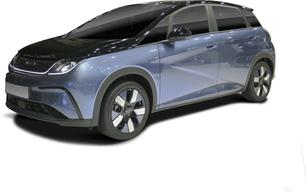
Contemporary touches on the exterior of the Dolphin include the bar light and full ‘Build Your Dreams’ typeface embedded in the rear, the blocky gloss black alloy wheels (17-inch on the Premium we tested), the two-tone colour scheme, and of course, the grille-free face.
Short overhangs and a tall body seal the EV deal, with the Dolphin looking closest in its aesthetic to something like the Volkswagen ID.3 than anything else on the market. It perhaps won’t be for everyone - it’s a little more experimental than the more conventional look worn by the MG4 - but then, for others this distinctiveness may be a selling point.
The interior look and feel is the biggest surprise. Somehow, the Dolphin, despite being more affordable than its larger Atto 3 sibling, feels a cut above when it comes to its design theme and build quality.
The weirdly organic touches designed to mimic muscle fibres in the Atto 3 have been traded out in favour of something a bit slicker.
I really like the material choices here. The use of neoprene across the lower half of the dash, in the doors, and down the centre of the seats feels a lot less pretentious than the standard synthetic leathers you usually get at this price-point, and there’s an agreeable mix of plastics as well as gloss and matt finishes.
The nods to this car’s name which are present are a bit more toned down and fit with the design in a more subtle way.
The floating door handles, designed to resemble a fin, are a much nicer piece than the weird rotary ones in the Atto 3, and the wavy touches across the top of the dash aren’t too in-your-face and add an element of intrigue. I like it much more than I expected to.
It’s clear this space is designed around the giant multimedia panel, for better or worse. It looks spectacular, it’s nice and sharp, and the software, which looks as though it’s trying to emulate Tesla, does a pretty good job.
It’s quick, sharp, colourful, and has nice large iconography to jab at while you’re on the move, although some of the driving settings are ambiguously labelled and require clicking through to a sub-menu to alter. You’d get used to it, but it isn’t as slick as a Tesla operating system.
It also rotates, because of course it does, although one quirk I found with this is the polarised coating on the screen made it impossible to see when in portrait mode if you were also wearing polarised sunglasses.
Also, Apple CarPlay doesn't work in portrait mode. A gimmick? You decide.
The floating physical rotary controls jutting out below are a also a brilliant little piece of design. On one side you have your gear shifter, and on the other you’ve got your volume control, between them there are core functions, an on/off switch and an auto button for the climate, as well as the hazard light and drive mode controls.
It would be nice to also have a fan speed and temperature toggle, as these functions can only be used through the touchscreen, but there are worse offenders for clumsy climate controls on the market.
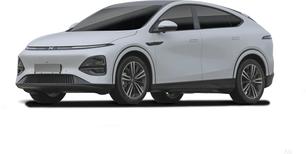
There’s more than a little Tesla Model Y in the XPeng’s exterior design, with the two sharing the same kind of soft-edged, swept-back SUV styling.
It helps make the XPeng look familiar and inoffensive, and while I wouldn’t go so far as to call it ground-breaking, I think it has enough exterior flourishes to break up the body work, and I don’t mind the way it looks, and the way it sits on those big alloys.
Inside, it’s a spacious and pretty stylish space. This giant screen is super responsive, and is easy enough to navigate, with the key functions (like climate) glued to the bottom of the screen so you don't have to paw through menus to access them. The idea begins to fail when you have Apple CarPlay or Android Auto active, though, as you have to revert back to the car's home screen to access anything.
The XPeng uses its steering wheel controls to access air-con fan and temp controls as a kind of shortcut, but confusingly they change to distance adjustment when you’ve got the cruise control on. An easier, and much better solution would be to bring back buttons.
I also don't love the stalk-style gear selector, which doubles as a cruise control activator, and, with a double pull, as your autonomous helper. It just feels super old-school in a vehicle this modern.
What is a massive win though is the driver screen. Tesla fans can scream minimalist aesthetics all they want, but the drive experience is simply better when you can see your speed and other key info right in front of you.
The clever design bits don’t end with the controls and themed motifs, either. While the Dolphin’s cabin feels a bit smaller than many of its rivals (because, physically, it is), efforts have been made to make it a versatile space.
There are plenty of little storage areas throughout. There’s the floating one below the touchscreen, which suits wallets and sunglasses. There’s one with a roll-out cover set low below the controls which is good for smaller objects you don’t want moving around the cabin.
A large cubby is located underneath the armrest between the two seats for bigger objects and a slick wireless phone charger cut out from the top.
The two centre bottle holders are a little small, as are the cut-outs in the doors, so if you’re negotiating with an XL takeaway soft drink you might run into trouble.
The dark theme for the interior in our car doesn’t help the more closed-in feel, but the standard panoramic fixed sunroof (mercifully with a rolling shade) helps to keep the space airy.
I found it easy to set up my driving position, another clever touch being the little digital instrument panel perched on the steering column, so no matter how you adjust it you can always see it.
I was a little concerned the rear seat would be tiny, because this car doesn’t look big from the outside, but I was most definitely wrong.
Behind my own seating position, at 182cm tall, I had leagues of knee room and plenty of space for my feet thanks to the flat floor. I also had sufficient but not stellar headroom, and the soft-touch materials continue into the doors and seat trim.
I will say, the abundance of synthetic leather is much more evident for rear passengers, but it feels like a minor complaint.
Again, the bottle holders in the doors are tiny, but at least the ones in the drop-down armrest are generous. The middle seat is very useful thanks to the flat floor, although there are no adjustable air vents for rear passengers.
The backs of the front seats have a variety of pockets in different shapes and sizes, and there are USB-C and USB-A ports on the back of the centre console, alongside a bizarre centre bottle holder which is on an angle.
Boot space is 345 litres if you move the false floor to its lowest position. I was just able to squeeze in the three-piece CarsGuide luggage set with a bit of fiddling around.
With the second row down, room expands to 1310L, and you can bring the false floor up in the boot to make the load area flat.
The space underneath is quite good for storing charging cables and such, but keep in mind the Dolphin doesn’t offer additional frunk storage.
What it does offer is a vehicle-to-load adapter, which lets you power household appliances via its external charging port. Neat, and rare at this end of the EV market.
At 4753mm in length, 1920mm in width and 1650mm in height, the XPeng fits into the fast-growing mid-size electric SUV space.
And it ticks a lot of practicality boxes, like with its 571-litre boot, swelling to 1374 litres with the seats folded. But its real party trick is in the back seat, where the space is properly massive.
I have another mid-size SUV, powered by a petrol engine, at the moment and our baby seat presses against the back of the passenger seat. In this it feels like I could fly a kite in the space between them.
It’s the same for passengers, too. Honestly, the real estate on offer is massive, and that includes for the middle-seat rear passenger, where the lack of a bulky tunnel eating into legroom means adults can sit there comfortably.
There's a pull-down divider separating the back seat that's also home to two cupholders, and there are twin USB connections, as well as air vents (though no temp controls).
There's no spare tyre, though, which means fiddling with the repair kit should you get puncture, or waiting for roadside assist.
Yep. This is the new cheapest electric car you can buy in Australia. This title is a frequently moving target, but again, at the time of writing, the entry-level Dolphin variant, at $38,890, before on-road costs and state-based incentives, undercut the MG4 by just $100, and the GWM Ora by $1100.
Importantly, its starting price is now in the realm of relevant combustion rivals. For similar money, you can hop into a high-spec Corolla (ZR Hybrid $39,100) for example, so this is the first time electric cars have become so affordable for the average consumer.
There are two Dolphin variants for now. The entry-level Dynamic, and the top-spec Premium. Both share more or less the same standard equipment levels, although they are differentiated by having different battery sizes and electric motor outputs.
You can’t talk electric car value without talking range, but thankfully, despite its low price, the Dolphin delivers on this front.
The base car scores a 44.9kWh battery, granting it a 340km WLTP-certified driving range, while the top-spec Premium ups this to a 60.5kWh unit, delivering a more substantial 427km range.
The entry battery is more than enough for city commuters, while the larger battery is enough to suit intercity freeway drives.
There are also plenty of longer-range EVs on the market, the Polestar 2 and Tesla Model 3 being chief among them, but for a vehicle at this price and in this market segment, the Dolphin is a huge improvement on some mainstream offerings, like the Mazda MX-30 and Nissan Leaf which can’t offer the same price-to-value ratio.
A lot of BYD’s ability to provide such an appealing price and driving range is down to its battery technology.
Unlike other automakers which need to buy batteries from suppliers, BYD designs and builds its own batteries, using an LFP chemistry which is cheaper and uses fewer scarce materials while offering economies of scale as well as the exact right size and form factor for its vehicles.
If this leaves you thinking the Dolphin must be sub-par when it comes to standard inclusions, you can think again, because this car also delivers with 16-inch alloys, LED headlights and tail-lights, a massive 12.8-inch multimedia touchscreen with built-in nav as well as Apple CarPlay and Android Auto connectivity, a wireless phone charger, electrical adjust and heating for the front seats, keyless entry with push-start ignition, climate control, and a comprehensive suite of active safety items.
Not bad at all, and the interior blend of neoprene and synthetic leather feels a bit nicer than the base MG4's cabin, for example.
The Dolphin might be as cheap as it gets when it comes to an electric car, but the value on offer here speaks for itself.
Okay, first things first – what the hell is XPeng? It's been around for about 10 years in China, but only made its way to Australia last year. It was founded by some former car company execs and tech tycoons — one of whom is telecommunications billionaire He Xiaopeng, which is where that name comes from.
Anyway, this one is the XPeng G6, which launched in Australia with two trims – the Standard Range, which is $54,800, before on-road costs, and the one we’ve tested, the Long Range, which is $59,800. The difference is in the battery size, of course, but we’ll get to that in a minute.
As of now, the new Model Y can be ordered for $63,400 for the Standard Range or $73,400 for the Long Range, which makes the XPeng a whole heap cheaper.
Outside, you get LED lighting all around (including the DRLs), a massive glass roof, auto door handles, an auto-opening boot, a V2L connection, which allows you to use your XPeng’s battery to power whatever you plug in and big 20-inch wheels wrapped in Michelin rubber.
You also get some cool high-tech features, accessed through the XPeng app, like the ability to drive your car out of tight parking spots remotely.
Inside, there are synthetic-leather seats that are heated, a heated steering wheel, dual-zone climate, a massive 18-speaker sound system (with speakers in the headrest), wireless charging and two very handy screens — a responsive 15-inch central screen with Android Auto and Apple CarPlay, and a 10.2-inch digital dashboard.
There’s also more safety stuff than you can shake a crash test at, but we’ll come back to that in a second.
There’s the choice of two powertrains for the Dolphin. Both are single-motor front-wheel drive set-ups.
The base Dynamic can make use of 70kW/180Nm which sounds underpowered to me, but the car we tested for this launch review was the Premium which offers a much healthier 150kW/310Nm.
As well as the increase to battery capacity the Premium upgrades the suspension to a rear multi-link set-up.
While the base car seems like such a value buy, the increase in power, ride quality, and range seems to justify stretching to the Premium if your budget allows.
This G6 is a rear-wheel drive affair, with a single electric motor housed at the rear axle. It produces 190kW and 440Nm in Standard Range form or 210kW/440Nm in Long Range guise, which don’t sound like massive numbers — especially given the 2.0-tonne-plus weight of this XPeng – but it gets up and moving just fine.
The 100km/h sprint is a claimed 6.2 seconds, while the top speed is 200km/h.
As previously mentioned, each variant also gets its own battery capacity. The entry-level Dynamic offers a 44.9kWh battery and 340km of driving range, while the top-spec car offers a 60.5kWh unit with a driving range of 427km.
Charging on a fast DC unit maxes out on 60kW for the Dynamic or 80kW for the Premium.
This sounds slow, with many rivals offering in excess of 100kW charging at a minimum, but because the Dolphin’s battery sizes are so trim, it still means an 80 per cent charge will arrive in a little over half an hour.
On the slower AC charging standard, the max speed is a disappointing 7.0kW. For a fully electric car, we prefer to see at least 11kW as it makes it worthwhile to plug-in to an AC unit at a shopping centre to add roughly 70 - 100km of range an hour.
Because the Dophin is also quite efficient, though, you can still expect about 50km an hour to be added on this charging standard.
Official energy consumption for the Premium as-tested is 14.2kWh/100km, and we saw an impressive 14.1kWh/100km on our brief test program, making it one of the more efficient EVs I’ve ever driven.
The Long Range version of the G6 nabs a 87.5kWh battery (compared to 66kWh in the Standard Range), unlocking a claimed driving range of 570km.
The official power use figure is 17.5kWh/100km, but I did a fair bit of driving on all sorts of roads and my number was more like 14kWh.
When it does come time to charge, the G6 is set up for 280kW DC fast charging which means, should you find the right fast charger, a 10-80 per cent charge should arrive in just 20 minutes. Home charging will take a lot longer, of course – we’re talking overnight plugged into a regular wallbox.
The Dolphin is immediately impressive. From the get-go I was greeted with a feeling of quality from the car in ways I didn’t expect. The steering feels nicely balanced and not too artificial like it can be on some EVs, while the interior is refreshingly ergonomic.
The ride might be the Dolphin’s most impressive trait, with a feeling of balance across both axles, and a spritely feel to the whole car.
It is trim for an EV, with a kerb weight of 1658kg, which no doubt helps the steering feel, and the efficiency.
As it is, I didn’t experience the kind of crashing and wallowing many EVs suffer from on larger bumps, and smaller bumps seemed to be filtered out with ease.
It even feels nicely balanced in the corners, pairing nicely with the great steering feel which is not something we’ve come to expect from Chinese cars.
The motor is also willing, with software tuning keeping power delivery on the right side of overwhelming, although the warm-hatch equivalent's seven second 0-100km/h sprint time is a hint at what it’s capable of.
Unfortunately, it is let down by a pretty sub-standard factory tyre package. The LingLong Comfort Masters are designed for the Dolphin, complete with little Dolphin markings on them, but are hardly inspiring for traction when you plant the accelerator or tip it into a corner with enthusiasm.
They are better than the pretty much no-name Atlas Batman A51 tyres which came on the Atto 3, but even MG has wised up to putting tyres from renowned manufacturers on its Australian-delivered cars.
The Dolphin is also easy to park, thanks to its excellent surround camera suite and tight footprint, but visibility out of the tiny rear window is limited and made worse by the huge headrests for the outboard back seats.
In terms of electric driving characteristics the Dolphin offers two levels of regen braking, one which is virtually non-existent, and another mild tune.
Surprisingly, there’s no single-pedal mode, and the Dolphin leans on blended braking more than some of its rivals. It feels a lot more traditional to drive in this sense, so may be well suited to someone hopping out of a combustion car.
The drive modes are quite dramatic, with 'Eco' mode limiting motor torque and even switching off the climate control, while 'Sport' will make bouts of wheelspin a bit too easy by upping the response time from the motor. I found it best to stick to the nicely-balanced 'Normal' setting.
Tl;dr? The Dolphin is impressive. It’s responsive, relatively light, and has a sense of quality to it through its great ride and decent handling. Not bad for the cheapest EV in Australia.
How much you love your time behind the wheel of the XPeng G6 comes down to what you're looking for from your mid-size electric SUV.
Speed and sportiness? There's not much of either. But it does serve up tons of space and technology, surprising refinement and a calm and cosseting ride.
And I think you can mount a pretty solid argument that all of that is pretty important in a mid-size SUV, more so than the ability to carve corners.
I did some solid driving in the G6, including a round trip from Sydney to the start of the NSW South Coast, taking in every road type and surface imaginable, and XPeng proved super comfy, pretty quiet and very, very easy the entire time.
Sure, it's not one of those EVs that makes the scenery blur when you put your foot down. Its outputs and acceleration are a bit more user-friendly than that. But it also doesn't ever feel underpowered, with the plenty of poke away from the lights and even some in reserve for freeway overtakes at 110km/h.
The steering, even in its 'Dynamic' mode, is fairly soft, and you can never magic away the weight of the XPeng in corners, where that compliant suspension does allow for some roll, but it also doesn't feel entirely disconnected from the road below in that disconcerting way some vehicles can.
So, if comfort is mission critical in your SUV space, the XPeng delivers.
Oh, and I know that big screens aren't that uncommon these days, but the multimedia unit in the XPeng is a treat. It's super fast, even when scrolling across maps, and it's relatively user friendly, too.
The Dolphin was recently awarded a maximum five-star ANCAP safety rating and is equipped with seven airbags and a robust list of active safety gear.
There’s auto emergency braking, lane keep assist, blind-spot monitoring, driver attention alert, rear cross-traffic alert, front cross-traffic alert, traffic sign recognition, and adaptive cruise control.
It’s one thing to have great active safety items, it’s quite another to calibrate them well so they don’t interfere with the driving experience.
The Dolphin does okay on this front. I found the lane keep system could occasionally be alarmingly heavy-handed, although it activates less than the very annoying system on my Haval Jolion long-termer.
The pre-collision alert also triggered several times due to parked cars on the side of the road, but turning down the sensitivity seemed to solve this problem.
Also included is an excellent 360-degree camera suite, ISOFIX points on the rear outboard seats, a ‘child presence detection’ system, which apparently sounds a warning if you leave a child in the back seat, and turns the air conditioning on if you ignore it, and there's even a tyre pressure monitoring system to top it off.
The XPeng G6 wears a maximum five-star ANCAP safety rating from assessment in 2024, owing mostly to a flood of active safety features that arrive as standard, including AEB (with pedestrian, backover, cyclist, motorcycle and crossing detection), lane departure warning, lane keep assist, speed sign recognition, driver monitoring and more.
But it could also lay claim to a unique record – the first Chinese EV in which the safety systems don't make you want to make you pull your hair out with their incessant chiming and bonging.
Only on the freeway, where an intermittent chiming incorrectly warned me I was leaving my lane, were the safety systems at all overzealous. Otherwise, they were entirely liveable.
If a crash is unavoidable, the airbag count runs to seven (dual front, front side, side curtain and front centre) and multi-collision brake is standard, to minimise the chances of a secondary crash following an initial impact.
The Dolphin is covered by a six-year or 150,000km warranty, which beats a lot of mainstream rivals for its duration, but not its distance.
In the EV segment it plays in, though, things are a bit tougher, as its primary Chinese rivals, GWM and MG, are offering seven year and unlimited kilometre warranty promises.
Service pricing is available all the way out to 96 months or 160,000km, averaging $299 per year for the duration, which is pretty good.
Many rivals are offering free servicing for several years, and there are also many electric cars which only need to see a shop once every 24 months or 20,000km, compared to the Dolphin’s more traditional 12 month intervals.
I'm scoring the regular warranty offering here, which is five years or 120,000km, with the battery covered for eight years or 160,000km. Keep an eye out for deals, though. At the time of writing XPeng was offering a 10-year warranty on both, for example.
Service intervals are 12 months or 20,000km. The cheapest individual service is $238, but over five years the total cost is $2064, averaging out to more like $410 per year.