What's the difference?
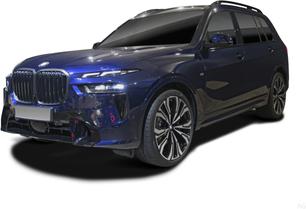
Large family-friendly luxury SUVs tend to be handsome in design but somewhat restrained. Until now. BMW has introduced a major facelift for its flagship SUV, the six- or seven-seat X7. Emphasis on face.
The new X7 adopts the striking but controversial front-end from the new 7 Series sedan, but the big, bold SUV is hiding some rather significant changes under the skin. Aside from a beefier diesel that now comes with mild hybrid tech, there’s also a redesigned cabin, massively upgraded tech, more standard features, oh, and a price increase.
Things that have had a name change AFTER they’ve become famous…
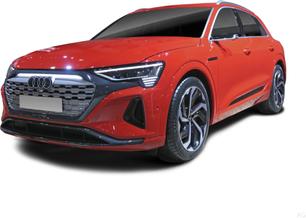
Okay… there’s Kanye West’s switch to Ye, Twitter’s rebranding to X and now this – the Audi Q8 e-tron.
As the brand’s first production EV, it used to be known simply as Audi e-tron. But that was confusing, because – Porsche Taycan-based GT and RS sports sedans aside – every electrified vehicle that the company has made before and since wears e-tron as a suffix.
Beyond new badging, the Q8 e-tron also brings a facelift and improvements underneath, to better challenge the BMW iX, Jaguar I-Pace and Mercedes EQC and EQE large electric SUVs, among others.
How does the Ingolstadt EV fare? Let’s find out.
When lined up against its direct rivals, the expensive X7 xDrive40d represents reasonable value for money.
It has a unique and bold look and a sumptuous, visually striking and well-appointed interior that has acres of space for family, friends, or for ferrying frequent flyers to the airport.
That wallop of performance from the big beefy diesel is the cherry on the top. This is how you do a mid-life update.
The Audi Q8 e-tron ushers in welcome improvements to an already likeable and capable large luxury SUV.
But it is also feeling dated compared to newer and fresher rivals like the BMW iX, isn’t as good to drive as the best, offers disappointing range for the size of the new battery, and prices are creeping up for what is essentially a half-decade-old EV.
The name change isn’t enough. What the Q8 e-tron really needs is a massive leap in its Vorsprung durch Technik in a rapidly evolving electrified landscape.
Very good… but far from great.
There’s quite a bit that’s interesting about the X7’s design. Especially looking at it front on.
BMW certainly took a bold step when it introduced its toothy grille design for the X7 and the 4 Series range.
But the Bavarian brand has made some even braver design moves recently by introducing a blocky front-end with split headlights on its new-gen 7 Series flagship sedan. That look has now found its way onto the face of the updated X7.
As with the 7 Series, it won’t be to everyone’s taste. But you can’t deny it has a lot of presence.
The tail-lights have been tweaked and look good, but the sheer size of the X7 - it’s 5.2 metres long and 1.8 metres tall - means there’s no disguising the fact that it is a big, boxy SUV.
Inside the update ushers in significant design changes. The old dash and cowl is gone in favour of the ‘Curved Display’ that connects the instrument cluster and multimedia.
New slimline air vents, LED backlit ‘X7’ graphics on the passenger side of the dash, and a new gear shift toggle that replaces the old shifter elevate the cabin and give it a much more modern vibe than the old X7 - one that’s in keeping with the excellent iX electric SUV.
The Q8 e-tron looks smaller than it actually is, with the SUV wagon’s length/width/height/wheelbase numbers measuring in at 4915/1937/1633mm/2928mm, respectively.
The Sportback version is slightly lower at 1619mm.
You’ll need a keen eye to spot the difference between the old e-tron and new Q8 e-tron, with almost all of the visual changes reserved for the front end.
For starters, there’s a new, two-dimensional four-ring logo that looks larger and flatter than before, sitting within a sleeker and slimmer grille treatment that now takes in the restyled headlights. Along with the redesigned bumper, the effect serves to broaden the SUV’s stance.
The effect also suggests improved aerodynamics, aided by small air foils near the wheel arches and a fully-clad underbody section.
Otherwise, aside from the odd inclusion of the make-model name on the B-pillar and minor trim updates out back, the Q8 e-tron keeps the same, contemporary appearance of its predecessor. Which is no bad thing.
And there are even fewer changes inside.
Regardless of the price point, a three-row SUV needs to be super practical and capable of family duties.
And if you want a BMW X5 but need a lot more space, this is the next logical step.
Let’s start in the front row. As mentioned, the new X7 gains the screen and tech set-up from other new BMW models like the iX and updated 3 Series. The Curved Display combines a 12.3-inch digital instrument cluster with digital speedo and a 14.9-inch multimedia screen.
You can customise the cluster layout and move things around on the multimedia screen, too. The latter is a touchscreen but you can also find what you need via the 'iDrive' controller in the console.
I have had some experience with this system in the iX and while it’s not without its flaws, it is a top notch system. There’s a lot to wrap your head around, but the use of app icons helps. And you can swipe through to your chosen screen.
It took far too long to work out how to find the trip computer, something that should be much easier to access, as well as a couple of other functions. And the climate controls are housed in the digital screen. I would always prefer a separate space with buttons for air-con.
But the graphics and displays - including the excellent head-up display - are excellent.
Other tech you get with the X7 includes the BMW’s 'Digital Key', which is an app that allows iPhone users to lock and unlock their car remotely, and BMW ID driver profile.
If you buy this car, just allow yourself some time to familiarise yourself with all that tech.
Elsewhere up front there’s a lovely new three-spoke steering wheel, and cute touches like the metal air vent toggles, black and metal touches and the choice of inserts.
The front seats are luxurious and comfortable and offer loads of side and thigh support. They have memory functions, too. There’s no shortage of headroom up front, either.
Storage-wise, the door will fit the largest of bottles, as well as other items thanks to generous door bins, while the central lidded box is also sizeable.
What about that second row?
The X7 xDrive40d usually comes standard with seven seats, but our test car was fitted with the $1500 captain’s chair option which drops seating capacity down to six people.
If you need the extra seating this is not the option for you, but it is great for families with bigger kids, and it would make for an excellent airport transfer car.
The seats are unbelievably comfortable and can be adjusted to suit your preference. They also have ISOFIX points and armrests.
Rear seat occupants have access to their own climate controls, air vents, USB ports, cupholders and ample door storage.
There is a massive amount of occupant space as well - stretch those legs out and enjoy it!
One of the X7’s selling points is that it is a genuine three-row SUV. That third row is not just for occasional use for very small children, like so many seven-seat SUVs. That row can be used every day.
Even with my six foot stature, I could easily climb in and out of the third row. That’s made even easier thanks to the mechanical seat functions.
Just hit the lever at the top of the second row seat and the motor moves the seat forward and up to ensure there’s a big enough aperture to get in and out of the rear seats.
You can also raise and lower the third row electronically via buttons on the boot wall - and they stow flush into the boot floor. Neat!
Once in the third row, there’s air vents, USB ports, bottle holders and storage and quite comfortable seats with more than enough leg and head room.
There’s even a third row section of the sunroof, operated from the second row. Lots of clever touches that people who use the third row will appreciate.
The boot has a few cool features, too, including a split tailgate.
You can even sit on the lower section - it can handle a load of up to 250kg - a perfect place to sit and watch the polo.
You can lower the suspension to aid loading larger items, and the X7 comes with a space-saver spare wheel.
Capacity is 300 litres with all seats in place, and I easily fit a pair of smaller suitcases in with that configuration. It increases to 2120L with the two rear rows folded.
More than merely good enough.
Entry and egress are easy thanks to a lofty ride height and wide-opening doors. Once sat, you’ll discover Audi has not changed anything much inside compared to the old e-tron. Frankly, very little needed to.
You’ll still find a strikingly stylish and upmarket cabin offering sufficient space for five people, a commanding driving position, superbly supportive front seats that are a boon when long-distance driving, plenty of storage options, ample ventilation and suitably moody lighting.
While not the most modern dash on the market when contrasted to the vast ‘hyper’ screens of some rivals, the Q8 e-tron’s remains very architectural in appearance and presentation.
Trim and material quality are certainly up to brand expectations. Practicality remains a priority, with lots of storage areas within the dash, console and door cards.
There are no fewer than three screens – a 12.3-inch digital instrument cluster Audi calls 'Virtual Cockpit', a 10.1-inch central multimedia display with haptic feedback and an 8.6-inch unit for climate control.
While they may seem daunting at first, a little familiarisation means most users will find them easy to operate.
Kudos, too, to the super-clear markings in the instrumentation, as well as the very satisfying tactile sensations of using the quality switchgear and controls. Typical Audi thoroughness here.
The same applies to the Q8 e-tron’s roomy and pleasantly-presented back seat area, with intelligently designed seating offering a nicely angled backrest as well as supportive cushion.
Three people can fit across without too much pain, though two is better, as the folding centre armrest and other amenities like air vents and climate control systems can be better-accessed and enjoyed.
You can see, smell and feel where your money’s gone inside. This is a quiet, isolated and cocooning experience, whether cruising on the motorway or stuck in heavy urban traffic. As you’d expect from a luxury SUV.
About the only real jarring aspect are the $3500 virtual exterior mirrors, created to improve aero performance. Their door-mounted screens are set low, outside the natural visual eyeline of the driver, creating confusion and adding precious extra seconds of eyes not on the road ahead. They’re irritating to the point of frustration.
Otherwise, the Q8 e-tron gets the job done inside, with cargo capacity at a reasonable 569 litres in the SUV wagon and 528L in the Sportback. And there’s even a 62L tub in the frunk up front to store the cables that also come standard with the EV.
Audi interior and packaging expertise strikes again.
We are way out of Kluger and Sorento territory with the BMW X7. This is a bus for cashed-up families.
The upper-large SUV was introduced in mid-2019, but as part of the mid-life update, BMW has changed up the model grades. There are still two, but the xDrive30d and M50i have been replaced by the diesel-powered xDrive40d M Sport, and the performance-focused V8 petrol-powered M60i.
For the purpose of this review, we drove the 40d M Sport, which gets a power boost over the outgoing 30d - more on that in a bit.
As a result of the significant update, BMW has increased pricing on both grades. For the xDrive40d, it now starts at $174,900, before on-road costs, which represents an increase of more than $30,000 over the old 30d.
If you’re after a bigger dollop of performance, the M60i will cost you $205,900.
While the xDrive40d pricing seems steep, it undercuts a couple of other big luxury diesel SUVs including the Mercedes-Benz GLS400d ($179,500 BOC) and the Toyota LandCruiser-based Lexus LX F Sport ($176,091 BOC).
The most affordable diesel-powered version of the new-generation Range Rover starts from $226,806, so in that regard, the X7 40d is the best value in its class!
As well as the updated powertrain and in-car tech, the X7 xDrive 40d now comes with a hefty standard features list including metallic paint, 22-inch wheels, the M Sport pack, five-zone climate control, Harman Kardon 16-speaker sound system, a drive recorder, comfort seats, ‘Comfort Access’, roof rails, electric sunblinds, panoramic glass sunroof, digital radio, a head-up display, ambient lighting, wireless Apple CarPlay and Android Auto, and leather interior.
Our test car was fitted with a number of options that pushed the price to just under $185,000. The extras included huge 23-inch alloy wheels ($3500), BMW Individual 'Dravit Grey' body paint ($2400), a trailer tow hitch ($2500) and second row captain’s chairs ($1500).
Note that if you opt for that tow hitch, you’ll lose the ability to open the hands-free tailgate with a kick motion.
First thing’s first. The Q8 e-tron has very little in common with the existing Q8 petrol, diesel and SQ8 high-performance models.
These, along with the larger Q7, have internal combustion engines.
However, keep in mind all leverage variations of the same 'MLB Evo' architecture that first saw the light of day all the way back in 2015. So, no spring chickens here.
But as it currently also serves Bentley, Lamborghini and Porsche SUVs, we’re talking about a classy set of components, anyway. Plus, the pre-facelift model was only rolled out on the world market in 2019.
For now, only a single variant is here, known as the Q8 e-tron 55, meaning the previous, smaller-battery 50 and flagship SQ8 aren’t here yet. That will happen sometime during 2024.
As before, there’s the choice of a traditional SUV wagon or more-popular BMW X6-style Sportback SUV coupe.
Prices start at $153,900 (all prices are before on-road costs) for the former and $165,900 for the latter, and that’s a jump of nearly $8K and $9K respectively over their old e-tron-as-a-noun-rather-than-an-adjective predecessors.
At least the Q8 e-tron is well equipped.
On the safety front, you’ll find about 40 driver assistance systems, backed up by a plethora of cameras, radar sensors and ultrasonic sensors to help keep the SUV as secure as possible.
These include a 360-degree camera system, adaptive cruise control, lane-support systems, rear cross-traffic assist and Autonomous Emergency Braking (AEB).
More on safety further down below.
All models also include adaptive air suspension with a variable ride height range of 76mm, a drive-mode selector that switches between normal and sport settings, LED headlights with auto high beams, keyless entry/start, front and rear climate control, heated and powered front seats and adjustable regenerative braking paddles on the steering wheel.
There's also a head-up display, three digital screens including electronic instrumentation and a central touchscreen with haptic feedback, satellite navigation, Android Auto, wireless Apple CarPlay, digital radio, wireless smartphone charging, four USB-C ports, an electric tailgate with gesture control, roof rails and 20-inch alloy wheels – with a space-saver spare wheel to boot.
Plus, an undisclosed number of Launch Edition SUVs from $165,900 are also available, adding Audi’s S line exterior styling touches, 21-inch wheels, sports front seats, a racier steering wheel, electric steering column adjustment and more.
Note that the base Q8 e-tron 55 does not include leather upholstery (it’s synthetic material instead) or a sunroof as standard.
Pricing and spec, then, are generally in-line with the luxury Euro EV SUV competition, which is to say, a bit on the exxy side.
Let’s check out the changes.
The X7 xDrive40d is powered by a 3.0-litre, in-line six-cylinder turbo-diesel engine, that gets a boost in power - it pumps out 259kW of power and 720Nm of torque - 64kW/100Nm more than the 30d.
It now also comes with 48-volt mild hybrid tech, which uses an electric motor integrated in the eight-speed automatic transmission.
It drives all four wheels via BMW’s 'xDrive' all-wheel drive system and it is fitted with air suspension for a cushy ride. Towing capacity is rated at 3.5 tonnes braked or 750kg unbraked.
If you are keen on off-roading in the X7, it has a 221mm ground clearance, and a fording depth of 500mm, but maybe best to keep it on the tarmac.
Tech-overload alert. As per its predecessor, the Q8 e-tron 55 continues with two electric motors – one on each axle – for ‘quattro’ all-wheel drive.
Upgraded internals are said to improve efficiency substantially. Both are induction/asynchronous motors, mated to a single-gear two-stage ratio planetary transmission.
In the 55 model, the dual-motor set-up delivers a combined 300kW of power and 664Nm of torque, for a healthy 0-100km/h sprint-time of 5.6 seconds, on the way to a 200km/h top speed.
That’s impressive, given the lightest Q8 e-tron 55 tips the scales from 2595kg. That said, the Audi’s power-to-weight ratio is an equally strong 116kg/tonne.
Other updates include more direct steering, stiffer front suspension and retuned chassis controls.
Suspension is a five-link arrangement all-around, with adaptive air suspension featuring an electronically controlled with continuously variable adaptive damping system.
According to BMW, the official combined cycle fuel figure for the X7 40d is 8.0 litres per 100 kilometres.
Our fuel figure after nearly a week of mixed city, freeway and country driving was 9.0L/100km, which isn’t too far off the mark.
It has an 80 litre fuel tank and an approximate driving range of 1000km.
The good news is that the lithium-ion battery pack size rises from 95kWh to 114kWh, and is accompanied by faster DC charging capability, due to a jump from 150kW to 170kW.
While far from the class best, this cuts down charging times by a considerable margin.
The claimed driving range is 454km, while average consumption is a disappointing 25.6kWh/100km. The Q8 e-tron’s trip computer during our run in it recorded a mid-to-high 20s readout, by the way.
With a big plush SUV like this, you’d expect a comfortable ride. And for the most part, the X7 delivers that, while offering more than a bit of grunt, as well.
The X7’s height ensures a high driving position, and there’s plenty of glass for decent visibility.
Propelling a 2.5-tonne SUV could be a struggle for a lesser engine, but the meaty diesel offers ample torque and the mild hybrid set-up helps to reduce initial turbo lag significantly - that means it is responsive from a standing start.
I wouldn't have thought a vehicle of this size and shape was capable of a 5.9-second 0-100km/h time, but here we are.
As a result of all that torque and power, overtaking is a breeze - providing there is enough room on the other side of the road for both cars to fit.
That size and heft have an impact on cornering and dynamics. You simply can’t carve through tight corners in this car, but with that said, it’s more entertaining than you’d think.
Steering feel is weighted on the heavier side and it’s as sharp as it needs to be in a car like this. It would be weird if the steering was too pointy.
Ride quality is top notch - as it should be - and while the massive optional 23-inch wheels and low profile tyres mean you’ll notice potholes and the like, it largely soaks up imperfections with ease.
That level of refinement extends to the hushed ride, too. The cabin is a quiet and serene place to spend time - but not quite to the same degree as a 7 Series.
Parking in tight spots is a challenge, and manoeuvring in narrow streets could take a while, too. But you could tell that just by looking at the X7.
For decades, Audi used the advertising tagline ‘Vorsprung durch Technik’ – which means Progress through Technology in its native German – to highlight how advanced its vehicles are.
So, how has the Q8 e-tron advanced over its predecessor?
Right from the get-go, there’s so much to dig about the electric Audi SUV, especially if you’re new to luxury EVs.
To start with, it’s as quiet as you’d expect, even by luxury brand standards. As the Audi accelerates, the sense of momentum is somewhat masked by how refined and civilised your progress is.
Watch that, though. You could get a speeding fine more easily than you expect!
Anyway, with 664Nm of torque coming on instantly, there’s certainly no shortage of it, backed up by enough muscle for effortless and instantaneous overtaking. This sort of motoring can become highly addictive.
Similarly, a low centre of gravity, combined with a beautifully modulated electric power steering and the quattro AWD set-up, provides pleasing agility combined with reassuring roadholding. Even when you’re pressing on, the Q8 e-tron corners and grip with confidence and control.
So far, so good. Especially considering the air suspension is further cushioning your sense of speed, with excellent bump absorption for an isolated ride.
That’s on the standard 20-inch alloys spec. Riding on the larger wheels, there is a bit more firmness, as well as some road-noise intrusion.
Plus, it doesn’t take long to realise the Q8 e-tron is a very heavy vehicle. Though undeniably quick and athletic, changing directions in a hurry means that the SUV can feel a bit unwieldy.
Throttle response at higher velocities can seem a little muted and, over certain crests and humps when travelling fast, there is a sense that the driver really needs to have their wits about them.
Best to take it a bit easier, then, and enjoy the serenity the Audi EV SUV delivers in more typical and restrained travelling scenarios.
There is so much that the Q8 e-tron brings, and driving it normally really does reveal a sophisticated, comfortable, dependable and high-quality grand-touring experience.
Push a bit harder, though, and some cracks show up.
The X7 has size on its side when it comes to occupant protection, but it also comes with a decent level of safety gear as standard.
Features include auto emergency braking (AEB) with pedestrian and cyclist detection, a safe exit assist function to avoid 'dooring', and an advanced lane keeping aid, ‘Parking Assistant Professional’, ‘Trailer Assistant’, and hill descent control.
The X7 is yet to be crash tested by the local safety authority, ANCAP, or by Euro NCAP.
Tested way back in 2019 but updated in September, 2023, the e-tron/Q8 e-tron range scored a maximum five-star ANCAP crash-test rating.
There is no shortage of safety equipment – with passive and active, driver-assist-heavy technologies designed to avoid an accident, with full surround-view cameras also providing an extra level of security.
Standard kit includes Audi’s 'Pre-Sense front' and 'Pre-Sense rear', offering AEB, cross-traffic alert and active lane-keep assistance tech, as well as adaptive cruise control with full stop/go, eight airbags (dual front as well as side and curtain airbags for all outboard occupants), hill-descent control, anti-lock brakes, electronic brake-force distribution, brake-assist, electronic stability control, traction control and tyre pressure monitors.
The AEB system can detect pedestrians and cyclists between 10km/h and 85km/h, and even at night, while for other motor vehicles that increases to 250km/h (an upper velocity more relevant for the coming SQ8 e-tron). The active lane warning operations is from 65-250km/h.
Both outboard rear seats feature ISOFIX child-seat latches, along with three top tethers for straps.
After copping a bit of flack from motoring media and buyers, BMW finally increased its warranty terms last year from three years to an industry standard five-year, unlimited kilometre warranty on its vehicles, including the X7.
Rather than a set servicing schedule, BMW offers condition-based servicing which is when the vehicle’s computer alerts the owner that it requires a service.
BMW doesn’t offer capped-price servicing, but does have a pre-paid 'Service Inclusive Package' with terms ranging from three years/40,000km to five years/80,000km and beyond.
A five-year basic package for the X7 costs $2800, which is not too bad considering the positioning of this model.
Audi provides a five-year/unlimited kilometre warranty as well as six-years’ worth of free roadside assistance, which is nothing unusual these days, while the battery warranty is eight years or 160,000km.
The first six years of scheduled servicing is free, too. Intervals are every two years/30,000km (whichever comes first).
Plus, owners also receive six years of complimentary access to Chargefox’s network.