What's the difference?
If there ever was a modern BMW that captured the essence of the classic 1602-2002 and pre-Bangle-era 3 Series, it's the 2 Series coupe.
From the lowly 118d diesel to the sublime M2, this model line is the reincarnation of everything that the old 'The Ultimate Driving Machine' company tagline stood for.
Now there's a third-generation 2 Series (if you also count the crisp E82 1 Series of 2007), and right now the M240i is giving off the sort of exciting vibes you might have felt as a teenager looking at a bedroom poster of a 2002ti or 323i.
Does the G42 2 Series deserve to sit alongside such esteemed ancestry? Let's take a deep dive into this most intriguing of BMWs to find out.
The B10 isn’t Leapmotor’s first car in Australia - the C10 has been here for more than a year now - but for many it might bring about the first time they hear about the Chinese brand.
The 2026 Leapmotor B10 lands in Australia promising to be the most European of its Chinese compatriots, with the brand’s connection to Stellantis giving it access to other brands under the company umbrella like Alfa Romeo, Maserati and Peugeot.
At its local launch, we get behind the wheel in scorching south-east Queensland to find out if that holds true for this electric small SUV, and to see if the B10 can bring with it a better first impression than the already-arrived mid-size C10.
When BMW is on a roll, the world needs to watch out.
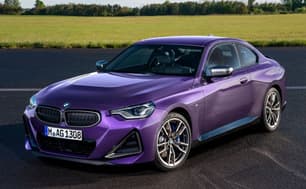
And, as our Thundernight metallic-hued M240i so literally demonstrates, its purple patch continues after a string of modern marvels like the latest 4 Series and iX, distilling the essence of compact sports coupe and luxury cruiser with dizzying confidence.
Joining the pantheon of back-catalogue greats like the 2002ti and 330Ci, we're missing it already now that the keys have been returned. Isn't that the true sign of the quintessential BMW experience?
I’ll be a shame if the B10 doesn’t sell well, because it doesn’t suffer from many of the downfalls of its compatriots and its price is extremely competitive for what you get.
As a comfortable smallish SUV, it meets par, and it’s on the better side of tech when it comes to cars from China, and it doesn’t have any major on-road red flags.
You really wouldn’t be disappointed with this having paid $40K, just skip the base model and go for the Design.
Note: CarsGuide attended this event as a guest of the manufacturer, with travel, accommodation and meals provided.
What is happening with BMW design? It's as if the Germans have run out of ideas.
Though we're eternally grateful it exists, the G42 is the least pretty of the three 1 and 2 Series coupe generations, as well as the most aggressively styled. All the usual macho tropes are present – cab-backward long-bonnet/short boot silhouette with an exaggerated dash-to-axle ratio, huge front air intakes, bulging bonnet and diffuser-heavy rear end.
There's also a beady eyed look to this M240i, with its squinty headlights and angry tail-light shapes further piling on the attitude. It's a far cry from the simple elegance of the E82 original, let alone the classic E30 of the Eighties. We wonder how much extra the M2 version will be when it surfaces later on.
That said, the G42's design is in keeping with something wearing an M-something-something prefix. In the optional purple of our press car, it certainly turns heads. That said, in the Bangle era, BMWs didn't have to rely on paint to do that.
Bangle, by the way, refers to BMW's late '90s/early '00s head designer Chris Bangle, an American with a bold aesthetic, scant regard for tradition and a taste for the controversial. His effect on vehicle styling, starting with the 2001 7 Series, is still felt today.
Dimensionally speaking, comparing the length/width/height/wheelbase measurements of the M240i (4548mm/1838mm/1404mm/2741mm) with a 2000 E46 330Ci (4488mm/1757mm/1369mm/2725mm) shows how today's coupe is palpably larger.
Over the previous (F22) 2 Series, the newcomer is 105mm longer, 64mm wider and 28mm lower; the wheelbase has been stretched by 51mm, while the front and rear tracks are 63mm and 35mm further out, respectively. Result? More space inside for today's lucky occupants.
Right after we praise the B10 for its value, we need to talk about its looks. A slight drop in tone as the second Leapmotor to land in Australia looks an awful lot like the first, and it’s relatively bland.
It’s not ugly, but it’s not particularly inspiring and there’s not much character to this little electric SUV.
It’s got a very upright silhouette at the front with a slightly sloping roofline at the rear, so the overall shape is appealing, but the lack of distinct features makes the B10 an anonymous commuter for now, especially with its similarities to the C10.
You can tell them apart by the C10’s slightly larger size if they’re near each other, or the B10’s more in-line headlight bar, where the C10’s have a ‘droop’ at the sides.
The large section of black at the lower half of the front is also unappealing, though darker colours like the optional 'Starry Night Blue' or 'Dawn Purple' (both $990) blend into it better than standard 'Light White'.
To its credit, at least the B10 doesn’t fall victim to the design crutch of adding trim and plastic for no reason.
In terms of the specifics, the B10 is 4515mm long, 1885mm wide and 1665mm tall with a 2735mm wheelbase, making it quite the large small SUV.
Inside, the cabin looks and feels roomy thanks to the test car’s light interior, decent windows and the light from the sunroof, as well as the fact the EV powertrains are compact and generally don’t interfere with cabin space.
Materials aren’t all scratchy hard plastic, though it is dotted around, and the general look of the B10 inside feels more premium than its price would have you thinking, despite the simplicity of the layout and design.
Interior dimensions may not be paramount to most coupe purchasers, but a stylish one with quality fittings and generous equipment levels certainly is, and here the M240i is bang-on brand.
For a compact two door, the M240i is pleasingly accessible. Long doors and a tallish roof help entry/egress, into a 2+2 cabin that obviously prioritises front-seat occupants. And it does that exceedingly well.
There's space to stretch – even if you're two metres tall – up front, as long as the rear seats aren't occupied, as a result of generous leg and shoulder room, while headroom should also be sufficient, even with the sunroof fitted. We're talking about a small coupe, remember, so that's impressive.
Vision out isn't as bad as you might imagine, either, due to the airiness that the elongated side windows provide. There are blind spots, though, with the B-pillar being the worst, but at least the extensive camera and sensor network surrounding the car provide reassuring back-up.
The handsome M Sport front seat option ($2000 extra) look like they mean business, providing all the comfort, support and adjustment most occupants will ever need. They're firm enough when you need them yet restfully supple all the time. Backed up by a multitude of electronics, both buckets will brace people of pretty much all sizes, while the driver has the luxury of two memory settings that also take in mirror positions.
Remember how the new 2 Series comes via Mexico? You'd never know it wasn't built in Germany, from the solid build quality and expensive materials to the extremely welcome absence of squeaks and rattles. No area exposed to the occupants looks or feels cheap.
Also meeting expectations is the dashboard itself, which is essentially a scaled-down replica of every recently released BMW – futuristic and fabulous iX aside – since the current (G20) 3 Series in 2018 broke the Bangle-era curse of disappointing new-millennial models.
If you're hoping for a return to classic analogue instrument dials, forget it. The M240i's instruments are modish electronic items, providing plenty of vehicle and driving data, and supported by an excellent head-up display. Like the switches and buttons, they're easy to fathom, with little familiarisation required.
As we've said repeatedly in other BMW reviews, the iDrive multimedia controller is amongst the best in the business, responding instantly to inputs. The other basics – ventilation, storage, driving position – are also first class. Nothing to complain about here. The company is on a good thing and it's sticking with it.
Accessing the rear seats is aided by electrified front seats that slowly whir forward, to provide a big-enough aperture for your medium-build 178cm tall tester to squeeze in.
Once sat, with legs splayed apart, there's just enough space for another person of similar height and proportions, as well as surprisingly decent levels of vision thanks to the narrow front bucket seats and extended rear glass area, to offset any feelings of claustrophobia.
BMW has also provided several welcome amenities, including face-pointed rear vents with full single-zone temperature control to serve two occupants back there, armrests (with the centre fold-down item also packing in a pair of cupholders), reading lights and coat hooks.
Sadly, however, the rear windows do not retract, and the thick door pillars are fixed, so you cannot enjoy a pillarless hardtop experience. That's what the M4 coupe (and convertible too) is for.
While rear-seat space is adequate, with enough room for shoulders, thighs and feet if the front-seat occupants don't mind raising the cushion a little, the backrest is too upright to be considered comfortable on longer journeys. At least the low cushion is scalloped enough to provide some support, though, again, not over extended periods.
That rear backrest folds, by the way, to a 40/20/40 split, providing access into the 390-litre boot while still able to accommodate a single passenger. The lid opens up and wide, offering up a long, flat and wide space for storage. Along with a 12V outlet and tie-down hooks, you'll find a tyre-repair kit, since no spare wheel is carried.
Getting into the B10 requires a minor annoyance - unlocking and locking the car requires a keycard to be tapped on the drivers’ side mirror like you're scanning to access your floor in a hotel elevator.
There’s an app that adds a fair bit of functionality, but having to whip your phone out ahead of jumping in the car is also irritating.
Once you’re in, though, the space inside the B10 is well laid-out, even if much of its functionality is crammed into the big central touchscreen - it’s always ‘points off’ for a lack of physical buttons in this section of a review.
Once you’re used to it and have sorted out your personal settings on the multimedia software, it becomes more natural and less distracting, though Apple CarPlay and Android Auto would occasionally lag in the car on test.
The good news is they now exist for the brand in the B10, with the Leapmotor C10 still lacking the vital in-car mirroring tech.
The ergonomics and interior space work well, generally, with comfortable pews and good vision, plus decent spaces to keep things out of the way. The phone charger being in a very visible and accessible position might tempt some naughty screen-keen drivers, and being in the sun without a vent for cooling while charging means your phone will get proper hot.
The second row is extremely spacious, belying the fact this car is classified as a small SUV. Oodles of legroom and enough headroom for a tall adult means the B10 outguns rivals in terms of good options for parents (note the B10’s extremely strong 95 per cent child safety score from ANCAP, too) or anyone who needs to cart humans around regularly.
Behind the second row is a 490L boot, which becomes 1475L when the second row is folded down.
There’s space under the floor for cables and messy bits, but unfortunately no spare wheel, just a tyre repair kit, so more points off for that.
Don't worry. Even though the latest, third-gen 1 Series hatch as well as five-door versions of the 2 Series have sacrilegiously gone all transverse-engined and front-wheel drive on us, BMW knows not to cook the golden goose or poke the bear by retaining the traditional longitudinal/rear-drive set-up for the G42.
For car enthusiasts, that was one of the few pleasant surprises of last year.
Hailing from a new BMW plant in Mexico, the 2 Series coupe comes in two flavours for now: the 220i from $61,900 before on-road costs, and the M240i from $89,900 before ORC. Other grades like a 230i are likely to follow soon.
Both models are decently specified, sharing LED headlights and tail-lights, auto start/stop, paddle shifters, an M Sport Package (including a multifunction steering wheel, selectable driving modes, sports seats and anthracite headliner), M Sport suspension, variable sport steering, 'Hey, BMW' driving assistant, head-up display, auto parking assistance with a surround-view camera, a 12.3-inch instrument display, a 10.2-inch control display, digital radio, wireless smartphone integration, Apple CarPlay/Android Auto connectivity, emergency services access, three-zone climate control, rain-sensing wipers, electric heated/folding exterior mirrors, through loading into boot with remote-release backrests, ambient lighting and tyre-repair kit in lieu of a spare wheel.
However, the differences between the two already on sale here are extensive, starting with the M240i gaining a 3.0-litre inline six-cylinder (I6) turbocharged petrol engine in lieu of the 220i's 2.0-litre four-cylinder turbo petrol unit.
There's also all-wheel drive (AWD) for the first time in a 2 Series in Australia, as well as M Sport suspension with adaptive dampers, an M differential, M Sport brakes, body kit, adaptive cruise control with full stop/go functionality, keyless entry/go via BMW Digital Key, electric sunroof, leather instead of Alcantara/artificial leather upholstery, electric front seats with driver's side memory and heaters, adaptive LED headlights with auto high beams, 14-speaker Harman/Kardon surround-sound audio system and 19-inch alloy wheels, among other items, to help justify the extra $28,000.
Standard safety features include six airbags, forward collision warning, Autonomous Emergency Braking (AEB) front and rear, with front/rear cross traffic alert, lane departure warning with passive steer assist, lane keep with active assist, blind spot monitor, 360-degree view cameras, parking assist, parking sensors and road-sign recognition, among other features. More details in the safety section below.
With two-door coupes falling out of favour, four-seater performance rivals to the M240i Coupe include the Ford Mustang GT V8 (from $64,190) and Audi TT S quattro (from $104,500), while there are various two-seater options like the coming Nissan Z (pricing TBC, but the outgoing 370Z kicks off from just $50,490), Toyota Supra (from $87,803) and Porsche 718 Cayman (from $115,900).
Thinking more laterally, the $92,900 Audi RS3 and $99,895 Mercedes-AMG A45 S hyper-hatches are quicker while the Tesla Model 3 Performance Dual Motor sedan from $88,900 will blow the BMW away for performance, so if you don't strictly need coupe style, then the M240i does cop some unexpectedly stiff competition at its price point.
Still, few rivals balance the pricing, packaging, performance and AWD capability with the swagger of our purple coupe, which makes this 2 Series quite a unique value proposition in its own right.
Talking about the price may well be us highlighting the Leapmotor B10’s strongest point right up top, because you can get into one for less than $40K, drive-away, before the end of March 2026.
While regular pricing for the B10 starts from $37,888, before on-road costs, for the base Style and $40,888 for the kitted-out Design LR, Leapmotor has a limited-time deal starting from $38,990, drive-away, for the B10 Style and $41,990 for the Design LR. LR for Long Range, by the way.
That runs until the end of March, 2026, but even its standard pricing is impressive for what you get.
The entry-grade B10 Style comes with plenty of kit, including an 8.8-inch LCD driver display and large 14.6-inch central multimedia touchscreen, a wireless phone charger, auto climate control, a panoramic sunroof with retractable shade, heated mirrors, auto LED headlights, a set of 18-inch wheels, surround-view parking cameras with dashcam recorder capability, over-the-air (OTA) updates and Level 2 advanced driver assistance (ADAS).
That’s a list of inclusions that can, on paper, rival much more expensive models.
The Design LR, for not much more money, adds heated and ventilated synthetic leather seats with electric adjustment (six-way for the driver, four-way for the passenger), a heated steering wheel, a 12-speaker sound system, ambient lighting, a power tailgate, tinted privacy glass, LED tail-lights and auto folding mirrors.
You’d hate to be in the product planning team of a legacy manufacturer trying to put together a competitive spec for a small electric SUV to sell in Australia against that.
Even other small electric SUVs from China come with much smaller batteries or fewer features around the $40K mark, like the MG S5 EV Essence RWD with its 49kWh battery ($42,990 D/A) or the base Geely EX5 Complete FWD ($40,990 BOC) and the higher Inspire variant is $4000 more.
As with all of our current favourite BMWs that aren't electric on full-fledged M cars, the M240i is fitted with a variation of the divine B58 engine – a 2998cc 3.0-litre double overhead cam direct-injection turbo I6. It delivers 285kW at a heady 6500rpm, and 500Nm of torque between a low 1900rpm and 5000rpm.
A kerb weight of 1690kg (200kg more than the 220i equivalent) means the M240i's power to weight ratio is about 169kW/tonne, which may explain why it can manage the 0-100km/h time in 4.3 seconds. V-max is 250km/h.
Power is channelled to all four wheels continuously via an eight-speed M Steptronic transmission, while the AWD system features a differential to help transmit torque to all four wheels more cleanly.
Controlling all those outputs, the M240i's suspension consists of a two-joint spring strut front and a five‑link rear axle arrangement, with M Sport suspension including variable sport steering, additional front axle struts, M Sport brakes, M Sport differential at the rear axle and adaptive M suspension with electronically controlled dampers.
There’s only one powertrain option for the Leapmotor B10, a single, rear-mounted electric motor that produces 160kW and 240Nm, which makes the electric SUV good for a claimed 0-100km/h time of 8.0 seconds in both variants.
Top speed is a claimed 170km/h, also regardless of the variant.
Over exactly 503km of city, suburban, freeway and performance testing, we managed a credible 9.6 litres per 100km – and that was with the air-con on constantly and regular visits to the 7000rpm rev limiter. No horses were spared in our quest to properly assess this vehicle.
BMW's official combined-average claim for the Euro 6d-rated M240 is 8.0L/100km flat – and 6.6L and 10.3L in the Extra Urban and Urban runs – for a carbon dioxide emissions average of 185 grams/km.
The small fuel tank swallows just 52 litres of E10, 95 or 98 RON (as tested) premium unleaded petrol, meaning an average of 650km between refills is possible.
Leapmotor claims the B10 will, from its LFP battery of either 56.2kWh for the Style or 67.1kWh for the Design LR, draw 17.2kWh/100km or 17.3kWh/100km, respectively under WLTP testing.
The result is the Style offering up a 361km WLTP-tested driving range, and the Design LR a more useful 434km.
While we were unable to properly confirm this claim on the launch, the trip computer after a mix of highway driving and more spirited back-road testing displayed a figure of 13.5kWh/100km, while the previous 1447km of driving had reportedly measured in at 14.7kWh.
Charging from 30 to 80 per cent takes approximately 20 minutes regardless of spec and battery size. The smaller battery can be charged via DC fast-charging at a maximum 140kW, and the larger at 168kW. Both max out at 11kW under AC charging.
In a word, invigorating.
Stuffing a big old engine in a little-ish car is always an exciting recipe for thrills, and the M240i Coupe does not disappoint.
Press the start button, and the sublime B58 3.0-litre turbo I6 growls into life, setting a rich tone for the level of performance as well as sophistication that's coming.
Even in Eco mode, off-the-line acceleration is stirring, with a hefty shove if you're in a hurry, or a brisk pace if you just long to just take it easy, defined by smooth upshifts from what remains one of the world's greatest-ever automatic transmissions.
That said, Normal is the default operating setting, and here the M240i can take on a Jekyll and Hyde split-personality, that goes well beyond simply possessing a strong throttle response accompanied by a soaring exhaust note. The engine sings sweetly even right up to 7000rpm, while the gearbox is uncanny in its ability to always be in the correct gear, yet will simultaneously hold each ratio in manual mode (via the shifter or paddles) if the driver needs to go hell-for-leather.
Speaking of which, in Sport mode, the 3.0-litre turbo goes into red alert, taking on a louder and more muscular mood, as it roars along with frenetic yet effortless speed. What seems like 90km/h can, in fact, be very much more, and with plenty of extra oomph in reserve.
It's so typical BMW that purists affronted by some of the brand's other niche offerings of late will cry with joy that the art of making a sports coupe has not been lost in Bavaria after all.
And that's before the first turn of that fat little steering wheel. Here the 2 Series Coupe's 3 Series-derived CLAR architecture's DNA is immediately obvious, providing subtle balance and an immersive connection to go with all that bolshy brawn.
The M240i will glide along precisely where pointed, sticking steadfast to the tarmac while cornering at speed without breaking a sweat. That mechanical rear diff helps provide both alacrity and reassuring control. Yes, it remains weighty and planted when punted relentlessly through tight corners, but it's also not as heavy-feeling as before.
Being AWD, there's grip galore to rely on for security, yet the M240i still seems deliberately rear-drive biased in its set-up, so the driver can hang the tail out if wanted with gradual ease in Normal, or with a little more of a sideways flick in Sport. The modes are configurable so the level of engine, steering and suspension responses can be tailored as desired, meaning that in the racy Sport Plus setting, with stability and traction controls on hold, the full oversteer experience is possible if you're game/brave/silly enough.
This car's brilliant performance is also down to incredibly dependable and nuanced braking, adding another layer of driver enjoyment, since it can pull up hard and fast if need be without drama or fuss.
So, it's no surprise to learn that an M-Sport-enhanced BMW can be a deliciously fast and limber along a mountain road.
But the real progress over the old F22 is just how suave and polished the G42 is if you're tired and stressed, isolating its occupants from the rigours of rubbish road surfaces. Kudos to the 'Adaptive M Suspension' and its adaptive dampers for this, for they're standard M240i fare. The resulting cushy ride completely broadens the dynamic bandwidth of this compact sports coupe, making it an everyday commuting proposition.
Ultimately, it's a bit of a struggle to find fault in the 2 Series' drivability and dynamic make-up. The usual Euro luxury car bugbear of too much coarse-chip tyre noise applies, but as this is a sports coupe, that's not such a big deal here. Even wind noise levels are subdued – all the better to drink in that glorious turbo engine wail.
BMW, you got the M240i delightfully right.
The Leapmotor B10 was developed with testing at Stellantis’ European proving ground in Italy. This is because despite Leapmotor being its own brand within China, its international operations are a joint-venture between itself and Stellantis.
There are some on-paper shreds of evidence for this, a rear-wheel drive layout and a claimed 50/50 weight distribution help, but get the B10 on the road and it’s clear this isn’t a car that’s relying entirely on price, a long list of features and some showroom shine to sell.
After the initial familiarisation that comes with many new electric cars, particularly from China, the Leapmotor B10 becomes easy to settle into a rhythm with, especially if you turn off some of its more intrusive ADAS features like lane-keep, driver monitoring and speed limit warning. The latter can sometimes get a limit wrong, and though the B10’s chimes aren’t audibly overbearing, they are persistent.
While the B10 doesn’t excel in any areas on the road, it doesn’t fall down significantly in any either.
Its suspension soaks up bumps relatively well, and despite some vibrations on rougher roads the B10 is pretty comfortable. The tyres it rides on as standard, however, are rather noisy, so if there’s an opportunity to swap out the Linglong defaults to something better, we’d advise it.
The tyres also squeal rather quickly when cornering, not necessarily because the B10 is about to let go, but just because the weight of the car appears to be pushing on the front outside tyre in cornering.
The B10 holds up better than\ a family car really needs to in dynamic driving, but we wouldn’t be doing mountain runs or track days in one.
There’s a little body roll in corners, but not nearly as much as has been in other models riding on the apparently soft suspension preferred in China.
The steering, braking and acceleration all have a mild vagueness to them, but once you’re honed in they’re all predictable. The steering can be adjusted for weight, and its lightest setting is too light, while the acceleration feels lethargic in its lowest setting and too aggressive in its highest.
There’s not a lot of regenerative braking strength, but it’s enough to help regulate speed once you’re used to how mildly it comes in - again, depending on your preferences and settings.
The good news here is that the B10 is easy to drive, and only very serious road bumps on fast corners unsettled it on test - the kind you’d expect to upset any car.
There is no ANCAP rating for the BMW G42 M240i Coupe, but over at EuroNCAP, a 2022 220d coupe scored just four out of five stars.
Areas singled out needing improvement include better pedestrians/vulnerable road user protection (especially for cyclists) and a 'marginal' rating for the emergency lane keeping's effectiveness.
Standard safety features includes six airbags (dual frontal, side chest and head-protecting airbags for the first row and side chest protecting airbags for the second row), forward collision warning, Autonomous Emergency Braking (AEB, operational from 5km/h to at least 210km/h and with cyclist and night-time operation), front/rear cross traffic alert, lane departure warning with passive steer assist (operational from 70km/h), lane keep with active assist, blind spot monitor, driver attention monitor, 360-degree view cameras, parking assist, parking sensors, anti-lock brakes with electronic brake-force distribution and brake assist, stability control, traction control, corner braking and rain-sensing wipers.
There are also two ISOFIX points as well as two top tethers for straps in the rear seats.
The Leapmotor B10 was bestowed a five-star ANCAP rating in early February 2026 under the body’s most recent criteria.
There are seven airbags, including an important centre airbag, plus the B10 boasts 17 ADAS systems with 12 cameras and sensors helping monitor the road, surroundings and the driver.
As mentioned, those systems can be a little intrusive sometimes, but less than other new models from brands new to Australia.
The B10’s list of safety features includes multi-collision braking, collision sensors, an emergency data recorder, the aforementioned dashcam-style surround-view recording system, belt pretensioners, plus all the elements of the ADAS suite Leapmotor calls 'Leap Pilot'.
This includes adaptive cruise and lane centring, lane departure warning and emergency intervention, collision avoidance and warnings, blind-spot detection, rear cross-traffic alert and brake, speed assist, and driver monitoring and distracted driver warnings.
For baby capsules and child seats there are three top tethers across the second row with ISOFIX anchors on the two outer positions.
Trailing all of its main luxury car rivals (except Porsche) by two years, BMW only offers a three-year/unlimited kilometre warranty, as well as three years of roadside assistance.
BMW says its vehicles' servicing is condition-based, depending on how they're driven and other factors, with a dash warning appearing to let the driver/owner know when it's time. We advise servicing your M4 annually or at every 10,000km
No capped-price servicing system is offered. However, as long as the first one is paid for before the first service on a new vehicle, the 'BMW Service Inclusive Basic packages' is available at extra cost, covering scheduled servicing for three years/40,000km or five years/80,000km. A 2 Series should cost from $1700 for the five-year/80.000km package.
The B10’s post-purchase prospects are generally solid, though Leapmotor’s six-year, 160,000km warranty is an area where it falls short of rivals which are offering longer, unlimited kilometre warranties.
The battery is covered for eight years or 180,000km, whichever comes first, which is pretty par for an EV.
Servicing is capped-price for the first eight years, with each service costing $370 on average. The eight-year span makes it pretty appealing, per 12-month interval or every 20,000km.
There are currently 20 dealers across the country, though more are coming, while Leapmotor also offers eight years of roadside service.