What's the difference?
Close to a decade ago BMW took a swan dive into the fully-electric car pool, with the i3, a compact, lightweight hatch, that although long gone from the Aussie market, remains in production. It features an exotic carbon passenger cell, and is pitched at a niche, city-dwelling audience.
The decision makers in Munich have decided to draw the curtain on it in mid-2022, because they’re moving from the EV springboard to the high tower.
Yep, BMW says it will be offering around 12 fully electric models worldwide by 2023, with several arriving here soon. And this is the first zero tailpipe emissions BMW X SUV model to arrive in Australia, the mid-size iX3.
Like its X3 siblings it lines up against traditional European SUV rivals, only this time there’s an electric motor rather than a combustion engine under the bonnet. Think Audi e-tron, Jaguar I-Pace, and Mercedes-Benz EQC.
Electric cars might be synonymous with Tesla right now, but as the world begins to ween itself off petrol and diesel, you can bet other car brands will be vying for the spotlight.
BMW is no stranger to the electric market with its i3 hatchback having first launched back in 2014, but with buyers shifting away from passenger cars to SUVs, that quirky model never really managed to find a substantial audience.
Enter BMW’s second-generation of EVs, then, which includes the i4 sedan, iX3 mid-size SUV and flagship iX.
And it is the latter that we’re testing here to see if BMW has done enough to shift the limelight away from Tesla and its Model X.
Much of the time behind the wheel of the iX3 I forgot it was electric. Which says as much about the refinement of current combustion engined cars as it does about the progress of EVs. But it demonstrates how easy it is to live with a zero emissions vehicle, particularly one of this calibre.
The iX3 represents good value in the premium mid-size SUV segment. And not just against other EVs. It’s quick, comfortable, practical, and recharging is getting easier by the day. I enjoyed driving it. In fact, a lot more than I thought I would.
BMW’s iX M60 isn’t just the brand’s flagship all-electric SUV, it’s a statement that the electric future is here and it doesn’t have to be boring.
Pricing aside, the top-spec iX serves up practical space and prodigious performance in a package that is punctuated with panache.
The sizeable battery also allays any concerns over range, while the cabin’s appointments and fit and finish are definitely befitting of a BMW.
It’s not designed to be for everyone, and that’s okay, too, because the small customer base willing to part with around $230,000 for an electric SUV in 2022 will find a lot to like about the iX.
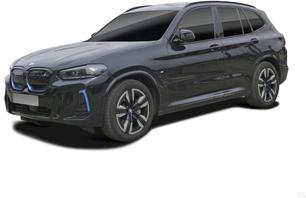
The most noteworthy thing about this car’s exterior design is how much it looks like any other BMW X3. No dramatic Hyundai Ioniq 5-style departure from the norm here. You have to have reasonably sharp eyes to spot the details that stand this car apart from its combustion-powered siblings.
For example, the signature kidney grille, with contrasting inserts, remains in place. Yes, it features active air vents, but really it’s more a single-piece branding decoration rather than a functional element.
At first glance the 20-inch rims look much like other styles in the BMW catalogue. But closer inspection reveals large, close to flat and closed in surfaces to help aerodynamic performance.
No small contributor to the car’s drag coefficient (Cd) of just 0.29, an outstanding number for an SUV, or any car for that matter.
Although sci-fi three-dimensional, the tail-light treatment is the same as other X3s and even the broad apertures at each lower rear corner look ready to accept exhaust outlets, which of course, they don’t. The entire rear diffuser panel is part of smoothing the exit of underbody airflow.
The interior look and feel is straight out of the current BMW design playbook, with blue highlights here and there to signify the car’s ‘i’ electric identity.
Classy, yet functional with the big digital screens for instrumentation and multimedia also dialing up the tech factor.
The leather trimmed seats feel as good as they look, the ‘Vernasca’ hide available in a choice of three colours, with different interior trim elements on offer as well.
It feels premium and driver-focused. The alignment, the stitching... A close attention to detail in the cabin’s design and execution is apparent.
Close your eyes and ask your eight-year-old self what an electric BMW SUV would look like, and chances are something like the iX will come to mind.
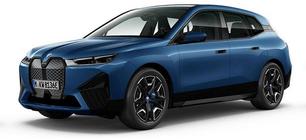
Sleek and slender, but still very BMW is the best way we can describe the iX.
Of course, we cannot talk about styling on a BMW without mentioning its front grille.
With a more vertically stacked orientation, the iX’s grille has been described as ‘toothy’ or even an ‘eye sore’ by the public in the past. But honestly, we think this attention-grabbing front end suits the swagger of the M60.
The gold highlights throughout are especially baller, and the grille serves as double-duty to hide a lot of the front-facing cameras and sensors required for more of the high-tech driving features like semi-autonomous driving.
The grille is flanked by BMW’s usual quad-headlight design for a menacing appearance on the road, and we particularly like the contrasting colours and sharp lines of our grey-coloured test car.
Another cool feature is the front badge, which can be popped up and serves as an inlet for the windscreen washer jets.
In profile, the 22-inch wheels look almost too small against the huge swathes of bodywork, but BMW has done a good job in slimming down the M60 thanks to the gloss-black stripe that runs along the bottom of the doors.
Speaking of, the handles might not pop-out like some of its rivals, but the recessed handle is highlighted nicely with gold-copper accents that also run along the beltline and door mirrors.
The D-pillar is also broken up with a blacked-out section that divides the roof, also helping slim down the behemoth BMW, and up close the section is embossed with ‘iX’.
At the rear, the clamshell boot might look large and bulky, but the design is helped by the very slender tail-lights and bumper broken up with more gloss-black.
Step inside the cabin, and the iX’s aesthetics are similarly unconventional, but the interior design also follows function.
For starters, the odd-shaped steering wheel is the feature that stands out the most, but you quickly realise the flat bottom helps with entry and exit into the driver’s seat.
As an all-electric model, there is no transmission tunnel, with the footwell between the driver and front passenger easily accessible for a more open-feeling cabin.
There is an armrest of course, while the area for multimedia controls is adorned with a one-piece, wood-like finish to contrast the crystal control knob. It’s a mix of technology and the natural environment, you see, much like the iX itself.
Do we love the styling of the iX M60? Much in the same way Louis Vuitton’s latest fashion range might not appeal to the masses, the iX M60 is likewise a polarising proposition.
To answer the question, yes, the iX M60 is a very stylish SUV that draws the eye and turns heads like nearly nothing else on the road – and that is exactly the point.
In terms of space, there’s plenty of head and shoulder room up front and lots of storage, including a pair of cupholders in the centre console, big door bins with a separate section for large bottles, a decent glove box, and a medium-size storage cubby which doubles as an armrest between the seats.
There’s a 12-volt outlet, wireless smartphone charging and a USB-A socket in the console, as well as a USB-C jack in the centre storage box.
The big media screen is easy to use with logical screen progressions accessed via direct touch, a rotary dial on the console, the writing pad on top of it, as well as gesture control or ‘Hello BMW’ voice control.
Move to the back and again there’s heaps of space. Over successive generations the X3 has quietly crept up in size to match that of the original X5.
Getting in and out is easy thanks to wide opening doors with big apertures, and sitting behind the driver’s seat set for my 183cm position there’s good head and legroom.
Again, there are big door bins with room for large bottles, individual climate control is a win for back seaters, and there are two USB-C outlets to keep devices powered up.
There are netted map pockets on the front seat backs, and a fold-down centre armrest contains a shallow flip-top compartment and a pair of fold-out cupholders, adjustable for different size cups, which is a thoughtful touch.
A relatively low loading height and no lip into the boot space makes life easy, and with the rear seat upright the iX3 has a capacity of 510L, enough to swallow our three-piece suitcase set, or the bulky CarsGuide pram with room to spare.
Lower the 40/20/40 split-folding rear seat, and load space increases to no less than 1560 litres. And as long as you have the key with you the tailgate’s hands-free open and close kick function is a welcome addition.
Those volume figures are down only slightly on petrol and diesel powered X3s (550L/1600L).
Multiple tie-down anchor points, a 12-volt outlet, as well as pop-out hooks and netted pockets are handy, but don’t bother looking for a spare of any description, your only option is a repair/inflator kit.
A small lidded space under the boot floor is designed for the on-board charging cables, and the tyre inflator canister.
A missed opportunity appears to be the lack of storage space under the bonnet. The combined motor/transmission unit is relatively small and mounted low in the chassis.
Peel back the plastic cover over the ‘engine’ bay and there’s plenty of room for a ‘frunk.’ Seems like a no-brainer, but the bean counters, engineers or some other link in the development chain must have knocked it on the head.
Despite what it might look like on the outside or how it drives behind the wheel, BMW’s iX is undoubtedly a large SUV in shape.
Measuring nearly five metres long, and featuring a 1967mm width and 1696mm height, the iX M60 is certainly a sizeable machine.
However, it is the three-metre long wheelbase that is the most important measurement here, as it enables a vast and expansive interior space fit for the family.
The front passengers have ample room to get comfortable, and like we said in the design section of the review, there is nothing dividing the footwells of occupants up front.
This makes it the perfect place to park a backpack, handbag or even nappy bag when on the go, and means the front passenger doesn’t lose out on any legroom.
Even the armrest affords storage solutions for all the little things you might have you in pockets, while a wireless smartphone charger means you always have somewhere to place your device.
The front seats, finished in a quilted leather, might look plain, but are wonderfully supportive – even when the speedo climbs and you're carving up corners.
And in the rear, the story is largely the same, with seats that look and feel great and plenty of room for passengers to get comfortable.
My 163cm frame had no problems with leg-, head- or shoulder-room, but the base middle seat is raised a little.
We’ll also call out the great way BMW has hidden the ISOFIX mounting points for child seats, which is hidden by a flap that can be raised or lowered depending on what is needed.
It’s an elegant solution to something that can be an eyesore in other models, and shows the lengths BMW has gone to for the little details.
There is also a fold-down armrest for passengers back there, while the back of the front seats feature two USB-C charging ports, map pockets and spots to insert entertainment screens.
Open the clamshell boot and there is a cavity that will swallow 500 litres of volume, plenty for a small family like ours, with the charging cables hidden neatly under the floor.
The boot floor is very long, too, meaning large objects will easily fit into the rear, while the 40/20/40 rear seats can be folded down to increase carrying capacity to 1750L.
To put that into perspective, something like the Ford Ranger is rated for more than 1200L in its tray, and while we would never condone the use of an iX to carry worksite tools, it does make carrying a surfboard or Ikea furniture that much easier.
However, it's worth pointing out that there is no front trunk in the iX, as there are electric motor and mechanical bits found in there.
It’s just a shame that in a car of this size, BMW has not managed to position things with room left for a bit of usable space under the bonnet.
Cost-of-entry to the BMW iX3 club is $114,900, before on-road costs, which is a match for the high-performance, six-cylinder powered X3 M40i at the top of the mainstream X3 range, with the bonkers X3 M another $45K above that.
For that money, aside from the performance and safety tech we’ll get to shortly, you should expect a lengthy standard features list, and the iX3 does well.
Standard are, adaptive LED headlights, adaptive suspension, 20-inch aero alloy wheels, keyless entry and start, an auto tailgate, three-zone climate control, active cruise, a head-up display, a 12.3-inch digital instrument screen, a 12.0-inch multimedia touchscreen, electrically-adjustable and heated front seats (memory function on driver’s side), leather trim (choice of three colours), rain-sensing wipers, Harman Kardon audio (16-speakers, 464W), ambient lighting, wireless Apple CarPlay and Android Auto, sat nav, a panoramic glass roof, wireless smartphone charging, and parking assistant.
There’s also heated and folding exterior mirrors, metallic paint (six colour options), the ‘M Sport’ body kit (aero package with dark metallic exterior elements) BMW even stumps up for a five-year unlimited use subscription to the Chargefox network.
Yes, you heard that right. You can juice up free-of-charge for the first five years, and it’s worth noting the iX3’s claimed range, another important factor in terms of whole-of-life value, lines up well with its prime competitors (BMW iX3 - 460km / Audi e-tron - 446km / Jaguar I-Pace - 470km / Mercedes-Benz EQC - 434km).
Any way you cut it, the iX3 is a pretty sharp deal for the dollars.
The 2023 BMW iX is available in four flavours, with the entry-level xDrive40 variant coming in at $135,900, before on-road costs.
The same powertrain is also available in Sport trim for $149,900, while a higher-output xDrive50 Sport sits at $174,900.
However, the top dog of the iX range is the M60, priced at a substantial $222,900.
As you can probably tell by the M badging, the iX M60 has more of a performance bent than its more affordable siblings, but it still commands a nearly $90,000 premium over the entry-level BMW electric SUV.
You are also getting a long list of equipment for the spend, though, with standard equipment including keyless entry, push-button start, heated and cooled front seats, a head-up display, and four-zone climate control – all things expected of a luxury model like the BMW iX.
The over-the-top extras you get on the M60 however, include soft-close doors, 22-inch alloy wheels and an electrochromic glass roof which can change its opacity by sending electricity through the middle layer of film. How high tech!
We also like that the iX can use the front-facing camera as a dashcam so you do not have an unsightly camera with long cables attached to the windscreen.
The iX M60 also features a curved 12.3-inch digital instrument cluster and massive 14.9-inch multimedia touchscreen with the latest 'iDrive 8' software.
Look, there’s no denying the iX M60 is a pricey vehicle, especially when stacked up against the Audi e-tron S ($173,900) and Jaguar I-Pace HSE ($160,217), but the BMW does kick it up a notch in performance compared to its perceived rivals.
Tesla’s upcoming Model X Plaid will no doubt have something to say about that, but pricing and timing for that model is yet to be revealed. For reference, the last Model X offered in Australia was in 2020, and the top-spec Performance variant was priced at $177,375.
So, does the BMW iX M60 represent good value for money? Not really. But buying a brand-new iPhone whatever on the day it launches is also not good value for money.
Early adopters and people who appreciate having the very latest in technology will always be asked to pay a premium.
Under the bonnet is a ‘current-excited’ synchronous electric motor, single-speed auto transmission and the power electronics bundle placed together in a single housing.
Driving the rear wheels, the motor produces 210kW/400Nm, which is enough to propel the iX3 from 0-100km/h in 6.8 seconds.
The ‘current-excited’ bit means the motor doesn’t make use of magnets to induce the rotor, rather the feeding in of electric power.
It spins up to a maximum of 17,000rpm, and BMW says the design means the use of rare earth elements (the mining of which is increasingly controversial environmentally) is avoided.
A large part of why the iX M60 is so much more expensive than its siblings, is because of its powertrain.
With two electric motors spinning all four wheels, the iX M60 makes a staggering 455kW of power and (are you sitting down?) 1100Nm of torque.
This means the iX M60 can accelerate from 0-100km/h in just 3.8 seconds. Not bad for a 2.5-tonne SUV, and it puts many petrol-powered rivals to shame.
This also makes it much more potent than the xDrive40 (240kW/630Nm) and xDrive50 (285kW/765Nm), while also blowing away the Audi e-tron S (370kW/973Nm).
The only electric car that comes close right now in Australia is the Porsche Taycan Turbo S (560kW/1050Nm), but the Tesla Model X Plaid supposedly makes 760kW/1020Nm from three electric motors.
And while the Tesla is not yet available, the Taycan Turbo S is more than $100,000 pricier than the iX M60, and doesn’t offer the same levels of practicality.
Worst case charging scenario is a 1.8kW AC single-phase domestic connection which has you staring down the barrel of a 44-hour charge time.
But using the latest BMW three-phase wallbox, the car's AC maximum rate of 11kW equates to charge time from 0-100 per cent is 7.5 hours. While DC fast-charging at a rate of up to 150kW means 10-80 per cent charge in 32 minutes.
The ports behind the not-fuel flap are a Type 2 for AC and Type 2 CCS (Combined Charging System) Combo for higher powered DC charging. And the car comes with two cables covering domestic and public scenarios.
Worth noting the single recharge point is on the right-hand side. Our driver’s side, but kerb side for left-hand drive countries. No problem at a dedicated charging station. But if you’re street charging, a connector poking out on the traffic side of the car could be risky.
BMW claims energy consumption for the combined cycle of 18.9kWh/100km, and over a week of city, suburban and highway driving, mostly in the default Comfort mode (with A/C on) we recorded an average of 19.1kWh/100km.
Worth noting the car features a regenerative braking system feeding energy back into the battery, but this one’s adaptive, able to read what’s ahead and determine the appropriate intensity of the regen function.
But underneath all this is that complimentary five-year Chargefox membership. And for reference, the current Chargefox network includes 1400 plugs, mainly along the East Coast, Tassie, Adelaide and Perth with the intention of 5000 by the end of 2025.
That’s across standard AC (22kW), fast (50kW) and ultra-rapid (350kW) units, with all of the latter powered by 100 per cent renewable energy.
Equipped with a 112kWh battery pack, the iX M60 features 566km of driving range according to the WLTP cycle.
In reality, we saw closer to 540km of driving range on the dash readout with a full charge, but of course this is all subject to things like the level of regenerative braking you apply, ambient temperature, the driving mode chosen, air conditioning and weight.
Officially, the BMW iX M60 consumes 26.5kWh per 100km, but our week with the car saw an average of 25.6kWh/100km with driving mainly focussed on short, inner-city trips that are advantageous to an electric car.
This betters the energy consumption of models like the Taycan Turbo S, which features a combined-cycle test of 28.5kWh//100km, but is much more energy-hungry than something like a Nissan Leaf (18kWh/100km).
This figure is also very dependent on driving style and environment, but for a 2.5-tonne SUV that will ferry the family and more, consumption isn’t too bad.
Charging options include 11kW for AC and 200kW DC fast-charging – the latter of which can juice the iX M60 from 10-80- per cent capacity in just 35 minutes, if you can find a compatible outlet, of course.
The notion of automotive tuning would normally lead you to the engine bay rather than the orchestra pit. But believe it or not, according to BMW, the simulated start/stop sound for this car has been designed by Oscar-winning composer Hans Zimmer and BMW sound designer Renzo Vitale. And every driving state is accompanied by a matching acoustic pattern, so keep your ears peeled.
Hans and Renzo’s work amounts to a brief (as in, half a second) triumphal burst as you hit the start button, and a similarly concise composition as you shut down.
At parking speeds, with the hum of the Acoustic Protection system in your ears, the overhead view, clear reversing camera and clean all around vision make parking the iX3 pretty straightforward.
The steering is light and the distance sensors front and rear aren’t too manic, only giving you a shout out when necessary.
Pick up the pace and the iX3 feels quick. Zero-100km/h in 6.8sec is rapid, but it’s the nature of the acceleration that changes the experience in pretty much any electric car.
In this case 400Nm of maximum torque is available from step-off and there's still solid pulling power at high revs, remembering the motor spins to 17,000rpm! Squeeze the accelerator at any speed and there’s plenty of urge available.
The nature of current EV tech means you don’t have to worry about a dual-clutch or CVT. The single ratio auto transmission just picks up the motor’s output and smoothly feeds it to the rear wheels.
By definition an electric car will be quiet but this one is so hushed the mega Harman Kardon system has a clean sheet to work from.
Suspension is strut front / five-link rear with all the major elements made from aluminium and the adaptive set-up includes electronically-controlled dampers.
There are ‘Comfort’, ‘Sport’ and ‘Eco Pro’ driving modes, with the switch from Comfort to Sport a pronounced one in terms of compliance and, well, comfort. But even in that softest setting, the ride is on the firm side.
This car weighs a not insubstantial 2260kg, and with that big battery pack spread out under the floor its centre of gravity is around 7.5 centimetres lower than a conventionally powered X3.
The drive unit sits in a model-specific sub-frame, and while you sense that weight through corners the iX3 feels planted and composed.
It points nicely at speed, steering feel and weight are good, while the mixed Bridgestone Alenza rubber (245/45 fr / 275/45 rr) is quiet and grippy. Worth noting they’re premium SUV-focused tyres rather than specific, low-rolling resistance specials.
The dash layout is classically driver-focused, with a clean and simple approach making for a relaxed drive. The front sports seats remain supportive and comfy over long stints behind the wheel.
Intensity of the ‘Brake Energy Regeneration’ is automatically adapted, although you can select ‘High’, ‘Medium’ or ‘Low’ settings through the iDrive system.
More direct still is moving the gear shift over to the ‘B’ position which effectively generates a one-pedal mode. You barely have to touch the left-hand pedal at all, while you’re feeding energy back into the battery to boot.
Maybe it’s just us, but as soon as we step into the driver’s seat of the iX M60, the “Gotta Go Fast” theme song for the Sonic the Hedgehog cartoon just comes to mind.
And that’s probably because this BMW all-electric SUV seems to want to do one thing... go fast.
Sure, there are various driving modes on offer, including 'Sport' and 'Efficient' (as well as 'Expressive' and 'Relax', weird names, but okay BMW), but no matter what mode you are in, there is just an eagerness and urgency in the iX.
And this feeling of immediacy isn’t just because the iX is an electric car. We’ve experienced that before in other EVs. This is because it’s an M-badged BMW.
The iX M60 is wonderfully responsive to throttle inputs, and the 1100Nm (!) available makes it almost comical getting up to speed from a freeway on-ramp.
And in day-to-day traffic situations, it feels like you’ve got cheat codes on while driving.
Waiting to turn into traffic and see a gap that you wouldn’t normally be able to squeeze into? The BMW iX M60 can do it.
How about cruising along and need to change lanes, so you nudge forward a bit for the opening in traffic? Put the foot down and in the span of half a second, the BMW iX M60 has surged forward enough to flick the indicator on.
And take the iX M60 out to some twisties and that brute force will get you to the end of the road in a time you didn’t think was possible in a 2.5-tonne large SUV.
It’s almost unfair how the instant torque makes it everything so much easier on the blacktop.
But that eagerness is a double-edged sword, as when you want things to calm down and operate the iX in the smoothest manner possible, it’s harder than you might think.
Because the throttle is so sensitive and the powertrain so potent, even the slightest twitch of the right foot can lead to a quick burst of speed that knocks you back into your seat.
Even with things dialled down to the Efficient drive mode, it didn’t do much to curb the unruly iX M60 from wanting to break free at the first moment of carelessness.
Don’t get me wrong, it never gets dangerous or unpredictable, but it’s a bit like toilet training a toddler – you’ve always got to be on top of it.
And for some, that’s fine, but for others when you’ve just had a full-on day at work and have to commute home to the family, it can get tiring.
The iX3 hasn’t been safety assessed by ANCAP or Euro NCAP so far, but crash-avoidance tech is impressive with AEB at the top of the active safety list. It includes pedestrian and cyclist detection as well as a crossroads function.
Also included are, dynamic brake lights, active cruise control, lane keeping assist (with ‘Active Side Collision Prevention’), ‘Steering and Lane Control Assistant’, ‘Lane Change Warning’, ‘Lane Departure Warning’, front and rear cross-traffic alert (with brake intervention), ‘Rear Collision Prevention’, ‘Automatic Speed Limit Assist’, and ‘Evasion Assistant.’
‘Acoustic Protection for pedestrians’ is a futuristic whirring sound emanating from the car up to 30km/h to warn people on the street that you’re there.
If an impact is unavoidable there are front and side airbags for the driver and front passenger, as well as curtain airbags covering both rows, plus a driver’s knee bag.
There are three top tethers and two ISOFIX positions for child seats in the second row.
Plus, an ‘Intelligent Emergency Call’ function automatically dials back-to-base when the car has been involved in a crash, plus there’s a first aid kit on board.
BMW’s iX range, including the M60, was awarded a maximum five-star safety rating from ANCAP when tested in 2021.
The adult and child occupant protection tests notched the highest results (91 and 88 per cent respectively), while the vulnerable road user score (73 per cent) and safety assist (78 per cent) examinations also yielded respectable scores.
Standard safety features include all the usual suspects such as autonomous emergency braking, lane-keep assist, rear cross-traffic alert, blind-spot monitoring, a surround-view monitor and traffic sign recognition.
However, there is no rear AEB offered on the iX, which is odd in a vehicle that offers all the bells and whistles in terms of equipment.
Littered throughout the cabin, there are nine airbags in total, including a front centre airbag to protect against passengers colliding in the event of an accident, as well as second-row chest and head cushioning units.
The iX3 is covered by BMW’s three-year/unlimited km warranty (including paintwork), as well as 12-year/unlimited km anti-corrosion cover.
That main warranty’s off the premium market pace now with Audi, Genesis, Jaguar-Land Rover, Lexus and Mercedes-Benz at five years/unlimited km.
The battery is warranted for eight years/160,000 kays, which is on par with Audi, Jag and Merc, but lagging behind Tesla at eight years/240,000km.
Service is condition-based, the car telling you when maintenance is required, and a range of service packages are available.
The ‘Basic’ plan covering an iX3 for four years/unlimited km comes in at $1200, appreciably less than for an equivalent combustion X3, as it should be for a car with far fewer moving parts.
A four year ‘Plus’ package adds brake pads and rotors as well as wiper blades, upping the price substantially to $4605. While six year/unlimited km Basic and Plus plans come in at $1650 and $5500, respectively.
Like all new BMWs, the iX now comes with a five-year/unlimited kilometre warranty with roadside assist over that period.
BMW held out at three years/unlimited km long after competitors had moved to five years. But this finally matches the assurance periods offered by premium rivals Audi, Genesis, Jaguar, Lexus, and Mercedes-Benz, and is up two years from the BMW warranty offered just earlier this year.
The iX uses BMW’s 'Condition Based Servicing' system, which means the vehicle will notify owners of when it needs maintenance, therefore there aren’t any scheduled servicing intervals.
However, services are bundled into four- and six-year plans, priced at $1520 and $2195 respectively. An annual average of $380 for the former, and $367 for the latter, is competitive in this part of the market.