What's the difference?
A hybrid BMW 3 Series makes sense now that everything is going electric. And the BMW 330e M Sport is the plug-in hybrid version of the 330i petrol variant. What's not to like, then?
Well, that's what we're here for because this review of the BMW 330e M Sport will reveal everything we've discovered about the car and will help you decide if it really does make sense to make it your next car.
We've covered everything from practicality to on-road performance, features and prices. And yes, we've run a fuel test to see just how efficient this plug-in hybrid is to live with in the real world.
Chinese newcomer GAC couldn’t have timed the arrival of its Aion UT in Australia any better.
At the time of writing, we were in the midst of another Middle East-related fuel crisis, and more buyers than ever before were considering switching to their first electric car.
It’s a good thing there hasn’t ever been a better time to buy one, especially with price tags getting lower and lower thanks to keen new players like GAC.
The Aion UT, which is a vaguely Corolla-sized hatchback is now one of the most affordable new EVs on the market, and aims to outfox its primary rivals, like the BYD Dolphin and GWM Ora.
But, as you may have figured out by now, newcomer brands can come with their fair share of quirks. So, is the Aion UT the affordable hatchback it needs to be? We went to its Australian launch to find out.
The 330e M Sport is an excellent car, but it could be a much better hybrid.
In Australia, where driving distances can be vast, a car that's as comfortable and easy to live with as this one is welcome. But for the electric range to dissipate so quickly, and not recoup again at a fast enough rate without plugging into a charger, is disappointing.
There are other plug-in hybrids, even among the more affordable mainstream brands, which can return charge to the battery incredibly quickly and effectively on the go.
If you are looking to make the step into a hybrid, then perhaps consider a fully electric car. There isn't a battery electric 3 Series on the market in Australia (yet), but BMW does sell the iX1 small SUV for less money than a 330e or the iX3 for a tad more.
Both are pure electric SUVs and have a range of between 400-500km. You'll never need petrol again, which makes a hybrid seem outdated.
The Aion UT is a cleverly-specified little hatchback and a great entry-point into electric motoring. The software needs a bit of work from a usability perspective, plus the spongy ride and cutesy styling might not be for everyone.
However, with strong points including driving range, cabin space and value, there’s even a pitch for it in some cases to be an only car compared to most of its price rivals, which are more likely to be thought of as a second car runabout in a two-car garage.
The pick of the range is definitely the entry-level Premium. It comes in at a headline-grabbing price with specs to blow rivals out of the water, while only missing out on a few luxuries.
Note: CarsGuide attended this event as a guest of the manufacturer, with accommodation and meals provided.
Once upon a time sedans were all we drove, well mainly. Then SUVs became the style of car most people wanted. In fact, three out of four new cars sold in Australia today are SUVs.
So, I commend you on your choice of not just doing what everybody else does, and you'll be rewarded with better driving dynamics, and ownership of an iconic BMW - the four door, 3 Series.
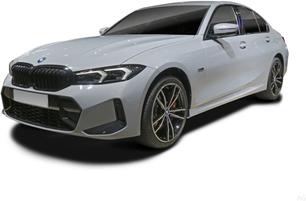
And even though this is a plug-in hybrid version of the 3 Series it's identical in styling to the petrol variants. Only the light blue border around the BMW roundel is the indication that it's an electric vehicle. That and the charging flap near the left front wheel.
The M Sport pack adds some very sexy features such as the M Sport aerodynamic body kit, the door sills and M Sport seats, but the M Sport Pro Pack our car came with adds a black gloss grille, boot lid spoiler and the snazzy seat belts.
The cabin's double screens are impressive but I miss analogue gauges and found the digital instrument cluster overly busy and led more by cool design than functionality.
GAC tells us the UT hatch was designed in Milan, Italy, but it also isn’t ashamed of the Chinese influence on its overall appearance, like the ultra-short bonnet and Chinese city-car style face.
Along the side it has a modern, aerodynamic profile, and the ultra-short overhangs and long wheelbase maximise the amount of room for batteries under the floor and interior space.
The rear feels a lot like a modern Mini, with its bulbous tailgate and protruding light clusters, spiced up with a sporty spoiler piece jutting out.
It’s not a bad looking thing and it’s available in an array of fun colours.
On the inside it seems to follow the established rule-book of Chinese automakers, with plush trims, big screens with minimal physical buttons as well as a contemporary two-spoke steering wheel.
There’s a trendy floating console which hosts the cupholders and wireless charger on the Luxury grade, and an array of interesting patterns and textures through the doors and dash which you wouldn’t have once seen on a car at this price-point.
However, it is worth noting that while the seats are quite nice, and the steering wheel is a stand-out touchpoint, the trims on the doors and across the dash-top are hard plastics, more so than some of this car’s rivals.
People will tell you SUVs are more practical than sedans... and they're right, but not in as many ways as they probably think.
The cabins of sedans and SUVs of the same size are close in terms of space, but the 330e comes with excellent storage - better than many SUVs I've tested, featuring enormous door pockets, and a deep centre console storage bin.
There are four cupholders, too. Two in the fold down armrest in the back and another two up front.
There's also wireless charging up front, plus USB ports for the back passengers. The second row also has its own climate control and directional air vents.
Legroom is excellent in the back and I can sit behind my driving position with plenty of room to spare. Headroom is also excellent thanks to the tall roofline of the 3 Series.
Where a sedan isn't as practical as an SUV is its ride height, which makes getting in and out of the latter easier (although the 330e's doors open very wide) and its boot opening.
SUVs have hatch-like openings and that offers a wider and taller aperture for carrying cargo.
The 330's boot was still big enough to fit our two largest CarsGuide suitcases (see the video), but the location of the battery means cargo capacity has been reduced from 480 litres in a petrol 330i to 375 litres in this 330e.
In terms of interior space, the Aion UT stands out with its spacious cabin. At 182cm tall, I am easily able to find a comfortable seating position, and visibility out the front sides and rear, while not as good as some small SUVs, isn’t bad.
There’s lots of headroom, and while I mentioned the hard plastic door cards before, there’s enough padding everywhere your elbows are going to touch to make it feel a bit nicer than perhaps it is.
The main drawback of this car for me is the lack of tactile buttons and the frustrating software.
The main screen isn’t particularly well utilised, being taken up by either a background or the navigation map, with an array of typically small shortcuts across the bottom for important features like the climate control or settings menus.
You can pre-set a few information panels which sit above the shortcut bar as in many rival cars and there’s also a shortcut tray which can be hosted on the driver’s side and configured with a variety of shortcuts and settings.
It’s just a bit clumsy to use, and the array of poorly-labelled settings menus for things like active safety equipment feel needlessly complicated.
I’d love to see this car with physical controls for climate and multimedia to make it easier to live with.
Up front the storage is decent. There are big pockets in the doors and a large storage tray between the driver and front passenger thanks to a flat floor. There’s also a slightly weird storage box under the touchscreen which has a net inside, good for more delicate objects you don’t want flying around the cabin.
On the floating console there are two cupholders which are a bit too shallow for my liking, and the wireless charger feels almost pointless because its made of a hard plastic, so your phone just slides right off in the corners. The cabled outlets are hidden beneath which allows for tidy cable management and the centre armrest console box is a healthy size.
The rear seat is comparatively basic, although touches on the key points. Its main advantage is how generous the space is. My frame was able to fit behind my own driving position with heaps of room for my knees, and just enough room for my head despite the dip in the roof for the sunroof shade in the Luxury-grade car we tested. There may be even more headroom in the base car.
The flat floor makes the space useful even for three across in a pinch and there’s a drop-down armrest with (again, shallow) cupholders. There are pockets on the back of both front seats and smallish pockets in each door. The array of soft trims continues, too, and the back of the centre console features a partially adjustable air vent. Luxury spec cars get a single USB rear power outlet.
As with many Chinese cars in this segment, the generous rear seat space comes at a cost to the boot. It measures just 321 litres, which is slightly smaller than its main opponents in this category, although larger than some hatchbacks like the Toyota Corolla, for example.
It has its advantages, though. The floor is two-tiered, and can offer a flat load area with the rear seats folded down, or a deeper boot in its lower position. Underneath there’s a cutaway good for charging equipment and the tyre repair kit (sorry, no spare wheel in here).
Unlike some EVs, the Aion UT doesn’t get a frunk (front boot) for additional storage.
The BMW 330e M Sport lists for $97,400, which is $4000 more than its 330i petrol twin.
The M Sport part of the name is there because the 330e comes standard with the M Sport pack. And that gives you a tough body kit, M Sport suspension, M Sport seats and aluminium trim, as well as M Sport door sills.
The car we tested and the one you can see in the video and images also comes with the 'M Sport Pro Package'. It costs $2800 and adds a boot-lid spoiler, glossy black grille and tail pipes, and M Sport seat belts, among other goodness.
This car also had the optional 'Visibility Package' fitted. It costs $4800 and adds a sunroof and adaptive LED headlights.
There's no direct rival for the 330e in Australia now. Mercedes Benz used to have a C300e, a plug-in version of its C-Class, but retired it locally some time ago.
The standard features of the 330e M Sport are identical to the 330i M Sport.
So, along with that M Sport pack also coming standard on the 330e is a head-up display, a 12.3-inch digital instrument panel, a 14.9-inch media screen with sat nav, Apple CarPlay and Android Auto, three zone-climate control, wireless phone charging, digital radio and power adjustable front seats.
Is it good value? There's a stack of equipment, tech, beautiful M Sport additions and it all feels superbly high quality. But knowing you can have a 330i for less means you're paying more just for the hybrid system. So, let's talk about that...
The GAC Aion UT starts from $31,990, before on-road costs, for the entry-level Premium grade, which makes it the third-most affordable EV you can buy in Australia after the city-sized BYD Atto 1 and the entry-level version of the BYD Dolphin.
It sits closer to price-parity with the GWM Ora, but is significantly more affordable than the rear-drive MG4 and more spec-competitive top-grade BYD Dolphin.
The bigger threat to the Aion UT is that a lot of buyers will be willing to spend slightly more to get into one of the most affordable electric small SUVs, like the BYD Atto 2 or Jaecoo J5.
Still, GAC makes a solid pitch for its hatch, which offers a higher spec level than its most direct price rivals.
For example, the Aion UT is more powerful than the entry-level Dolphin and Ora while offering a higher level of interior equipment.
Even the just-arrived front-drive MG4 Urban also starts at $31,990, but that’s for a version with significantly less driving range.
In fact, I’d go so far as to say the entry-level version of the Aion UT (the confusingly-named Premium) is probably the pick of the two variant range.
Standard equipment levels on this car include 17-inch alloy wheels, LED lighting all around, synthetic leather interior trim with heated and power adjust front seats, a 14.6-inch multimedia touchscreen with online connectivity and built-in nav as well as wireless Apple CarPlay and Android Auto.
There’s also an 8.88-inch digital instrument cluster, heated steering wheel and the full array of safety kit.
With the same power and battery size, this leaves only arguably unnecessary luxuries for the Luxury grade, like a wireless phone charger, ventilated driver’s seat, auto dimming rear vision mirror with auto power folding wing mirrors, a powered tailgate and of course, a panoramic sunroof (with shade!).
The 330e M Sport has a 2.0-litre petrol engine and an electric motor. The engine makes 135kW while the motor produces up to 80kW, for a combined dollop of 215kW. Total torque is more than sufficient at 420Nm.
Acceleration to 100km/h from zero feels as quick as the 5.8 seconds BMW claims and that's also about a tenth of a second brisker than the 330i.
The 'XtraBoost' function combines the total output of both the engine and motor briefly providing that great acceleration.
An eight-speed automatic shifts gears smoothly with the drive going to the rear wheels.
I like all this very much - the responsive engine, the fantastic transmission, the extra oomph from the motor and the way it all works together seamlessly. It's just a shame it's not as efficient as some other new plug-in hybrids.
The Aion UT has a front-mounted electric motor producing 150kW/210Nm. That’s plenty punchy for any hatchback at this price, and I like the way the brand hasn’t messed around with a sub-100kW motor in the base variant to push prospects towards the top-spec car.
It’s more powerful than all of its closest rivals and at the time of writing you’ll have to spend four to six thousand dollars more to get into something equivalent from BYD, Chery, Jaecoo, Leapmotor or MG.
It even has a claimed 0-100km/h sprint time as low as 7.3 seconds.
The 330e M Sport is a plug-in hybrid which must be connected to an external power source regularly to charge its 12kWh battery.
The charging flap is located on the left side of the car near the front passenger door, which worked well for me as I could steer the 330e into my driveway and connect to a powerpoint on the wall using the charging cable provided.
It took me about six hours to charge the battery to 100 per cent from zero and that gives you a maximum 57km of electric driving range.
During my four days with the 330e Sydney's summer temperatures were hitting 34-degeres Celsius and with the climate control keeping the cabin at a hospitable 18C electric range was seriously cut short to about 40km.
I drove the 330e in hybrid mode nearly all the time - this is a hybrid after all. But there is a 'Sport' mode for more grunt and a 'Battery Hold' mode to save the charge for later.
I started with a full charge and a full tank of petrol, and for four days I lived with the 330e as I do with all my test cars.
I didn't aim to get the best fuel economy ever, nor was I wasteful with fuel. My wife and I, plus our two kids, just used it as our family car, doing trips to the beach, endless laps of the supermarket car park looking for a space, a birthday party, the lot.
I drove 154.7km over those four days and charged it on the second day after the battery was drained completely before driving another 70km or so over the next couple of days.
When I filled up after this it needed 7.74 litres to reach full again - it's a small 41 litre tank.
That converts to average fuel consumption of 5.0L/100km, which is bang on double the 2.5L/100km BMW says you should get.
I don't doubt you could get 2.5L/100km, but you'd have to be doing short trips and charging almost every time you weren't driving. And not use the climate control on an icy blast setting.
I've tested other plug-in hybrids that achieved much better mileage and that's because their on-board charging capabilities were excellent.
Some were even able to use the petrol engine to power the motor in reverse and therefore act as a generator to recharge the batteries fully.
The 330e M Sport doesn't do a good job of charging its battery while on the go. Sport mode does recoup charge to the battery, but again, if you're doing a long motorway trip that charge evaporates fast.
I don't think this type of plug-in hybrid is suited well to our country where we don't blink an eye at travelling 100km for Christmas lunch and then drive back again.
Also think about if you ever go on a trip away and don't have access to a power point or public charger. It's happened to me.
The Aion UT has a 60kWh lithium-iron phosphate (LFP) battery pack, which grants it a WLTP-certified 430km of driving range.
That’s more than its closest rivals, like the entry-level Ora Standard Range (310km), BYD Dolphin Essential (410km) or BYD Atto 2 (345km).
Claimed efficiency is 16.4kWh/100km and the car I tested returned a consumption of 14.0kWh/100km over a 130km route of mixed conditions, which isn’t bad at all.
Charging speeds are less impressive, but realistically appropriate for the relatively small battery. The peak DC charging capacity of 87kW means a charge time which the brand quotes at 24 minutes, but this is from 30-80 per cent. Expect closer to 40 minutes for a 10-80 per cent charge.
AC charging is decent, at 11kW. This should have you charging from 10-80 per cent between four and five hours.
The 330e M Sport is outstanding to drive. The driving position is superb, the steering is effortless and accurate, handling is excellent and the ride is beautifully comfortable.
Brake pedal feel is surprisingly good for a hybrid - some have a wooden sensation.
The transition from electric motor to petrol engine is also remarkably smooth.
Acceleration in Sport mode is sudden, with the engine and motor combining their mumbo to move you. There is a 'fake' or synthesised exhaust note in Sport mode, but it sounds convincing.
Speaking of sounds at lower speeds, in fully electric mode the 330e emits a warning tone to alert pedestrians of your presence. It's quite loud in car parks and does actually make people turn around looking for a UFO.
The drive experience can be where a lot of Chinese cars fall down but I walked away less frustrated by the Aion UT.
That’s not to say it will behave as you might expect a low-slung hatchback to. The suspension, for example, is extremely soft as it maintains its original Chinese-market state-of-tune.
This makes the car waft over imperfections on city roads. And in that sense it offers supreme ride comfort in the scenarios it was designed for. However, at the extremes, like some speed bumps, or particularly deep pot holes there can be a surprisingly violent re-bound sending a thud through the cabin.
The other trade-off for soft suspension is less body control. I was surprised to find that the Aion UT holds it together mostly well on a flat country B-road, but when undulations and big dips introduce themselves, the soft suspension can be too slow to react, making the car lose confidence in higher-speed open road scenarios we’re more used to in Australia.
The steering, like many electric cars in this category, is relatively heavily electrically assisted. This makes it light and easy to adjust at low speeds for easy park and maneuverability in the confines of a city. It loses a little bit of road-feel at higher speeds but the Aion UT’s steering is far from the least connected I’ve experienced recently.
One thing it can’t be criticised for is a lack of power. With 150kW instantaneously available the Aion UT has some serious poke and while the ChaoYang tyre package is tuned more for efficiency than grip, it’s again not one of the worst I’ve driven with.
One thing which helps the whole experience along is this car’s hatchback layout. With the weight of the battery low and squat and the wheels all the way out to the edges of the frame, the Aion UT inherently handles decently compared to an electric crossover or small SUV.
Like all Chinese cars, the UT has a host of occasionally frustrating driver aids, which you can read about in the Safety section below. While I was inclined to turn some of the features off after testing them, the alerts are relatively quiet and non-invasive.
Is the UT any good to drive? It’s not bad for the segment, I was largely pleased with how it handled and the power on offer, and while it still has its annoyances, they’re not big deal-breakers.
The MG4 rear-drive is a better allrounder, while the GWM Ora isn’t as good. I’d say it’s on par with the BYD Dolphin, but they excel in different areas. The Dolphin's a bit sharper in terms of handling but the Aion UT is more comfortable.
The 3 Series was awarded the maximum five-star ANCAP rating when it was tested in 2019. The 330e comes standard with AEB, lane keeping assistance, blind-spot warning and rear cross-traffic alert.
There are excellent cameras front and rear and LED headlights, too.
Adaptive cruise control is also standard on the 330e M Sport.
As with many Chinese cars the list of active safety equipment is long but that doesn’t mean it’s particularly well calibrated.
Standard gear includes the key stuff like auto emergency braking (AEB), lane keep assist, blind-spot monitoring, rear cross-traffic alert and adaptive cruise control. There are also rarer features for an affordable car like this including traffic sign recognition, door open warning, auto high beams and front cross-traffic alert.
On the parking front you get a 360-degree parking camera view as well as front and rear proximity sensors.
There's also an annoying driver monitoring system and one I haven’t seen much in the form of an occupant warning system, which seems to imagine you’re not wearing a seatbelt when you are.
It’s not the only safety system I found myself reaching to turn off. The lane keep assist could occasionally be a bit heavy-handed and the traffic sign alert was typically frustrating. This, sadly, is what we’ve come to expect from these types of systems from many Chinese automakers.
It’s not the most annoying system I’ve used, though, and the alerts are quiet enough and far enough apart that they aren't as intrusive as they can be in some rivals. You can also adjust the tolerance of some of the systems in the (needlessly complicated) menus to make them less annoying.
At the launch, the Aion UT was yet to be rated by ANCAP.
The 330e M sport is covered by BMW's five-year/unlimited kilometre warranty. The hybrid battery is covered by a six-year/100,000km warranty.
BMW offers a five-year/80,000km service package for the 3 Series for $2150.
Service intervals are condition-based, and the car will let you know when it's time for a check-up.
GAC covers this electric hatch with an eight-year and unlimited kilometre warranty, while the brand’s “magazine battery 2.0” is covered by a separate eight-year and 200,000km warranty. Five years of roadside assistance is included.
The Aion UT needs to be serviced once a year or 15,000km. The service price schedule extends all the way out to 240,000km with yearly visits costing between $199 and $640 but for the life of the warranty the average yearly cost comes in at $352.
There are currently 19 GAC dealers in Australia, confined mainly to Melbourne, Sydney and Brisbane with a single store in Perth and an outlier in Cairns. No representation yet in Tassie, Canberra, the Northern Territory or SA.