What's the difference?
Over 44 years BMW has produced more than 15 million examples of the 3 Series. That's roughly one every minute and a half... for over four decades.
And the latest, seventh-generation version of what the famous German maker defines as the "heart and soul" of its brand has landed in Australia.
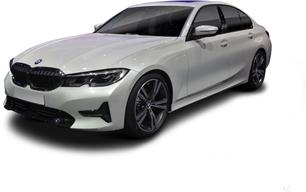
The new '3' is longer and wider. It's also claimed to be slicker aerodynamically, up to 55 kilos lighter, more fuel efficient, and faster.
And it'll need every advantage it can muster to take a chunk out of its arch rival, the all-conquering Mercedes-Benz C-Class.
MG needs a win, and the MG4 Urban may be the right car at the right time to give the Chinese brand a major boost.
It has been a rough few years for MG, with sales in decline for the past two years, which has seen it tumble from Australia’s favourite Chinese car maker to a distant fourth place behind BYD, GWM and Chery.
Part of that could be because of its rapid expansion, both in terms of its total number of models but also the size of the vehicles it’s offering. The larger QS SUV and U9 ute have both received underwhelming responses from the car-buying public.
So, MG has returned to its roots - small, affordable cars. The MG4 Urban, not to be confused with the MG4 Hatch, is its new price-leading electric car and the company’s new management hopes it leads a sales revival.
Despite BMW's wholehearted embrace of the SUV its 3 Series is still a critically important model for the brand in Australia. And this new version certainly has the spec and tech to take the fight up to Merc's C-Class. And if you're in the happy position of making that choice, it's now a whole lot harder. For our money the 330i marks the sweet spot with extra performance, safety tech and standard features for only a fraction more than $3k over the 320d entry-point.
The MG4 Urban is not only the right car at the right time, perfectly catering to buyers looking to avoid rising petrol prices, it’s also a welcome return-to-form for MG as a brand.
MG is seemingly at its best when it sticks to small cars. It has traditionally excelled with the MG3 and ZS, smaller, more affordable products that keep expectations in check and can win over customers looking for the best bang-for-their-buck rather than simply the best car.
That’s not to say the MG4 Urban isn’t a good car. It offers tremendous value for money, excellent interior space and drives nicely, so anyone who has been considering making the switch to an EV should seriously consider this new arrival.
Note: CarsGuide attended this event as a guest of the manufacturer, with meals provided.
At just over 4.7m nose-to-tail the new 3 Series has crept 76mm in overall length but that dimension is still more than 200mm shy of its next-size-up 5 Series sibling.
Changes to the exterior design are more evolutionary than revolutionary. You're never going to mistake this car for anything other than a BMW 3 Series.
But even if the face is familiar, aerodynamic efficiency is outstanding. BMW admits its claimed Cd of 0.23 was achieved with a base model running on 17-inch wheels (not offered here), but even if bigger rims knock a few fractions off that number it's still an amazing result for a conventional four door sedan.
Big contributors are a full width front spoiler, 'air curtains' managing flow around each corner of the nose, almost complete sealing of the largest areas underneath the car, and a functional rear diffuser section.
The signature kidney grille has grown and is delivered as a single piece, with active shutters incorporated to manage cooling air flow through to the engine. Twin adaptive LED headlights (standard on all models) feature a sharp notch on their lower edge, a big clue for new model spotters.
Broad, carefully managed surfaces characterise the bonnet and flanks of the car, with a distinct character line just above door handle height enhancing its confident stance.
The slightly smoked L-shaped LED tail-lights sit proud of the body, and 18-inch alloys are standard on the 320d, stepping up to 19s on the 330i.
The interior has been redesigned with revised controls and new materials, including slick 'aluminium teragon' finish on the console and dash in the M Sport.
As you can see in our interior images, it's been tidied up and simplified considerably, although it will still be instantly recognised by current BMW drivers.
Highlights are a 12.3-inch configurable digital 'Live Cockpit Professional' instrument display (lifted directly from the X5), a new 10.25-inch media touchscreen and a standard (larger) head-up display.
MG says the design inspiration for the MG4 Urban came from the $100,000 Cyberster. While there are certainly a lot of differences between that roadster and this hatchback, the air-intakes and wheel design are indeed very similar. And I guess the badge is the same too, so there’s that…
But, comparing it to the Cyberster misses the point. What makes the MG4 Urban’s design more interesting is the bits you can’t see. While it shares the same name as the MG4 Hatch, this car has almost nothing in common with it. That’s because this new MG4 Urban is based on the brand’s newer EV underpinnings that debuted on the MGS5 EV.
That means the MG4 Urban is front-wheel drive, whereas the hatch is rear-wheel drive, and because of the way the battery is integrated into the chassis, it creates not only a bigger hatchback but also one with a different shape.
The Urban is more ‘cab forward’ (to use design parlance) meaning a shorter bonnet, which creates more cabin room. It also means there is more boot space because the powertrain is located up front.
MG does a good job with cabin presentation too. It’s another step forward for the brand, improving the overall level of fit and finish from its earlier models, to create a cabin that looks modern and doesn’t feel like it has been built to a price.
A longer wheelbase (+41mm) has helped increase overall cabin space and rear room specifically.
There's plenty of storage provided with a large lidded box between the front seats as well as two large size cupholders in a recessed section in front of the gear shift (which can be closed off with a roll-top style cover).
The glove box is large and there are big bins in the doors with separate holders for full-size bottles.
Rear legroom is generous. At 183cm, sitting behind my own driving position, there was plenty of fresh air between knees and seatback, with lots of foot room to boot.
Headroom was more marginal with a straight back leading to a bonce/roof interface. But there are adjustable rear vents, twin cupholders in a fold-down centre armrest, and big bottle holders in the doors. Multiple USB ports (Type A and Type C) and a 12-volt power outlet are provided front and rear.
The boot space offers up a 480-litre luggage capacity with a 40/20/40 split-folding rear seat increasing cargo flexibility. Local towing capacity is yet to be confirmed, but indicative (European) ratings for both models are 750kg for an unbraked trailer and 1600kg braked.
Standard rubber is run-flat so there's no spare of any description.
As I just mentioned, the cabin is bigger than the other MG4, which creates good space in both seating rows.
Up front they’ve placed the gear selector on the steering column to create space for more storage in the centre of the car. That means there’s plenty of shelves, cubbies and cup holders to take care of your small (and not so small) items, spread across the cabin.
As for the boot, the switch to a front motor and a smaller rear suspension means a 382-litre boot with all seats up and 1266L if you drop the back seats. Plus there’s a 98L underfloor storage spot, in place of a spare wheel (with a puncture repair kit included instead).
The design of the key controls are simple and easy to use, with a digital display for the instruments ahead of the driver and a 12.8-inch multimedia screen in the centre of the dashboard.
Navigating the menus is relatively straightforward but in a victory for user-friendliness, MG has listened to feedback (and incoming Chinese government regulations) and added some physical controls. There are buttons and a dial for the air-conditioning system and a volume knob for the sound system.
Pricing for the two-model launch line-up starts at just under $67,900 before on-road costs for the 320d, rising to $70,990 for the 330i.
That means it remains head-to-head with comparable Merc C-Class models, and other premium mid-size competitors like the Audi A4, Jaguar XE and Lexus IS.
Given many previous Australia-bound 3 Series models have been built in South Africa it's fair to ask where is the BMW 3 Series built, and the answer this time around is Germany.
And the standard features list is long, including 'Adaptive LED headlights' (with 'High-Beam Assistant'), LED fog lights and tail-lights, electrically adjustable and heated exterior mirrors (with electric fold-in function), rain-sensing wipers, three-zone climate control, electrically-adjustable sports front seats (with memory function for driver and front passenger), wireless smartphone charging, 'Aluminium Tetragon' interior trim finishers, 12.3-inch 'BMW Live Cockpit Professional' digital instrument display, 'Navigation System Professional' with 10.25-inch digital touchscreen display also managing a 10-speaker, 205-watt sound system, including a 20GB hard drive and DAB+ digital radio. Apple CarPlay is included.
Also included are 'BMW TeleServices' taking in 'ConnectedDrive'(free use of vehicle apps via 'BMW Online'), real-time traffic info and 'Concierge Services'. The 'BMW Intelligent Personal Assistant' responds to a "Hey BMW' voice command with a range of hands-free functions like nav, calls and texts. We had mixed success in challenging this friendly PA.
The default M Sport trim includes 18-inch 'M Double-spoke' light alloy wheels, BMW Individual high-gloss 'Shadow Line' black treatment on the window frame and air breather surround, the 'M Aerodynamics package' (aero front and rear bumper trims, and side sills), Alcantara/Sensatec (vinyl) upholstery (black with contrast blue stitching), Anthracite BMW Individual headliner, and an M leather steering wheel (with multifunction buttons).
The no-cost 'Luxury Line' treatment swaps in 'Vernasca' leather seats, ash grey-brown interior wood trim, a sport leather steering wheel, the instrument panel trimmed in Sensatec and standard level sport seats for the driver and front passenger.
Step up to the 330i and you can add 19-inch alloys, 'Vernasca' leather upholstery, 'Comfort Access' (keyless entry to all doors), adaptive suspension, M Sport brakes, 'Driving Assistant Professional' (active cruise control with 'Stop&Go' function, front and rear cross-traffic warning, steering and lane control assist, lane keeping assistant with side collision warning, crossroads warning and 'Evasion Aid'), and 'Parking Assistant Plus' ('Parking Assistant' with 'Active Park Distance Control' rear, 'Reversing Assistant', 'Surround View', 'Panorama View', and '3D View').
In terms of colours, 'Alpine White' and black are no-cost, wihle metallic shades - 'Black Saphire', 'Melbourne Red', 'Glacier Silver', 'Mineral White', 'Mineral Grey', 'Mediterranean Blue', 'Sunset Orange', 'Velmont Bronze' (brown), and 'Portimao Blue' add $2000 (rrp). And the 'BMW Individual' metallic shade of 'Dravit Grey' adds $2350.
Lots and lots of fruit without any change to the price. Clearly BMW is determined to bring the 3 Series back to prominence.
MG made its reputation in Australia by selling some of the most-affordable models on the market, filling the hole left by mainstream brands like Toyota, Hyundai and Mazda as they increased the entry-level prices in their respective line-ups. Something MG itself tried with the HS, QS and U9, as it expanded beyond the once-popular MG3, MG5 and ZS.
The MG4 Urban is a return to form in that sense for MG, with this new small car starting at just $31,990 drive-away. For context, the MG4 Hatch starts at $37,990 drive-away, so this is a much cheaper proposition. That starting price is for the MG4 Urban Standard Range, the Extended Range variant is priced from $34,990 drive-away.
That pricing does not feel accidental from MG Australia, despite what they may suggest when pressed. That’s because the new BYD Atto 2, the direct rival to the Urban, starts at $31,990 plus on-road costs. Even so, BYD has the last laugh, because it offers both the BYD Atto 1, which starts at $23,990, and the Dolphin, which is priced from $29,990 - to undercut the MG4 Urban, even if neither are considered direct competitors.
In terms of specification, both the Standard Range and Extended Range have the same equipment with the exception of the obvious - a bigger battery, and more power from the motor.
Standard equipment highlights include 17-inch alloy wheels, LED headlights and tail-lights, a leather-wrapped steering wheel, PVC seat upholstery, heated front seats, Bluetooth connectivity with wireless Apple CarPlay and Android Auto, in-built navigation and a six-speaker stereo.
The 320d is powered by a 2.0-litre four-cylinder twin-turbo-diesel, featuring common-rail direct-injection and variable inlet timing. It produces 140kW at 4000rpm and 400Nm between 1750-2500rpm.
The turbo's multi-stage design incorporates a small, high-pressure, fixed-vane turbocharger as well as a larger, low-pressure, variable-vane turbo to maximise response, performance and efficiency.
A 2.0-litre single turbo-petrol four-cylinder engine sits under the 330i's bonnet incorporating direct-injection, as well as variable valve and cam timing. Peak outputs are 190kW from 5000-6500rpm and 400Nm between 1550-4400rpm.
Mark the date because this is the first time the BMW 3 Series has been offered in Australia without a manual gearbox option. Both launch models send drive to the rear wheels via an eight-speed automatic (with wheel-mounted shift paddles) only.
The MG4 Urban Standard Range is powered by a 110kW/250Nm electric motor that drives the front-wheels via a single-speed transmission. The Extended Range has slightly more performance, 118kW and 250Nm, but aside from that they are the same motor.
Despite each car's performance potential claimed fuel economy for the combined (ADR 81/02 - urban, extra-urban) cycle is commendably low.
BMW says the 320d delivers excellent diesel fuel economy, consuming a miserly 4.5L/100km, emitting 119g/km of CO2 in the process, with the 330i's fuel consumption figure coming in at 6.4L/100km and 147g/km.
You'll need minimum 95 RON premium unleaded in the 330i, with both petrol and diesel requiring 59 litres to fill the tank to full capacity.
The biggest difference between the two MG4 Urban variants is the battery. The Standard Range has a 43kWh battery good for 316km of driving between charging, while the Extended Range gets a bigger 54kWh battery to make it capable of up to 405km.
We didn’t drive the car long enough to get a clear indication of real-world efficiency and range, but it performed well during our drive in suburban Sydney. The steady stop-start traffic gave the battery its best chance to perform well and the early indications are its range is close to claim, at least under the right circumstances. We’ll have to reserve definitive judgement until we’ve had a longer test drive.
What MG was very keen to highlight are the cost savings of buying an EV at a time of sky-high petrol prices. The company made a point that using off-peak electricity, which can be had for just 6c per kW from certain providers, means you can replenish the battery of the MG4 Urban Standard for just $3.44.
First, the performance figures. BMW claims the 320d will accelerate from 0-100km/h in 6.8sec, which is agreeably quick, while the 330i knocks that down to 5.8sec, which is properly fast.
Both engines deliver the same 400Nm of maximum torque at low rpm; 1750-2500rpm for the 320d, and a broader 1550-4400rpm spread for the 330i. Mid-range acceleration is strong and satisfyingly linear in each, the 330i that bit more urgent at the top end.
The eight-speed auto is velvety smooth, with the wheel-mounted shift paddles on hand for rapid 'manual' changes. Engine noise is muted at low revs but nice and rorty under pressure.
A stated aim in the development of this 3 Series was "dynamic engagement", and the standard strut front, multi-link rear suspension has been tuned to reinforce the driving part of the brand's long-standing 'ultimate driving machine' promise.
The standard suspension includes tricky two-stage dampers front and rear, but with all cars at the local launch fitted with the optional active damper system we'll have to wait to report on its quality (or otherwise).
This car's centre-of-gravity is 10mm lower than the model it replaces, which may not sound like much, but in engineering terms, absolutely is. In concert with a perfect 50:50 front-to-rear weight distribution, and wider tracks front and rear, it helps deliver an overall planted feel and predictable cornering balance.
The electro-mechanically assisted steering is accurate and linear with good road feel, which is not always the case in recent Beamers.
The launch fleet was also rolling on 19-inch rims (standard on 330i, optional on 320d) shod with Bridgestone Turanza run-flat rubber (225/40f - 255/35r) and despite that type of tyre's reputation for harsh characteristics and a moderate level of road noise, ride comfort on the typically coarse rural roads we covered in the Victorian high country was impressive.
Braking on both models is by ventilated disc front and rear, and even in spirited cornering maintained their power and efficiency. The M Sport brake package fitted to the 330i dials things up with four-piston alloy calipers (sourced from Brembo) up front.
The standard sports steering wheel is fat and grippy, the sports front seats combine firm location with long-distance comfort and overall noise levels are low. Overall, this is a super-impressive touring car.
What really stood out about the MG4 Hatch is its rear-motor, rear-wheel-drive layout, which made it a very dynamic and almost sporty car. In my 2023 review I called it “a genuinely enjoyable small car to drive".
The MG4 Urban doesn’t quite leave the same impression. Again, we had only a brief and (appropriately) urban test drive around Sydney’s beachside suburbs, but the MG4 Urban proved competent rather than commendable.
But, let’s be honest, unless you’re looking for driving thrills in the wrong place (affordable, city-focused hatchbacks) the MG4 Urban does the job it is required to do. It’s as nice as any other mainstream hatch to drive from Point A to Point B.
The ride could be a little softer and more compliant, with the suspension feeling too firm at times, but with its electric motor it’s a quiet and relaxed driving experience. The electric motor provides adequate performance too, certainly more torque in less time than you’ll get in a petrol-powered hatch.
Curiously, MG Australia executives said the MG4 Urban was locally evaluated and tuned but could only offer a vague mention of ‘holistic’ changes to better suit it to local conditions, rather than pointing to any specific Australia-developed changes to the suspension, steering or powertrain.
The new 3's active safety package is exactly where it needs to be, with all the 'cost-of-entry' items like ASC, DSC, ABS, 'Braking Assist', and traction control included. But additional tech includes everything from all-speed AEB, 'Lane Departure Warning', 'Lane Change Warning', head-up display and 'Front Collision Warning' (with brake intervention), to 'Cornering Brake Control', 'Rear Cross-Traffic Warning', 'Rear Collision Prevention', 'Speed Limit Information', 'Parking Assist' (with 'Reversing Assistant') and 'Dynamic Braking Lights'.
Step up to the 330i and you can add 'Steering and Lane Control Assist', 'Emergency Stop Assistant', 'Auto Speed Limit Assist', 'Lane Keeping Assist', 'Front Cross-Traffic Warning', 'Evasion Aid', 'Crossroads Warning' (with 'City Braking' function), 'Wrong Way Warning', as well as 'Parking Assistant Plus' (with 'Surround View Camera' and 'Remote 3D View').
On the passive side, the airbag count runs to eight (front and side airbags for driver and front passenger, and head airbags for all four outer seats). 'Intelligent Emergency Call' is also included.
There three top tether anchors for child seats/baby restraints across the back seat, with ISOFIX anchors on the two outer positions.
This seventh-generation 3 Series is yet to be assessed by ANCAP or EuroNCAP, but it's a safe bet it will pick up a maximum five-star safety rating.
It may be small and cheap, but that doesn’t mean MG has cut corners on safety. The MG4 Urban comes equipped with the MG Pilot and a suite of active safety features, including adaptive cruise control, autonomous emergency braking, lane keep assist, blind spot monitoring, driver attention monitoring and speed limit notification.
The latter two are the most evident, as they provide a steady soundtrack of beeps as you drive along. Take your eyes off the road for more than a few seconds as the driver attention system fires up, while the speed sign recognition gets busy in Australia’s ever-changing speed limits.
While MG has undoubtedly improved the sensitivity of some of these systems compared to other models, they are still more active than rival products. Perhaps more concerning, the speed limit recognition repeatedly beeped to tell me I was in a ‘25km/h’ zone, which is simply not a recognised speed limit on Sydney roads.
Like so many other brands, MG needs to further refine these active safety systems in order to make the driving experience more relaxed and less distracting.
MG says the MG4 Urban has secured a five-star rating from Euro NCAP, which is expected to be carried over by ANCAP.
BMW offers a three year/unlimited km warranty, which is drifting off the pace now with the majority of mainstream brands stepping up to five-year cover, with some at seven.
On the upside, bodywork is covered for 12 years, the paint for three, and 24-hour roadside assistance is complimentary for three years.
Servicing is condition based, so the car tells you when maintenance is required, and BMW offers a range of service packages in 'Basic' and 'Plus' grades up to 10 years/200,000km.
The MG4 Urban is covered by the brand’s 10-year/250,000km warranty, as long as you service it at an official MG service centre. If you don’t get your car serviced with the company directly, your warranty reverts to seven-year/unlimited km coverage.
Servicing intervals are every 12 months or 25,000km and will cost you $1366 over the first five years. The cheapest visit is just $149 but the major service, after four years, is a pricey $472, which does push against the idea that EVs are cheaper to service due to less moving parts.