What's the difference?
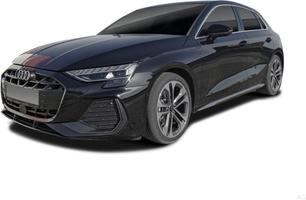
In a world where car upgrades often feel like saying, “Can I upsize that?”, it’s refreshing to hop into the updated Audi S3 Sportback.
The flagship RS 3 may still be the holy grail of hot hatch dreams, but with boosted engine outputs and upgraded tech, the S3 is stepping up.
Is the S3 Sportback the smarter pick over pricier rivals? It delivers serious performance and polish without stretching into RS 3 territory. With fierce competition in the segment, let’s see what this contender brings to the table.
Most buyers don’t care for sedans these days, but those in the premium market are still spoilt for choice, with new model after new model being launched.
The latest on offer is the new Audi S6, which once again attempts to mix executive style with boy-racer performance.
With its predecessor’s 4.0-litre twin-turbo V8 succeeded by an engine that is 1.1 litres and two cylinders short, does it still serve up enough bang for your back?
Of course, the only way to find out is to put the new S6 sedan to test, so that’s exactly what we did. Read on.
The updated Audi S3 Sportback is a fun-sized dynamo with impressive outputs and athletic road manners. It’s missing a few premium features, but its compact size paired with a gutsy engine makes it a compelling option for drivers who don’t want to compromise on performance (just space).
We adore the new S6 sedan. It looks great, feels comfortable and goes like stink all at the same time. What’s not to like?
It also helps that it is relatively good value, safe and practical by large-sedan standards, so it’s a bit of a no-brainer.
But will buyers be quick to dismiss the new S6 sedan because it’s not a more practical SUV? Time will tell, but we hope not.
Does the new Audi S6 sedan represent the best mix of executive style and boy-racer performance? Tell us what you think in the comments below.
The S3 Sportback may be a small car, but its S design features, like the stylised blackout grille, matrix LED headlights, and 19-inch alloys with red brake calipers, give it a distinctly athletic and fun-loving vibe. It’s compact, but definitely not diminutive and carries serious road presence. It’s hot hatch meets fun-size.
Inside, the S3 looks fabulous. Integrated ambient lighting, a sharp dashboard treatment and a driver-focused cockpit all lend it a premium feel.
The front seats look properly sporty with their integrated headrests, and the quilted Nappa leather upholstery feels great, especially with the eye-catching red contrast stitching.
As for technology, it’s as high-end as you’d expect with a 10.1-inch touchscreen multimedia display and 12.3-inch digital instrument cluster taking centre stage.
The only drawback? No sunroof. Combined with the black headliner and compact cabin, it can feel a little gloomy at times. Still, it’s a cabin you’ll enjoy spending time in.
To these eyes, the new S6 sedan is very attractive, albeit not outlandish, in keeping with its executive focus.
Up front, the subtly aggressive S body kit immediately comes into frame, with the bumper sporting sinister-looking side air intakes.
And, of course, there’s Audi’s signature Singleframe, which is not only large and in charge, but also finished in gloss-black, like many of the S6 sedan’s exterior design elements.
Below the heavily creased bonnet, the HD Matrix LED headlights look both angry and sophisticated, with their integrated LED daytime running lights (DRLs) providing a crisp signature.
Around the side, the S6 sedan goes about its business quietly, but its blistered wheelarches do add some bulk and help to accentuate its strong shoulder line.
And then there are the thick skirts and 21-inch alloy wheels (with a space-saver spare), which have a sporty twin five-spoke design. It’s all very classy.
Speaking of which, the rear end is arguably the S6 sedan’s best angle thanks to its wicked LED tail-lights, which have a segmented signature.
The chunky bumper below incorporates a diffuser element that houses the quad exhaust tailpipes, while a blink-and-you’ll-miss-it bootlid spoiler rounds out the look.
Inside, the S6 sedan is a technological tour de force, with 10.1- and 8.6-inch touchscreens dominating its centre stack. The former is responsible for most of Audi’s latest multimedia system’s functions, while the latter takes care of the climate controls.
This set-up works pretty well, although a few too many taps are required for certain functions, and then there’s the issue of the glass display coverings, which are absolute fingerprint magnets alongside the gloss-black accents used throughout.
That said, the 12.3-inch digital instrument cluster and windshield-projected head-up display on hand are brilliant. In fact, they set the standard for the entire industry thanks to their design and breadth of functionality.
The S6 sedan does, of course, feel a little bit more special than the regular A6 inside, with the obvious additions being the front sports seats, which are covered in supple Valcona leather alongside the armrests. They even have diamond-stitched inserts.
Then there’s the obligatory flat-bottom steering wheel (with paddle-shifters), which is trimmed in Nappa leather alongside the gear selector, upper dashboard, door shoulders and knee rests. Indeed, hard plastics are hard to find here.
Meanwhile, a black headliner adds to the sportiness alongside the black Alcantara door inserts, but the cabin is otherwise a familiar (read: classy) affair.
Like most hatches, the front row enjoys the most space. While it’s cosy, it never feels cramped. The seats are firm yet comfortable, thanks to their adjustability and expandable under-thigh supports. Access is fairly easy with wide door apertures, though the low seating position might earn a few grunts, especially from taller folks.
Storage up front is well sorted, with a glove box, a small centre console, a dedicated phone cradle and a couple of cup and bottle holders. It’s about what you'd expect for a car this size, but it's enough to keep things tidy.
There are plenty of charging options, with two USB-C ports in each row and a wireless charging pad up front.
The multimedia system is intuitive and easy to use. The touchscreen is responsive, and wireless Apple CarPlay connected without fuss and stayed connected all week. Wireless Android Auto is available, too.
Built-in sat nav is clear, and I love the way directions pull through to the digital instrument panel. The Sonos sound system? Pretty darn good. My son and I had more than one mini-concert on the school run.
As for the rear row, it definitely reminds you this is a small car. At 168cm, I found it on the cramped side of cosy and my husband just laughed when I asked him to try it! The wheel arch also cuts into the door aperture, making access a little awkward. Best to think of it as occasional adult seating. But given the size, that’s no surprise.
Amenities in the back are decent with a couple of map pockets, cup and bottle holders, as well as a fold-down armrest, those USB ports and rear temperature control (but curiously, no fan control). The seats are comfortable enough, but space is limited. Realistically, it’s best suited for two passengers, not three.
Boot space is quite practical. The wide opening and manageable load lip height make it easy to slide items in and out. It offers 325L of space, less than its key rivals, but expands to 1145L with the rear seats folded flat. The handy 40/20/40 split also adds versatility. Under the boot floor, you’ll find a tyre repair kit.
Measuring 4954mm long, 1886mm wide and 1446mm tall, the new S6 sedan is a large sedan in every sense of the term, which is mostly good news when it comes to practicality.
Cargo capacity is decent, at 520L, but can be increased to an undisclosed amount with the 40/20/40 split-fold rear bench stowed.
Speaking of the boot, there are four tie-down points and a cargo net to help secure loose loads, while a bag hook and a side storage net are also on hand, alongside a 12V power outlet. Bulkier items will, however, be confronted by a decent load lip.
In-cabin storage options are numerous, but not all are effective. The glovebox is well-sized, while the driver-side cubby is surprisingly large, but the central bin is shallow, mostly taken up by the wireless smartphone charger, two USB-A ports and the SD and SIM card readers.
A pair of cupholders is located in the centre console, with a 12V power outlet found in between, while the front door bins can accommodate one regular bottle each, just like their rear counterparts.
In the second row, there’s a fold-down armrest with two more cupholders as well as a shallow storage tray, while cargo nets are affixed to the front seat backrests.
The rear bench is pretty comfortable, with four inches of legroom available behind my 184cm driving position alongside decent toe-room. Headroom is also good, with about two inches on offer.
That said, three adults sitting abreast won’t enjoy the experience, due to the large transmission tunnel, which makes for limited footwell space. At least they’ll have access to a couple of USB-A ports and a 12V power outlet, below the central air vents.
For reference, child seats can be fitted to the outboard seats via top-tether and ISOFIX anchorage points.
The A3 Sportback comes in three trim levels, with the S3 technically sitting in the middle, just below the performance-focused RS 3. It's priced from $78,800, before on-road costs, and it shares the same platform and underpinnings as the Volkswagen Golf R. Surprisingly, our test vehicle isn’t significantly more expensive than its Golf R rival which comes in at $70,990 MSRP.
That makes it a more affordable option when compared to premium rivals like the BMW M135 xDrive which starts at $83,600 MSRP and the Mercedes-AMG A35 which comes in at $89,700 MSRP.
The update sees engine outputs improve with it gaining 17kW and 20Nm of torque, resulting in a total of 245kW and 420Nm.
Feature highlights include 19-inch alloy wheels, red brake calipers, electrically-adjustable and heated front seats (with expandable under-thigh support), rear privacy glass, quilted Nappa leather upholstery and 'S Sport' suspension with damper control which lowers the ride height lowered by 15mm.
The updated technology is well-rounded and now comes with wireless Apple CarPlay and Android Auto. There's also three-zone climate control, a 10.1-inch touchscreen multimedia display, a 12.3-inch digital instrument cluster, digital radio, four USB-C ports, a wireless charging pad, built-in satellite navigation and a 15-speaker Sonos 3D sound system.
Still, despite its premium hot hatch status, this grade skips a few luxury touches. Ventilated front seats, a heated steering wheel, heated rear outboard seats and a sunroof are all missing. The BMW M135 xDrive, notably, includes all of these as standard.
Even the powered tailgate with kick-functionality is an optional extra here, adding $660 to the price. At this level that should be standard.
The new S6 large sedan is priced from $149,900 plus on-road costs and is far better value than before, even if it does command a $33,900 premium over the regular A6's flagship variant.
Compared to its predecessor, the new S6 sedan is $21,480 cheaper, while Audi Australia claims it has also added $20,000 worth of kit.
Standard equipment not already mentioned includes metallic paintwork (our test vehicle was finished in Tango Red), dusk-sensing lights, rain-sensing windshield wipers, soft-close doors, auto-folding side mirrors with heating, rear privacy glass and a hands-free power-operated bootlid.
Inside, satellite navigation with live traffic, Android Auto and wireless Apple CarPlay support, digital radio, a 705W Bang & Olufsen 3D sound system with 16 speakers, a panoramic sunroof, keyless entry and start, power-adjustable front seats with heating, a power-adjustable steering column, four-zone climate control, an auto-dimming rearview mirror and LED ambient lighting feature.
Of note, buyers can opt for the $7700 Dynamic Package that bundles in speed-sensitive electric power steering, a rear limited-slip differential and all-wheel steering. It was not fitted to our test vehicle.
In terms of rivals, the BMW M550i sedan is identically priced, while the Mercedes-AMG E53 sedan is much more expensive, at $173,800. The S6 sedan arguably has the former beat on value but loses the performance battle due to its 390kW/750Nm 4.4-litre twin-turbo V8.
The S3 Sportback wears the quattro badge proudly, meaning it’s all-wheel drive and it pairs a tweaked seven-speed automatic transmission with a 2.0-litre turbocharged, four-cylinder petrol engine.
This update brings a bump in performance over the previous model, including the addition of a rear torque splitter. Power is now up to a gutsy 245kW and 420Nm of torque, launching the S3 from 0 - 100km/h in just 4.7 seconds. That’s proper hot hatch territory.
The new S6 sedan is powered by a hard-hitting 2.9-litre twin-turbo V6 petrol engine that produces a strong 331kW of power from 5700-6700rpm and a punchy 600Nm of torque from 1900-5000rpm.
Compared to its aforementioned predecessor, power is unchanged, while torque has increased by 50Nm.
This unit is mated to a 48V mild-hybrid system that includes a trick Electric-Powered Compressor (EPC), which helps to reduce its turbo lag.
A reliable eight-speed torque-converter automatic transmission is responsible for swapping gears, while drive is sent to all four wheels via Audi’s rear-biased quattro system.
This combination helps it sprint from a standstill to 100km/h in an impressive 4.5 seconds, while its top speed is electronically limited to 250km/h.
The S3 Sportback has an official combined fuel consumption figure of 7.9L/100km and a 55-litre fuel tank, giving it a theoretical driving range of up to 696km.
Its key rivals hover around similar numbers, so it's right on the mark for the segment. After a mix of long-distance drives and my usual urban errands, my real-world figure came in at 8.0L/100km - very close to the claim, which I’m pretty happy with.
The new S6 sedan’s fuel consumption on the combined-cycle test (ADR 81/02) is 8.4 litres per 100 kilometres, while claimed carbon dioxide emissions are 197 grams per kilometre. Both figures are pretty keen given the level of performance on offer.
Audi says the aforementioned 48V mild-hybrid system reduces fuel consumption by 0.4L/100km thanks to its coasting ability, which sees the engine turn off for up to 40 seconds between 55km/h and 160km/h. It also engages idle-stop from 22km/h.
In our real-world testing, we averaged 14.4L/100km over 100km of driving skewed towards country roads over city traffic, with limited highway time. It’s worth noting that my spirited driving inflated this result. That said, while its fuel consumption is not as bad as it appears, this is still a thirsty sedan.
For reference, the S6 sedan’s 73L fuel tank takes 98RON petrol at minimum.
The S3 Sportback sounds as mean as it looks, and it delivers on that promise with effortless grunt. Acceleration is immediate, with plenty of power on tap when you need it. It’s just fun all around.
The lowered sports suspension and wide tyres do bring some extra noise into the cabin, even at lower speeds. You might find yourself repeating things to rear passengers now and then, but it never feels overwhelming.
Steering and suspension are on the firmer side, so yes, you’ll feel the bumps but the payoff is sharp, responsive handling. Quick lane changes and winding coastal roads are where this car shines.
Visibility is about what you’d expect from a low-slung hot hatch. The pillars don’t obstruct the view, but sitting beside a towering SUV at the lights can make you feel a bit... compact.
Cornering is a strong suit, thanks to the car’s wide stance and AWD system. It feels confidently planted in most conditions. That said, I noticed the occasional wobble through the rear frame on rough sections in heavy rain.
Its compact size makes parking a breeze, especially with the help of multiple sensors. The reversing camera is crisp, but at this price point, the lack of a 360-degree camera view feels like a missed opportunity.
The S6 sedan has no right being this good in a straight line and around corners…
Much of its success is owed to the 2.9-litre twin-turbo V6, which is now one of my favourite engines being built today. Simply put, it absolutely hammers.
Punch the accelerator from a standing start and it doesn’t take long for 600Nm to be on tap all the way through, and just a little bit beyond, the mid-range.
Occupants are firmly pressed into their seats as the S6 sedan sprints towards the horizon with vigour. Soon enough, 331kW arrives and hangs around until just prior to the redline.
Needless to say, this acceleration is addictive, and the EPC deserves some of the credit, as it effectively mitigates any dreaded turbo lag and ensures the engine is always seemingly on boost.
But we also need to acknowledge the eight-speed torque-converter automatic, which is a real beauty. Gear changes are nice and smooth, which is great, but what’s even better is their relative quickness – dual-clutch transmissions be damned!
Of course, extra performance can be extracted by switching between the engine and transmissions’ settings but, rest assured, they both stand up, no matter what.
However, we’d suggest spending time in the former’s most aggressive setting, as it unleashes the sports exhaust system, which sounds unreal.
Upshift with intent and you’re met with a booming ‘brap’. Downshifts and the overrun will even gift you a series of pops. In fact, the S6 sedan soundtrack sounds strangely similar to that of the five-cylinder RS3, and we have absolutely no problem with that.
Better yet, the S6 sedan has an appetite for corners, with its neutral handling a standout, partly thanks to its hard-working rear-biased quattro all-wheel-drive system, which works in tandem with all the other electronics to ensure there is plenty of grip at any given time.
This controlled driving pleasure is enhanced by the electric power steering on hand, which has a variable ratio. At low speed, it’s nice and light, but those after more heft can always switch to another one of its settings, which become progressively heavier… arguably too heavy.
Feedback through the wheel is also good, while the steering itself is pretty direct, lending itself to sporty driving, which, of course, is half of the S6 sedan’s mantra.
Coming into corners, braking performance is solid, thanks to the massive 400mm front and 350mm rear discs with red callipers, so the driver is brimming with confidence at every turn, even though there’s an unladen weight (with 75kg driver and luggage) of 1985kg to manage.
But let’s not forget the S6 is an executive sedan, so it has to ride like one. Thankfully, it does. The independent five-link suspension has air springs and adaptive dampers, which serve up comfort in spades, especially at high speed.
Its firm tune does come into frame when travelling on unsealed or uneven roads, with this exacerbated by the large 21-inch alloy wheels, which have a penchant for catching sharp edges.
The S3 isn’t covered by its 2WD sibling's maximum five-star ANCAP safety rating but it is well-equipped with safety features all the same.
Safety equipment includes blind-spot monitoring, side exit assist, rear cross-traffic alert, lane departure alert, lane keeping aid, park assist, reversing camera, front/rear parking sensors, forward collision warning, autonomous emergency braking and adaptive cruise control with stop and go function.
It also has six airbags but misses out on a front centre airbag. None of the driver assist systems are intrusive to daily driving, which I always like.
The rear row has ISOFIX child seat mounts and three top-tether anchor points but only two child seats will fit.
ANCAP awarded the A6 range (including S6) a maximum five-star safety rating in 2018.
Advanced driver-assist systems extend to autonomous emergency braking with pedestrian detection, lane-keep and steering assist, blind-spot monitoring, rear cross-traffic alert, adaptive cruise control with stop-and-go functionality, high-beam assist, driver attention alert, hill-start assist, tyre pressure monitoring, surround-view cameras and front and rear parking sensors. Yep, buyers aren’t left wanting here.
Other standard safety equipment includes six airbags (dual front, side and curtain), electronic stability and traction control systems, anti-skid brakes (ABS), brake assist and electronic brake-force distribution, among others.
Audi backs the S3 Sportback with a five-year/unlimited kilometre warranty, which is on par with its European rivals. A five-year pre-paid servicing plan is available for $2890 which is cheaper than pay-as-you-go and reasonable for the class.
For those looking to go the extra mile, the 'Audi Advantage' package lets you extend the warranty and capped-price servicing by an additional two years, which represents solid value overall.
Servicing intervals are every 12 months or 15,000km, whichever comes first.
The S6 sedan comes with Audi Australia’s three-year/unlimited-kilometre warranty, which falls short of the premium market’s relatively new five-year standard that was set by Genesis and followed by Mercedes-Benz.
Three years of roadside assistance is also bundled in, although this term can be extended up to nine years if the vehicle is serviced at an authorised dealership, which is great.
Speaking of which, service intervals are every 12 months or 15,000km, whichever comes first. Capped-price servicing plans are available, costing $2350 for three years/45,000km or $4110 for five years/75,000km. They’re pricey, but you weren’t expecting the opposite.