What's the difference?
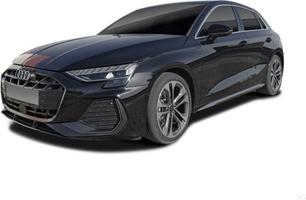
In a world where car upgrades often feel like saying, “Can I upsize that?”, it’s refreshing to hop into the updated Audi S3 Sportback.
The flagship RS 3 may still be the holy grail of hot hatch dreams, but with boosted engine outputs and upgraded tech, the S3 is stepping up.
Is the S3 Sportback the smarter pick over pricier rivals? It delivers serious performance and polish without stretching into RS 3 territory. With fierce competition in the segment, let’s see what this contender brings to the table.
What happens when you struggle to sell an odd-bod, not-quite-a-coupe, sort-of-a-hatchback, almost-an-SUV model? Well, sometimes it gets axed, and replaced with a new model that bears a new name.
That's pretty much it in a nutshell for the BMW 6 Series Gran Turismo, which was formerly the 5 Series GT. It essentially takes the place of the 6 Series Gran Coupe - an alternative to the regular 5 Series sedan that's more attainable than a 7 Series limousine.
Confused? It's not as difficult as all that sounds - you just need to know that this model, the 2018 BMW 6 Series Gran Turismo, is supposed to offer a neat alternative to the go-to family luxury car or SUV.
I spent some time in the entry-level 630i to see if it can deliver on that promise. In fact, I spent more than 24 hours driving the BMW 6 Series GT over the past week, and I don't have a sore back, I haven't been left scratching my head over the intended purpose, I haven't been uncomfortable, and I haven't been left wanting for much.
The updated Audi S3 Sportback is a fun-sized dynamo with impressive outputs and athletic road manners. It’s missing a few premium features, but its compact size paired with a gutsy engine makes it a compelling option for drivers who don’t want to compromise on performance (just space).
This isn't a car for everyone's tastes, but if you fit in to the buyer group that just doesn't really know what they want in a luxury car, it could be the perfect fit for your family. The 6 Series GT is a practical large prestige car, albeit one that will likely find very few buyers.
The S3 Sportback may be a small car, but its S design features, like the stylised blackout grille, matrix LED headlights, and 19-inch alloys with red brake calipers, give it a distinctly athletic and fun-loving vibe. It’s compact, but definitely not diminutive and carries serious road presence. It’s hot hatch meets fun-size.
Inside, the S3 looks fabulous. Integrated ambient lighting, a sharp dashboard treatment and a driver-focused cockpit all lend it a premium feel.
The front seats look properly sporty with their integrated headrests, and the quilted Nappa leather upholstery feels great, especially with the eye-catching red contrast stitching.
As for technology, it’s as high-end as you’d expect with a 10.1-inch touchscreen multimedia display and 12.3-inch digital instrument cluster taking centre stage.
The only drawback? No sunroof. Combined with the black headliner and compact cabin, it can feel a little gloomy at times. Still, it’s a cabin you’ll enjoy spending time in.
There is no denying the 6 Series GT looks better than the old 5 Series GT. It isn't as frumpy, it looks more sporty, and to me it appears to have grown into its identity with more conviction than its predecessor.
That said, I don't necessarily like the look very much - it's a bit like a BMW X6 that has been rounded off a little and lowered down substantially. But I can appreciate some of the finer design aesthetics that it offers up: the frameless windows are a nice touch, and the swooping roofline looks smoother than a duck's back.
Other things like the active grille shutters and the air breathers ahead of the front doors are nice functional touches, and to my eye it lives up to BMW's hope of it looking "smooth but muscular". You can get the 630i with either the M Sport package, like you see here, or the more sedate Luxury Line, which is, well, more luxurious looking.
The M Sport styling and equipment package you see in the images here - with M aero kit and 19-inch wheels (ours had been upgraded to optional 20s) - help out with the athletic look of this very big vehicle.
It's huge in fact. The length of the 630i is 5091mm long, it measures 1902mm wide and sits at 1538mm tall, with a lengthy 3070mm wheelbase.
All that equates to a lot of room in the cabin, and what a sumptuous and delightful place it is to be - leather, wood and plush finishes abound.
Like most hatches, the front row enjoys the most space. While it’s cosy, it never feels cramped. The seats are firm yet comfortable, thanks to their adjustability and expandable under-thigh supports. Access is fairly easy with wide door apertures, though the low seating position might earn a few grunts, especially from taller folks.
Storage up front is well sorted, with a glove box, a small centre console, a dedicated phone cradle and a couple of cup and bottle holders. It’s about what you'd expect for a car this size, but it's enough to keep things tidy.
There are plenty of charging options, with two USB-C ports in each row and a wireless charging pad up front.
The multimedia system is intuitive and easy to use. The touchscreen is responsive, and wireless Apple CarPlay connected without fuss and stayed connected all week. Wireless Android Auto is available, too.
Built-in sat nav is clear, and I love the way directions pull through to the digital instrument panel. The Sonos sound system? Pretty darn good. My son and I had more than one mini-concert on the school run.
As for the rear row, it definitely reminds you this is a small car. At 168cm, I found it on the cramped side of cosy and my husband just laughed when I asked him to try it! The wheel arch also cuts into the door aperture, making access a little awkward. Best to think of it as occasional adult seating. But given the size, that’s no surprise.
Amenities in the back are decent with a couple of map pockets, cup and bottle holders, as well as a fold-down armrest, those USB ports and rear temperature control (but curiously, no fan control). The seats are comfortable enough, but space is limited. Realistically, it’s best suited for two passengers, not three.
Boot space is quite practical. The wide opening and manageable load lip height make it easy to slide items in and out. It offers 325L of space, less than its key rivals, but expands to 1145L with the rear seats folded flat. The handy 40/20/40 split also adds versatility. Under the boot floor, you’ll find a tyre repair kit.
Now, I said before that this is a bit like an X6, but it has heaps better interior space than that SUV.
As soon as you slide into the driver's seat, you feel like your inside a large car. The cabin space is plentiful, and there's an abundance of storage on offer, too: there's a split-lid armrest between the seats, a pair of cupholders, a phone storage nook with wireless charging, and big door pockets with bottle holsters.
In the back you have access to door pockets, a flip-down armrest with cupholders (that middle part of the seat can fold down completely to allow storage of longer items), and there's excellent room on offer. How many seats in the BMW 6 Series GT? Five - like, five full-size seats.
Because the roofline doesn't rake as sharply as a four-door 'coupe', headroom is excellent for adults (even of the 183cm variety, like myself), and legroom and toe room are equally very good. This is bigger in the back than a 5 Series, but maybe not as plush as a 7 Series… so I guess it makes sense numerically for its nomenclature.
Of course you get climate control in the front (and in the rear if you option it), and the materials are excellent. The media screen is tablet-style, proudly displaying 10.25 inches of high-def real estate that is both touch-capacitive and controllable by way of the central rotary controller with touchpad. And get this - you can even use gestures to control certain elements like volume, swiping and changing tracks… but you have to option that.
The fully digital instrument display is bordered by a set of incomplete dial rings, which is just odd. BMW, back yourself - your buyers can handle just having a digital screen in front of them, particularly when it's as good as this one.
This grandiose hatchback's boot is commodious - with the back seats in place it has a huge 610 litres of cargo capacity, which extends to 1800L with the 40/20/40 seats folded down using the quick release levers in the boot area.
There is no spare wheel (the BMW range is fitted with run-flat tyres) but it does have a secondary hidden storage area under the boot floor for hiding items or stowing wet gear, bathers/swimmers or muddy clothes.
For context, the X6 has 580L seats up, 1525L seats down.
The A3 Sportback comes in three trim levels, with the S3 technically sitting in the middle, just below the performance-focused RS 3. It's priced from $78,800, before on-road costs, and it shares the same platform and underpinnings as the Volkswagen Golf R. Surprisingly, our test vehicle isn’t significantly more expensive than its Golf R rival which comes in at $70,990 MSRP.
That makes it a more affordable option when compared to premium rivals like the BMW M135 xDrive which starts at $83,600 MSRP and the Mercedes-AMG A35 which comes in at $89,700 MSRP.
The update sees engine outputs improve with it gaining 17kW and 20Nm of torque, resulting in a total of 245kW and 420Nm.
Feature highlights include 19-inch alloy wheels, red brake calipers, electrically-adjustable and heated front seats (with expandable under-thigh support), rear privacy glass, quilted Nappa leather upholstery and 'S Sport' suspension with damper control which lowers the ride height lowered by 15mm.
The updated technology is well-rounded and now comes with wireless Apple CarPlay and Android Auto. There's also three-zone climate control, a 10.1-inch touchscreen multimedia display, a 12.3-inch digital instrument cluster, digital radio, four USB-C ports, a wireless charging pad, built-in satellite navigation and a 15-speaker Sonos 3D sound system.
Still, despite its premium hot hatch status, this grade skips a few luxury touches. Ventilated front seats, a heated steering wheel, heated rear outboard seats and a sunroof are all missing. The BMW M135 xDrive, notably, includes all of these as standard.
Even the powered tailgate with kick-functionality is an optional extra here, adding $660 to the price. At this level that should be standard.
The BMW 6 Series Gran Turismo range starts off with the model tested here, the 630i. It has a list price of $123,500 before on-road costs - and that's whether you buy the M Sport Line or the Luxury Line.
That's quite a lot of money. And while it has a lot of equipment to help justify the cost, the smarter dollars will probably find their way to a more affordable 5 Series.
Standard gear in this spec includes adaptive air suspension with multiple drive modes, a colour head-up display, semi-autonomous parking, adaptive cruise control with steering assistance, auto high-beam LED headlights with LED daytime running lights, DAB+ digital radio, a 16-speaker harman/kardon sound system, a 12.3-inch driver information screen and a 10.25-inch media display with sat nav, Bluetooth and 'BMW ConnectedDrive' online services.
Hey, you even get a panoramic sunroof as standard! Plus there are things like an active rear spoiler, two USB ports and four 12-volt outlets, leather trim, heated front electric seats, electric steering wheel adjustment, keyless entry, push-button start, and an automatic boot.
It also comes loaded with active safety assistance functions - we'll get to that in the safety section below.
Things it's missing at this price point? Well, heated seats are an option, but bundled nicely into the 'Comfort Package' ($3000) which was fitted to our car. The pack includes heated seats front and rear, quad-zone climate control, electric sunblinds for the rear side windows, and electric seat back adjustment. Oh, and BMW continues to gouge consumers $623 for Apple CarPlay (which seemingly didn't work in our car).
The only other 6 Series GT model available is the 640i xDrive, which is again available with the choice of M Sport or Luxury body styling. It's also pretty exxy, with a list price of $148,900, but gets a more performance-focused drivetrain, as well as extra equipment: essentially the Comfort package, plus vented front seats, interior fragrance (eight options), memory settings for the front seats, 20-inch wheels and metallic paint.
Plus the 640i has Sport+ settings - it's probably the wrong car for those - and 'Integral Active Steering' to couple with the all-wheel drive system.
The S3 Sportback wears the quattro badge proudly, meaning it’s all-wheel drive and it pairs a tweaked seven-speed automatic transmission with a 2.0-litre turbocharged, four-cylinder petrol engine.
This update brings a bump in performance over the previous model, including the addition of a rear torque splitter. Power is now up to a gutsy 245kW and 420Nm of torque, launching the S3 from 0 - 100km/h in just 4.7 seconds. That’s proper hot hatch territory.
Under the bonnet of the 630i is a 2.0-litre four-cylinder turbocharged petrol engine, which produces 190kW of power (at 6500rpm) and 400Nm of torque (from 1550-4400rpm). It uses an eight-speed automatic transmission, and is rear-wheel drive.
That may not seem a lot considering the size of this machine, but consider that some of the steamiest four-cylinder hot hatches have nearly the same outputs, and you realise this engine offers up a far-from slouched approach to propulsion.
The 640i xDrive has a 3.0-litre six-cylinder turbocharged engine with 250kW of power and 450Nm of torque. It gets the same eight-speed auto, but as the xDrive naming indicates, it's all-wheel drive.
But this is the one you'd prefer if you want to hit highway speed in a hurry - the 0-100km/h claim is 5.3 seconds, where the 630i takes a full second longer (6.3sec) according to the company.
The S3 Sportback has an official combined fuel consumption figure of 7.9L/100km and a 55-litre fuel tank, giving it a theoretical driving range of up to 696km.
Its key rivals hover around similar numbers, so it's right on the mark for the segment. After a mix of long-distance drives and my usual urban errands, my real-world figure came in at 8.0L/100km - very close to the claim, which I’m pretty happy with.
BMW claims fuel use of 7.0 litres per 100 kilometres, and you'll need to use 95RON premium unleaded when you fill up.
On my trip with the car, I saw about 9.0L/100km across mostly high-speed driving - some freeway, some highway, some country back road touring, and quite a bit of corners and city stuff thrown in as well. I think that's pretty respectable.
What wasn't so great was the lack of premium fuel in some of the 'away from civilisation' places on my route home. Keep that in mind if planning your own GT long-distance cruise.
The S3 Sportback sounds as mean as it looks, and it delivers on that promise with effortless grunt. Acceleration is immediate, with plenty of power on tap when you need it. It’s just fun all around.
The lowered sports suspension and wide tyres do bring some extra noise into the cabin, even at lower speeds. You might find yourself repeating things to rear passengers now and then, but it never feels overwhelming.
Steering and suspension are on the firmer side, so yes, you’ll feel the bumps but the payoff is sharp, responsive handling. Quick lane changes and winding coastal roads are where this car shines.
Visibility is about what you’d expect from a low-slung hot hatch. The pillars don’t obstruct the view, but sitting beside a towering SUV at the lights can make you feel a bit... compact.
Cornering is a strong suit, thanks to the car’s wide stance and AWD system. It feels confidently planted in most conditions. That said, I noticed the occasional wobble through the rear frame on rough sections in heavy rain.
Its compact size makes parking a breeze, especially with the help of multiple sensors. The reversing camera is crisp, but at this price point, the lack of a 360-degree camera view feels like a missed opportunity.
I'll put this out there - if you like to drive, there are BMW models for less than this one that will put a much bigger smile on your face. Like, a 440i Gran Coupe, or even just a 330i sedan…
But if you're in BMW's target market - that being older executive buyers who want space and luxury as a priority over thrills at the wheel, you could do a lot worse.
That's because the 6 Series GT lopes along the highway without fuss - the engine easily coping with the demands of overtaking moves, the adjustable drive modes allowing a light steering and wafting suspension feel to wile away the kilometres.
There are 'Comfort' and 'Comfort Plus' modes, but the latter is a bit too spongy and can be boaty feeling. The Comfort setting is made for the highway.
It is actually pretty agile for its dimensions.
If you decide to deviate from the straight sections, you'll be able to explore a little bit of dynamic range, especially when you dial up the 'Sport' mode, which changes the damper settings, steering weight, throttle and transmission response, and even the digital dials in front of the driver to a more aggressive look.
Our car had the 'Integral Active Steering' setting, which is a variable ratio steering system that includes rear steering - that essentially helps make is more turnable in corners at highway speed, and easier to park at lower speeds. It's difficult to say whether the assistance is excellent or not short of driving a car without the tech, but to this tester it was hard to hide the size and weight (1835kg kerb weight) of the vehicle.
That isn't to say it's clumsy or lumbering - it is actually pretty agile for its dimensions, though it makes a lot more sense on long drives and coastal cruises than it does in the narrow and twisty alpine roads of the Snowy Mountains Highway that I tested it on.
There's good grip from the tyres, and strong response from the powertrain - but if it were my money, and I had to have a 6 Series for whatever reason, I'd be looking towards the 640i model, which has a thumping six-cylinder with 250kW/450Nm - certainly an engine that would be more at home in this car. Plus that model comes with AWD.
The S3 isn’t covered by its 2WD sibling's maximum five-star ANCAP safety rating but it is well-equipped with safety features all the same.
Safety equipment includes blind-spot monitoring, side exit assist, rear cross-traffic alert, lane departure alert, lane keeping aid, park assist, reversing camera, front/rear parking sensors, forward collision warning, autonomous emergency braking and adaptive cruise control with stop and go function.
It also has six airbags but misses out on a front centre airbag. None of the driver assist systems are intrusive to daily driving, which I always like.
The rear row has ISOFIX child seat mounts and three top-tether anchor points but only two child seats will fit.
The BMW 6 Series GT range has a five-star Euro NCAP crash test score based on 2017 testing, but it hasn't been scored by ANCAP.
There's the usual array of airbags - dual front, front side, full-length curtain and driver's knee airbags are included, plus parking sensors all around, and heaps of safety tech including the 'Driving Assistant Plus' package with lane departure warning and lane keeping assist, forward collision warning, auto emergency braking (AEB) front and rear, blind-spot monitoring and rear cross-traffic alert, and adaptive cruise control with stop and go.
That's all great stuff, and so is the 360-degree camera system with adaptive display - so, if you're reversing and you turn the wheel to one side, the image on screen will move, too. It'll also go between a birds-eye view and a backing-up perspective, and that can take some getting used to.
What was less convincing in terms of the user experience was the rear auto braking, which seemed to be scared of the car's own shadow. On multiple occasions the car jammed on the brakes when reversing out of driveways on to empty streets - be it in the normal height, or the raised height setting.
The 6 Series GT has dual ISOFIX anchor points and three top-tether points are there and ready for baby seats or child seats.
Audi backs the S3 Sportback with a five-year/unlimited kilometre warranty, which is on par with its European rivals. A five-year pre-paid servicing plan is available for $2890 which is cheaper than pay-as-you-go and reasonable for the class.
For those looking to go the extra mile, the 'Audi Advantage' package lets you extend the warranty and capped-price servicing by an additional two years, which represents solid value overall.
Servicing intervals are every 12 months or 15,000km, whichever comes first.
BMW runs a condition-based servicing plan, which means the car will tell you when it needs servicing. But you can rest assured it won't (theoretically) cost you much, with the brand's 'Service Inclusive' pack. It covers you for basic maintenance as and when required for five years/80,000km. According to BMW, that includes "annual vehicle checks, oil changes, all filters, spark plugs and labour costs for the duration of the package".
BMW offers a three-year/unlimited kilometre warranty plan, and you get the same cover for roadside assistance.