What's the difference?
Here’s a fun fact.
Audi has only ever offered two rear-wheel drive (RWD) production cars in its entire 116-year history… the spectacular R8 supercar and the electrifying e-tron GT.
Now there’s this, the Q4 e-tron – a small-ish medium-sized SUV electric vehicle (EV), and Audi’s overdue response to the BMW iX1 and iX2, Polestar 4, Volvo EX40, Mercedes EQA and, of course, the Tesla Model Y.
Overdue? It’s been in production since March, 2021, making it very, very late to Australia.
But, you know what? You might be very glad the local team waited, because this MY25 update might be the premium medium electric SUV to buy right now.
To find out, read on.
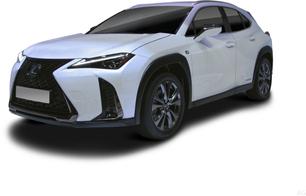
Lexus has released a revamped version of its smallest electric SUV, the UX300e and I’ve been driving the Sports Luxury grade this week with my little family of three.
This model sees a few key upgrades to its battery performance, driving range and technology.
These improvements should see it continue to be a solid competitor for its rivals, the BMW iX1 XDrive 30 M Sport, Mercedes-Benz EQA 250 and Volvo XC40 Recharge Pure Electric.
Audi is famous for sticking doggedly to front-wheel drive and quattro AWD, but clearly, when it puts its mind to it, the few RWD machines it has produced over its 116 years have been exceptional.
While not as exciting as the R8 or as supersonic as the e-tron GT, the Q4 e-tron is an impressive machine. Thoroughly engineered and thoughtfully designed to be a friendly, refined, comfortable, safe and capable family SUV, it deserves to be on your shortlist.
With a couple of choice option packages, the base 45 seems remarkably complete, but there’s plenty to enjoy in the hot-shot 55 quattro as well. Either way, Audi seems to be on a winner.
Note: CarsGuide attended this event as a guest of the manufacturer, with travel, accommodation and meals provided.
The Lexus UX300e Sports Luxury nails the luxury and standard features list! It certainly feels like a premium SUV inside and the updated technology and driving range were sorely needed to keep this competitive, but once you start looking at its rivals, which all offer similar specs and better driving ranges, the price point starts to feel a smidge high. However, the ongoing costs and the complimentary bonuses that Lexus throws in, are great.
Whether talking about the SUV or Sportback, the Q4 e-tron is an excellent example of Audi’s recent design prowess.
Beautiful proportions, crisp surfaces, exquisite detailing and undeniable elegance are all present in spades. And the Sportback is a rare example of a graceful-looking coupe SUV, though it is not in the otherworldly Polestar 4’s league aesthetically.
However, where is the originality? You’d never know these are rear-motored and predominantly RWD vehicles. Yes, the Single Frame grille execution is amongst the best-yet from the brand, while the wheelarch ‘blisters’ are an (albeit questionable) homage to the seminal Ur-Quattro of the 1980s, but the Q4 e-tron could be any contemporary Audi SUV from the Q3 up. Its design is the opposite of daring.
Still, maybe the Q4 e-tron’s classy, relatable conservatism explains why the Brits made this car their second-best selling EV of 2024, representing everything that the number one Model Y is not.
Plus, with current global automotive interiors stalling behind over-illuminated and oversized screens full of greasy fingerprints, glitchy electronics and reflections of their frustrated operators, a bit of old-school Audi cabin presentation knowhow can only be a good thing, right?
The design hasn’t seen much change and Lexus seems to be encouraging an understated EV design as it looks just like its fuel-based siblings.
I don’t mind that it’s not as futuristic as some of its competitors and that, at first glance, there isn’t anything to set it apart.
The front sports a classic Lexus 'spindle' grille and the external lights are large but the rear side lights jut out rather severely, reminding me too much of its Toyota counterparts.
The rear features a cool LED strip light for the brakes, which elevates its night-time presence.
The sporty-looking 18-inch alloy wheels are a nice touch but the plastic mouldings around the base of the car detract from the premium-level this model sits in. It’s not as slick-looking as it could be.
Having said that, the interior earns back points courtesy of its premium feel with leather-accented trims and Japanese Washi paper influenced accent panels. But there is a lot happening with the dashboard.
It’s a little overwhelming at first because it protrudes well into the cabin and features multiple cutaways, but you get used to it after a while.
There are also little knobs on either side of the instrument panel that look out of place to me and resemble horns.
Unlike most of its German competitors (and the Volvo EX40), the Q4 e-tron is built on a dedicated EV platform known as MEB, and shared with other Volkswagen Group models, like the Skoda Enyaq and Volkswagen ID.4.
Consequently, the Audi feels a wee-bit narrow inside, as the MEB SUV family are on the smallish side for medium-sized SUVs. This is not a criticism, just an observation.
And there is no lack of interior space, either. Entry/egress is easy via large doors, there’s plenty of space for heads and shoulders and legroom is generous. All are an upshot of the EV-only platform.
Despite some obvious packaging links with the other VW MEB interiors, the dashboard is very Audi-esque in styling, layout, functionality and quality.
From the ‘Virtual Cockpit’ electronic instruments and crisp multimedia screen, to the feel of the buttons and logical, easy locations of the controls, the Q4 e-tron is completely and utterly on-brand. And that means high standards. Looks posh. Works well. Nice to touch. No bewildering endless screen-menu search and rescue frustration here.
Plus, the Audi is practical. We’ve already talked about ample room, but even the standard, non-sports seats cosseted and supported over a few hours of testing; different and unexpected levels of storage (including a nifty bottle holder ahead of the forward door jam – brilliant); superb ventilation and, especially in the Sportback 55 e-tron quattro sampled, a banging audio system, complete a suave and sophisticated interior experience.
Issues? No too many, really.
There is quite a lot of quality plastic material visible, which might offend some sensitive souls. There is some road-noise intrusion over coarse surfaces, perhaps reminding owners of the Q4 e-tron’s shared architecture; and rear vision in the Sportback is hampered by fat pillars and slim back glass.
However, no spare wheel exists. Nada. Just the occasionally ineffective and always-infernal tyre inflation kit, that renders the tyre and kit useless afterwards and so makes for expensive replacements. And just because almost everybody else does it, this is not good enough for Australia.
The corollary of that is quite generous luggage capacity, with the Sportback’s 535 litres somehow beating the more-upright SUV’s 520L VDA capacity, though with the rear seatbacks folded that switches to 1460L and 1490L respectively. Both are gorgeously lush and quite practically shaped.
And what about the storage compartment up front?
As soon as you slide in, you’re reminded that the UX is a small SUV. Even with the driver's seat at its lowest position I still knock my knees on the steering wheel when getting in and out of the car.
The higher door sills also accentuate the penned in feeling despite there being plenty of head- and legroom in the front row!
Then comes the back seat, which is super tight on space. I’m 168cm (5'6") and my headroom is fine but the legroom sucks. My knees press into the back of the driver’s seat (set for my driving position).
There’s also not a lot of space underneath the seat for toes, so I wouldn’t recommend the UX to anyone who regularly transports tall passengers.
Having said that the seats in both rows are very comfortable and the leather trims feel lovely to touch. Both front seats are electric with heat and ventilation functions but only the driver’s side enjoys adjustable lumbar support.
Storage is good throughout the car, which is not usually the case for the small SUV class. Up front you get a glove box, two cupholders, two drink bottle holders and a middle console that opens from both sides, which is handy and cool.
In the rear you get two cupholders in a fold-down armrest and map pockets but no storage bins in either door unfortunately.
Other amenities in the back are very good for this class with the heated outboard seats, directional air vents, reading lights and two USB-C ports.
On that note, the upgraded multimedia system is now easier to use while on the go, is responsive to touch and looks great.
Some of the information on the system can be annoying to find but the customisations available on the 7.0-inch digital instrument panel more than make up for it.
There is a coloured head-up display, wireless Apple CarPlay, wired Android Auto and satellite navigation.
All are easy to use and won’t confuse you too much!
The charging options are great with each row getting two USB-C ports but the front also gets a USB-A port, 12-volt socket and a wireless charging pad. You’re seriously spoilt for choice.
The boot space sits at a small 314L, which is 100L less than the previous model but that’s because Lexus has made a little storage nook underneath the floor for the tyre repair kit and cable pouches.
It's a great boot because it sits high and is easy to access, and I have plenty of room for all of the gear needed for a week’s errands. The hands-free powered tailgate is great, too.
The Q4 e-tron is available in two body shapes – a handsome if quite conservative wagon SUV style, as well as a sleeker coupe-SUV derivative that Audi calls Sportback.
The latter is expected to be the slightly more popular of the two designs, despite costing about $1600 more.
Obviously slotting in between the smaller Q3 and larger Q5, the Q4 e-tron almost shadows the latter size wise, and is available in either 45 RWD or 55 quattro all-wheel drive (AWD) guises.
Since both share the same, largish (82kWh) battery, Audi reckons most buyers will choose the 45, especially as its pricing in either body style slips under the Australian Federal Government’s Luxury Car Tax (LCT) threshold.
Kicking off from $84,900 before on-road costs, the base grade includes a full suite of safety tech such as full stop/go adaptive cruise control, an electronic instrument display, heated front seats, three-zone climate control, a gesture-controlled powered tailgate and 19-inch alloy wheels.
These come on top of the LED headlights, an 11.6-inch touchscreen, full wireless multimedia connectivity, a premium audio system, electric driver’s seat adjustment, navigation, folding/heated/kerb-side-view mirrors, roof rails and automatic parking.
From the Sportback 45 and up, the S-Line package is standard, bringing with it 20-inch alloys.
All the essentials then.
But, on the base 45s, be prepared to spend extra for luxuries like bolstered “sports” seats, a head-up display, a powered front passenger seat, driver’s side memory settings, a 360-degree camera instead of the regular rear-only view and privacy glass.
The 55 quattro grades from $105,900 include most of these, along with an extra electric motor for AWD and considerably more muscle, as well as variable-ratio steering, Matrix LED headlights, dynamic indicators, extra lane-assist intervention and the aforementioned S-Line trim shod with 20-inch alloys.
Now, against the remodelled Tesla Model Y Juniper, the Audi costs considerably more, but it is also a more upmarket (and less conspicuous) luxury brand that prioritises quality.
The iX1, iX2, EQA and EX40 cost around the same as the Q4 e-tron, but aren’t quite as large, offer smaller batteries (Volvo-aside), are based on other internal combustion engine (ICE) models compared to the Audi’s ground-up dedicated-EV architecture and, except for the BMWs, are getting somewhat long in the tooth.
Conversely, fresh designs, bespoke electric platforms and bigger batteries set the larger yet less-expensive Polestar 4 as well as the more-compact yet loaded Genesis GV60 apart against the Audi’s aforementioned competitors, but neither challenger brand is as established as all the others. Finally, Lexus’ UX300e is too compact while the larger RZ450e has priced itself out of contention here.
So, why the delay getting the Q4 e-tron to Australia? Especially when the brand has offered the bigger and much-more expensive Q8 e-tron SUV since the beginning of this decade?
Initially, demand in Europe was through the roof and supply could not keep up. Then Audi elected to wait for an update that debuted globally in September 2023, ushering in a raft of changes, to make its most important EV ever more competitive in a wildly shifting market.
These include efficiency gains leading to more range thanks to an upgraded motor and battery, stronger performance, faster charging, retuned steering, comfier suspension and improved safety spec.
Not that you’d be able to spot the differences comparing new Q4 e-tron with old. Nor even against sibling SUVs…
There are only two variants for the electric UX and our test model is the top-spec Sports Luxury but the gear isn’t the only thing that’s been upgraded. The before on-road costs price for this model has jumped by almost $7K to a hefty $87,665!
In comparison, the BMW is the nearest rival at $84,900 (MSRP) and the Mercedes-Benz is a bit more affordable again at $82,300 (MSRP) while the Volvo sits pretty at $76,990 (MSRP).
The UX300e is the most expensive but is well-specified by anyone’s standards.
The Sports Luxury grade maintains its premium features, like the sunroof, heated front and rear outboard seats, ventilated front seats, and a heated steering wheel.
But the technology has been retooled and a new 12.3-inch touchscreen multimedia system replaces the previous model's 10.3-inch touchpad arrangement. It’s a welcome addition as it’s much easier to use.
New features, like wireless Apple CarPlay, acoustic front glass and insulation around the bonnet and wheel wells provide additional on-road comfort and practicality.
Lexus also throws in an AC Type 2 charging cable, as well as a GPO (General Power Outlet) cable. The technology is robust but I’ll go into more detail in the Practicality section.
Other standard features are solid with 18-inch alloy wheels, a tyre repair kit, handsfree powered tailgate, full suite of LED exterior lights, 10-way electric driver’s seat and an eight-way electric front passenger seat (but only the driver enjoys adjustable lumbar support).
The leather-accented trims feel luxy and the steering wheel has mounted controls and paddles to customise the regenerative braking while on the go.
Unlike the Model Y, there's no storage up front. That space is instead reserved for auxiliaries and, in the 55 quattro versions, the second electric motor that drives the front axle for AWD.
In all versions, a permanently excited synchronous motor sits on the rear axle driving the rear wheels via a single-speed transmission.
Tipping the scales at 2145kg, the 45s produce 210kW of power, to offer a power-to-weight ratio of 98kW per tonne, while the 2235kg 55s’ 250kW output ups that to 112kW/tonne. Both Q4 e-trons deliver a healthy 545Nm of torque.
No slouch, the 45s manage the 0-100km/h sprint in a rapid 6.7s, while the 55 quattro’s extra motor chimes in when extra traction is required, shaving another 1.3s off that, for a 5.4s time. Top speed in both is limited to 180km/h.
Adding a bit more driver involvement, the 55s have variable ratio steering, while MacPherson-style struts up front and a four-link independent rear suspension setup out back help keep everything under control.
The UX300e has a fully electric powertrain with a 72.8kWh lithium-ion battery that’s located on the front axle.
The power and torque remain unchanged at 150kW and 300Nm but that’s enough to produce a 0-100km/h sprint time of 7.5-seconds. Plenty of oomph for city-slickers and open-roaders to boot.
The update sees the battery increase in capacity by 34 per cent which means the driving range has jumped from 305km to 440km.
That's still a bit lower than some of the UX's competitors but it certainly helps ease range anxiety! And unlike some of its rivals, the UX300e only sports a front-wheel drive drivetrain.
Built on a 400V architecture, the Q4 e-tron uses an 82kWh Lithium-ion battery pack, offering a useable capacity of 77kWh. It only charges to 80 per cent full to help preserve battery life.
Now, driving most of the available versions over a 200km launch route from Adelaide airport to wine country, we averaged between 17.5 and 19.5kWh/100km, with the lighter RWDs obviously being the more economical of the drivetrains.
In ascending order, the official combined average figures are 16.9kWh/100km (Sportback 45), 17.4kWh/100km (45 SUV), 17.5kWh/100km (Sportback 55 quattro) and 18.1kWh/100km (55 quattro SUV).
Despite weighing about the same, the Sportback uses around 0.5kWh/100km less electricity than the SUV version, due to better aerodynamics.
That translates to about 15km of extra distance, with the Sportback 45 going the furthest, delivering a WLTP range of 540km. That’s followed by the 45 SUV, Sportback 55 quattro and 55 quattro SUV with 524km, 503km and 488km respectively.
To aid with recharging, the driver has three modes of battery energy recuperation via steering-wheel paddle shifters.
Plugged in at home, the battery needs about 40 hours to completely recharge, or over 12 hours using an optional 7kWh Wallbox. Maximum AC charging capacity is 11kW.
With a maximum of between 135kW (RWD) and 175kW (AWD) of DC charging capacity, however, 10-80 per cent charge using a 50kW DC public charger needs fewer than 70 minutes, or just 40 minutes if you find a 100kW station.
My energy consumption sat at an average of 19.5kWh, which is decent considering all of the open-road driving I did.
There are four levels of regenerative braking to help conserve battery percentage but even on the firmest setting, it’s not super noticeable.
When you’re at full charge, multiple notifications and sound alerts pop up on the instrument panel stating ‘Regenerative Braking Limited Press Brake to Decelerate’. It’s quite an intrusive feature but disappears after 20 to 30km.
Despite the bigger battery size, the UX300e can only accept up to 6.6kW on AC charging, whereas, all of its rivals can accept 11kW. On a 240-volt AC charger, expect to see a charge time of nine and a half hours to get to 80 per cent.
Curiously, the UX features two charging ports, on the right-hand-side, there is a Type 2 port and, on the left, a CHAdeMo port, which allows for faster charging.
You'd think it would be easier to simply add the CCS enhancement on the Type 2 port but still, expect to get from 10-80 per cent in 80-minutes on a 50kW fast charger.
Audi might be late to the affordable electric SUV party, but it’s certainly been worth the wait from behind the wheel, because the Q4 e-tron drives exactly how you would expect an Audi to.
The 45 in either body shape has ample oomph, as its impressive 6.7s 0-100km/h times prove, providing a decent amount of instant speed the moment you put your foot down. This is a smooth, strong and muscular performer.
The steering is nicely modulated and precise, for easy, flowing handling, even when the speed is taken up a few notches. Note that while it may seem a little light, it can be configured for a more dynamic feel.
However, slightly stronger single pedal braking would be appreciated. The Audi EV’s brakes do a great job stopping the car, but they do feel a bit on/off at first. Maybe even a bit wooden.
All the Q4 e-trons we drove on the launch around the Adelaide hills rode on steel springs. That said, and to our surprise, the suspension is more than comfortable enough, soaking up many of the bumps we encountered without breaking a sweat.
Plus, except on coarse bitumen, there's not much of any type of noise coming through inside the cabin. These are agreeably comfortable and refined cruisers.
Meanwhile, the 55 quattro version is a slightly different proposition, with measurably stronger acceleration across the board and more eager throttle response. Actually, even on bone-dry roads at the height of summer, there’s almost too much torque coursing through the axles, so just be wary of this EV’s considerable power.
Still, the twin-motor Audi feels like a relaxed yet brawny grand touring SUV, with plenty in reserve for fast overtaking and quick getaways. Even the RWD model provides exceptional roadholding and control, but that extra AWD grip when things become a bit slippery would certainly be a bonus.
Plus, kudos to the Germans for delivering user-friendly driver assist safety systems. Nuanced and largely unobtrusive, they keep you safe without driving you to distraction. China and Polestar in particular, are you listening?
On the flip side, you do feel the extra weight of the second electric motor (about 100kg more), and so it doesn't quite have the agility and alacrity of the standard 45 RWD machine.
Indeed, there isn’t quite the athleticism or connection of driver-focused alternatives (like BMW), but the Q4 e-tron rarely puts a foot wrong, either.
Impressively capable and dynamic, Audi’s more-affordable electric SUV has been worth the wait.
The UX300e comes into its own when you’re zipping around tight city streets. The power is responsive and the steering crisp with excellent cornering capabilities.
It feels well-placed on the road most of the time but can move around when it gets hit by high winds.
While the power is steady, the tyres can lose a little traction if you’re too quick to accelerate from a full stop.
The ride comfort is also very good with the new acoustic glass and extra insulation around the bonnet and wheel wells providing a whisper quiet cabin space.
The suspension is well-cushioned but not floaty and you won’t wince when you hit a bump, but occasionally you get a thump-thump shudder through the frame on certain rough road surfaces.
It’s not a massive size and you’ll be thankful for that when it comes time to park because it is seriously easy to slide into a spot!
The 360-degree view camera system is top-notch providing clear graphics and a cool feature where the car becomes invisible in the video feed, which makes it even easier to see all around you. Coupled with the front and rear parking sensors, you’re set.
Tested back in 2021, the Q4 e-tron managed a five-star ANCAP crash-test rating, and possesses most of the driver-assist safety systems expected nowadays in this class of car.
This includes Autonomous Emergency Braking (AEB, dubbed Audi Pre-Sense in corporate-speak), lane departure warning/assist, rear cross-traffic alert, blind-spot warning, on-coming traffic turn-and-swerve collision avoidance, exiting-vehicle alert tech, adaptive cruise control (with active lane assist in the 55s), driver attention monitor, tyre pressure indicators, 360-degree cameras, and light and rain sensors.
AEB operating parameters vary. Car to car, it’s between 5km/h and 250km/h. For pedestrian/cyclist/back-over, it’s from 5km/h to 85km/h. And the lane support systems work between 60km/h and 250km/h.
All outboard occupants also enjoy full airbag coverage – front, front side/centre, and full-length curtain airbags.
A trio of child-seat anchorage points are fitted across the back seat, along with ISOFIX child-seat anchorages in the front passenger seat and two in the rear outboard positions.
The UX300e has a bunch of great safety features that come as standard and I like the proximity alert that pops up a camera feed of your surroundings when you’re in stop/start traffic. It’s a practical feature to help identify pedestrians or cyclists in your blind spots.
Other standard safety equipment includes forward collision warning, blind-spot monitoring, daytime running lights, rear cross-traffic alert, lane keeping aids, lane departure warning, adaptive cruise control, intelligent seat belt reminders, traffic sign recognition, an SOS call button, and that awesome 360-degree view camera system.
Family-friendly features include two ISOFIX child seat mounts on the rear outboard seats plus three top-tethers but two seats will fit best.
The UX also has a rear occupant alert if it detects weight or seat belts in use in the back seat, which is always a great feature.
The UX has a maximum five-star ANCAP safety rating from testing done in 2019. It also has eight airbags, which includes knee airbags for both front occupants.
Audi’s warranty remains the same as before, at five years with unlimited kilometres, with the battery covered for eight years or 160,000km. Six years of roadside assistance is also included.
Service intervals are every two years or 30,000km. Nothing special here nowadays.
But the Q4 e-tron owner can buy a six-year service plan for a total of $2050, while gaining 12 months of free electricity at Chargefox stations. They can also purchase a JET Charge home installation charger from $800.
The UX comes with a five-year/unlimited km warranty but the battery is covered by a 10-year or up to 160,000km warranty, which is better than most in this class.
This also comes with a five-year capped-priced servicing plan where services cost a flat $295, which is good but the servicing intervals are more in line with a fuel-based car at every 12-months or 15,000km, whichever occurs first. It’s typical to see intervals stretched out at every two years for an EV.
Lexus also throws in a few sweeteners for owners with three-year complimentary subscriptions to both ChargeFox and Lexus Connected Services, as well as, installation of an at-home wall charger. It’s not often you see the word ‘complimentary’ coupled with a luxury brand, so that’s a nice touch.