What's the difference?
The Audi A4 allroad is the off-roader of the A4 line-up. I’m using the term ‘off-roader’ loosely here because this wagon is obviously best suited to daily duties in a city and suburbs, with perhaps an occasional foray into very light off-roading, i.e. driving on a well-maintained gravel or dirt road with few, if any, corrugations, and in dry weather only.
But that’s not a negative factor because the great thing about adventures is that they can be scaled to suit you, your lifestyle and your vehicle of choice.
However, is this allroad your best option for a comfortable, nice-driving all-rounder? Read on.
BMW has been incredibly smart with its electric vehicle (EV) offerings in Australia to date.
Ever since the Fringe Benefits Tax (FBT) exemption was introduced for novated lease buyers of EVs under the Luxury Car Tax (LCT) threshold, the German brand strategically introduced versions of its EVs that qualify.
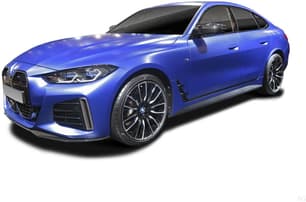
The BMW i4 eDrive35 electric liftback, which is based on the locally defunct 4 Series Gran Coupe, is one of these cars.
It recently received a mid-life update that brought more range and features, while remaining under the LCT threshold for fuel-efficient vehicles.
However, the plot thickens. BMW is soon set to launch its new i3 electric sedan which is based on the company’s Neue Klasse dedicated electric architecture.
BMW hasn’t given the i4 an official production end date, however overseas reports indicate it’ll end as soon as next year to make way for the new i3.
Should you hold out for this new-generation car, or does the i4 still hold up? Read on to find out.
The Audi A4 allroad 40 TDI quattro S Tronic is a nice-looking wagon that’s fun to drive.
It’s packed with tech, adequately functional for daily life and it’s also capable enough off-road as long as the driving surface is nothing more challenging than well-maintained gravel or dirt tracks in dry weather, and you’re not planning a rough-and-tumble expedition into remote bushland.
As I mentioned earlier, the great thing about adventures is that you can scale them to suit you and your vehicle and the allroad offers a nice stepping-stone for people who’d like to experience the outdoorsy lifestyle, before perhaps diving deeper into it.
The BMW i4 balances a solid, old-school feel with the beauty and stunning looks of high-end technology. It feels like the end of an era for the German brand before it leaps into the screen-heavy age of software-defined vehicles.
While BMW hasn’t publicly announced an end-date for i4 production just yet, the new i3 is bound to overshadow it once it arrives. It offers more than double the claimed range and will likely address a number of this car’s flaws.
In the meantime however, the i4 is definitely worth considering if you value driving dynamics and a quality feel in a car that you can drive daily.
The allroad’s overall look is part of a range-wide refresh and it certainly fits in with the line-up’s updated aesthetic.
Because I’m a bloke who spends the bulk of my time in 4WDs – traditionally bulkier vehicles rather than slim city-friendly wagons – I’m not totally enamoured of the Audi’s style, especially in terms of trip-packing practicality. However, I can certainly appreciate the appeal of its quite low, sleek and streamlined appearance, which its tweaked chunkier grille adds some gravitas to. It’s just not my cup o’ tea.
The BMW i4 is firmly at the end of its lifecycle, however its exterior design is ageing like fine wine. This is apt given our tester was finished in delicious-looking 'Fire Red' metallic paint.
The overall proportions of this car are gorgeous, especially towards the rear where the roofline is drawn out, accentuating the liftback look.
This latest update only brought minor tweaks to the design, including refreshed headlight and tail-light signatures. As mentioned above, the M Sport package is now also standard which does give this car a subtly sporty look.
Inside the design marries together the best of the old and new worlds. A major highlight is the curved display housing not only the 12.3-inch digital instrument cluster, but also a 14.9-inch touchscreen multimedia display. It’s a stunning setup that looks ultra modern.
On the flipside however, there is still a lot of physical switchgear on the centre console, including a rotary iDrive controller that allows you to control the content on the screen. It’s a great setup if you like to avoid getting fingerprints on the touchscreen.
While there are a few applications of glossy piano black around the cabin, it’s balanced nicely with other metallic and matt finishes. You’re able to choose from a few different trim inlays, including aluminium and open-pore wood, for no extra cost.
Lastly, the new M Sport steering wheel looks great in this car and adds a lovely sporty touch to the interior.
I’ll answer that question as a politician would – without actually answering the question.
The allroad’s interior looks good and certainly feels open and spacious, although the driver’s seat tends to feel a bit more snug as the dash is angled towards that position.
The new 10.1-inch touchscreen, home for most upfront functions, dominates the dash, in a good way.
The front seats are electrically adjustable with lumbar and driver memory.
There are plenty of places in which to put your everyday bits and pieces (including a decent storage bin/arm-rest), as well as charging points, including two USB ports, for your devices.
Need somewhere to put a cold beverage, mate? There are two cup-holders between driver and front-seat passenger, two in the fold-down centre arm-rest for the back-seat passengers, and bottle holders in all doors.
Back-seat passengers also get air vents, climate control, mesh seat-back pockets and grab handles.
There is a 495-litre cargo space when the rear seats are in use, but that increases to 1495 litres when those seats – 40:20:40 split folding – are stowed away in the floor.
Hopping into the i4, it’s clear you’re getting into a low-slung vehicle. If you’ve got poor mobility, it may be worth looking elsewhere.
Once you’re in though, the cockpit is a lovely space to spend time. The driver’s seat is beautifully comfortable and offers plenty of adjustment, including extendable thigh support.
Ahead of the driver the steering wheel is rather thick in classic BMW fashion. I appreciate the physical buttons and scroll wheels as they’re easy to understand and use on the fly.
The curved display not only looks stunning, but is functional and easy to use. The digital instrument cluster has a number of layouts you can choose from and it can be paired with the head-up display, which is great to refer to at a glance.
Moving across, there is a lot going on with the central multimedia system. It can feel overwhelming with the amount of content and information to begin with, but once you start poking around, things are logically sorted.
Thankfully there are also a series of shortcut buttons always at the bottom of the screen to take you to key menus.
Adding to this, there is the flexibility of having the iDrive controller. Reaching the far side of the screen from the driver’s seat can be a bit of a stretch and being able to use the rotary dial on the move is much easier.
There is wireless Apple CarPlay and Android Auto as standard. It takes up the full touchscreen display, which looks great.
Looking around the cabin, storage space is fine but not amazing. There are two cupholders plus a wireless charger tucked behind them on the centre console, plus a shallow centre storage area under the central armrest.
Hopping into the second row, it’s clear the focus for this car is on the occupants up front. The door aperture is rather narrow, making it tricky to get in and out gracefully.
In the second row space is nothing more than adequate. At a leggy 182cm tall, my legs almost touch the seat in front when it’s set to my driving position and my head almost brushes the roofliner. I’d struggle to spend a lot of time back here.
This is compounded by the massive hump in the centre that’s a carryover from the combustion platform this car is based on.
Second-row amenities include climate control with air vents mounted on the back of the centre console, two USB-C ports, as well as a fold-down armrest with cupholders.
At the back there is a large liftback that opens and closes electronically. With the rear seats upright there is 470L of boot space, which expands to 1290L when folded.
While this is not massive in terms of outright capacity over a similarly sized sedan, the envelope is much more open and usable.
There’s also a section under the boot floor that’s generously sized for power cables, among other odds and ends.
The Audi A4 allroad 40 TDI quattro S Tronic has a MSRP of $69,900 (plus on-road costs).
It has a 2.0-litre four-cylinder turbo-diesel engine unit (140kW/400Nm), a seven-speed S tronic automatic transmission, and Audi’s quattro all-wheel drive system.
In standard guise this allroad’s features list includes a new 10.1-inch touchscreen (with Apple CarPlay and Android Auto), DAB+ digital radio, an Audi 10-speaker stereo, wireless charging for Qi-enabled smartphones, Audi’s Virtual Cockpit (a 12.3-inch digital display), smart key with push-button start, leather trim, three-zone climate control, as well as LED headlights, 18-inch alloy wheels, illuminated door sills, and overall tweaked exterior and interior styling.
It also has AEB with pedestrian detect, lane change warning, rear cross-traffic alert, front and rear parking sensors and a reversing camera.
But our test vehicle has a few different features and a fair few extras. Our allroad has a ‘price as tested’ of $75,681 (plus on-road costs), because it has Assistance plus package ($2900), which includes a raft of driver-assist tech, such as adaptive cruise control, active lane assist, collision avoidance assist, high beam assist, head up display, park assist (helps to steer the vehicle into a parallel or perpendicular parking space), as well as a 360-degree-view cameras
It also has 19-inch Audi sport alloy wheels in 10-Y-spoke design ($1350), instead of the standard 18-inch alloy wheels in 5-V-spoke design, and metallic paint (Mahattan grey, $1531).
Note: when we were conducting this test, Audi announced that, among other things, it would release a new-gen A4 allroad quattro 40 TDI in early 2021 that would have an extra 10kW more than our test vehicle, so it’ll be a 150kW/450Nm machine.
For those of you into hot laps, the current-generation achieves 0-100km/h times of 7.9 seconds; the new A4 allroad quattro 40 TDI is claimed to achieve that mark in 7.3 seconds.
Pricing for the upcoming 150kW A4 allroad quattro 40 TDI as standard was set to be $70,700.
BMW now only offers one version of the i4 in Australia, the eDrive35. It dropped the M Performance grade when the facelift was introduced last year.
The 2026 BMW i4 eDrive35 is priced from $88,900 before on-road costs, which is $1100 more than it was in pre-update guise.
It’s worth noting that it now picks up the M Sport package as standard which gains sporty exterior and interior highlights. This was previously offered on defunct eDrive40 trim.
Critically the i4 remains under the LCT threshold which means that if you put it on a novated lease it’s exempt from Fringe Benefits Tax.
Standard features include 18-inch alloy wheels, LED headlights, power tailgate, 12.3-inch digital instrument cluster, 14.9-inch touchscreen multimedia system, wireless Apple CarPlay and Android Auto, synthetic leather upholstery and heated front seats.
It’s fairly standard on this front, though a heated steering wheel and ventilated front seats would make for a nice touch. However, this would likely tip it over the LCT threshold.
The Audi A4 all road 40 TDI quattro S Tronic has a 2.0-litre, four-cylinder turbo-diesel engine, producing 140kw at 3800-4200rpm and 400Nm at 1750-3000rpm.
It has a seven-speed S tronic automatic transmission and all wheel drive.
The i4 eDrive35 continues to be powered by a single, rear-mounted electric motor that produces an unchanged 210kW and 400Nm.
This is nothing revolutionary in terms of the powertrain, though it’s nice it retains a rear-wheel drive-layout like the discontinued 4 Series Gran Coupe this car is based on.
BMW claims the i4 eDrive35 can do the 0-100km/h sprint in 6.0 seconds and the top speed is 190km/h.
It has claimed fuel consumption of 5.2L/100km (combined), but we recorded actual fuel consumption on test of 8.4L/100km – driving in soft sand likely negatively impacted that figure.
It has a 61-litre fuel tank.
The electric motor is fed by a 70kWh lithium-ion battery pack that allows for up to 448km of claimed range, according to ADR 81/02 testing.
This is 18km more than the pre-update car thanks to silicon carbide semiconductor components which are claimed to reduce energy consumption and increase range.
However, the Tesla Model 3 and Polestar 2 both still offer more range for less money.
BMW claims the i4 eDrive35 consumes an average of 16.3kWh/100km, according to ADR 81/02 testing. Over my 200km of urban testing I saw an average of 17.5kWh/100km, which isn’t fantastic as EVs are predominantly more efficient in the city.
Using my as-tested consumption, this means you have a theoretical range of 379km. That’s not great, though this range issue will be addressed with the forthcoming i3 electric sedan.
AC charging is available at rates up to 11kW, whereas DC fast-charging is offered at rates up to 180kW, allowing for a 10 to 80 per cent charge in 32 minutes.
For a bloke who spends a lot of time in big, tall and bulky 4WDs, I felt like I was driving a go-kart. It’s that low, but it’s also that much fun – and it’s a very different driving experience to what I’m used to.
The allroad is 4762mm long, 1847mm wide and 1430mm high, and has a listed kerb weight of 1720kg. So relative to the 4WDs I usually steer around, this is light and low slung. It’s more car than SUV, that’s for sure.
Acceleration is rather punchy (the engine and auto are a decent match-up), steering is light but precise, and you can cycle through drive modes (efficiency, comfort, auto etc) to set up vehicle characteristics to suit your driving style and conditions.
The quattro all-wheel drive system helps to keep the allroad planted and composed at all times.
Ride is on the sharpish side of firm and you do tend to feel every irregularity in the road surface – it is long and low and on low-profile rubber afterall.
The virtual cockpit plus – a 12.3-inch high-resolution colour display – offers a comprehensive read on all things to do with the allroad.
Throw around your superlative of choice – “sporty” and “dynamic” fit this allroad well – but I’m loathe to gush about its on-road performance much more than that because I reckon if any motoring journos are reading this – many of whom spend the lion’s share of their time swanning about in sports cars – they would have already choke-spat out their dirty chai with surprise by now.
BMW has positioned itself as creating vehicles that are the ‘ultimate driving machine’ for decades now and this i4 is no exception.
While it’s not an outright performance powerhouse, it doesn’t need to be in order to feel engaging to drive.
The rear-mounted electric motor produces a decent 210kW/400Nm and it’s enough to get moving in frenetic urban traffic with ease. You’ll rarely want any more out on the open road either as rolling acceleration is decent.
The regenerative braking system in this car feels natural and transitions to the friction brakes with no awkward lurching or inconsistencies.
I like how you can drive this car like a regular combustion car using both the accelerator and brake pedals, or with an extra flick of the gear selector you can activate one-pedal driving. During my loan I played around with both and didn’t have a favourite as both feel well tuned and easy to adapt to.
The steering is direct and on the lighter side, making the car feel agile and nimble on the move. However, in low-speed situations you realise the turning circle isn’t fantastic…
I appreciate that BMW opted for standard 18-inch alloy wheels that are paired with tyres that have chubby sidewalls as this keeps the ride from being harsh and jittery, especially over firmer bumps.
Don’t worry if 18 inches aren’t enough though, BMW offers alloy wheel options that go all the way up to 22 inches.
This is the type of car that suits a long-distance road trip as it’s such an easy and fun car to cruise around in. That's why it’s so unfortunate that the range limits how you can travel before recharges.
In terms of noise, vibration and harshness (NVH) in the cabin, the i4 is naturally quiet given it’s an EV. However, it feels like there’s extra insulation because even at high speeds tyre and wind noise are virtually nonexistent, creating a hushed and tranquil interior ambience.
The Audi A4 all road 40 TDI quattro S Tronic has the maximum five-star ANCAP safety rating.
It has eight airbags (dual front, front side, side bags front and rear, and curtains front and rear), as well as AEB with pedestrian detection, lane change warning, rear cross-traffic alert, a reversing camera, and front and rear parking sensors.
The BMW i4 received a four-star ANCAP safety rating based on testing conducted by Euro NCAP in 2022.
It was held back from receiving a five-star rating due to its ‘Safety Assist’ score of 62 per cent. A car needed to receive a minimum of 70 per cent back in 2022 to achieve five stars.
It’s also worth noting that the Australian-specification BMW i4’s autonomous emergency braking (AEB) and lane support systems are claimed to be of a “higher standard” than the European-specification car tested by Euro NCAP. However, BMW never provided ANCAP with an Australian-spec i4 for verification testing.
Standard safety highlights include AEB, blind-spot monitoring, rear cross-traffic alert, lane departure warning, adaptive cruise control, front and rear parking sensors, plus a surround-view camera.
One of the few safety features that is missing is an active lane-keep assist or lane-centring function. When you drift near a marked line the steering wheel only vibrates to notify you and doesn’t physically move you back into the lane.
This Audi has a three-year/unlimited km warranty. Service intervals are recommended every 12 months or 15,000 km, whichever comes first.
Like all electric BMWs, the i4 is covered by a five-year, unlimited-kilometre warranty, whereas the high-voltage battery is covered for eight years or 160,000km.
A five-year warranty has been commonplace within the premium space for a few years now, whereas many mainstream brands have since moved up to seven years of coverage, or longer in some cases. It’s far from competitive.
Owners also receive three years of complimentary roadside assistance.
BMW offers a six-year pre-paid service package priced at $2420, which averages out to just over $400 per year.