What's the difference?
Can a hatchback still be a fun and fashionable way to get around when the SUV has become such a status trend?
The facelifted Audi A3 certainly makes a case for it.
The refreshed 2025 A3 is, as Audi puts it, more competitive than before when it comes to not only value but also, you might agree, style.
Last year, before the update even arrived, the A3 sold almost as well as its Volkswagen Golf corporate sibling. In fact, it’s Audi’s third most popular model behind the Q3 and Q5 SUVs.
It’s also third in its segment of ‘Small cars under $40,000’, behind only the MG4 electric car and, you guessed it, the VW Golf.
As such, it also outsells its actual closest rivals the BMW 1 Series and Mercedes-Benz A-Class, both of which are close to the A3 on price.
Now that it’s been given a bit more razzle dazzle, let’s see if the A3 can keep that momentum going.
Close your eyes for me and try to picture a two-door vehicle with a thumping V8 engine, 575kW and a whopping 1000Nm on tap, a 0-100km/h burst of 3.2 seconds and a top speed of 335km/h. Does it look like a Ferrari in your head? Something else Italian, or German perhaps?
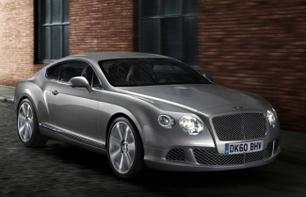
Well, what if I tell you it also weighs 2.5 tonnes. Are you imagining a luxe SUV with the rear doors removed, perhaps? Think again, because what we’re discussing here is arguably the very best of Britain (albeit German-owned), the all new and highly impressive Bentley Continental GT Speed.
Gone is the famous and fabulous W12 engine, never to return (Bentley was long the world’s biggest maker of 12-cylinder engines, henceforth it will make exactly none), to be replaced by the one and only power plant the company will now offer, in various tunes, in all of its ICE cars (yes, a Bentley EV is coming, of course).
All that torque isn’t just from the big 4.0-litre V8, it’s also an 'Ultra Performance Hybrid', which will allow you to drive up to 81km in fully silent electric mode, should you be so boring.
We flew to a posh and very private members-only race track in Japan to find it out if this really is, as Bentley suggests, the everyday supercar.
Closing in on $60,000 for a small car isn’t cheap. Ask a car dealer and they might even say the hatchback is a good way to get someone into a showroom to eventually look at an SUV.
But I reckon you’d be doing the A3 a disservice to count it out. It’s always been one of those cars that does everything well, and with this current facelift manages to keep its practicality without becoming boring.
It looks good on the outside, it’s smart on the inside and it’s fun to drive while remaining sensible. Even if you get it in bright yellow.
Any fears Bentley was heading in the wrong direction by abandoning 12 cylinders for hybridisation (not that it had a lot of choice) should be totally salved by the Continental GT Speed. It is a hugely capable, fabulously luxurious and beautiful to behold grand tourer that deserves extra points for not being an SUV. It might just be the supercar you could drive every day, with no complaints.
Note: CarsGuide attended this event as a guest of the manufacturer, with travel, accommodation and meals provided.
Eye of the beholder and all that, sure, but the A3 looks cool from the outside. It’s got this angular design but manages it without being too aggressive or busy with other design elements, so it still has a ‘premium Euro’ feel to it.
Shooting pics of the car for this review, the harsh light accentuated its sharp lines. It looks sculptural rather than just some little blob.
At the same time, thanks to the proliferation of sports design packs like the S Line, The A3 looks like it could be an S3, almost. Which makes sense, because the front bumper and rear diffuser as well as the roof spoiler are all partly inspired by RS models.
New for the A3 is the flat, 2D Audi badge, the model name on the B pillar and the new font for its name on the tailgate.
The lights in the cluster are able to look narrower than before thanks to their customisable settings, which allow you to choose the light signature, while the grille has a flatter appearance and the air intakes are bigger. Even the wheels look like they’re from a sports car.
Whether you’d have the A3 in the Python Yellow of our test car is another thing. I don’t mind a loud colour but I reckon a bit of 'District Green', 'Ascari Blue' or 'Progressive Red' would be the vibe.
Also, any colour that isn’t white is a cost-option on the A3, all of them coming in at $1350, except Ascari Blue which is an Audi Sport colour and costs $1850.
Speaking of the vibe, inside the A3 feels properly nice. It’s not just a spruced up Golf in there. There’s proper Audi character to the car, though that means plenty of piano black trim to get smudgy.
Audi’s done a good job making the layout look sleek without resorting to locating all the controls in the screen. There are design elements in the cabin that aren't strictly necessary but are worth doing for the way they look.
Things like the way the vents flank the driver display or the trim inlay on the passenger side of the dash.
I don’t think I’ve ever heard so much interesting waffle about the design of any car, ever, but before we get to the wild, and wildlife, justifications for how it looks, just feast your eyes on it.
Now, not everyone might love it, but it’s hard to imagine a huge, super coupe looking any better than this thing does. It’s no Ferrari, sure, but realistically it doesn’t have to compete with that, because it’s a cruiser as well as a bruiser, a supercar you can be quiet and comfortable in. A Rolls-Royce with rocket engines, even.
The most obvious change, of course, is that Bentleys have had four headlights, or four eyes if you like, for so long that seeing this new one with two is a major shock, a big shift, but somehow it works.
The proportions, the elegance, the bold 'be big and bold and give no damns what anyone thinks', it’s just impressive, and the interior reflects that same, luxury ethos.
Apparently the new-look Continental is built on three design principles, the first of which is, amusingly, 'Resting Beast'. This is supposed to reflect how the Bentley looks from side on; like a tiger, stalking its prey, or perhaps resting and thinking about its prey. It’s all muscles and strength and power, but also elegance. And who doesn’t imagine tigers walking red carpets in ball gowns?
Principle two is 'Upright Elegance', and here you’re supposed to see, in the car, the strong vertical line one finds in the chest of a thoroughbred horse when it’s standing in particularly powerful way. Great. Love it.
And finally, there is the 'Endless Bonnet', which is a horizontal line that goes from the front of the car - via the bonnet obviously - and all the way to there rear, via cat-like haunches, providing an impression of “speed, even when standing still”.
Those are the bold strokes, but it’s all the little details that make it sing, like the beautiful jewellery-like look of the headlights, which are meant to resemble a tiger’s eyes. So many cats, is it any wonder I started thinking of the Bentley as a very, very flashy Jaguar?
It’s important to note that while it looks very new - and 68 per cent of the Continental’s parts are new - the body panels are carried over, while the front and rear are all new. This is one very effective mid-life facelift, with a heart transplant, then.
Starting from what’s right in front of you as a driver, the steering wheel is the same as in bigger, more expensive Audis. That’s a good thing, because it’s nice to hold, has a good shape for the nine-and-three hand position and it’s not too thick.
As well as the nice, clear buttons on the wheel, you’ve got some physical controls for the climate control and some of the vehicle functions like parking assist and stop-start under the multimedia screen.
For a car this size, the 10.1-inch central touchscreen is plenty big enough, and the fact it doesn't sit up high over the dash is great. It's like a perfect arm's length for your standard-sized adult (like me). I can reach the other side of the screen without needing to lean.
The fact there’s no head-up display is a bit of a let-down, but the now-standard 12.3-inch driver display is very good. It’s configurable yet clear, and means you can get detailed navigation information in front of you rather than having to look to the multimedia screen.
The test A3 has genuine leather upholstery, which is $1100 extra. Not the most you’d pay for leather seats in a Euro, and the seats are comfortable. They're nicely bolstered, the drivers’ side is electrically adjustable and the leather doesn’t feel hard or rough to the touch.
Sitting behind my own seating position in the second row is a little tight, however. At 178cm, my knees almost touch the seat in front. There's also no sunroof, and even though there's just about enough light, that omission doesn’t help the cramped feeling.
There are, like the front, two USB-C ports and the air vents in the back, the latter separately adjustable to avoid arguments, though the cupholders in the armrest are in an awkwardly central position.
Behind that, under the 380-litre boot's floor is a space-saver spare tyre. That's better than some SUVs designed for family adventures that only offer up an inflator/repair kit. Keep that up, Audi. Good job. Well done.
If you fold the rear seats, you get 1200 litres of space. Interestingly, those luggage space figures are the same as the BMW 1 Series.
So a two-door, '2+2' grand tourer isn’t entirely built with the term 'practicality' in mind and it could be argued the existence of this Bentley Continental, the fourth generation, is something of a surprise, when you consider most people just buy SUVs and Bentley has done quite well with its Bentayga (which will, in future, share the same engine used here).
But for what it is, a two-seat car with occasional seating in the rear for emergencies, or very small children, it feels entirely fit for purpose.
An actual human can sit in the back, but it does feel a bit claustrophobic, and you’d be so jealous of how comfortable the people are in the front.
The 20-way adjustable front pews feel like grand armchairs for grand touring, fabulously comfortable - although you can slide across them a bit when driving on a race track, not a common problem - and plush to the touch.
They now come with a 'Wellness Facility' that brings postural, massage and climate functions to help with fatigue on long journeys - and epic blasts across multiple European countries is clearly what this thing is designed for.
In general, the cabin is just lovely, Bentley claims it does the best car interiors in the world and while Rolls might argue, it’s a pretty fair statement.
The spinning central 12.3-inch display remains the highlight, offering you a modern touchscreen, which can disappear to reveal either three classic analogue dials or a plain piece of dashboard, if you prefer a 'digital detox'.
For $54,800, before on-road costs, the A3 can be had as a hatchback - aka Sportback if you’re Audi - or for $57,800 as a sedan.
It’s a little over $4000 more expensive than the pre-facelift version, but Audi reckons there’s about $10,000 more value than before.
And value can be an important when you’ve got the BMW 118 ($57,600) and Mercedes A200 ($61,900) not sitting too far away in terms of price.
Part of the A3’s value equation comes thanks to the addition of the S Line package as standard, which not only makes the A3 look sportier but adds heated sports seats, aluminium interior trim elements and stainless steel on the pedals.
There’s also a larger 12.3-inch screen for the driver display as standard rather than an option. Audi has also reconfigured the air vents for the three-zone climate control, as well as adding a new style gear shifter.
Continued standard kit on the A3 is a wireless phone charger as well as a 10-speaker sound system, an ambient lighting package, a leather steering wheel and synthetic leather trim on the seats which all make for a sporty feel on the inside.
But on the outside there’s also customisable LED headlights and daytime running lights, as well as dynamic indicators and a set of 18-inch alloy wheels.
The car we tested also has a couple of options, its 'Python Yellow' paint is $1350 which I’ll come back to in the design section, but there’s also optional leather seats for $1100 and an electric tailgate for $660, the latter certainly worth it, I reckon.
All up, the car on test comes to $57,910, before on-roads, so even an optioned-up A3 comes in at either the same or less than its closest rivals from BMW and Mercedes-Benz.
As always, value becomes a nebulous term once the price of a car surges into the multiple hundreds of thousands. The Bentley Continental GT Speed will set Australian buyers back a whopping $581,900, before on-road costs.
Yes, you really can buy Ferraris and Lamborghinis for that kind of money, but Bentley assures us its buyers have already owned such fearsome machines, grown tired of their compromises and want something that’s just as fast, but 1000 times more comfortable, and easier to drive every day, and everywhere.
So that’s where the value proposition sits, basically. You’re buying a supercar that’s also a kind of Rolls-Royce adjacent luxury cruiser. Two cars for one price. Bargain. Kind of. It also weight 2.5 tonnes, if you’d like to think of it in dollars per kilogram.
Oh, and it’s hand made, too, and genuinely feels like it.
For that money you get an incredibly posh and plush cabin, excellent seats, and everything you touch, and smell, seems expensive and refined.
The newly facelifted, and butt-lifted, Continental also looks simply stunning, from every angle, outside. Particularly in its new 'Tourmaline Green' paint (there are 18 standard colours to choose from, or you can have bespoke paint made for you on request). And 15 standard leather hide colours as well.
It comes with all the apps and connectivity you could wish for, including a Bentley App Studio.
The A3 is powered by a 1.5-litre, turbocharged four-cylinder petrol engine that makes 110kW and 250Nm.
It drives the front wheels via a seven-speed dual-clutch auto transmission and it can hit 100km/h in a claimed 8.1 seconds.
It’s also got a 48-volt mild hybrid system to help with efficiency, though you’d need to be told about it to notice. It also helps with the A3’s (smooth) stop-start system.
There is some sadness that the world’s biggest producer and promoter of 12-cylinder engines has cut production of them altogether - the epic W12 is no more - and this does feel, on a smaller scale, like Porsche ditching flat-six engines forever.
Previous hybrid efforts from Bentley, including a V6-based one that the company now admits was a bit limp wristed, might cause some concern when you hear that Bentley will, henceforth, make just one engine for all its cars, and that it is a hybrid, albeit one attached to a 4.0-litre twin-turbo V8.
But then they point out the version in this Continental GT Speed’s is “the most powerful Bentley engine ever” and that sounds pretty good.
The engine alone makes 441kW and 800Nm, which almost sounds ample, but the addition of the electric E-motor is good for another 140kW and 450Nm, with the aid of a 29.5kWh battery, which somehow adds up to a combined output of 575kW and a nice, round, and impressive 1000Nm of torque.
All that power does have to move 2.5 tonnes of precious metal, which sounds like an ask, but is effortless in practice - hurling the Speed to 100km/h in a properly supercar-like 3.2 seconds on its way to a top speed of 335km/h.
Yes, vitally, it sounds pretty damn impressive when all the power sources are going at once, it even barks and pops on the overrun, a bit like the Porsche Panamera with which it shares the hybrid set-up, only a bit bossier, and perhaps classier.
The point of the hybrid feels like it’s mostly about performance and excitement, but it has a practical side, too, because in EV-only mode this giant Bentley can drive for up to 81km in pure, and slightly inappropriate-feeling, silence (at speeds of up to 140km/h).
Handy if you live in global cities with zero-emission zones, or if you want your neighbours to think you care about the climate.
One brilliant thing about this plug-in hybrid is it’s set up to use the engine to regen the battery, hard, in 'Sport' mode, so the more fun you have, the quicker the battery charges. So much so that, realistically, you might never need to plug it in at all (Bentley recently ran the car at a race track for two weeks and never needed to top it up via cable once).
It is an impressive, sonorous and enjoyable power plant, and you’d expect nothing less from Porsche, although Bentley says it’s done lots of work on the donor engine to make it uniquely more wonderful.
The A3’s 50-litre fuel tank needs to be filled with RON 95 premium fuel and it’ll drink a claimed 5.3-litres per 100km on the combined (urban/extra-urban) cycle.
Theoretically you’re topping 900km a tank there, but given how fun this car is to drive you’d have to be well behaved to get even close.
For reference, whenever I was on a normal, day-to-day drive on test the A3's trip computer was returning figures in the mid to high sixes.
While the top-line figures for performance hybrids like this always sound impressive, it’s hard to believe anyone will ever get near them in the real world, because the temptation to drive a car like this hard and fast, as its makers clearly intended, will mean chewing fuel in a very non-efficient way indeed.
On paper, though, where it matters in terms of being allowed to sell your giant luxury grand tourer in Europe, the Bentley Continental GT Speed produces just 29 grams of CO2 per kilometre.
Fuel economy is a claimed 10.3 litres per 100km, which is optimistic, but still a lot lower than the equally unlikely 14L/100km figure for the old (12-cylinders and no hybrid) car. As in, neither car would ever achieve the theoretical figure, but at least the new one is clearly a lot better.
First things first, the A3’s exterior and S Line pack are a clue to the way the car drives. It’s probably not the perfect car if you like a cushy, soft ride.
Its suspension errs towards the stiffer side of things, and certain bumps can feel more significant than they need to. But even on particularly bad roads or tram tracks in the city the dampers do a decent job of soaking up the harsh stuff.
It also means there’s more road noise than you’d like on some older highway surfaces, but only in a way that might get annoying if you’re on a road trip with the stereo off for some reason.
The upside of that is its steering feels well weighted and accurate. Plus, the way it handles and corners feels like a bit more grunt would make this a proper driver's car.
It’s not too intense, and there’s enough feedback to make it feel like the A3 shouldn't be a city-dweller only when it comes to driving.
Of course, it’s a hatchback, so you've got the advantages that come with less weight and a lower centre of gravity.
It doesn’t have enough weight to push into understeer more than you’d like on a tight corner. But it also doesn’t feel so light that you’re not sure how it’s going to behave under sharp braking.
The A3’s drivetrain, despite looking underwhelming on paper, feels practical on the road. Sure, 110kW isn't anything wicked, but its 250Nm feel like they’re working in the right places - that being between 1500 and 3500rpm.
It isn't blisteringly quick but even with the seven-speed transmission operating in default auto mode it usually feels like it's in the right place, let alone chipping in with 'manual' shifts via the paddles or shifting drive modes. The A3 has a choice of 'Normal' and 'Sport' shift settings.
You might be a little disappointed if you thought you’d be getting anything approaching a hot hatch, but for an entry-level model the A3 more than holds its own. It’s a solid platform that performs well without compromising too much when it comes to daily driving ability.
In an ideal world, one would take the Bentley Continental GT Speed for an appropriate drive from the top of Germany to the bottom of Italy or France, but instead we were asked to drive the big beast around a tight and slightly terrifying private members race track outside Tokyo called the Magarigawa Club.
Members here pay US$1 million a year for access to this circuit, carved out of several mountain tops, which features two long and fun straights attached to what feels like a hill climb circuit with a bit of Laguna Seca’s Corkscrew and a touch of Mt Panorama’s undulations.
This track, with its daunting lack of run-off, should have been an intimidating and possibly inappropriate place to try the Continental GT Speed, but it is a credit to the car’s “everyday supercar” personality that it soaked up the pressure, and pace with ease.
On our first lap we were encouraged to drive in EV mode, which was predictably a bit dull, quiet and not-quite boring, because if you went past 75 per cent of throttle, or 140km/h, the engine would kick in and things would instantly get interesting.
It was a good chance to note just how lushly comfortable the cabin and seats are, however, and just how supple the suspension can be.
The Bentley’s “secret weapon”, according to its engineers, is a new twin-valve damper the allows the chassis to behave like a sports car when you want it to - probably about 3.0 per cent of the time for actual owners - and an absolute luxury pleasure palace for cruising around the rest of the time.
The split personality thing really is on offer with this car, as we found out once we engaged the Sport setting.
The Speed’s all-wheel drive, all-wheel steering, torque vectoring and electronic LSD were all on display over the later laps, in which we were allowed to blast past 200km/h and find out just how good the brakes are at pulling up 2.5 tonnes of high-speed luxo-barge.
You do your steering via a lovely wheel with a leather front and Alcantara wheel, and it feels effortless, even in full track attack mode. A bit more feedback might be nice, but I guess Bentley owners have other cars for that kind of thing.
Aside from the rushing, roaring speed, what is most impressive is how little body roll there is from the Continental. It feels planted, poised, happy to change direction and is rarely upset or flustered, despite some squeals of complaints from the tyres.
Getting too wide on to the ripple strips caused a shudder and a skip sideways now and then, but perhaps I shouldn’t have been so far off the racing line.
Overall, the Continental GT delivers on its name, with Speed, and lots of it, all delivered in a properly swanky environment.
Tested in 2020, the A3’s been awarded a maximum five-star rating from ANCAP which applies to the facelifted version.
Six airbags and a suite of active safety tech helped contribute to this, though, whether it would pass with five stars under ANCAP’s current assessment protocols isn’t certain.
That’s likely only down to its relatively non-invasive safety warnings and mild assistance with things like lane-keep and speed warnings.
If you’re someone who’s likely to turn off most of the electronic assistance, the A3’s systems are at a pretty good level as standard.
It’s missing some modern kit like surround-view parking cameras but it does have front and rear proximity sensors and things like rear cross-traffic alert.
All the money and you only get four airbags; front and side for driver and passenger. And none in the back, so don't sit there. Bentley also has its own 'Safeguard' suite of technologies including 'Advanced Emergency Braking', 'Swerve Assist' and 'Turn Assist'.
Other tech includes 'Predictive Adaptive Cruise Assist with Lane Guidance', 'Lane Departure Warning', 'Emergency Assist', 'Remote Park Assist' and '3D Surround View'.
Audi offers a five-year/unlimited kilometre warranty, which is about par for a premium brand, but it also offers five years' free roadside assist and the ability to pay to extend the warranty.
Servicing is $2520 for a five year plan, but the extended two years of 'Audi Advantage' warranty is $3250 and comes with unlimited kilometres, roadside assist and covers two services.
The Bentley Continental GT Speed comes with a five-year, all-inclusive servicing plan as standard.
That sounds good, but stunningly, Bentley still only offers a three-year manufacturer warranty, albeit one with no mileage limitations. That's way below industry standard these days.
The battery that forms part of the hybrid system is, however, warrantied for eight years, or 160,000km.