What's the difference?
The world was ready for an Aston Martin SUV. Yes, by the time the Aston Martin DBX debuted Bentley had given birth to the Bentayga, Lamborghini had sired the Urus and even Rolls Royce had realised its Cullinan.
Still, the arrival of another ‘super SUV’ is always a bit exciting. Would it be a true Aston Martin, how would it compare to its rivals and is it even a good SUV?
Well, that's what I wanted to know about Aston Martin's DBX anyway, and I found out, along with everything else you should know: from its performance to practicality in this review.
Land Rover was making SUVs before they were even called SUVs.
Range Rovers were ferrying families around in prestigious four-wheel drive comfort decades before Audi, BMW or Mercedes-Benz even thought of doing it, too.
So, even with all its rivals these days, how well does a Range Rover do modern family duties?
Well the Range Rover Autobiography came to live with my little family of four for a week. We had the seven-seater long-wheelbase version with the twin-turbo petrol V8 engine, and this is what we discovered…
As with all Aston Martins the DBX is a seriously beautiful car with that high-end exotic but restrained exterior styling for which the brand is known. As with all Astons, too, the busy interior design may put some minimalism fans off and those high-placed shifting buttons pose a functionality problem.
As an SUV the DBX is spacious and practical. You could use this daily as a family car. I did and found it easy to adapt to.
The driving experience left me disappointed. I didn’t feel the same close connection with the DBX while driving that I have had with other super SUVs, such as the Lamborghini Urus and more affordable models offered by Porsche and Mercedes-AMG.
But then, you see those other cars everywhere, unlike the DBX which is a rare and beautiful creature, despite the flaws.
The Range Rover Autobiography long wheelbase is an outstanding SUV that is not just beautiful to drive but makes family practicality a priority, too,
The price is reasonable relative to the competition, the features list is long and complementary servicing offers peace of mind.
If you don’t need the third row, I’d consider the standard wheelbase Autobiography even if it does reduce legroom, there’s still plenty of space.
My son stopped short of giving the Range Rover Autobiography full marks "because there are no massaging seats in the second row".
I'm not one to name drop but I was having a chin wag with Marek, that's Marek Reichman, Aston Martin's Vice President and Chief Creative Officer, the fellow who has designed every Aston from the past 15 years, that Marek. Anyway, before the DBX came out he told me any SUV he designed would be unmistakably an Aston Martin.
I think he nailed it. The gaping Aston Martin grille is unmistakably the same as the DB11's and the tailgate, which although is the back hatch to a large SUV, is absolutely the same as the rear end of the Vantage.
Everything in between has all the family hallmarks. There are those oval headlights and the huge beak of a bonnet, the chiselled side panels with wheel arches that push up towards the sky and those rear haunches.
Not a fan of minimalist design? Then you'll love the DBX's cabin and its dashboard cluttered with dials, buttons, and switches.
It's like the cockpit of a plane and it's a very Aston Martin thing – just look at the layout of the DB5 from the 1960s, it's a mess, a beautiful mess though. The same goes for current models such as the DB11, DBS and Vantage.
Seriously, if there was one area where Marek may have decided not to make the DBX unmistakably Aston Martin, I wish it had been the interior.
Still, I think the DBX has the best cabin design of any current Aston, with its large media screen built into the centre console and more modern styling.
But regardless of what it looks like the feel of the materials is outstanding. There's a thick leather coating on just about every surface, apart from those which are solid, cold metal, like the paddle shifters and door handles.
It's a plush, sporty place, like Batman's suit only it smells a lot nicer.
The DBX is a large SUV at 5039mm long, 2220mm wide with the mirrors unfurled and 1680mm tall. Yep, this thing fills up an entire space in a car park.
The DBX comes in a choice of 53 colours. Yes, fifty three. There's the 'Onyx Black' my test car wore, but also 'Royal Indigo', 'Supernova Red' and 'Kermit Green.'
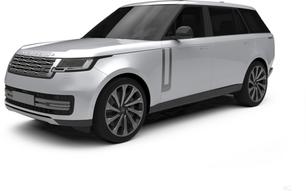
This fifth-generation Range Rover debuted in 2021 and despite its smooth, modern styling this SUV retains the familiar traditional Range Rover look with the short squared bonnet, flat roofline and tall windows.
Let’s talk about the wheelbase, because it has a huge impact on passenger space.
We had the long wheelbase which is 3197mm between the front and rear wheels - that’s 200mm more than the standard wheelbase.
Just look at those stretched rear doors in the photos - this is a go-anywhere limousine, or go-anywhere daycare centre in my case.
The overall length of the long wheelbase Range Rover is 5252mm. That’s big, but the design of this SUV doesn’t make it appear enormous.
What I don't like are the retractable door handles. They take a while to pop out and they look and feel cheap. Land Rover has used these on its other SUVs and if I had time I’d pen a letter asking the company to please stop. I’m sincerely hoping this review will do the same thing. I await your response JLR.
I think the tail-lights are pure genius. The pencil thin design is such a brave move away from the norm where brands are going over the top with LED lighting, and the simplicity is refreshing.
Inside, a traditional-looking Range Rover cabin awaits you with the flat dashboard, the low window sills contrasted by super modern touches like the displays and fully digital dials.
It’s sumptuous, luxurious, but not over the top. Again some people are looking for bling and gimmicks, but you won’t find them here - and I like that. This interior feels solid and substantial, but plush.
Until the DBX came along the most practical Aston Martin was the five-door, four-seater Rapide which had a huge rear hatch and a boot big enough to swallow an entire matching five-piece luggage set – I saw it with my very own eyes.
Now there's the DBX which seats five (well, four comfortably, because nobody wants to be in the middle) and has a boot with a luggage capacity of 491 litres under the leather cargo cover.
As you can see it fit our three-piece CarsGuide luggage set, and I also used it to pick up some compost – very likely the first time anybody has done this to a DBX ever in Australia, and probably the last.
Cabin storage is impressive. The floating centre console is suspended like a hammock and under it is a huge bunk for a phone, wallet, and small bags. The split-opening armrest houses a large box, too.
The door pockets are on the small side but there are two cupholders up front and another two in the fold-down armrest in the second row.
Talking of rows, there's no third row. The DBX comes as a two-row, five-seater only.
It’s a roomy second row, with more than enough space for me at 191cm (6'3") tall to sit behind my driving position and headroom is excellent, too.
Range Rovers have been a family favourite for decades and they’ve been doing school runs and trips away long before other brands even thought about producing SUVs for families.
So what you’re buying is Land Rover’s decades of knowing how to make a family SUV and you can tell by little things such as, how wide the doors open, how easy it is to get in and out of (even for little kids), the flat floor, the good visibility (thanks to low window sills), and then there’s the space and cabin storage. Stuff other brands seem to be still working out.
The second row seats in the Autobiography have electric sun shades, dual-zone climate control and the window seats are power adjustable and heated.
My eight-year old couldn’t resist playing with his electric sunshade and the seat adjustment, but fortunately the driver has an override switch which let me turn off his 'seat privileges’ as he called it.
Being the long wheelbase means the rear doors are long and heavy. So while the eight-year old could open them, he had trouble closing them.
The long wheelbase offers unrivalled legroom in the back and that meant my wife and I could put our own seats back further for our own comfort -even with a baby seat behind us.
Enormous door pockets, a giant centre console storage area, cupholders in all three rows, USB ports, wireless phone charging and in our case an optional domestic power outlet ($130) made this a comfortable, roomy, well equipped cabin.
Sure, the third row isn’t exactly spacious, but I’ve never met one that is.
The intelligent seat folding system is remarkable. From the boot or side doors you can electronically adjust the second and third rows - either to raise them or lower them so they are flat for storage.
With all seats in place there is 229 litres of cargo space still left in the boot, but with those back seats folded flat you have 713 litres of capacity - and that’s just up to the cargo cover.
The Range Rover Autobiography has air suspension and this means the SUV can lower itself to an 'Access' height to make it even easier to get in and out.
There is only one type of Aston Martin DBX and it wears a list price of $357,000, so it resides in the price range above the Porsche Cayenne, which tops out at $336,100, but below the Lamborghini Urus, which starts at $390,000.
The Bentley Bentayga V8 is its closest price rival, starting less than $10K higher than the DBX.
And while we're marvelling at the emergence of these super SUVs don't discount the original luxury SUV brand. The Range Rover SV Autobiography Dynamic is $351,086, and superb.
Let's take a look at the Aston Martin DBX's features.
Coming standard is leather upholstery, heated front and rear seats, three-zone climate control, a 10.25-inch media display with sat nav, Apple CarPlay and digital radio, a 12.3-inch digital instrument cluster, a panoramic glass sunroof, power tailgate, proximity key with push-button start, LED headlights and tail-lights, and 22-inch forged alloy wheels.
For this high-end corner of the market the value is good, but there are a couple of misses such as the lack of a head-up display and Android Auto isn't supported.
But if you wanted a shopping trolley packed with value you'd go to a supermarket, right? Maybe. What you really want to know is what it's like to drive, right? Let's start with horsepower.
The Autobiography sits high in the Range Rover line-up and only the SVO (Special Vehicle Operations) models command higher prices.
Our Range Rover Autobiography was the long-wheelbase with the twin-turbo petrol V8 engine and has a list price of $312,193.
The standard features include retractable door handles with a proximity key, the LED headlights and tail-lights, a power tailgate and the panoramic sunroof.
Inside, 'Caraway' perforated semi-aniline leather seats are standard, too. So is a 13.1-inch screen with wireless Apple CarPlay and Android Auto, plus sat nav. There’s a fully digital driver display, a head-up display, wireless phone charging, and a Meridian 'Signature' sound system.
Four-zone climate control is standard and will keep the kids comfortable in the back, while the sun shades will project them from that giant fireball in the sky.
Up front there are heated and cooled seats which also massage, while the outboard rear seats are heated and power adjustable.
Our Autobiography was the seven-seater and it’s only about $1600 more than the five-seat version.
Ours had a few options fitted - there are the 23-inch wheels, the standard alloys are 22-inch, there’s also the black contrasting roof and the privacy glass which is so dark it’s almost impossible to look in.
All up the total list price for ours came to $318,603.
When it came to giving the DBX an engine Aston Martin chose the same 4.0-litre twin-turbo V8 that's in the Vantage only they made it more powerful – 25kW more at 405kW (542hp). There's 15Nm more torque as well, at 700Nm.
Shifting through a nine-speed automatic transmission the DBX's 0-100km/h time is 4.5 seconds, which is almost a second slower than the Vantage's 3.6 seconds.
That said, the DBX weighs more than 2.2 tonnes, has a maximum ground clearance of 190mm, can wade rivers to a depth of 500mm and has a braked towing capacity of 2700kg. Oh yeah, and it's all-wheel drive.
That engine is one of the world's best V8s. It's light, compact, efficient and can produce enormous grunt. It's also made by Mercedes-Benz. Yup, it's the same (M177) 4.0-litre V8 found in the Mercedes-AMG C 63 S and a stack of other AMG-badged beasties.
There's just one thing, the V8 in the DBX doesn't sound as good to me as the one in a Mercedes-AMG. Aston's version has a less guttural and breathy exhaust note.
Sure, it still sounds amazing and when pushed hard it screams like Boudica charging into battle, but how often will you drive like that?
Most of the time we're in traffic in the suburbs and city trundling around at 40km/h. But even with the ‘loud’ exhaust mode set the note is still not as deep and brash as the AMG, which sounds delicious even at a standstill.
You probably already know why Aston Martin uses Mercedes-Benz engines. But just in case, it's because the brand with the star has been a part owner since 2013. Aston saves money and in return gets some of the best engines in the world.
The 4.4-litre twin-turbo petrol V8 is a perfect match for the Range Rover Autobiography.
There’s enormous power at 390kW and a colossal 750Nm of torque, but it’s delivered so smoothly and without sounding like Armageddon is beginning.
You might here the engine referred to as the P530. That signifies it’s petrol and makes about 530 horsepower.
All that grunt means that despite weighing more than 2.7 tonnes, this SUV can hurl itself from a stand still to 100km/h in 4.8 seconds.
An eight-speed automatic sends the drive to all four wheels. And making this SUV incredibly capable off-road is an excellent four-wheel drive system with a low range gear, plus a maximum ground clearance (thanks to the adjustable air suspension) of 283mm and a wading depth of up to 900mm.
There is a six-cylinder diesel, but if you decide on that instead of the V8 then it's all over between you and me. That’s how good this V8 is.
In my fuel test of the DBX I took in open roads and city streets and measured 20.4L/100km at the pump.
On the same test loop the Urus I drove used 15.7L/100km and the Bentley Bentayga consumed 21.1L/100km.
It's not surprising these super SUVs are thirsty, but if you're spending all your time on city roads you can expect the consumption to be even higher.
What is surprising is Aston Martin thinking anyone could really get 12.2L/100km, but then all carmakers tend to claim overly ambitious fuel economy figures.
Just think, your next car after this will probably be electric, so enjoy the petrol while it lasts.
Now, you’re going to use a lot of fuel. But that’s okay because this will probably be your last petrol car and the next one will be electric so let’s go out with a bang - last drinks at the petrol bar! Land Rover says you’ll use 11.8L/100km.
After a week of punishing my Range Rover with school drop offs, shopping centre car parks, hilly suburbs, motorways and rural roads the petrol pump told me we’d used 19.8L/100km.
I’m not shocked by that consumption. This is a 2.7 tonne all-wheel drive twin-turbo V8 SUV that was almost always ferrying around four people with a pram, garden supplies and shopping in bumper to bumper traffic. A real world fuel test.
There is that six-cylinder diesel and a hybrid version of the Range Rover, but this V8 engine suits the character of the SUV perfectly - anything else and it’s like eating reduced fat ice cream.
The DBX is a circa 550 horsepower giant that can reach out and almost touch 300km/h. But testing it on Sydney's roads is like having a champion racehorse in your backyard and your neighbour asking you what it's like to ride.
A racetrack wasn't handy at the time and I'd signed a form saying I'd not put any more than 400km on the clock during its stay with me, which meant having to choose my test loop carefully.
Fortunately, this was before Sydney was plunged into the current COVID lockdown, which makes that 400km now seem vast.
First, the DBX is an SUV anybody could drive, every day. Visibility is great and the ride is fine considering it rolls on 22-inch wheels and wears rubber as wide as some doorways and as thin as my socks (285/40 front and 325/35 rear Pirelli Scorpion Zero). Power delivery is smooth and predictable.
I did drive it every day, doing the shopping, school pick ups, a trip to the garden centre to fill it with plants and (ahem) compost, and it performed exactly as a large SUV should.
A source of frustration was the location of the shifting buttons high on the dashboard. Have a look at the images. Even with my chimpanzee-like long arms I had to stretch to change from Drive to Reverse. And with a not so small turning circle of 12.4m, three-point turns were a bit of an arm workout.
But the bigger frustration was the driver-car connection which didn't feel quite right. A good car-driver connection is essential for any great performance car.
Yes, there wasn't a race circuit where I could get to know the DBX quickly. But a good road, driven often with test cars, reveals a lot, too.
And the DBX didn't feel as good as the Lamborghini Urus, which is not only more comfortable but feels more dynamic and offers a superb connection between the driver and the machine.
The DBX is fast, it's powerful, the huge brakes pull it up quickly (almost violently so, if required) and handling is incredibly good.
It's just that I didn't really feel a part of it much at all. You know, the whole driver and car becoming one, thing. I felt like the third wheel on a date.
That connected feeling has been mastered by Porsche with its SUVs, but I feel the DBX needs more work. It felt unfinished.
I was told at the start that the DBX I was testing was a pre-production vehicle, but I'm sure that doesn't cover the shortcomings in the way it drove.
It's disappointing. I was hoping for better, but I think further development will see that come later.
Driving the V8-powered, long-wheelbase, 2.7-tonne, Range Rover Autobiography is a lot easier than it sounds. Really, it’s the Range Rover’s height above sea level which will strike you first.
You’ll lord it over other cars. The length doesn’t come into it - even for parking because the visibility is so good, the steering is so light and the engine is civilised and smooth.
This is truly an easy and enjoyable SUV to drive, with power and performance whenever you need it.
There are several drive modes from a 'Dynamic' sporty one, which makes the engine more responsive and suspension firmer, to off-road settings.
Most of the time I left the Range Rover in 'Comfort' mode for the softest ride, but with 530 horsepower lurking in the background ready to jump out and eat up hills and overtaking.
The front seats are wide, comfortable and supportive even after hours of driving.
The DBX hasn't been given an ANCAP crash safety rating and it's unlikely it ever will, which is often the case with low-volume, high-end models.
Still, the DBX comes standard with seven airbags, AEB, lane keeping assistance with lane-change warning, rear cross-traffic alert, blind-spot warning, traffic sign recognition, auto parking and adaptive cruise control.
For child seats there are three top tether anchor points and two ISOFIX mounts across the second row.
I found it easy and quick to fasten my son’s car seat into the DBX.
The Range Rover was given the maximum five-star ANCAP rating when it was tested in 2022.
For second-row child occupant protection the Range Rover scored a high 86 per cent in frontal and side impacts.
Standard safety tech includes AEB (junction and forward) with cyclists and pedestrian detection, there’s blind-spot warning, lane keeping assistance and rear cross-traffic alert, but no rear AEB.
For child seats there are ISOFIX mounts in the second row, and top tether anchor points in the second row and third rows.
Along with an entire suite of airbags it’s good to see a centre airbag up front and also head-covering curtain airbags all three rows.
The DBX is covered by Aston Martin's three-year-unlimited kilometre warranty. Also included is roadside assistance.
Service intervals are every 12 months or 16,000km.
Aston Martin doesn't have have capped price servicing for the DBX nor can owners purchase a maintenance plan for the SUV.
We asked Aston Martin for an estimate of how much owners can expect to pay for servicing over the life of the warranty, but a spokesperson told us, "We are unable to provide an estimate on the cost of servicing over three years."
With Aston Martin unable or unwilling to give us any guidance on servicing costs, maybe there are recent model Aston owners out there who can. Let us know in the comments section below.
The warranty is good with five-years and unlimited kilometre coverage.
There’s also five years roadside assistance and a complimentary five-year/130,000km service plan.
Yep, that's complimentary, as in free servicing for five years. I didn’t believe it myself and called Land Rover to check and was told that it does indeed mean free-of-charge.