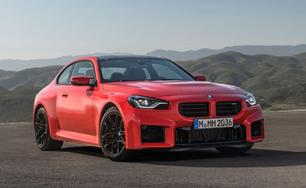
What's the difference?
Dieppe. A pretty seaside community on the northern French coast. Established a mere thousand years ago, it's copped a hammering in various conflicts, yet retained its beautiful 'marine promenade', a handy reputation for top-notch scallops, and for the last 50-odd years, one of the world's most respected performance carmakers.
Alpine, the brainchild of one Jean Rédélé - racing driver, motorsport innovator, and automotive entrepreneur - is still located on the southern edge of town.
Never officially imported into Australia, the brand is virtually unknown here to all but committed enthusiasts, with Alpine having an illustrious rally and sportscar racing back-story including victory in the 1973 World Rally Championship, and the 24 Hours of Le Mans in 1978.
Rédélé was always committed to Renault, with the French giant eventually buying his company in 1973, and continuing to produce brilliant, lightweight road and racing Alpines until 1995.
After a close to 20-year hibernation, Renault reanimated the brand in 2012 with the stunning A110-50 concept racing car, and then the two-seat, mid-engine machine you see here, the A110.
It's clearly inspired by the Alpine of the same name that wiped the rallying floor clean in the early 1970s. Question is, does this 21st century version build or bury that car's iconic reputation?
I think auto journalists are supposed to see vehicles a bit like parents see their children. You know, view them all as equals. No favourites. That kind of thing.
But I'm going to let you in on a tiny little secret, just between us. I liked this potent M2 before I even sat in it. And I like it just a little bit more than I love other bite-sized performance cars.
In fact, I like it more than I like bigger, more powerful, and more expensive models in the BMW M family.
Don't let the overall score fool you. The Alpine A110 is an instant classic. While practicality, safety and ownership costs don't set the world on fire, it delivers a driving experience that makes everything right with the world every time you get behind the wheel.
Proving good things still come in small packages, the pint-sized M2 remains my pick of the BMW M range. It's not the perfect daily drive, but I reckon the fun outweighs the foibles.
The final example of the original Alpine A110 rolled out of the Dieppe plant in 1977, and despite more than four decades separating it from this newcomer, the 2019 A110 is effectively a new-generation version.
Much more than a tip of the hat to a special predecessor, the new A110 perfectly updates the distinctive, purposeful look of its not-so-ancient ancestor.
In fact, head of the A110 design team, Antony Villain says, "We wondered; if the A110 never went away, if this new car was the sixth or seventh generation A110, what would it look like?"
Appropriately finished in a very French shade of 'Alpine Blue', our test example was one of 60 'Australian Premiere Edition' cars, and the design is full of intriguing details.
At just under 4.2m long, 1.8m wide, and only a touch over 1.2m high the two-seat A110 is compact to say the least.
It's raked LED headlights and round fog lights are recessed into the markedly curved nose in a complete and unabashed reload, with circular LED DRLs accentuating the throwback effect.
The overall look of the carefully scalloped bonnet is also familiar, with a huge under-bumper grille and side ducts creating an air curtain along the front wheel wells to finish off the treatment with a focused, technical touch.
A steeply raked windscreen runs up to a small turret with a broad channel running down its entre, and the flanks are narrowed by a lengthy, aero-influenced indent.
A case study in tightly wrapped surfacing, the rear-end is equally taut, with elements like 'X-shaped' LED tail-lights, tightly curved rear screen, single central exhaust outlet and aggressive diffuser continuing the expressive design theme.
Aero efficiency is a major influence, and as well as the diffuser careful inspection of the rear side window reveals a neat duct at its trailing-edge funnelling air to the mid/rear-mounted engine, and the underbody is smoothed near flat. An overall drag co-efficient of 0.32 is impressive for such a small car.
The A110 also proudly wears its French heart on its sleeve, with an enamel version of Le Tricolore attached to the C-pillar (and various points around the interior).
Eighteen-inch Otto Fuchs forged alloy rims fit the car's style and proportions perfectly with body-colour matching blue brake calipers poking through the delicate split-spoke design.
The interior is all business with racy Sabelt one-piece bucket seats setting the tone. Trimmed in a combination of quilted leather and microfibre (which extends to the doors) they are separated by a floating, flying buttress-style console housing key controls above and a storage tray (including multi-media inputs) below.
Highlights include cool body-colour panels in the doors, a Ferrari-like push-button gear selection set-up, slender alloy manual shift paddles attached to the steering column (not the wheel), matt carbon-fibre accents on the console and around the circular air vents, and a 10.0-inch TFT digital instrument cluster (which morphs to suit Normal, Sport or Track modes).
The A110's chassis and body are made from aluminium, with a brushed form of that material adorning everything from the pedals and perforated passenger footrest to multiple dash trim pieces.
Quality and attention to detail is outstanding to the point that just getting in the car feels like a special occasion. Every time.
There have been mixed reviews of the design of the BMW M range, but I reckon this one looks pretty damn good. In fact, I've always thought this kind of hyper-aggressive styling looks better on smaller cars than it does on big ones.
And it certainly is aggressive, right? From the huge bonnet bulges to the meshed out grille and angry rear diffuser, to the staggered alloys and flared wheel arches, to the blocky rear end with its four massive exhaust exits.
But my favourite exterior item has to be the blacked-out carbon roof, which helps shrink the M2 visually, and makes the whole car look more potent.
Inside, it's plenty sporty feeling, with hard-backed sports seats, lashings of carbon-fibre-look trimmings and the bright red M buttons on the steering wheel.
It's nice, but some of the touch points – like the hard plastics on top of the doors, where, if you're like me, you rest your elbow when driving – feel less than premium.
Still, all the tech is present and accounted for, with its digital dash and huge centre screen, and there's no shortage of spaces to connect or charge your phone.
Practicality is the oil to a two-seat sports car's water. If you want day-to-day functionality, look elsewhere. Quite rightly, the Alpine A110 puts driver engagement at the top of the priority list.
That said, with limited real estate to work with the car's development team has made it liveable, with a surprising amount of boot space included, and modest storage options snuck in around the cabin.
The heavily-bolstered, high-sided sports seats, necessitate use of the 'one hand on the A-pillar and swing in/out' technique for entry and exit, which won't suit everyone. And once inside several things are missing.
Glove box? No. If you need to refer to the owner's manual or grab the service book, they're housed in a small satchel attached to the bulkhead behind the driver's seat.
Door pockets? Forget it. Cupholders? Well, there's one, it's tiny, and located between the seats where only a double-joined circus contortionist could reach it.
There is a long storage bin under the centre console, which is helpful, although it's hard to reach in and actually extract things placed in it. Media inputs run to two USBs, an 'aux-in' and an SD card slot, but their location at the front of that lower storage area is tricky, and there's a 12-volt outlet just in front of the unreachable cupholder.
However, if you and a passenger want to head off on a weekend road trip, amazingly, you can take some luggage with you. With the engine located between the axles there's room for a 96-litre boot at the front and a 100-litre boot at the rear.
We managed to fit the middle (68-litre) hard suitcase from our three-piece set (35, 68 and 105 litres) in the broad but relatively shallow front boot, while the wider, deeper, but shorter rear boot is best for soft bags.
Another missing item is a spare tyre, with a neatly packaged repair/inflator kit your only option in the case of a puncture.
The M2 pocket rocket measures just over 4.5m in length, just under 1.9m in width, and just over 1.4m in height, and it rides on a 2747mm wheelbase. That makes it longer, wider and lower than the model it replaces.
Remember that 'lower' bit, as it will come up again in a moment.
Up front, you don't feel cramped, and there's the requisite cupholders, door pockets and hiding holes, as well as wireless device charging and USB connections.
But remember, this is a two-door, four-seat affair, which cuts into the practicality a little, or a lot.
Swing open the wide front doors, and push the front seat-back forwards, and the entire chair will slide forward automatically.
It does help create more room to climb into the back, but it's still a slightly embarrassing challenge to make getting back there look anything like graceful.
Once there, it's tight. I'm 175cm and my head was firmly pressed into the roof.
You do get your own vents and temp controls, but that's about it. Even the pull-down divider only gives you access to the 390-litre boot, rather than extra cupholders.
You do get two sets of ISOFIX attachment points, though, and let's be honest – if you're buying this to make Bunnings runs, you've probably got it wrong.
At $106,500 before on-road costs the Alpine A110 Australian Premiere Edition competes with an interesting range of similarly specified lightweight two-seaters.
The first that springs to mind is the achingly beautiful, mid-engine Alfa Romeo 4C Coupe at $89,000. For some, its exotic carbon chassis is underpinned by a too-firm suspension and the unassisted steering is difficult to deal with. For others (including me) it offers an exceptionally pure driving experience (and those that can't cop its physical nature need to harden up).
Lotus founder Colin Chapman's engineering philosophy, "Simplify, then add lightness" is alive and well in the form of the Lotus Elise Cup 250 ($107,990), and less than $10k more than the A110's MRRP delivers access to Porsche's thoroughbred 718 Cayman ($114,900).
Of course, part of the A110's substantial price tag relates to its all-alloy construction and the low-volume production techniques required to execute it. Not to mention development of an all-new design and global kick-start of a respected but dormant brand.
So, it's not all about bells and whistles, but for the record, a breakdown of this lightweight screamer's standard equipment list includes: 18-inch forged alloy rims, an 'Active-valve' sports exhaust system (with engine noise aligned to drive mode and speed), brushed aluminium pedal covers and passenger footrest, leather-trimmed Sabelt one-piece sports seats, auto LED headlights, satellite navigation, climate control air, cruise control, rear parking sensors, and electric heated, folding wing mirrors.
The 'Alpine Telemetrics' driving data system provides (and stores) real-time performance metrics including power, torque, temperatures, and turbo pressure, as well as lap times for track day warriors. And you'll also pick up a leather and microfibre-trimmed sports steering wheel (complete with 12 o'clock marker and Alpine Blue topstitching), stainless steel door sills with Alpine branding, dynamic (scrolling) indicators, auto rain-sensing wipers, and a 7.0-inch multimedia touchscreen including 'MySpin' mobile phone connectivity (with smartphone mirroring).
Audio comes from French specialist Focal, and although there are only four speakers, they're special. The main (165mm) speakers in the doors use a flax cone structure (flax sheet sandwiched between two glass fibre layers) and (35mm) aluminium/magnesium inverted dome tweeters sit at either end of the dashtop.
Certainly enough to be going on with, but at more than $100k we'd expect to see a reversing camera (more on that later), and the latest safety tech (more on that later, too).
First, the bad news. The M2 has only been getting more and more expensive over the years, and this new-generation model continues that charge.
Fun fact: When we first tested this model way back in 2016, you could get the Pure grade for less than $90K with a manual transmission.
Or you could spend just under $100K for the full-fruit version. This one, though, lists at $121,700, before on-road costs.
So, a little less bang for buck, but there's still a whole lot of bang on offer here.
You'll find staggered 19- and 20-inch lightweight alloys, while standard performance kit includes an 'Active M Differential', 'Adaptive M Suspension', 'M Compound Brakes' (with blue calipers), 'M Sport Seats' up front and, for the first time, a lightweight 'M Carbon' roof.
Elsewhere, there's adaptive LED headlights, a 12.3-inch instrument display and a 14.9-inch multimedia screen, a head-up display, a Harman Kardon 'Surround Sound' audio system and Android Auto and Apple CarPlay connectivity.
You'll sit on leather seats that adjust electrically and are heated up front. There's three-zone climate control, along with a heated steering wheel, wireless device charging and ambient interior lighting.
The Alpine A110's (M5P) all-alloy 1.8-litre turbo-petrol four-cylinder engine is closely related to the unit found under the bonnet of the Renault Megane R.S.
Alpine has modified the intake manifold, exhaust and overall calibration, but the big difference here is that although it's still transversely mounted, in the Alpine the engine sits in a mid/rear position and drives the rear wheels (rather than in the R.S.'s nose driving the fronts).
Featuring direct injection and a single turbo it produces 185kW at 6000rpm, and 320Nm of torque from 2000-5000rpm, compared to 205kW/390Nm in the Megane R.S. But the Alpine's 356kg weight advantage means it boasts a 169kW/tonne power-to-weight ratio, while the Megane sits at 141kW/tonne.
Drive goes to a Getrag-sourced seven-speed (wet) dual-clutch auto transmission, with Alpine-specific ratios inside.
Besides, this is what we're really here for, isn't it? The M2 gets the 'M TwinPower' 3.0-litre twin-turbo inline-six engine, producing a sizeable 338kW and 550Nm, sending that power to the rear wheels via an eight-speed auto or six-speed manual.
BMW says this engine is very, very close to the engine that powers the M3 and M4, and says it will rocket the M2 from 0-100km/h in 4.1 seconds, and to 200km/h in either 13.5 seconds in the automatic, or 14.3 seconds in the manual.
Claimed fuel economy for the combined (ADR 81/02 - urban, extra-urban) cycle is 6.2L/100km, the 1.8-litre four emitting 137g/km of CO2 in the process.
Over close to 400km worth of often 'enthusiastic' driving, taking in city, suburban and freeway running we recorded an average of 9.6L/100km.
Definitely a miss, but not bad when you consider we hit the off switch for the standard stop-start system on a consistent basis and regularly took advantage of the accelerator pedal's ability to move towards the floor.
Minimum fuel requirement is 95 RON premium unleaded, and you'll need just 45 litres of it to fill the tank.
A small fly in the ointment is fuel use, with the M2 said to use 9.7L/100km on the combined cycle. It also drinks 98 RON premium, and is home to a 52-litre fuel tank. Your theoretical driving range is around 540km.
Now, be warned, you'll be bored stiff if you drive it in the way that's required to get it that low. When we were being gentle, we were somewhere between 10.5 and 11.5 litres per hundred kilometres.
Emissions are pegged a 220g/km of C02.
Weighing at just 1094kg (target weight was 1100kg), with a 44:56 front-to-rear weight distribution, the all-aluminium A110 is every millimetre the mini-supercar you'd hope it to be.
It only takes two to three rotations of the Alpine's wheels to realise it's exceptional. The Sabelt seat is superb, the chunky steering wheel perfect, and the engine instantly eager to get on with it.
The electro-mechanical power-assisted steering feels just right from the first corner. The rack is quick and road feel is intimate without the crashy feedback penalty paid by the Alfa 4C.
Engage launch control and you're blasting from 0-100km/h 4.5sec, with the engine adding a suitably raucous backing track, a full charge of air rasping through the inlet manifold just behind your ears. Spinning up to the close to 7000rpm rev ceiling is pure pleasure, with peak torque available from just 2000rpm all the way to five grand.
Pressing the wheel-mounted 'Sport' button sharpens gearshifts and holds low ratios for longer, with the already slick dual-clutch really getting its race face on. Hold in the down lever in manual mode and the transmission will instantly shift through to the lowest gear engine revs will allow, the Active-valve sports exhaust chipping in with rude pops and bangs on the over-run. 'Track' mode is even more hardcore, allowing a greater element of slip in cornering. Brilliant.
The engine's mid/rear location delivers a low roll-centre and the double wishbone suspension set-up (front and rear) manages to combine super-sharp dynamic response with a surprisingly civilised ride.
Alpine says the A110's light weight and ultra-rigid chassis mean its coil springs can be reasonably soft and anti-roll bars light so even our truly ordinary urban blacktop doesn't cause too much distress.
The A110 is beautifully balanced, amazingly agile, and satisfyingly precise. Weight transfer in quick cornering is managed to perfection, the car remaining stable, predictable and hugely entertaining.
Grip from the Michelin Pilot Sport 4 rubber (205/40 fr - 235/40 rr) is tenacious, and the torque vectoring system (by braking) quietly keeps things pointing in the right direction if an over-zealous pilot begins to overstep the mark.
Despite the A110's modest kerb weight braking is professional grade. Brembo provides ventilated 320mm rotors (front and rear) with four-piston alloy calipers at the front and single-piston floating calipers at the rear. They're progressive, powerful and consistent.
The only downsides are a clumsy multimedia interface, and the annoying lack of a reversing camera. But who cares, this car is amazing.
Let's be totally up front here: the BMW M2 isn't the most comfortable vehicle to live with. In fact, I recently climbed out of the M3 Touring, and found that to be more comfortable on broken city streets.
The M2 is fitted with adaptive suspension, but even in its most comfortable settings it can feel rough, bumpy and jarring on bad roads (of which Australia has lots), and unless you're gentle with the accelerator, it can feel a little jumpy when first taking off – a by-product of its prodigious power.
Now, let's be totally up front again: I don't care. The M2 is fun, plain and simple, and for mine, the above is a fair price to pay for something that brings so much joy.
The steering is lovely, the power immediate and the soundtrack intoxicating, and it's the kind of car that's fun no matter where, how far or how fast you drive it.
In fact, fun seems to be the very centre of the M2 proposition, which definitely doesn't take itself too seriously.
For evidence, look no further than the 'M Drift Analyser', buried in a hopelessly busy multimedia system that will have you praising the CarPlay and Android Auto gods.
It will rate your best drift out of four stars, measure it for distance, and basically give you a pat on the back for doing your best hooligan impression (not on a public road, of course).
Fun, then, is the order of the day here. And I bloody love it.
In terms of active safety, the A110's sheer dynamic ability will help you avoid an unfortunate incident, and specific tech includes ABS, EBA, traction control, stability control (disconnectable), cruise control (with speed limitation) and hill-start assist.
But forget about higher order systems like AEB, lane keeping assistance, blind spot monitoring, cross traffic alert or adaptive cruise.
And when it comes to passive safety you're protected by an airbag for the driver and one for the passenger. That's it. Weight-saving, eh? What can you do?
The Alpine A110 hasn't been assessed for safety performance by ANCAP or EuroNCAP.
The BMW M2 hasn't been assessed by ANCAP, but it arrives with six airbags, as well as all your usual traction and braking aids.
Elsewhere, you'll find lane change and lane departure warning, active cruise control, front and rear parking sensors, tyre pressure monitoring, and AEB with pedestrian detection.
There's also blind-spot monitoring, rear cross-traffic alert and lane centring assist, as well as a tyre-pressure monitoring system.
The Alpine A10 is covered by a three-year/100,000km warranty with a twist. According to Alpine, the first two years are covered for unlimited kilometres. And if at the end of the second year total kilometres remain less than 100,000, the warranty continues into a third year (still to an overall cap of 100,000km).
So, you can sail over the 100,000km mark in the warranty's first two years, but that means you won't get a third.
Complimentary roadside-assist is provided for 12 months, continuing for up to four years if your Alpine is regularly serviced at an authorised dealer.
There are currently three dealers only – one each in Melbourne, Sydney and Brisbane – and service is recommended every 12 months/20,000km, with the first two costing $530 each, and the third ramping up to $1280.
You'll also need to factor in a pollen filter ($89) at two years/20,000km and accessory belt replacement ($319) at four years/60,000km.
The BMW M2 is covered by a five-year, unlimited kilometre warranty, and servicing is 'condition based', in that the vehicle will tell you what maintenance is required, and when.
You can prepay your service costs at the time of purchase for all BMW vehicles, covering the first five years of ownership, for $3480 (which means $695 per service).