What's the difference?
Dieppe. A pretty seaside community on the northern French coast. Established a mere thousand years ago, it's copped a hammering in various conflicts, yet retained its beautiful 'marine promenade', a handy reputation for top-notch scallops, and for the last 50-odd years, one of the world's most respected performance carmakers.
Alpine, the brainchild of one Jean Rédélé - racing driver, motorsport innovator, and automotive entrepreneur - is still located on the southern edge of town.
Never officially imported into Australia, the brand is virtually unknown here to all but committed enthusiasts, with Alpine having an illustrious rally and sportscar racing back-story including victory in the 1973 World Rally Championship, and the 24 Hours of Le Mans in 1978.
Rédélé was always committed to Renault, with the French giant eventually buying his company in 1973, and continuing to produce brilliant, lightweight road and racing Alpines until 1995.
After a close to 20-year hibernation, Renault reanimated the brand in 2012 with the stunning A110-50 concept racing car, and then the two-seat, mid-engine machine you see here, the A110.
It's clearly inspired by the Alpine of the same name that wiped the rallying floor clean in the early 1970s. Question is, does this 21st century version build or bury that car's iconic reputation?
With Ferrari leaving the Fiat-Chrysler family and becoming an independent entity in 2016, Maserati was left without a technology partner.
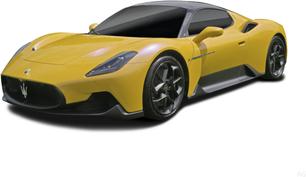
Suddenly, the Trident brand had to go it alone and come up with its own engines for the first time in more than 20 years. The MC20 sports-car is the result of that rebirth.
While there’s no doubt the Maserati brand has the currency to pull this off, the MC20 is also a big step outside the company’s usual grand-tourer box.
The new coupe is aimed at McLaren, Porsche and even Ferrari buyers, so can the first true Maserati sports car since the MC12 of 2004 walk the walk? And let’s not forget that the MC12 was Ferrari Enzo-based…
No-compromise cars are often the ones that impose the most compromises, and in that sense, the MC20’s shattering on-paper performance means its greatest attributes can’t be enjoyed on a public road.
That’s why this review was conducted entirely on Philip Island’s 4.4km Grand Prix layout. As a result, we can’t tell you much about parking ease or highway fuel consumption. But as for the things that give a super-sports car its identity, read on.
Don't let the overall score fool you. The Alpine A110 is an instant classic. While practicality, safety and ownership costs don't set the world on fire, it delivers a driving experience that makes everything right with the world every time you get behind the wheel.
With a 320km/h-plus top speed and the ability to get from rest to 100km/h in under three seconds, there’s no doubting the MC20 meets or exceeds its performance brief. But when you’re paying these prices, there must be more than just the measurable stuff going on.
And there is. The MC20 brings a big dollop of purity to the ranks of current supercars, doing away with all-wheel drive and hybrid tech and relying instead on and old-school approach in terms of handling and overall feel.
Anybody who wants to argue that call has plenty of alternatives to the MC20 from other manufacturers, and for some of us, that less-is-more thing will ring true.
Note: CarsGuide attended this event as a guest of the manufacturer, with meals provided.