What's the difference?
Dieppe. A pretty seaside community on the northern French coast. Established a mere thousand years ago, it's copped a hammering in various conflicts, yet retained its beautiful 'marine promenade', a handy reputation for top-notch scallops, and for the last 50-odd years, one of the world's most respected performance carmakers.
Alpine, the brainchild of one Jean Rédélé - racing driver, motorsport innovator, and automotive entrepreneur - is still located on the southern edge of town.
Never officially imported into Australia, the brand is virtually unknown here to all but committed enthusiasts, with Alpine having an illustrious rally and sportscar racing back-story including victory in the 1973 World Rally Championship, and the 24 Hours of Le Mans in 1978.
Rédélé was always committed to Renault, with the French giant eventually buying his company in 1973, and continuing to produce brilliant, lightweight road and racing Alpines until 1995.
After a close to 20-year hibernation, Renault reanimated the brand in 2012 with the stunning A110-50 concept racing car, and then the two-seat, mid-engine machine you see here, the A110.
It's clearly inspired by the Alpine of the same name that wiped the rallying floor clean in the early 1970s. Question is, does this 21st century version build or bury that car's iconic reputation?
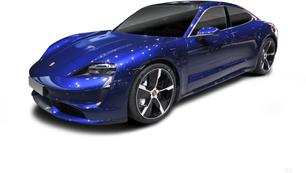
Can you believe Porsche’s Taycan has been on sale in Australia for three and a half years?
Well, it has, which means the mid-life refresh clock has struck 12 for this ground-breaking pure-electric performance sedan and wagon.
Porsche says it’s faster in a straight line… and to charge, with more power and an extended range. It’s also been refreshed cosmetically, the dynamics have been tweaked and the standard features list has been lengthened as prices have gone up.
We’re ready to share our first impressions review, so stay with us to see if the new Taycan keeps the Porsche flame burning in an increasingly electrified automotive world.
Don't let the overall score fool you. The Alpine A110 is an instant classic. While practicality, safety and ownership costs don't set the world on fire, it delivers a driving experience that makes everything right with the world every time you get behind the wheel.
Porsche says its Taycan models have always been performance-focused and this updated version is even faster than the car it replaces, in a straight line and point-to-point. It’s better equipped, more efficient, and yes, more expensive but every millimetre a Porsche in the way this EV sedan and wagon package has been executed.
It’s an impressive car likely to appeal to Porsche newcomers rather than traditionalists, although you may already have other Porsches in the garage. But with the Macan EV landing any minute and the pure-electric 718 Boxster and Cayman just around the corner it's a key part of the changing face of this iconic German brand.
Note: CarsGuide attended this event as a guest of the manufacturer, with travel, accommodation and meals provided.
The final example of the original Alpine A110 rolled out of the Dieppe plant in 1977, and despite more than four decades separating it from this newcomer, the 2019 A110 is effectively a new-generation version.
Much more than a tip of the hat to a special predecessor, the new A110 perfectly updates the distinctive, purposeful look of its not-so-ancient ancestor.
In fact, head of the A110 design team, Antony Villain says, "We wondered; if the A110 never went away, if this new car was the sixth or seventh generation A110, what would it look like?"
Appropriately finished in a very French shade of 'Alpine Blue', our test example was one of 60 'Australian Premiere Edition' cars, and the design is full of intriguing details.
At just under 4.2m long, 1.8m wide, and only a touch over 1.2m high the two-seat A110 is compact to say the least.
It's raked LED headlights and round fog lights are recessed into the markedly curved nose in a complete and unabashed reload, with circular LED DRLs accentuating the throwback effect.
The overall look of the carefully scalloped bonnet is also familiar, with a huge under-bumper grille and side ducts creating an air curtain along the front wheel wells to finish off the treatment with a focused, technical touch.
A steeply raked windscreen runs up to a small turret with a broad channel running down its entre, and the flanks are narrowed by a lengthy, aero-influenced indent.
A case study in tightly wrapped surfacing, the rear-end is equally taut, with elements like 'X-shaped' LED tail-lights, tightly curved rear screen, single central exhaust outlet and aggressive diffuser continuing the expressive design theme.
Aero efficiency is a major influence, and as well as the diffuser careful inspection of the rear side window reveals a neat duct at its trailing-edge funnelling air to the mid/rear-mounted engine, and the underbody is smoothed near flat. An overall drag co-efficient of 0.32 is impressive for such a small car.
The A110 also proudly wears its French heart on its sleeve, with an enamel version of Le Tricolore attached to the C-pillar (and various points around the interior).
Eighteen-inch Otto Fuchs forged alloy rims fit the car's style and proportions perfectly with body-colour matching blue brake calipers poking through the delicate split-spoke design.
The interior is all business with racy Sabelt one-piece bucket seats setting the tone. Trimmed in a combination of quilted leather and microfibre (which extends to the doors) they are separated by a floating, flying buttress-style console housing key controls above and a storage tray (including multi-media inputs) below.
Highlights include cool body-colour panels in the doors, a Ferrari-like push-button gear selection set-up, slender alloy manual shift paddles attached to the steering column (not the wheel), matt carbon-fibre accents on the console and around the circular air vents, and a 10.0-inch TFT digital instrument cluster (which morphs to suit Normal, Sport or Track modes).
The A110's chassis and body are made from aluminium, with a brushed form of that material adorning everything from the pedals and perforated passenger footrest to multiple dash trim pieces.
Quality and attention to detail is outstanding to the point that just getting in the car feels like a special occasion. Every time.
Porsche has freshened up the Taycan’s front and rear end, the nose losing the vents dropping down from the headlights as previewed by the original Mission E Concept in 2015.
Matrix LED headlights are standard with high-resolution HD available. But there are no major sheet metal changes to the bulk of the car. And why would you fiddle with it? The drag coefficient is an ultra-slippery 0.22.
Around the back the Porsche logo in the rear light strip has been given a cool three-dimensional treatment al la the 911, Panamera and other current Porsches. And if you have eyes for the Turbo or Turbo S the brand’s glamorous ‘Turbonite’ metallic silver colour is now available.
Inside is a screen-rich environment with a three-dial digital version of the brand’s five-dial instrument cluster customisable through roughly 5000 configurations and there’s a new multimedia software interface for the central screens with additional functions. A passenger display is a $2860 option.
Practicality is the oil to a two-seat sports car's water. If you want day-to-day functionality, look elsewhere. Quite rightly, the Alpine A110 puts driver engagement at the top of the priority list.
That said, with limited real estate to work with the car's development team has made it liveable, with a surprising amount of boot space included, and modest storage options snuck in around the cabin.
The heavily-bolstered, high-sided sports seats, necessitate use of the 'one hand on the A-pillar and swing in/out' technique for entry and exit, which won't suit everyone. And once inside several things are missing.
Glove box? No. If you need to refer to the owner's manual or grab the service book, they're housed in a small satchel attached to the bulkhead behind the driver's seat.
Door pockets? Forget it. Cupholders? Well, there's one, it's tiny, and located between the seats where only a double-joined circus contortionist could reach it.
There is a long storage bin under the centre console, which is helpful, although it's hard to reach in and actually extract things placed in it. Media inputs run to two USBs, an 'aux-in' and an SD card slot, but their location at the front of that lower storage area is tricky, and there's a 12-volt outlet just in front of the unreachable cupholder.
However, if you and a passenger want to head off on a weekend road trip, amazingly, you can take some luggage with you. With the engine located between the axles there's room for a 96-litre boot at the front and a 100-litre boot at the rear.
We managed to fit the middle (68-litre) hard suitcase from our three-piece set (35, 68 and 105 litres) in the broad but relatively shallow front boot, while the wider, deeper, but shorter rear boot is best for soft bags.
Another missing item is a spare tyre, with a neatly packaged repair/inflator kit your only option in the case of a puncture.
At nearly 5.0m long and 2.0m wide but less than 1.4m tall the Taycan is a low-slung large sedan.
In the front of the Taycan I’ve got plenty of breathing space, lots of headroom and enough shoulder room and you don’t feel cramped relative to the co-pilot.
In terms of storage, there are pockets in the doors with room for bottles, a couple of cup and bottle holders in the centre console as well as a tray under the flying buttress type upper console section.
A lidded box between the seats housing a couple of USB-C outlets and a 12-volt socket is handy and there’s a decent-size glove box on the passenger side.
Interestingly, an in-car video function enables video streaming on the central display (while the vehicle is stationary) and the passenger display at any time with the vision hidden from the driver by a lenticular-style screen.
In the back, sitting behind the driver’s seat, set for my 183cm position, I have ample legroom and space for my feet. Problem is my head hits the roof solidly, even with the extra room afforded by the panoramic glass insert, which is a no-cost option from the Taycan 4S up.
Standard configuration is two rear seat positions, although a ‘4+1’ set up which adds an occasional centre rear position is optionally available. Trust me, that’s tight.
On the upside you have adjustable ventilation for the rear seat passengers (climate control zones on the Turbo grades) with a small oddments shelf below them, slots in the doors for bottles and two more cup or bottle holders in the fold-down centre armrest.
No map pockets on the front seat backs, so while there’s some room for storage it’s not exactly over supplied in that department, or for breathing space in general.
Boot space is relatively modest at 366 litres in the sedan but the 60/40 split-folding rear seat liberates more space if required. The Cross Turismo wagon offers 405 litres and a much larger load aperture for greater flexibility. An 84L frunk sits in the nose of all Taycans.
Interesting to note Taycans in other markets boast an extra 41L of boot space. It doesn’t feature here because Porsche Australia has made the high-end Bose sound system standard and its sub-woofer eats into available capacity.
A power boot lid or tailgate and auto self-levelling to maintain the car’s ride height under load is standard but there’s no spare tyre of any description. A repair/inflator kit is your only option, which is less than ideal.
At $106,500 before on-road costs the Alpine A110 Australian Premiere Edition competes with an interesting range of similarly specified lightweight two-seaters.
The first that springs to mind is the achingly beautiful, mid-engine Alfa Romeo 4C Coupe at $89,000. For some, its exotic carbon chassis is underpinned by a too-firm suspension and the unassisted steering is difficult to deal with. For others (including me) it offers an exceptionally pure driving experience (and those that can't cop its physical nature need to harden up).
Lotus founder Colin Chapman's engineering philosophy, "Simplify, then add lightness" is alive and well in the form of the Lotus Elise Cup 250 ($107,990), and less than $10k more than the A110's MRRP delivers access to Porsche's thoroughbred 718 Cayman ($114,900).
Of course, part of the A110's substantial price tag relates to its all-alloy construction and the low-volume production techniques required to execute it. Not to mention development of an all-new design and global kick-start of a respected but dormant brand.
So, it's not all about bells and whistles, but for the record, a breakdown of this lightweight screamer's standard equipment list includes: 18-inch forged alloy rims, an 'Active-valve' sports exhaust system (with engine noise aligned to drive mode and speed), brushed aluminium pedal covers and passenger footrest, leather-trimmed Sabelt one-piece sports seats, auto LED headlights, satellite navigation, climate control air, cruise control, rear parking sensors, and electric heated, folding wing mirrors.
The 'Alpine Telemetrics' driving data system provides (and stores) real-time performance metrics including power, torque, temperatures, and turbo pressure, as well as lap times for track day warriors. And you'll also pick up a leather and microfibre-trimmed sports steering wheel (complete with 12 o'clock marker and Alpine Blue topstitching), stainless steel door sills with Alpine branding, dynamic (scrolling) indicators, auto rain-sensing wipers, and a 7.0-inch multimedia touchscreen including 'MySpin' mobile phone connectivity (with smartphone mirroring).
Audio comes from French specialist Focal, and although there are only four speakers, they're special. The main (165mm) speakers in the doors use a flax cone structure (flax sheet sandwiched between two glass fibre layers) and (35mm) aluminium/magnesium inverted dome tweeters sit at either end of the dashtop.
Certainly enough to be going on with, but at more than $100k we'd expect to see a reversing camera (more on that later), and the latest safety tech (more on that later, too).
Cost-of-entry to the Taycan club stretches from close to $174,500, before on-road costs, for the entry-grade, single-motor RWD model to just under $373,600 for the flagship dual-motor AWD Turbo S. That’s an increase of between 2.7 and 6.6 per cent, varying by model.
MSRP - correct at time of publication
The heavy-hitting Taycan Turbo GT is scheduled to arrive in the third quarter of this year at $416K, and we’ll no doubt see a sporty GTS variant within the next 12-to-18 months.
That price spread for the new Taycan pitches the Porsche against the likes of Audi’s closely related e-tron GT and RS GT, BMW’s three-tier i5 line-up and the Mercedes-Benz EQE sedan.
Highlight spec additions include ambient lighting, soft-close doors and an ‘Intelligent Range Manager’ which uses the nav and onboard systems to optimise energy use.
The ventilation system now features a heat pump which compresses outside air to heat the cabin and wireless charging is included across the board.
Then tip in adaptive cruise control, a head-up display, lane change assist, surround camera view (with ‘Active Parking Support’), rear side airbags and digital radio.
The base model picks up adaptive air suspension, alloy door sill protectors and a bigger, lighter battery.
That’s on top of a laundry list of non-safety or performance related inclusions like auto matrix LED headlights, dual-zone climate control, 14-way electrically adjustable heated front seats (with memory), partial leather trim, privacy glass, 10.9-inch central multimedia display, configurable digital instrument panel, 14-speaker/710W Bose audio (with digital radio), Apple/Android connectivity, an auto tailgate and more.
While, depending on model, higher grades collect extra standard gear ranging from bigger rims and full leather interior to a panoramic glass roof and ventilated seats.
Not bad, even in this elevated part of the market.
The Alpine A110's (M5P) all-alloy 1.8-litre turbo-petrol four-cylinder engine is closely related to the unit found under the bonnet of the Renault Megane R.S.
Alpine has modified the intake manifold, exhaust and overall calibration, but the big difference here is that although it's still transversely mounted, in the Alpine the engine sits in a mid/rear position and drives the rear wheels (rather than in the R.S.'s nose driving the fronts).
Featuring direct injection and a single turbo it produces 185kW at 6000rpm, and 320Nm of torque from 2000-5000rpm, compared to 205kW/390Nm in the Megane R.S. But the Alpine's 356kg weight advantage means it boasts a 169kW/tonne power-to-weight ratio, while the Megane sits at 141kW/tonne.
Drive goes to a Getrag-sourced seven-speed (wet) dual-clutch auto transmission, with Alpine-specific ratios inside.
The entry-level single-motor RWD Taycan features a new electric motor that’s 10kg lighter and seven per cent more powerful but more notably produces 22 per cent more torque than the unit it replaces.
Both it and the additional motor fitted to the front axle of AWD models are permanent magnet synchronous units with outputs up across the range, the Turbo S producing a stonking 700kW and more than 1100Nm.
That 700kW peak number for the Turbo S comes courtesy of an ‘overboost’ function with Launch Control. And Taycan models equipped with the Sport Chrono package and the Performance Battery Plus have up to an extra 70kW courtesy of a 10sec push-to-pass button.
There’s a two-speed transmission on the rear axle and a single-speed on the front of AWD variants.
Claimed fuel economy for the combined (ADR 81/02 - urban, extra-urban) cycle is 6.2L/100km, the 1.8-litre four emitting 137g/km of CO2 in the process.
Over close to 400km worth of often 'enthusiastic' driving, taking in city, suburban and freeway running we recorded an average of 9.6L/100km.
Definitely a miss, but not bad when you consider we hit the off switch for the standard stop-start system on a consistent basis and regularly took advantage of the accelerator pedal's ability to move towards the floor.
Minimum fuel requirement is 95 RON premium unleaded, and you'll need just 45 litres of it to fill the tank.
The Taycan runs 800-volt electric architecture which means it can charge at up to 320kW on a DC fast-charger which is 50kW more than its predecessor. In fact, charging at more than 300kW for up to five minutes is possible.
You’re looking at a 10-80 per cent charge in 18min on a fast charger which is down from 37min. It’s 46min on a more typical 120kW charger.
An 89kWh lithium-ion battery is standard on the entry-grade Taycan. It boasts a nickel, cobalt, manganese cell chemistry which Porsche says delivers high energy content, lower internal resistance and higher charge and discharge currents. And it’s 9.0kg lighter.
All models above it feature the 105kWh ‘Performance Battery Plus’, a roughly $12K option on the base car.
Maximum AC charging capacity is 11kW and you’re staring down the barrel of nine hours for a 0-100 per cent fill of the smaller battery and 11 hours for the performance battery pack.
Official energy consumption on a combined urban, extra-urban cycle varies from 17.1kWh/100km for the single motor Taycan to 17.8kWh for dual-motor variants.
On the launch drive program, covering mainly rural B-roads on Tasmania’s east coast, we cycled through all models on offer and recorded a best figure of 21.5kWh/100km for the single-motor Taycan up to 22.0kWh for the Turbo S. Not bad.
Claimed range is 566km for the entry-grade Taycan, up to 626km for dual-motor models.
Interestingly, on 4WD models the - front electric motor can electronically decouple more frequently to improve efficiency.
Weighing at just 1094kg (target weight was 1100kg), with a 44:56 front-to-rear weight distribution, the all-aluminium A110 is every millimetre the mini-supercar you'd hope it to be.
It only takes two to three rotations of the Alpine's wheels to realise it's exceptional. The Sabelt seat is superb, the chunky steering wheel perfect, and the engine instantly eager to get on with it.
The electro-mechanical power-assisted steering feels just right from the first corner. The rack is quick and road feel is intimate without the crashy feedback penalty paid by the Alfa 4C.
Engage launch control and you're blasting from 0-100km/h 4.5sec, with the engine adding a suitably raucous backing track, a full charge of air rasping through the inlet manifold just behind your ears. Spinning up to the close to 7000rpm rev ceiling is pure pleasure, with peak torque available from just 2000rpm all the way to five grand.
Pressing the wheel-mounted 'Sport' button sharpens gearshifts and holds low ratios for longer, with the already slick dual-clutch really getting its race face on. Hold in the down lever in manual mode and the transmission will instantly shift through to the lowest gear engine revs will allow, the Active-valve sports exhaust chipping in with rude pops and bangs on the over-run. 'Track' mode is even more hardcore, allowing a greater element of slip in cornering. Brilliant.
The engine's mid/rear location delivers a low roll-centre and the double wishbone suspension set-up (front and rear) manages to combine super-sharp dynamic response with a surprisingly civilised ride.
Alpine says the A110's light weight and ultra-rigid chassis mean its coil springs can be reasonably soft and anti-roll bars light so even our truly ordinary urban blacktop doesn't cause too much distress.
The A110 is beautifully balanced, amazingly agile, and satisfyingly precise. Weight transfer in quick cornering is managed to perfection, the car remaining stable, predictable and hugely entertaining.
Grip from the Michelin Pilot Sport 4 rubber (205/40 fr - 235/40 rr) is tenacious, and the torque vectoring system (by braking) quietly keeps things pointing in the right direction if an over-zealous pilot begins to overstep the mark.
Despite the A110's modest kerb weight braking is professional grade. Brembo provides ventilated 320mm rotors (front and rear) with four-piston alloy calipers at the front and single-piston floating calipers at the rear. They're progressive, powerful and consistent.
The only downsides are a clumsy multimedia interface, and the annoying lack of a reversing camera. But who cares, this car is amazing.
Full disclosure. My preference when it comes to Porsche propulsion is pistons in cylinders; ideally six of them, horizontally opposed.
But if the Taycan is on your shortlist you’re ready to move past internal combustion and there is no doubt this car is properly quick.
The entry-level RWD model accelerates from 0-100km/h in 4.8sec (0.6 faster than the outgoing model) with the Taycan Turbo S at 2.4sec which is hypercar fast.
Porsche admits to having played around with some dual-clutch transmission-type mimicry along the lines of the Hyundai Ioniq 5 N. But the boffins in Zuffenhausen left that to one side due to concerns over compromise to the car’s point-to-point ability. Porsche seemingly can’t entertain anything that makes a car slower.
It did, however, install a push-to-pass function on dual-motor versions which gives you a 10-second burst of extra performance which is fun.
Suspension is by forged alloy double-wishbone front and rear with some extra links at the back.
Adaptive air suspension is standard across the range, and ‘Active Ride’ is fitted to the upper variants which takes things one step further.
And it does ride very nicely. The launch drive covered second-class, coarse-chip B-road type surfaces and the Taycan smooths the road out beautifully.
Standard wheel diameter is 19-inch for the entry-grade, 20s for the 4S and Turbo, then 21s on the Turbo S. The cars on the launch program all featured 21-inch rims shod with Goodyear Eagle F1 or Michelin Pilot Sport 4 rubber and even on those big wheels the car still rides well.
In terms of the steering… hey, it’s a Porsche. It’s fantastic. Accurate and direct without being too jerky or snappy. It does exactly what you want the car to do. The connection with the front tyres feels like it’s almost direct.
This car may be lighter than its predecessor but all models are over 2.0 tonnes so you’d expect it to be heavy and slow. It’s not. Point and accelerate through corners with supreme confidence. It’s beautifully balanced. What you’d expect from a Porsche performance car.
Physical braking is by big ventilated discs all around with six-piston aluminium monobloc fixed-calipers at the front and four-piston units at the rear. Suffice it to say they wash off speed effectively.
Believe it or not the Turbo S’s front brake calipers contain no less than 10 pistons, clamping ceramic composite rotors. We gave all Taycan variants a solid workout on the Baskerville Raceway just north of Hobart and stopping power felt as strong and effective at the end of the session as it did at the start.
There’s also improved recuperation capacity for the regenerative braking system, up 30 per cent from 290 to 400kW.
In terms of miscellaneous observations, beware the 11.7m turning circle. What might appear to be a three-point turn situation often turns into a five-pointer.
And entry to cars fitted with Active Ride is made easier (when activated). As soon as a door is opened, the body raises by 55mm. May seem OTT but it makes life with the Taycan that bit better.
In terms of active safety, the A110's sheer dynamic ability will help you avoid an unfortunate incident, and specific tech includes ABS, EBA, traction control, stability control (disconnectable), cruise control (with speed limitation) and hill-start assist.
But forget about higher order systems like AEB, lane keeping assistance, blind spot monitoring, cross traffic alert or adaptive cruise.
And when it comes to passive safety you're protected by an airbag for the driver and one for the passenger. That's it. Weight-saving, eh? What can you do?
The Alpine A110 hasn't been assessed for safety performance by ANCAP or EuroNCAP.
Although Porsche and ANCAP do not intersect at this stage the Taycan ticks just about every active (crash avoidance) safety box in the book.
The highlights are AEB (including pedestrian detection), 'Intersection Assist', 'Lane Keeping Assist' and adaptive cruise control (with ‘Swerve & Turn Assist’). There’s also a high-def reversing camera, a surround view set-up, lane-change assist and a head-up display.
If a crash is unavoidable there are 10 airbags onboard (dual front and front side, driver and front passenger knee, rear side and full-length curtains) as well as an active bonnet to minimise injuries in a pedestrian impact and multi-collision brake minimises the chances of subsequent collisions following an initial crash.
There are two top tethers and two ISOFIX anchors for baby capsules and/or child seats across the second row.
The Alpine A10 is covered by a three-year/100,000km warranty with a twist. According to Alpine, the first two years are covered for unlimited kilometres. And if at the end of the second year total kilometres remain less than 100,000, the warranty continues into a third year (still to an overall cap of 100,000km).
So, you can sail over the 100,000km mark in the warranty's first two years, but that means you won't get a third.
Complimentary roadside-assist is provided for 12 months, continuing for up to four years if your Alpine is regularly serviced at an authorised dealer.
There are currently three dealers only – one each in Melbourne, Sydney and Brisbane – and service is recommended every 12 months/20,000km, with the first two costing $530 each, and the third ramping up to $1280.
You'll also need to factor in a pollen filter ($89) at two years/20,000km and accessory belt replacement ($319) at four years/60,000km.
Porsche covers the Taycan with a three-year, unlimited km warranty which is off the pace for the premium segment where five years, unlimited km is the norm. The high-voltage drive battery is covered by an eight-year, 160,000km warranty. The paint is covered for three years and a 12-year (unlimited km) anti-corrosion warranty is included.
Porsche Roadside Assist provides 24/7/365 coverage for the life of the warranty, and after the warranty runs out is renewed for 12 months every time the vehicle is serviced at an authorised Porsche dealer.
Thanks to fewer moving parts, servicing intervals for the Taycan are relatively lengthy at two years or 30,000km, whichever comes first.
With Porsche, final costs are determined at the dealer level (in line with variable service labour rates by state/territory).