What's the difference?
Sedans have long been supplanted by SUVs as the family favourite but they still have their charms for those drivers who like something that feels more dynamic on the road.
Enter the limited edition Volvo S60 Recharge Black Edition which sees the return of a plug-in hybrid powertrain for Volvo’s only sedan.
I’ve been family-testing the PHEV variant to see just how practical a sedan is for the modern family, and whether it's rivals, the Audi A4, BMW 3 Series and Mercedes-Benz C200 have anything to worry about.
GWM’s Haval H6 has been a solid budget-oriented mid-size family SUV for years now, but now it might be a better package than ever.
This current model has just received a mid-life update that brings new looks inside and out, new powertrain options, as well as a revised trim level structure.
Competition in the mid-size SUV segment is hotter than ever with fierce rivals like the Toyota RAV4, Kia Sportage and Hyundai Tucson.
Is the updated GWM Haval H6 worth considering? Read on to find out.
The Volvo S60 Recharge Black Edition proves sedans can still be sexy and an excellent family car, providing your family is on the smaller side. I only have one kid, so it's perfect for our activities and gear. It’s wonderful to drive and has a great features list but it's not without its quirks.
My son thinks it looks cool, and we enjoyed bellowing out a few renditions of the original Batman theme song this week. He has had a lot of comfort in the back seat, too.
The GWM Haval H6 has always been a value buy as a mid-size family SUV and although it previously wouldn’t have been at the top of my shopping list, this mid-life update has changed my mind.
It’s now more stylish inside and out, has more ergonomic storage and most importantly remains a cut-price offering.
Things aren’t perfect, as you still need to rely on the touchscreen for many key features and the suspension tune isn’t quite right.
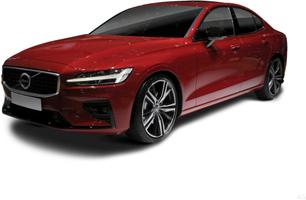
The S60 Black Edition nails it on design. It sports a handsome and sleek shape that manages to look sporty and elegant. It's exactly what you expect a luxury sedan to look like.
My seven-year old dubbed this the Batmobile, and for good reason, every accent is black!
The grille, badge and 19-inch five-spoke alloys look aggressive against the 'Hammer of Thor' LED headlights and make this design look hot.
You better like black paintwork, though, as that is the only choice for this variant.
The interior hasn’t seen any changes for the 2025 model and it seems Volvo is streamlining most of its interiors to look the same.
You could find this dashboard in most of its cars, which is fine because it’s a good-looking treatment full of soft-touchpoints and high-quality materials. But there’s also nothing that sets the Black Edition apart from its stablemates. It would be nice to see a point of difference.
The dashboard is headlined by the 9.0-inch touchscreen multimedia system and a 12-inch digital instrument cluster. You have some other nice focal points in the large sunroof and massive air-vents, which add some interest to the dash.
Overall, it’s a pleasant interior but maybe not as fun as some of its rivals.
Although the GWM Haval H6 has only received a mid-life update, it’s rather comprehensive.
At the front there’s a new front fascia that features a grille that's eerily similar to the outgoing Hyundai Palisade.
There’s also a new LED daytime running light signature that features a plunging light strip. You can tell it’s a little tacked on to the headlight unit which remains unchanged, though it’s a nice point of difference.
Around the side GWM has made a big point of removing all the pre-update car’s chrome highlights, which is a great step in the right direction. In its place is a swathe of black finishes. It’s noticeable around the wheel arches and door sills, as well as around the windows and on the roof rails.
At the rear there are more obvious changes, including the removal of the full-width LED light bar. This is fantastic to see because they're being done to death by car brands at the moment.
In its place are two regular LED tail-light units which still look great and inoffensive.
Other changes at the rear include a revised tailgate design that’s now more angular and sharp, plus there’s now ‘GWM’ badging where ‘Haval’ once was.
Inside there are even more changes. In fact, it’s hard to see what has carried over with this update.
One of the most obvious changes is the inclusion of a new cream synthetic leather upholstery option. It’s not to my personal tastes, nor would it be something I’d recommend for someone using this as a family car.
However, it’s a no-cost option and provides a nice point of difference from the drab-looking black synthetic leather that’s standard.
Ahead of the driver is a leather-wrapped steering wheel which now has a thicker rim than before and now features sculpted indentations at the 10 and two o’clock marks.
It’s nice, but I do prefer how the old thinner steering wheel feels in the hand, plus the spokes where the buttons are placed are still too thick and highly placed.
It’s clear GWM is still sticking with the screen-heavy approach with this updated Haval H6. There’s still a 10.25-inch digital instrument cluster, but a larger 14.6-inch touchscreen multimedia system that sits proudly on the dash like an iPad.
The centre console has been heavily redesigned and it now looks similar to the Leapmotor C10.
The rotary gear selector has been moved to a column-mounted unit behind the steering wheel, freeing up more space.
Overall the Haval H6 continues to present well inside with a wide range of soft-touch materials on the dashboard. There is now also a rubberised section on the centre console which feels modern and fresh for a car that’s so affordable.
The cabin of the S60 is fairly practical with the front row feeling spacious for my 168cm height. It’s a low car, so if your knees squeak you might find it annoying to get in and out of!
The comfort of the front seats cannot be understated. They feature a two-position memory function, lumbar- and side-bolster adjustments and under-thigh extenders. Plus, with the heat and ventilation functions, you’ll look forward to a long journey.
Because of the sloping roofline, it’s a bit awkward to get in and out of the back seat but once you’re in there is a stack of room (behind my driving position) and the outboard seats hug you into position, so you don’t move around in corners.
Seats are comfy for long journeys and outboarders enjoy heat functionality, too. The pillar-mounted directional air vents are super practical and the hardened kickplates are a godsend for parents with wildlings like my son, who seem to want to put their feet on everything.
The transmission tunnel is massive, though, so keep the middle seat reserved for kids only.
Up front, individual storage isn’t as great as you might hope for with the glove box being the largest cubby on offer. The middle console is literally a tray and it doesn't fit my iPhone 15 Pro Max (I have a thin case, as well!).
There's no centre console storage aside from the two cupholders, and this variant misses out on a wireless charging pad, so my phone and 'bits' have been shoved into the cupholders or on the passenger seat, which is a tad annoying. The storage bins in each door feature a small drink bottle holder but are, again, shallow.
Individual storage is a bit better in the rear with two net map pockets, two large cupholders in the fold-down arm rest, as well as a drink bottle holder in each storage bin.
Technology is well-rounded and the multimedia system (powered by Android Automotive) is easy to use, but curiously you don’t get Android Auto in this model!
You do get a bunch of built-in apps like Google Maps and Spotify. There's wired Apple CarPlay and satellite navigation, too.
You get a head-up display and the digital instrument cluster looks high-end with its graphics and shows your sat nav directions, which is always handy.
Charging options throughout are good with two USB-C ports in each row, while the front also gets a 12-volt socket.
The boot is slightly smaller compared to its rivals at 427L thanks to the electric components but it is still well-sized for my grocery run and it’s not too difficult to grab things that slide to the back.
You get a 'tyre mobility kit' (rather than a physical spare) underneath the floor and I like the way you can hang the home charging cable bag out of the way.
The Black Edition has a hands-free tailgate which is operated by a kick-function. But you don’t have an electric button on the lid and the kick-function didn’t always work to close it! That said, the lid isn’t heavy, so it’s nothing to split hairs over.
As standard both the front seats in the top-spec Haval H6 Ultra have electric adjustment. In particular, the driver’s seat has six ways of electric adjustment, plus adjustable lumbar support.
The driver’s seat itself is comfortable enough, though on longer drives I look for a little more thigh support. You’re unable to adjust either front seat to get more thigh support.
However, there’s both heating and ventilation as standard for both front seats. The steering wheel is also heated which has been a godsend in the cold Melbourne weather.
The buttons on the new thicker steering wheel now control different functions. There’s no longer a stalk dedicated to the cruise control, instead this is now done on the steering wheel itself.
Also on the right-hand side of the steering wheel there are still buttons that change the volume, but when you click just above the volume rocker it changes their function to altering what’s on the digital instrument cluster. I’m sure you’d get used to this if you owned this car, but initially it messes with your head.
Another thing is given the gear selector is now behind the steering wheel, the wiper controls are now on the indicator stalk. This now also means there’s no proper buttons or stalk to adjust the headlights.
Instead you need to either use the touchscreen or press the ‘auto’ button on the dashboard. Unless you frequently change your headlight settings, this likely won’t be an issue.
The 10.25-inch digital instrument cluster now has updated graphics and looks high-resolution. The interface is still dark, however, and you can only adjust the content on the right-hand side.
Moving across the larger touchscreen multimedia system looks fantastic and is a breeze to navigate thanks to the shortcut keys on the right and the handy swipe-down control centre menu.
There’s now wireless Apple CarPlay and Android Auto functionality in this car which is fantastic to see. It’s particularly good because if you want to use the wired version of either, the USB-A port to access this is still on the passenger side of the centre console.
However, while you’re using smartphone mirroring you can’t access the handy swipe-down control centre menu. You need to exit and go back to the native interface to use it, which completely undermines its existence.
Another gripe is there still aren’t many physical buttons around the H6's cabin, with only a few for select climate control functions. To change the temperature, for example, you either need to use the touchscreen or the voice assistant, which isn’t always intuitive.
Thanks to the relocation of the gear selector, storage in the centre console has improved massively. There are two cupholders, a wireless charger that now features ventilation to keep your phone cool, as well as another storage nook for your keys.
Other storage highlights up front include a large space under the centre console, a centre console box, a glovebox, as well as big door pockets with bottle holders.
Moving to the second row, this is where Chinese SUVs shine. At a leggy 182cm I have plenty of space behind my own driving position.
The rear bench is reclined a touch and plenty comfortable enough for longer trips. You could easily fit three adults in the back thanks to the minimal centre tunnel intrusion.
Second-row amenities include centre console-mounted air vents, a USB-A and USB-C port, as well as a fold-down armrest with cupholders.
At the back there’s now a hands-free power tailgate that’s standard across the line-up, except for the entry-level H6 Lux petrol trim. It’s very easy to use and particularly handy if you’ve got full hands.
The boot area in the Haval H6 is decent and there’s no load lip, making lugging items in and out a lot easier. GWM claims there’s 560L of boot space with the rear seats upright, which is great for the segment.
There are few boot-related amenities besides a single hook, 12V socket and a cargo blind.
Disappointingly there’s no spare wheel under the boot floor of the H6 Hybrid. Instead there’s only a tyre repair kit, which is surprisingly common among hybrids as the space where a spare wheel would typically go is taken up by the high-voltage battery pack.
There are two variants for the S60, the mild-hybrid Ultimate or the plug-in-hybrid Recharge Black Edition, the latter being our test model.
The Recharge Black Edition is priced from $88,990, before on road costs, which positions it towards the lower end of the market, with the Audi A4 Avant 45 TFSI Quattro S Line MHEV being the most affordable at $85,700 MSRP.
Next up is the Mercedes-Benz C200 MHEV at $89,900 MSRP and then the BMW 330e M Sport PHEV at $98,700 MSRP.
The interesting thing, though, is you don’t pay extra for any packs on this model, which is rare for a luxury brand. It’s pretty well-specified already.
Luxury features include powered front seats that have adjustable side-bolsters, lumbar support and two-position memory function, as well as heat and ventilation functions.
Other items include heated rear outboard seats, a heated steering wheel, a panoramic sunroof and beautiful Nappa leather upholstery throughout.
Practical features include dual-zone climate control, handsfree boot opening and double locking, which is when you lock the car from the outside and if there is forced entry via a smashed window, for example, the doors still can't be opened, even from the inside.
Technology is robust with a 9.0-inch touchscreen multimedia system including in-built Google Apps (Google Play and Maps, YouTube, and Spotify).
Other items include wired Apple CarPlay, the 'Volvo Car Services App' with a four-year subscription and over-the-air updates, 12-inch digital instrument cluster, Bluetooth connectivity, digital radio and a 15-speaker Bowers & Wilkins 'High Fidelity' audio system.
Unfortunately on this variant, you miss out on Android Auto capability and a wireless charging pad.
The 2026 GWM Haval H6 range now only includes two trim levels – Lux and Ultra.
Pricing for carryover variants is down by up to $2000 over the pre-update model. The range now starts at $35,990 drive-away for the Lux petrol and extends to $50,990 drive-away for the new Ultra PHEV AWD.
It’s worth noting the variant we have on test here is the Haval H6 Ultra Hybrid which costs $43,990 drive-away. That’s incredibly affordable in this segment.
As standard all variants get 19-inch black alloy wheels, automatic LED headlights, LED tail-lights, heated and folding side mirrors, a hands-free power tailgate (exc. Lux petrol), 10.25-inch digital instrument cluster, 14.6-inch touchscreen multimedia system, wireless Apple CarPlay and Android Auto, voice assistant, 50W wireless phone charger, synthetic leather upholstery and electric driver’s seat adjustment.
It’s fantastic to see the multimedia system in the Haval H6 now supporting wireless smartphone mirroring, while also gaining a more powerful wireless charger that has ventilation.
Stepping up to the Ultra, as tested here, it gains rear privacy glass, a panoramic glass sunroof, head-up display, front stainless steel scuff plates, heated steering wheel, heated and ventilated front seats, as well as driver’s seat memory and lumbar support.
There’s a lot of nice kit in the Ultra that makes stepping up to it an easy choice. GWM even admits that’s what a lot of Australian buyers are doing, too.
The S60 Recharge Black Edition’s plug-in hybrid powertrain features a 2.0-litre, turbo-petrol, four-cylinder engine and an electric motor that combine to produce 340kW of power and 709Nm of torque.
It has serious kick and can do a 0-100km/h sprint time of just 4.5-seconds. The eight-speed auto transmission is smooth as silk and creates a refined on-road driving experience.
Unlike the petrol and the soon-to-be introduced PHEV variants, the GWM Haval H6 Hybrid’s powertrain remains unchanged with this update.
It’s still powered by a 1.5-litre turbocharged four-cylinder petrol engine that runs the Miller cycle, as well as a single electric motor that’s fed by a 1.8kWh lithium-ion battery pack. Total system outputs are a massive 179kW of power and 530Nm of torque.
This is mated to a Dedicated Hybrid Transmission (DHT) with drive sent to the front wheels only.
It’d be great to see an all-wheel-drive version of the Haval H6 Hybrid because it would be better able to harness the amount of power and torque better than the front-wheel-drive version can.
The official combined cycle fuel consumption figure is an extremely low 1.4L/100km and I did two economy tests this week covering a healthy mix of open-road and urban driving.
Charging it every day for four days, gave me a real-world usage of 3.8L/100km and charging it once in three days gave me a trip readout of 5.6L/100km.
The PHEV powertrain has proven itself economical whether you dedicate yourself to the charging or not, so that’s pretty good.
The Black Edition features a Type 2 port for AC charging, but it can’t be hooked up to a DC fast charger.
This doesn't worry me because even on a standard domestic house socket you can charge the 19kWh battery from 0-100 per cent in just five hours, which is pretty fast for a PHEV.
You also get up to 90km of WLTP-rated pure electric driving range in this, which is good for a plug-in.
GWM claims the Haval H6 Hybrid consumes 5.2L/100km on the combined cycle (ADR 81/02).
During my testing I matched this figure, according to the trip computer, which is surprising as not many hybrid cars actually achieve their fuel consumption claims.
All Haval H6 variants, excluding the PHEVs, have a 61L fuel tank and require a minimum of 91 RON regular unleaded petrol.
GWM claims you can travel 1000km on a full tank of petrol in the Haval H6 Hybrid, but using my as-tested fuel consumption you can theoretically travel up to 1170km.
A lot of people think driving a Volvo means it’s stately or boring. Get in the Black Edition and it will change your mind.
The power it has is awesome and the pick-up will blow your hair back. Power delivery feels effortless.
The firm suspension and steering provide great road feedback and dynamic handling. While the suspension is firm, the comfort in the cabin is high and you don’t wince going over a pothole. The cabin is very quiet which makes it feel refined, too, even at higher speeds.
You do feel a bit low when you’re sitting next to a big SUV at lights but visibility is pretty good with the wide windows and pillars that don’t get in the way.
I've been precious about going over speed bumps or exiting a ramp, because it's easy to scrape underneath the nose as the S60 sits quite low. But on a whole it's pretty easy to park.
The 360-degree view camera system is clear and has a birds-eye and reversing view but I'd like to see both feeds pop up at the same time. It's easy enough to flit between the views when needed.
Starting the GWM Haval H6, it’s generally quiet, but if the engine is bone cold it’ll fire it up to get the fluids warmed up.
Once the engine reaches an operating temperature it’ll typically switch off allowing you to drive around on electric power alone.
Depending on how much charge the battery has and also how cold the weather is, it can be surprising just how electric-heavy the H6 Hybrid can be. There were times where I accelerated all the way from standstill to 60km/h on pure electric power, then others where I was travelling along at 80-90km/h and the engine would shut off.
When you’re driving around in EV mode the car is super quiet. Under 20km/h though the car emits a noise that’s meant to alert pedestrians. You’re able to choose from two different noises and while neither bothered me, they did frustrate my passengers.
When the battery charge starts to deplete, or when you push the accelerator a little harder, the engine does naturally turn on. You can’t feel any drop off in terms of acceleration, though you can hear the engine turn on and start whirring away under the bonnet. Thankfully it’s nowhere near as loud and droney as a RAV4 Hybrid, for example.
With a massive 179kW and 530Nm, that’s a lot for a car that’s just front-wheel drive. In practice however, acceleration is rather linear, though if you do punt the accelerator the front wheels can get overwhelmed. It’s by no means a sports car.
There are three levels of regenerative braking available, including an additional one for one-pedal driving, which is quite rare for a hybrid car. For the majority of my driving I used the normal regen mode because it felt the most natural.
Unlike some hybrids, there’s no awkward interaction between the regenerative braking system and the traditional friction brakes. It can sometimes be a little jerky navigating in tight spots, but slowing down to a stop generally feels linear and normal.
There are also three settings you can choose for the steering feel. Although I sampled them all, the middle Comfort setting felt the most natural as the Light setting was too light and Sport was too firm.
Unlike some Chinese SUVs, the Haval H6’s steering feels like it has some connection to the wheels, though it’s not the most direct or fun to steer.
This feeds into the suspension. It’s clear the Haval H6 is still tuned for comfort because while it does iron out a lot of bumps, it gets overwhelmed easily with harsh or more continuous bumps. When this happens it can jostle and wallow around a bit, making it feel a bit like a boat.
Hopefully GWM is working on something for this because it did hire ex-Holden Lead Engineer of Vehicle Dynamics, Rob Trubiani, earlier this year as a Product Engineering Manager.
On the parking front, the Haval H6 comes with front and rear parking sensors, as well as a surround-view camera with fantastic quality. There’s also a handy semi-autonomous parking assist and a reversing assist.
Despite this, the Haval H6 is on the upper limit of what’s typically regarded as a medium SUV and it feels like it. This isn’t helped by its wide turning circle, meaning you’ll likely have to do some three-point turns in tight carparks.
Visibility has always been a sore spot for the Haval H6 and this remains the case with the update. Although you have an elevated seating position, the bonnet sits high, making you feel like you’re sitting in the car, rather than on it.
This continues with the rear visibility as the rear window is quite small.
It’s nice GWM has gone to the effort of reducing the amount of bings and bongs the safety systems make in this updated Haval H6. There’s one for the speed limit assist, though it only chimes once and not very loudly.
However, when you activate or deactivate adaptive cruise control the car talks to you with an artificial Australian woman’s voice telling you it's either on or off and to pay attention. This feels a little unnecessary.
The S60 Recharge Black Edition has just been launched, so it’s not covered by its siblings’ maximum five-star ANCAP safety rating from 2018 but it features all of the goodies you’d expect from a Volvo.
Standard features include blind-spot monitoring, rear collision warning, forward collision warning, rear cross-traffic alert, lane departure alert, lane keeping aid, traffic sign recognition, an intelligent seatbelt warning, a head-up display, adaptive cruise control, 'Pilot Assist', a tyre mobility kit and a 360-degree view camera system, as well as front, side and rear parking sensors.
The S60 Black Edition also features Volvo designed safety items like the 'Side Impact Protection System' (SIPS) that reinforces the car's steel framework at the sides and disperses energy in a side collision.
It also features a 'Whiplash Injury Protection System' (WHIPS), which if hit from behind, the headrests move with the occupants to limit injuries.
One of the highlights is the programmable spare key where you can limit audible levels and speed limits. Which is perfect if you have a teenager who borrows your car. And the spare key is bright orange, so there's no sneaky 'whoops, I grabbed the wrong key' moments!
The rear row features two ISOFIX child seat mounts and three top-tethers. You'd be doing very well to fit three child seats in, so two will fit best.
The pre-update GWM Haval H6 petrol and hybrid received a five-star ANCAP safety rating back in 2021. It remains unclear whether this rating will carry over to the updated model.
As standard there are seven airbags, autonomous emergency braking (AEB), blind-spot monitoring, rear cross-traffic alert, traffic sign recognition, driver fatigue monitoring, a surround-view camera and rear parking sensors.
Stepping up to the Ultra gets you additional safety features like front parking sensors, semi-autonomous parking assist and reversing assist. It’s worth noting none of these features are offered on Ultra PHEV variants.
The S60 comes with a five-year/unlimited km warranty, which is a normal term for the class.
You can pre-purchase either a three- or five-year servicing plan and the three-year plan costs $1750, while the five-year plan costs a flat $3000 or an average of $600 per service, which is reasonable.
Servicing intervals sit at every 12 months or 15,000km, whichever occurs first.
The GWM Haval H6 continues to be covered by a seven-year, unlimited-kilometre warranty, while variants with a high-voltage battery pack have that covered under an eight-year, unlimited-kilometre warranty.
There’s also five years of complimentary roadside assistance and the first five services are capped priced.
Logbook servicing is required every 12 months or 15,000km, though the first service is required after 12 months or 10,000km.
During the five five years of ownership, servicing the updated Haval H6 Hybrid costs a total of $2145, which averages out to around $430 per service. That’s not bad but a Toyota RAV4 and a Honda CR-V are cheaper to service.