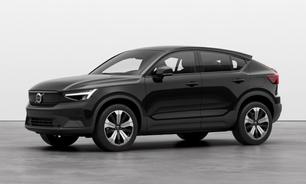
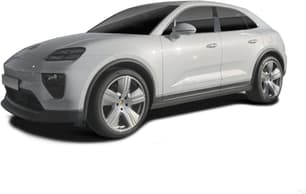
What's the difference?
Throughout its history Volvo has been known for a lot of things. Being a safety leader, dorky but endearing station wagons, ‘bloody Volvo drivers’, and more recently, a trailblazer in minimalist premium design.
The C40 is the first step in a next chapter for Volvo, with the brand wanting to be known next for its leadership in the electric space. For the first time for Volvo, it’s a fully electric offering
But in a world of Teslas, Polestars, and Mercedes Benz EQs, where does the C40 sit, and is it worth considering in an increasingly congested premium small SUV space?
We went to its Australian launch to find out.
This might be the biggest gamble in Porsche's history. It's the latest version of its best-selling car, the Porsche Macan, only this one has a very big difference.
You see, this time, it’s all-electric. There is not an internal-combustion engine (ICE) in sight. And that makes climbing into an entry-level Macan significantly more expensive than ever before.
So, will this bold shift help or hinder the Macan in Australia? And is this the country’s best all-electric SUV?
There’s only one way find out.
The C40 becomes a compelling option in the electrified small SUV space, offering a premium look and feel, great range and tech inclusions at the price, as well as awesome on-road dynamics.
Its main downsides are the rear seat, which is compromised by its platform and design-led roofline, and the overwhelming power and added traction of the dual-motor makes the single motor less attractive on the value front.
Still, regardless of variant chosen, the C40 looks to offer a stand-out balance of price, range, and performance, against its traditional rivals and newcomers alike.
There is no doubting the substance of the Porsche Macan Electric. Its ride, steering and poise make it a joy to drive on twisting roads, and it ticks the practicality boxes, too.
The only lingering question is whether enough people are ready to make the all-electric switch. Only then will we know if Porsche's Macan gamble has paid off.
Note: CarsGuide attended this event as a guest of the manufacturer, with travel, accommodation and meals provided.
Volvo has become a brand with a distinctive and consistent design language which embodies the kind of beautiful minimalism normally associated with Scandinavian brands.
I have always liked how Volvo says more with less design elements, with only gentle touches of chrome or gloss black, and a lack of over-the-top sporty pieces avoiding the temptation to over-sell the sporty potential of the brand’s range.
The C40 takes the small SUV formula, well established by its XC40 relation, and gets a bit weird and experimental. It’s slightly lower and has a more coupe-styled rear, with a strongly raked rear window giving it a sportier and more aggressive look than the rest of Volvo’s SUV range.
The styling is sold by an angular spoiler piece running atop the boot, and the rear light clusters have gone all minimalist, constructed of individual pieces rather than a single transparent housing, and they give a nod to the C30 hatchback which this car is the spiritual successor to, by name and nature.
The interior offers up no surprises, sticking to the formula Volvo has established across all of its current models. An effortlessly premium space with, again, a minimalistic dash dominated by the portrait touchscreen, the C40’s premium nature is confirmed by its finely patterned inlays, simple chrome pieces, and abundance of soft-touch surfaces.
The big upright vent fittings with clever rhomboid patterns on their adjustment dials are always a highlight piece of modern Volvos, and the pattern work is continued on the central volume adjust dial and even on the little rotating pieces of the light and wiper stalks. Clever.
Even the software is paired back on the multimedia suite and digital dashboard, with easy to use shortcuts and simple menus which suit the car.
Volvo might turn off some buyers with the more unconventional shape of the C40. But for those looking for a more traditional SUV it also offers the XC40 in the same two variants, and the Polestar 2 caters to those not looking for an SUV at all.
The Macan Electric looks sharp, all aerodynamic and swept-back like a range-maximising electric SUV should.
There’s functional method behind all this swoopy styling, too. The headlights look as though they’ve been chiselled into the body work, and at the grille, you’ll find active venting to help with cooling when needed.
There is also a sizeable front splitter that looks very much like the Macan is sticking its jaw out. All of which is to assist with aero and range.
It’s also a dual charging port layout with access left and right, though the latter is AC charging only, while the one on the left does both.
Step inside the Macan and you’ll find a familiar and very welcoming space. I especially like the twin-screen set-up that looks great in the way it's kind of embedded into the dash. Each is big, clear and easy to use.
I also really like the control panel that gives you quick-button access to the climate control, and the haptic feedback is next level, with the whole screen clicking in or out whenever you hit a button.
That said, in Turbo-guise you’re dropping almost $200,000, and some of the materials feel too hard and plasticky at that price point.
The C40 is essentially a XC40 with a cropped down roofline, and there are some obvious downsides which this new shape brings.
The front seat throws no surprises, though, offering plenty of room for two adults with a welcome level of adjustability for the seat and wheel. The seats could be more comfortable, though, with a notable lack of padding in the base compared to some luxury (or even non-luxury) rivals.
I’m a fan of the fabric trim which comes on both grades, bucking the trend of needing to have leather or leather-like trim for a car to feel ‘premium’.
The ample window space up front, including the massive glass roof helps the C40’s cabin feel spacious, but the view out the rear with its aggressive design is all but a very limited letterbox aspect, particularly if the rear seat headrests are in the upright position.
While some controls are exclusively via touch interface, there is a physical volume dial, and shortcut buttons for the defogger functions.
Temperature is controlled by touch, however, and the detail settings have some smaller toggle adjustments. Tricky to jab at when you’re on the move.
The digital dash is refreshingly simple, but minimally adjustable, with the choice of either a nifty navigation screen, a blank screen, or trip details being the only options.
Cabin storage is good but not stellar. There are bottle holders and big pockets in the doors, a set of two cupholders in the centre (beats the Polestar 2’s single cupholder), a small tray with a wireless charger under the multimedia screen, and a smallish console armrest box.
The rear seat is where the real problem exists. Unlike the XC40, the C40’s cropped roofline means my head was hard up against the roof (I’m 182cm tall).
I did have decent knee room behind my own seating position, however the seat comfort in the back still isn’t as good as some rivals.
The middle position is also compromised, thanks to the raised centre floor piece the C40’s platform needs to facilitate all-wheel drive in its combustion relations.
A bottle holder appears in each door pocket, and in a rare inclusion, there are heated outboard rear seats, adjustable air vents, and USB-C charging ports.
The boot has a quoted capacity of 413 litres with the rear seats up. The floor is comparatively high suggesting a smallish space when loaded with luggage cases, for instance. Stay tuned for a follow-up review so we can see how well it holds our three-piece demo set.
The floor itself has an adjustable, pop-up divider and multiple luggage hooks, making it quite versatile, and there is a cavity beneath which can hold your charging cables as well as the inflator kit in place of a spare wheel.
There is a little open-sesame magic at play with the Macan, and that starts at the frunk, where, if you lovingly caress the bonnet, it will automatically pop open for you, revealing an 84-litre storage space.
Rubbing the charging port will see it slide open, too, but just in case you’re not the kind of person who likes to fondle their car in public, you can use the key.
The Macan’s boot is a little more traditional, opening to reveal 540 litres (but just 480 litres in the 4S or Turbo) of storage with the rear seats in place, with a wide, flat and very useable area for your goodies.
The back seat of the Macan feels spacious enough, without being outstanding. There’s more than enough space for my 175cm frame, with enough knee and head room, but the way the middle console juts out will definitely eat into leg room for any middle-row passenger.
Elsewhere you get air-con controls with vents, along with bottle storage in each of the doors. There is also a pull-down divider that’s home to two extra cupholders.
When it comes to electric vehicles, it’s impossible to consider price alone, as you also have to consider driving range, and the C40 manages to impress on both fronts.
Its refreshingly simplified range consists of just two highly-specified variants, a single motor which starts from $74,990, offering a 434km driving range, or a dual motor starting from $82,490 which offers a 420km driving range.
There’s much more devil in the detail, but to set the scene there are now quite a few direct rivals in this price-bracket, including everything from the Tesla Model Y (from $72,300), Mercedes-Benz EQA (from $78,513), Polestar 2 (from $63,900) and even the Kia Niro which is similarly sized and specified (from $65,300).
Interestingly, the C40 is closely related to the Polestar 2, but has a much higher base starting price. Volvo says this is because it carries a higher standard specification, and offers the C40 without option packs.
Standard gear on the base single motor C40 includes 19-inch alloy wheels, a 9.0-inch portrait multimedia touchscreen (running a Google-based always-online software suite), LED headlights, dual-zone climate control, a fixed panoramic sunroof, electrically adjustable front seats, heated seats for the front two and outboard rear seats, a powered tailgate, as well as keyless entry with touch-free ignition.
Interestingly, Volvo also told us some 90 per cent of customer interest so far has been for the more expensive dual-motor variant, which is particularly impressive for doubling the power output while adding 20-inch alloy wheels, a 360-degree parking suite, premium Harmon Kardon audio, and an alternate interior trim.
Both variants score safety equipment and items which are otherwise part of expensive option packs in the Polestar 2 range. We’ll take a look at the full safety gear later in this review.
Overall, the C40 impresses on the premium car value front compared to rivals, bolstered by solid range and impressive performance.
The Macan arrives with four trim levels, the entry-level Macan, the Macan 4, Macan 4S and then the flagship Macan Turbo. The latter is just a name Porsche now applies to its go-fast models — obviously there isn’t an actual turbo in action.
The new electric range opens with the Macan, which lists at $128,400, before on-road costs. A reminder here that the old entry-level Macan with an ICE powertrain would have set you back less than six figures, so this one represents quite the jump.
Now, it should be pointed out that you can still buy the previous-generation ICE Macan, at least until supply runs dry. The brand isn’t getting any more, but suggests there are enough in the country to satisfy demand until around Q2 next year.
Next is the 4, which is $134,400 and adds a second e-motor. Then comes the 4S, yours for $149,300, before the range tops out with the Turbo, which climbs to $184,400. All prices before on-road costs.
Those are big numbers, but at least Australian-delivered cars are some of the best-specified on the planet.
That starts with the Macan, which gets a 12.6-inch digital instrument cluster, and a second 10.9-inch central touchscreen with Apple CarPlay and Android Auto.
It rides on 20-inch alloys, has synthetic-leather seats that are heated up front and Australian cars get things like the clever 'Porsche Active Suspension Management' (PASM) system as standard.
Next up is the Macan 4, which adds a second electric motor, but otherwise largely mirrors the base car’s spec. Next on the list is the 4S, which rides on a different 20-inch alloy, picks up LED matrix headlights, sports a better Bose stereo, a panoramic roof and four-zone climate control.
Finally, the Turbo is the big dog of the electric Macan range, packing serious power, but also arriving with its own 20-inch alloy wheel design (with 21-inch wheels a no-cost option) — an augmented reality head-up display, and things like the 'Porsche Electric Sport Sound', the 'Sport Chrono Package' and a performance-focused 'Sport+' drive mode.
Great news here, the C40 can be chosen with two powerful layouts, either a front-wheel drive 170kW/330Nm set-up, or a dual-motor all-wheel drive arrangement, able to make use of nearly double the power at 300kW/660Nm. The dual-motor is capable of sprinting from 0-100km/h in just 4.7 seconds.
The front-drive is backed by a 69kWh battery allowing it a 434km range, while the dual motor ups the battery size to 78kWh to allow a 420km driving range.
The entry-level Macan is equipped with a single rear-mounted electric motor, and it will make a total 250kW (265kW with launch control activated) and 563Nm, which is enough to push the cheapest Macan to 100km/h in 5.7 seconds.
The 4 then adds a second electric motor for AWD, upping the grunt to 285kW (300kW with the launch function) and 650Nm, and drops the sprint to a brisk 5.2 seconds.
The 4S is probably the performance sweet spot, with its dual-motor set-up generating 330kW (380kW in launch) and 820Nm, and a blistering sprint of just 4.1 seconds.
But the Macan Turbo is a true monster. We’re talking 430kW (470kW with launch control), 1130Nm and a sprint to 100km/h that’s as fast as a Carrera Cup race car – just 3.3 seconds.
It’s twin-motor, all-wheel drive and offers the kind of brutal acceleration that gives you a little facelift every time you step on the accelerator.
Surprisingly, energy consumption is quite high for both C40 variants. The single motor is the more efficient of the two, consuming 16.8kWh/100km on the more lenient ADR testing schedule, while the dual motor officially consumes 22.2kWh/100km to the same standard. I saw around 23kWh/100km overall in my short test of the dual-motor variant.
Energy consumption could be better for both, as I have achieved more consistently impressive results particularly from Hyundai and Kia electric cars.
Where the C40 is more impressive though is its charging specs, which are exactly where they need to be for a car this size. On a rapid DC charger, the C40 can charge at a rate of 150kW meaning a 10 - 80 percent charge in 40 minutes for the dual motor, or 32 minutes for the single motor.
On the slower AC standard, the C40 charges at a rate of 11kW. Expect a 10 - 80 percent charge time of around five or six hours on this standard.
The C40 uses a European-standard Type 2 CCS charging port, although it misses out on the handy two-way charging feature offered by some rivals.
Every Macan is fitted with a big 100kWh lithium-ion battery, which helps deliver a solid driving range no matter which one you choose.
The entry-level Macan will cover the most distance, at a claimed 654km, while the 4, 4S and Turbo will travel 624km, 619km and 616km, respectively.
The Macan rides on an 800V architecture, and is set up for 270kW DC high-speed charging, which will take 21min to go from 10 to 80 per cent. It will also accept 11kW AC charging, which should take 10 hours to go from empty to full.
Worth noting, though, that most home wall boxes are around 7.0kW, which means a full charge would take more like 13 hours plus.
If you’ve driven any kind of XC40 or even a Polestar 2 before, the C40 will offer no surprises. It’s pretty much exactly the same from behind the wheel with a few subtle tweaks.
This is a very good thing. The C40 is quiet, easy to drive, and its electric motor and regen system offer a smooth single-pedal experience.
It is also alarmingly, overwhelmingly, rapid. While its massive set of batteries under the floor make it feel heavy off the line in stop-start traffic, sticking your boot into the accelerator will remove any doubt, particularly in the dual-motor variant, that this Volvo means business.
The dual-motor also has an incredible torque-vectoring system, making it extremely difficult to elicit so much as a squeak from its tyres. It also feels as though torque is distributed quite evenly between its two driven axles, making it feel neither prone to over- or understeer.
This has the effect of making the C40 feel somewhat indestructible in the corners, with absurd levels of grip.
The same feeling is present in top-spec versions of the Polestar 2, only the feeling of ever-present weight is more noticeable in the higher-riding C40, which can make it unsettling to take corners at the kinds of speeds it is capable of.
The steering tune is interesting. Volvo offers two software-controlled modes, either heavy or standard, and the standard mode is heavy enough.
Despite its electrical assistance, the wheel does continue to offer some organic feedback, making the C40 a pleasure to steer on countryside roads.
The ride is also surprisingly good, despite massive wheel options. I was impressed how easily the C40 handled most bumps and undulations, communicating little to the cabin.
The ride can approach its limits with such big wheels and the weight of its batteries, generally these are communicated via unsettling thuds from underneath the car. Regular undulations at higher speeds also had the C40 bouncing around a little.
On the whole, though, the cabin is kept relatively insulated and serene, adding an element of total confidence, similar to that offered by Teslas, whilst offering better ride quality with a softer edge. At higher speed, at least on the 20-inch wheels, road noise does pick up, however.
In terms of electric driving, there is a single adjustable setting for regen. The car either offers a full single pedal mode with maximum regenerative braking to bring the car to a halt with the motor alone, or a ‘standard’ mode which tones the regen down and offers it blended in via the brake pedal.
Single pedal mode is more efficient. I suggest you stick to it if you want to make the most of this car’s efficiency.
I was surprised to have so few complaints about the C40’s drive experience. This is a balanced and capable EV which is yet another example of how even vehicles which use combustion platforms are improved out of sight by full electrification.
Porsche seemed at pains to prove that, though the all-electric Macan has lost its ICE heart, it's still worthy of the badge, and still very much a Porsche.
First stop, then, was the Norwell race circuit in Queensland, to put the Macan through its paces with 0-100km/h sprints, drifting (well drift attempts... ) on a watered-down skid pan and finally some high-speed running on the circuit.
And two things immediately became very clear. The first, and most obvious, was that, like the first men on the moon, we were likely among only a handful of people that might ever take their all-electric Porsche mid-size SUV to a race track. And second, this is one seriously sorted electric car.
Happily, for the many (read: every) owners who won't be pulling out of a pit garage at their next local track day, the Macan is actually more enjoyable on the road than it is on the track.
On the latter, there's a freedom to push too hard – what with the lack of trees, guard rails or oncoming traffic – and cracks do appear, mostly from the screaming tyres struggling with the two-tonne-plus weight.
But on public roads, where a thick fog of consequence prevents you pushing too hard, the Macan is a gem.
Porsche tends to have a knack for these things, I know, but the Macan is a seriously smooth and satisfying drive.
The ride is bang-on (comfortable enough on rougher surfaces, firm and grippy enough on twisting roads) and the steering is direct and confidence-inspiring.
Body-roll has been largely banished, too, with the Macan staying flat, stable and satisfying, even on the tighter stuff.
In much the same way the ICE Macan defined what it meant to be a driver's SUV, I think this one does the same in the EV space. And the fact that it does it with five seats and a decent boot is a sizeable bonus.
But there's no denying it lacks in the emotion department. That sense of excitement, the sound track, the hard-to-define fizz – as competent its this, and as weaponised as the EV powertrain is – it does feel a little clinical, like a tool doing its job and doing it well.
One important caveat. We've driven the 4 and Turbo to date. The entry-level Macan and the mid-tier 4S are still incoming. And I suspect I wouldn't be dropping my deposit on the Turbo.
Yes, the power is ridiculous, but I don't reckon you need it. For me, the 4 is more than enough, but I suspect the real performance sweet spot will be with the 4S.
Sticking to its brand promise, Volvo offers the full range of active safety equipment on the C40 regardless of variant.
This includes freeway-speed auto emergency braking, rear auto braking, lane keep assist with lane departure warning, blind spot monitoring with rear cross-traffic alert, and one of the best adaptive cruise control systems on the market.
The only item the single motor misses out on is a 360-degree parking camera, which is exclusive to the dual motor variant.
It is notable how the adaptive cruise control, blind spot monitoring rear cross-traffic alert, and rear auto braking are on the options list for the Polestar 2.
These active systems combined with eight airbags (the standard dual front, side, and curtain, as well as a driver’s knee and centre airbag) make for a five-star ANCAP safety rating to the latest 2022 standards.
The Porsche Macan Electric is yet to be assessed by ANCAP, or by Europe’s NCAP, but it doesn’t appear to be missing any key equipment from its safety list.
That includes curtain airbags that extend all the way to the boot, AEB with pedestrian detection, lane keeping assist, a surround view camera and 'Intersection Assist'.
The C40 is covered by Volvo’s five year and unlimited kilometre warranty, with a separate eight-year, 160,000km warranty for the battery. There is also eight years of roadside assistance attached.
It is pleasing to see the service intervals for the C40 are long, as they should be for an electric car with so few moving parts, set at two years or 30,000km.
The first 24 month service is free of charge, and Volvo tells us service pricing after this period will average out to around $100 a year ($200 per visit).
The Porsche ownership experience is frankly underwhelming by modern standards, with the brand offering just a three-year/unlimited kilometre warranty, plus an eight-year/160,000km battery warranty.
The positive, though, is that servicing should only be required every two years or 30,000km. You also buy a prepaid service plan for three, four or five years, priced at $1495, $2795, $2995.