What's the difference?
The Volkswagen Transporter has a long bloodline which can be traced to 1950 when the first split-windscreen Type 2 (aka Kombi) van was launched sharing mechanical components with its equally iconic T1 ‘Beetle’ sedan sibling.
Since then, the Transporter has evolved through seven generations, with the latest being the result of a global alliance with Ford in which the automotive giants share vehicle underpinnings and other technologies. This is designed to streamline new model development and amortise costs, as demonstrated by VW’s current Amarok ute based on the Ford Ranger.
The latest Transporter shares a similar relationship with Ford’s mid-size Transit Custom range, including the full-electric e-Transporter variant based on the E-Transit Custom. We recently spent a working week aboard this electrified model to see how it measures up from a tradie’s perspective.
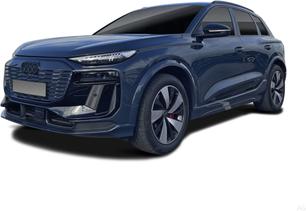
Sharing the same Volkswagen Group PPE platform as its main rival, the Porsche Macan 4S, the newly launched Audi SQ6 e-tron has promised both efficiency and performance.
Is it a combination that can be achieved in real life? My family of three have been testing it out this week to find out for you.
Although closely related to Ford’s E-Transit Custom, the e-Transporter has carved its own niche in appealing to VW Transporter loyalists and businesses wanting to project a chic Euro image. For tradies and other service providers its driving range is best suited to metro duties, which if combined with the convenience of daily back-to-base charging could make it a practical solution for many working roles.
When it comes to a performance electric SUV, the Audi SQ6 e-tron is a fine example and showcases a masterclass in design. It drives and handles beautifully, even if it’s not as fun as I expected.
The technology looks amazing and I'm sure the little bumps we experienced will be ironed out with a software update.
The SQ6 will suit a smaller family best but the decent driving range and fast charging capabilities means regional families might like it too.
Although based on the E-Transit Custom, the e-Transporter (like the Amarok) does a commendable job in establishing its own identity, with noticeable differences in styling and a spacious and functional cabin design with a distinct VW commercial vehicle look and feel.
Its dash design is free of protrusions, leaving enough floor space between it and the seats to allow drivers convenient ‘walk-through’ access from one side of the cab to the other.
Our LWB example is clearly designed with hard work in mind, armed with 16-inch steel wheels and unpainted dark grey plastic evident in areas most vulnerable to wear and tear including the bumpers, hubcaps, door handles and mirror shells.
It rides on a sprawling 3500mm wheelbase with MacPherson strut front and coil-spring rear suspension. Key body dimensions of 5450mm length and 2032mm width are combined with a practical 1978mm height, the latter allowing access to low clearance loading zones and multi-storey carparks. The long wheelbase contributes to its largish 13-metre turning circle.
The SQ6 has a distinct look compared to the other mid-size SUVs in Audi’s stable with panelling that lacks some of the severe pleating of its cousins, instead incorporating swoopy lines and a more pronounced moulding around the base of the car.
The sporty S styling is seen in the large 21-inch alloy wheels and red calipers but the customisable light designs inside and out really make this stand out.
The interior is sumptuously styled with Nappa leather and suede upholstery and trims, and sports front seats, while the use of displays in the dashboard makes the SQ6 feel like a spaceship.
However, the main panel curves towards the driver and it still feels accessible and intimate for a cockpit. The cabin looks as expensive as what you’d want it to look like at this price point.
The heavy propulsion battery mounted beneath the load floor is largely responsible for the e-Transporter’s sizeable 2540kg kerb weight, which when deducted from its 3225kg GVM leaves a payload of 685kg.
However, Volkswagen’s published rating is higher at 760kg, as European payload measurement typically allows for a 75kg driver. Even so, that’s still a modest payload compared to numerous mid-size diesel rivals (including its TDI Transporter equivalent) offering up to one tonne or more.
About 150kg of the e-Transporter’s payload can be carried on the clever trio of folding roof racks courtesy of its Ford donor, which lie flush with the roof when not in use but can quickly be locked in vertical positions to carry loads as needed.
Our test vehicle is also rated to tow up to 2300kg of braked trailer but Volkswagen does not publish a GCM figure (how much it can legally carry and tow at the same time) so we don’t know if it can tow its maximum trailer weight while carrying its maximum payload.
The cargo bay, which offers up to 6.8 cubic metres of load volume, is accessed through a standard passenger-side sliding door with 1030mm opening width or the swing-up tailgate.
The load floor, which comes standard with a protective liner, is 3002mm long and 1777mm wide with 1392mm between the rear wheel housings. This means it can carry two standard Aussie pallets or three Euro pallets secured by a choice of eight load anchorage points.
A section of load floor length can also be extended to 3450mm by opening a hinged hatch on the lower left of the cabin bulkhead, which can be handy for carrying long lengths of timber, pipe, conduit, carpet rolls etc. The walls are also neatly lined to mid-height and there’s a 12V socket.
There’s also ample cabin storage with three tiers of storage (including large-bottle holders) in each front door plus cupholders on each side of the dash-pad, which also has a large open tray in the centre with a pair of USB ports.
The lower dash includes a large glove box, driver’s pop-out cupholder, wireless phone charging pad, 12V socket and more USB ports, while the centre seat backrest folds forward to serve as a mobile work desk.
Beneath the hinged base cushions on the passenger bench seat is a cavernous hidden storage area which is ideal for the five metre long charging cable.
The cabin's primary objective seems to be one of passenger comfort. Everything you touch feels soft under hand and while seat padding is on the firmer side, all but the rear middle seat is comfy on a longer journey because of their extra functions.
The rear-row back rest has two recline positions and the seat beds offer long under-thigh support. The middle seat bulges up, and coupled with the compromised legroom, it won't be a nice seat for an adult.
The front row offers the best legroom and there is enough space in the rear for my six foot three brother to squeeze into (somehow) but I wouldn't want to be in the rear for a longer journey if you're super tall.
Access is good for each row with wide door apertures and seats that aren't positioned too high. There will be no groans getting in and out of the SQ6.
Up front the glovebox and middle console shoulder most of the storage burden but there is a handy flip-down drawer at the driver's knee for a wallet and a centre console with the charging stuff but it is an awkward space that could have been better utilised. Things tend to move around in there if not secured.
In the rear there are a couple of net map pockets, storage bins and a total of four drink holders but that's about it. The other amenities back there soften the lack of storage options as you get directional air vents, climate control, heated outboard seats and a couple of USB-C ports.
The technology on a whole looks amazing and the touchscreen multimedia display is responsive and logically laid out. You'll be able to figure it out quickly and I like that important functions, like climate control, and shortcuts are pinned to the screen as it makes it easier to access them when on the go. The Audi voice assistant can be activated by 'Hey Audi' if you don't want to fiddle with screens on the road.
The wireless Apple CarPlay was simple to set up but at the beginning of the week it did tend to get booted whenever the climate or massage functions were activated. This was annoying as you'd have to reselect CarPlay and jump back into whatever app you were in and when you're using the Map app, it feels disjointed. However, this sorted itself out by the end of my week.
On the whole, all the screens and their functions are user friendly but there were a couple of gremlins that needed a car restart to fix. Randomly, my volume became useless and the touchpad/buttons on the steering wheel stopped working.
I do like a normal button over touchpad controls as I find them more responsive but the touchpad controls on the driver's door were really easy to use and I like the family-friendly option of being able to individually apply the child-lock to the rear doors.
Rounding out the cabin is the large 526L boot which offers a level loading space and the ability to adjust the height via the adaptive S air-suspension from buttons in the rear.
The rear row has a 40/20/40 split, which opens up storage options again and there is a deep under-floor storage pocket that houses the tyre repair kit. A handsfree-powered tailgate comes standard, which I always appreciate and the massive frunk (64L) takes care of all of the cable storage.
The latest Transporter range comprises traditional TDI diesel powered 2WD models with list pricing (before on-road costs) of $58,590 for the short wheelbase (SWB) and $60,590 for the long wheelbase (LWB). 4Motion all-wheel drive variants are also available in both SWB ($62,590) and LWB ($64,590) configurations.
The e-Transporter, which comes standard with a single electric motor, single-speed automatic and rear-wheel drive, is the highest priced model in the range with list pricing of $83,590 for the SWB and $85,590 for the LWB.
This is higher than full-electric mid-size van rivals like the closely related Ford E-Transit Custom Trend LWB ($77,590 plus on-roads) and sharper priced LDV eDeliver 7 ($74,200 driveaway) but considerably lower than the Mercedes-Benz eVito 112 LWB which lists at $98,951.
Our test vehicle is the LWB version which comes standard with 16-inch steel wheels and 215/65 R16C tyres but no spare (tyre sealant/12v inflator kit only), LED headlights/DRLs/tail-lights/internal lighting, three folding roof racks, heated exterior mirrors a heated tailgate window with wiper and more.
The cabin and cargo bay are separated by a metal bulkhead plus there’s keyless start, single-zone climate control, heated seating for three, 12-inch digital instrument display, 13-inch multimedia touchscreen with Apple CarPlay Android Auto connectivity and digital radio, wireless phone charging, seven USB ports, two 12V sockets and more.
Buyers can personalise e-Transporters with no-cost options like deletion of the cabin bulkhead plus cargo bay options you must pay extra for including a right-hand side sliding door, dual powered sliding doors, rear barn-doors, side windows, a wooden floor liner, aircraft-style load-securing rails and shelving/cabinet preparation.
Volkswagen Commercial Vehicles also works closely with aftermarket vehicle converters to facilitate commercial and camper installations including no-cost options like a swivel front passenger seat and a second (12V) battery.
The launch of the flagship SQ6 e-tron brings the Q6 line up to three before a high-performance RS hits our shores sometime in the future. However, this new variant is priced at $151,400 before on-road costs and that's a hike of $28,900 over the mid-spec Q6 e-tron quattro.
Is it worth the jump? Mostly because this model has almost every feature that is found as an at-cost extra or pack for the other variants but it does miss out on a ventilation function for the front seats and at this stage Audi is saying it's not available to add, which is odd for a top model grade.
With the motor outputs and performance tweaks, the SQ6 competes in the world of the Porsche Macan 4S as they are mechanically related but you can pick up the 4S for $149,300 MSRP and the SQ6 can't match it's torque output of 820Nm.
The most exciting thing about the Q6 range in general is the technology and the SQ6 is no different. The dashboard is a visual feast for the eyes with a 14.5-inch multimedia display, an 11.9-inch digital instrument cluster, and a 10.9-inch touchscreen for the front passenger.
There is wired/wireless Apple CarPlay and Android Auto, built-in satellite navigation and because the system is run by Android Automotive there are a whole bunch of downloadable apps like Spotify, YouTube and Amazon Alexa voice assistant on top of the connected Audi App. These apps are accessible from the passenger display, which means they can scroll the news or watch a video on a longer trip.
There is also the upgraded 3D Bang & Olufsen surround sound system, a colour augmented reality head-up display (the screen is basically a dynamic 3D setup) and three-zone climate control.
Charging is taken care of with four USB-C ports (2/2), a 12-volt socket that moonlights as an actual cigarette lighter (complete with an nearby ashtray) and a wireless charging pad with its own 'arm' that secures your phone.
The LED lights at the rear can be customised with different light signatures which are downright cool and the front LED lights also have animated individual pixels that do a little light show when you turn on the car (to the delight of my child).
Other highlights include front sports seats with heat and massage functions, wine-red Nappa leather upholstery and black suede trims, a heated steering wheel, panoramic sunroof, heated rear outboard seats, and a handsfree powered tailgate.
Audi also includes three charging cables and a one-year subscription for Chargefox public charging stations for free, as well as installing an at-home 7kW charger, which is a nice way of making a new owner feel valued.
The e-Transporter’s single electric motor, which produces 210kW of power and 415Nm of torque, drives the rear wheels through a single-speed automatic transmission. It offers numerous drive modes including 'Normal', 'Eco', 'Sport', 'Slippery' and 'Tow/Haul' plus there's a 'B' button on the gear selector which optimises regenerative braking for largely one-pedal driving and maximum energy harvesting.
The motor and transmission are neatly combined in a compact unit mounted beneath the load floor driving the rear wheels. This design has an inherent traction advantage over front-wheel drive rivals, particularly when towing and hauling heavy loads on low-grip surfaces.
The SQ6 is a fully electric all-wheel drive and has two motors, one located on each axle. Together they produce up to 380kW of power and 580Nm of torque, which means this can do a 0-100km/h sprint in just 4.3 seconds when the launch control is activated.
There are three regenerative braking levels and a one-pedal mode which can be selected by sliding the gear-selector into 'B' otherwise the other two modes can be selected via the paddles on the steering wheel. You'll get the best efficiency when B is selected but it does take a beat to get used to and if you time your stops right, it can function as a proper one-pedal action.
Volkswagen claims a combined (urban/extra-urban) cycle electric WLTP driving range of up to 330km from a single charge of its 64kWh lithium-ion propulsion battery, which can be charged from zero to 100 per cent in around seven hours and 30 minutes using a three-phase 11kW AC charger and 10-80 per cent in just 38 minutes using 125kW DC fast charging.
The dash display confirmed a 100 per cent charge and estimated driving range of up to 298km when we collected the test vehicle. After completing 103km of metropolitan driving there was 65 per cent charge and 186km range remaining, which was consistent with the original onboard estimate.
We plugged into a public AC station (the charging port is located behind a flap in the front bumper) and after three hours the battery charge had increased from 65 to 93 per cent, with the estimated driving range rising from 186km to 290km. The total test distance was 233km with average consumption of 20kWh/100km, so based on those figures a real-world driving range of around 300km from a full charge is credible.
The SQ6 has a lithium-ion battery with a large 100kW capacity and can accept up to 270kW on DC power, which is excellent. There are two Type 2 charging ports (on either side of the car) and one has a CCS enhancement which means you can charge this from 10 to 80 per cent capacity in as little as 21 minutes on a 270kW ultra-rapid DC charger.
It is more common to see a 50kW DC charger though and that charge time sits closer to an hour and 20 minutes.
On a home 7.4kW charger, you'll get the same percentage after 15 hours, perfect for an overnight recharge.
With a claimed WLTP driving range of up to 568km and energy consumption between 17.5 and 18.6kWh/100km, the daily commute and odd family road trip is more than covered with this model.
My average consumption popped out at 18.1kWh based on the trip computer and that’s a good result for how hard I’ve pushed it over country roads, in the city and on the highway.
It has a big left footrest and ample steering wheel and seat adjustment, with the latter including a fold-down inboard armrest, power lumbar support and even manual extension of the base cushion to provide extra thigh support.
The large truck-style door mirrors feature a wide-angle view in their lower third which combined with blind-spot monitoring and other active features ensures commanding side and rear surveillance for the driver.
More than 400Nm of torque is ample for a mid-size van and with most of that delivered instantly from standing starts thanks to the electric motor, it has zippy acceleration that’s ideal for metro driving.
It’s also like riding in a tram at suburban speeds with its near-silent drivetrain although tyre noise increases and can become intrusive at highway speeds, even with a sealed bulkhead to largely insulate the cabin from most of the tyre noise emanating from the rear wheel housings.
To sample its load carrying ability we forklifted 325kg into the cargo bay which combined with our crew of two equalled a total payload of more than half a tonne. It coped comfortably with this task across a mix of city roads and highway hauling. Overall, we found it difficult to fault as a urban-based workhorse.
Outside of the initial acceleration thrill, I have to say that the SQ6 sort of drives like a lot of the other Audi SUVs I’ve sampled. Which is fine because it’s dynamic and handles beautifully on the highway or city but it’s just not as fun as what I was hoping it would be. The power will satisfy everyone though.
The different driving profiles and adaptive S air suspension really personalises the on-road experience when you want it and my favourite profile is Dynamic as the suspension and steering feels more performance focused, which I prefer.
Ride comfort is up there with the best and you won’t really be bothered by the bumps in the road, even with the stiffer suspension, but road noise does creep in at higher speeds.
The visibility all round is good despite thicker pillars but the rear visibility is narrow even before a car seat or passengers are back there. A digital rearview mirror would have been handy here.
Just something interesting to note is that when you accelerate from a full stop, there can be a small lurch as if it’s rolled backwards or the brakes have held a tad too long. It’s so quick when it happens that it’s not annoying but it is noticeable in stop/start traffic.
The SQ6 is really simple to park and navigating small car parks feels like a dream. The dimensions are forgiving and the 360-degree camera system is top notch.
The e-Transporter does not have an ANCAP rating as yet but comes standard with multiple airbags and a suite of active features including AEB with pedestrian and cyclist detection, front cross-traffic assist with swerve support, lane keeping assist, blind-spot monitoring, traffic sign recognition including ‘wrong way’ warning, front and rear parking sensors, tyre pressure monitoring, a reversing camera, adaptive cruise control and more.
The SQ6 is covered by a maximum five-star ANCAP safety rating from testing done in 2024, and features nine airbags which includes side chest airbags for the second row but it’s more common to see those just on the first row so it's nice to see on a family car.
There’s a host of safety equipment included but standouts are the emergency call capability, and safe exit assist which will delay your door from opening if it detects a car or cyclist which is a handy feature if you have a kid that throws open their door like mine.
Other equipment includes driver attention warning and alert, blind-spot monitoring, tyre-pressure monitoring, intelligent seatbelt warning, adaptive cruise control with stop/go function, lane departure warning, lane keeping assist, emergency lane keeping, park assist, front/rear parking sensors, 360-degree camera system, rear cross-traffic alert, and traffic sign recognition.
There is auto emergency braking (AEB) with forward collision warning, car, pedestrian, cyclist and junction turning assist which is operational from to five to 250km/h.
There are ISOFIX child seat mounts on the rear outboard seats and three top-tether anchor points but two seats will fit best. Front passenger space might get cosy when a rearward facing child seat is installed but I had no issue fitting my big booster seat this week.
This van comes standard with a five-year/unlimited km warranty with roadside assist plus a separate eight-year/160,000km propulsion battery warranty.
Scheduled servicing is every 12 months/30,000km whichever occurs first. Volkswagen offers three-year and five-year prepaid service plans with average costs of around $400-$450 per service.
These terms are competitive with rivals like the LDV eDeliver 7 and Ford E-Transit Custom, with the LDV offering lower servicing costs and a longer battery warranty. The e-Transporter’s servicing is also considerably cheaper than its eVito German rival.
Volkswagen Group Australia is backed by a large national network of around 170-180 dealerships represented in all states and territories including many regional areas.
The SQ6 is covered by Audi’s five-year/unlimited kilometre warranty and the battery is covered by an eight-year or up to 160,000km warranty, which are all standard terms for the class.
Audi also offers six years of complimentary roadside assistance and a servicing program for six years that costs $2080, which is competitive, and servicing intervals are at every two years or 30,000km.
Audi includes the installation of a 7.4kW AC home charger, three charging cables and a one-year Chargefox public charging subscription with this model.