What's the difference?
I'm calling it - the Volkswagen Passat is the forgotten hero of station wagons.
It's surprisingly large while retaining the creature comforts and understated styling of old-world glamour.
Then enters the R-Line. A badge that diehard Volkswagen enthusiasts know is synonymous with sporty performance and handling.
However, it can be overlooked for its more affordable rivals, the Mazda6 and Skoda Octavia wagons.
But does affordability take it out of the running for the family market? Or is this the answer for the drivers who don't want to compromise on performance but still have a kid (or three) to throw in the back?
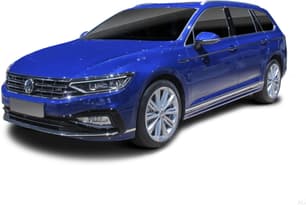
I've been hauling my little family of three around town this week to see what the big blue wagon could do.
The current-generation Honda CR-V is a deeply impressive vehicle. It’s won a bunch of awards, it’s one of CarsGuide’s top picks for a medium SUV and it’s got decades of heritage.
Despite all this, it’s not as popular as it once was. The Toyota RAV4, Hyundai Tucson and newer rivals, largely from China, have grabbed the attention of Australian buyers.
Halfway through the sixth-generation CR-V's life Honda Australia has improved the offering, and the timing couldn’t be better.
As the fuel crisis looks to be hanging around for a while, Honda has trimmed the pure petrol grades from six to two and added three more hybrid grades. Previously hybrid power was only offered on the flagship e:HEV RS at around $60k drive-away, but now you can get a petrol-electric CR-V for just under $50k.
Not much else has changed with the model year 2026 update aside from some new spec on select grades, but Honda has addressed the CR-V’s biggest criticism by making hybrid power more affordable.
I so enjoyed driving the Volkswagen Passat 206TSI R-Line. It's a roomy wagon that should fit a lot of different types of families. It still has sporty performance that will entice even the most reluctant family car buyer, so don't be turned off by its large proportions! I really like the comfort, convenience and handling of this one, so it gets an easy 8.0/10 from me.
My kid thought the blue colour was cool and loved having so many things to play with in the back seat. His only complaint was about the heavier doors but he still managed. He gives it an 8.0/10, too.
What a joy it is to drive such a complete, solid, refined car. Close to three years into its life, the sixth-gen Honda CR-V remains one of, if not the best mid-size mainstream SUV in Australia. I say ‘one of’ as I am yet to drive the new-gen Toyota RAV4 so I’ll wait to test that before giving a final judgement.
The new entry-grade VTi X e:HEV is a winner and you likely won’t need much more kit than what it offers. But you wouldn't regret paying a bit more for the extra spec in higher grades.
Aside from the lack of a space-saver spare wheel in hybrid grades, most of the other negatives are forgivable.
If you are looking for a mid-size family friendly SUV, please go and test drive the CR-V. Very few brands are doing things as well as Honda right now.
The Passat is a large car and stands at 4708mm long, 1832mm wide and 1504mm high. The boxier rear and long nose make these proportions feel even larger.
The 2023 model doesn't see much change, if any, to the previous iteration. The exterior features the classic VW sharp pleat that runs the length of the body, slim-line LED lights and pronounce grille with lots of chrome accents found throughout.
It looks shiny, new and stylish, but not garish. You'd be proud to be seen in this.
The interior is also classically VW – sharp, a little pared back and hosting easy to see buttons and dials. The adjustable ambient lighting elevates the cabin space, as does the black headliner (R-Line exclusive).
An interesting feature is the directional air vents, the slatted design is carried the entire length of the dash which accentuates the width of the car. It all looks seamless and well thought out.
If you’re familiar with the sixth-generation CR-V that launched in late 2023 then you’re familiar with the 2026 version. No visual changes have been made, although the flagship RS now has gloss black mirror caps and door handles.
It is a handsome design for sure, but it doesn’t elevate the medium SUV segment, nor does it do anything different or interesting.
I remember thinking it already looked a bit old when it launched, specifically the entry-grade versions, and given there’s a lot more competition in the segment now, a nip and tuck would've helped.
Nothing has changed design-wise inside. It has an appealing but somewhat conservative design with cool elements like the honeycomb mesh horizontal panel housing the air vents, and the classy chrome dials.
A very practical family wagon with all passengers enjoying ample head and legroom.
The amenities in both rows are very good. The seats are fairly comfortable but the lumbar support isn't awesome. The massage function on the driver's side is a nice novelty but not strong enough to be called a massage. Think of it as gently stretching.
For storage, you get a decently sized middle console, dedicated phone tray, cooled glove box, drink bottle holders in each door and two cupholders.
There are plenty of charging options available for the front with two USB-C ports and a 12-volt socket. Bonus having the wireless Apple CarPlay (and Android Auto), as it's one less cable you have to worry about.
In general, I like how easy the tech is to use. The 9.2-inch touchscreen multimedia system looks great and is responsive.
It's easy to get all the connections going and you can pull the built-in satellite navigation directions through to the 10.25-inch digital instrument panel. I did miss having a head-up display this week but the info on the instrument panel is displayed clearly.
The back seat gets a couple of cupholders in the fold-down armrest and drink bottle holders in each door. It also has directional air vents with climate control, reading lights and one USB-C port for charging. However, I would have liked to have seen another charging port, to limit sibling squabbles.
There are ISOFIX child seat mounts on the outboard seats plus three top tether anchor points.
The backseat is wide enough to fit three child seats side by side if needed, and there's plenty of room for front passengers when a 0-4 rearward facing child seat is installed.
The windows are wide and offer good visibility but I really like the 142mm ground clearance. It was super easy for my six-year old to climb in and out.
The only thing he mentioned he didn't like was how heavy the doors were to operate. I don't mind this because they feel solid but they do swing wide, so be wary of letting any wild kids just hop out themselves in a crowded car park. You may get (or inflict) some dings.
The boot is a great size at 650L, with all seats in use, but if you pop down the backseats, that jumps up to 1780L.
The back seat also split-folds 40/20/40, which opens up your storage options. I enjoyed using the powered tailgate with kick function, it's handy on the grocery run.
The CR-V is a medium-size family SUV with a long history of practicality at its core, so it has to get the fundamentals right. And, largely, it does.
Up front the CR-V is a spacious car with ample head room and decent space across. The seats are well-bolstered and comfortable across the model grades. The seats in the RS are almost sports seats with ample side bolsters and black leather-appointed trim with red stitching, but I prefer the cloth trim of the VTi X.
Storage is handled by sizeable door bottle holders, a pair of cupholders up front and a big central bin, with a few other nooks for phones and the like.
Connectivity-wise there’s a pair of USB-C ports and a wireless charging pad on all grades. The multimedia screen is small by today’s standards, but it’s hard to fault its functionality. Large menu tiles are easy to identify and swipe through, and thankfully there is a separate space on the stack for air-con with actual buttons and dials. And the dials look great! Virtually every Chinese brand (and Tesla), please take note.
Google Built-in is a solid system as it allows you to log into your own Google account and access your saved places on Maps. I used this when I reviewed the Accord and barely needed to use Apple CarPlay. On the launch we mostly used CarPlay because of time limitations, and unlike when I attended the original sixth-gen CR-V launch, the Apple connection worked without fault.
Rear-seat space is ample, especially when it comes to leg, knee and toe room, but headroom is impacted in the RS by the panoramic sunroof. There’s scalloping in the roof to help with this, but my head (I’m 6ft tall) almost scrapes the roofliner.
Sadly the CR-V doesn’t have the ‘magic’ seats of other Honda models. That system allows you to fold the base upright on all three rear seats, or even remove the seat entirely, to allow for extra cargo space in the second row. The CR-V just has standard 60-40 split-fold seats.
You also get map pockets on the rear of both front seats, two more USB-C ports, fold-down armrest with cupholders, knee-level air vents and enough space for a small bottle in the doors.
The boot measures a healthy 589 litres for the five-seat petrol, as well as VTi X and L hybrid grades. That drops ever so slightly to 581L for the VTi LX and RS hybrids. And it’s just 150L for the seven-seater with the rear rows in place. The boot in the five-seat versions has a flat floor for easier loading of heavy items, as well as a 12V outlet, hooks, nooks and lights. It’s a decent, practical space.
Only the five-seat petrol grade has a full-size spare wheel. The seven-seat petrol has a space saver spare, while the hybrid has none at all - just a dismal tyre repair kit. That’s not good enough, Honda. Many of your hybrid rivals have at least a space-saver these days.
The 206 TSI R-Line is top of a (small) two-model line-up. Our example has been finished in 'Lapiz Blue', a colour exclusive to the R-Line. Otherwise, expect a sea of monochromatic colour options.
We say top model but it's not necessarily a massive jump up in specifications from the 162 TSI Elegance, you're paying for the engine performance on this one.
This R-Line will cost you $67,790, before on-road costs. That's a $4K price hike from the 2022 model with no discernible upgrades.
And that price tag still puts it well above its closest rivals, with the Octavia RS 180 TSI being $53,090 and the Mazda6 Atenza at $52,140 (all before on-road costs).
However, you won't be disappointed with the features list with Nappa leather-appointed seat trim, R-Line stitched detailing on the floor mats and seats, electric and heated front seats, massage function on the driver's seat, a panoramic sunroof as well as wireless Apple CarPlay and Android Auto all coming as standard.
The R-Line also enjoys 19-inch alloy wheels, a full-sized spare, heat insulating tinted glass, 65 per cent light reducing rear privacy glass and 30-way adjustable ambient lighting in the cabin.
There are now six CR-V grades following this model-year update. The two petrol grades are the VTi X and VTi L7. The latter is now the only seven-seat offering after one of the grades was dropped due to low take-up.
Pricing for the petrol versions is actually up a little, with the VTi X kicking off the range at $44,900, a $3000 increase over the former base grade. The VTi L7 is up by $2600 to $54,900. By the way, all Honda pricing is inclusive of on-road costs.
But the hybrids are the big news. The only hybrid used to be the e:HEV RS at $59,900 d/a, but it now starts at $49,900 for the e:HEV X. From there you move up to the e:HEV L at $53,900, then the e:HEV LX at $58,900.
The e:HEV RS is still the flagship and gains some more features as part of the update, but its price has also increased to $64,400.
While Honda should be commended for lowering the price of entry for a hybrid CR-V, the pricing is still a fair bit higher than newer plugless hybrid rivals from China like the MG HS (from $42,990) or GWM Haval H6 (from $40,990 d/a).
Looking at more traditional rivals, the new-gen Toyota RAV4 hybrid starts at $45,990, the Kia Sportage from $44,450, Nissan X-Trail e-Power from $48,915 and Subaru Forester hybrid from $46,490. But remember, these prices are all before on-road costs, whereas Honda’s pricing is inclusive of on-road costs, which can add anywhere from $3000 to $5000. That makes the CR-V more competitive than you might initially think.
For your money the CR-V comes standard with LED headlights and daytime running lights, dusk-sensing headlights, a 7.0-inch digital driver instrument display, dual-zone climate control, keyless entry and start, eight-way power-adjustable driver’s seat, two-tone black fabric seat trim and a retractable cargo cover (not offered on the seven-seat grade).
All grades now get the latest version of Honda Connect which is an app-based system that allows you to remotely lock and unlock the car, as well as remotely controlling climate, lights, the horn and the power tailgate, while also offering car diagnostics, location services and more.
As part of the multimedia setup all CR-Vs now get Google Built-in, which comes with integrated Google Maps, Assistant and Google Play. It also has wireless Android Auto and Apple CarPlay and four USB-C ports.
VTi L grades add black leather-appointed seats, leather-wrapped steering wheel, privacy glass, a ‘Smart’ key card, heated front seats, a 360-degree camera and a 10.2-inch digital driver display which is new to this grade.
The VTi LX adds extra trim flourishes, ambient lighting, DAB+ digital radio, a 12-speaker Bose audio system, auto retractable mirrors (new) and two-tone gloss black 19-inch wheels.
Finally the RS gets unique RS exterior styling, a panoramic sunroof, LED active cornering lights, an extra drive mode, red stitching on the leather-appointed seats and alloy pedals. New to the RS for 2026 is ventilated front seats, heated rear seats, a heated steering wheel and a head-up display.
It’s disappointing to see digital radio only offered in the top two grades when it’s available in $22,000 hatchbacks. And only offering the head-up display in the RS feels cheap, too.
The R-Line has a 2.0-litre, four-cylinder turbo-petrol powertrain with a maximum output of 206kW/350Nm.
That puts its engine specs 44kW up on the Elegance model and you feel that difference when you put your foot down.
The six-speed auto transmission provides surprisingly smooth shifting in most settings. The grunty engine combined with the all-wheel drive creates a sporty and purposeful driving experience.
Pure petrol powered CR-Vs use Honda’s 1.5-litre four-cylinder turbocharged engine that’s also found in the HR-V and ZR-V SUVs. In the CR-V, it pumps out 140kW of power and 240Nm of torque.
It is paired with a continuously variable transmission (CVT) driving the front wheels only.
The hybrid uses a 2.0-litre petrol engine combined with a hybrid setup and a shift-by-wire E-CVT. The total system output for the hybrid is 135kW and 335Nm. There’s a choice of two front- and two all-wheel-drive hybrid grades.
The CR-V’s power output is less than the RAV4 (143kW) and Forester (145kW), but it offers more torque than the latter (212Nm).
That powerful engine does cost you a little bit with efficiency. The official combined fuel figure is 8.1L/100km and real-world testing saw my figure at 8.6L.
Not too bad for the type of driving I did this week, which was a combo of open-road and urban. I wasn't scared of putting my foot down but I would expect to see a double-digit figure in an urban setting.
This has a 66L fuel tank and based on the official combined figure, you should be able to get around 815km driving range, which is great.
Fuel consumption for the petrol grades is 7.1 litres per 100 kilometres for the five seat VTi X, while the VTi L7 is a tad thirstier at 7.3L. CO2 emissions for the petrol SUV is 162-167g/km.
Front-wheel-drive hybrids sip 5.5L and all-wheel-drive versions consume 5.7L. CO2 emissions for the hybrids range from 125-131g/km.
Hybrid versions of the Kia Sportage drink between 4.9-5.3 litres, while the new-gen RAV4 sips just 4.5-4.6L. The CR-V is not the most efficient hybrid in the medium SUV segment, but it’s more frugal than most petrol engines.
The theoretical driving range of the CR-V hybrid is close to 1040km, while the petrol CR-V is 804km.
Both powertrains are rated for Euro 6b and they can both drink 91 RON fuel.
The performance of this is to be commended. Powerful but poised, there's a sense of performance in reserve when you put your foot down and while still fun, it's not unbridled power.
It inspires confidence, the lower centre of gravity and firm steering meaning you tackle corners with minimum roll. You can accelerate out of a corner a little earlier than you might normally in this.
The cabin is nice and quiet with some road noise at higher speeds but not enough to intrude on chatting.
Despite suspension that feels sporty, aka stiff, the ride comfort is very good, with back seat passengers also feeling the comfort. There's not a lot of jostling in this.
Let's talk parking. It is a large car but you don't feel those dimensions when you park it.
It's very forgiving to manoeuvre with the front and rear parking sensors, crisp 360-degree view camera and tight 11.7m turning circle!
And if you're not confident it has a self-parking feature.
It’s been about two-and-a-half years since I attended the CR-V launch and it’s always good to reacquaint yourself with a car, particularly one I was so impressed with.
The CR-V has a few more rivals than when it first went on sale. A lot of them are from Chinese brands. But even with the fierce competition in the segment, the CR-V remains an absolute standout.
Honda didn’t have any petrol grades at the launch, which isn’t surprising given the Japanese carmaker expects hybrids will make up a whopping 85 per cent of CR-V sales by the end of this year.
The two-wheel-drive VTi X e:HEV is the most affordable hybrid grade and it should appeal to a lot of potential buyers. This does not feel like a base grade car in terms of the cabin or how it drives. The cloth seats are the only giveaway that it’s not a higher grade.
Honda engineers have managed to produce something rare - a silky-smooth hybrid system. The company is using the word ‘smooth’ in its TV ads for this car, but for once the ad execs got it right.
The powertrain operates on electric power until highway speeds but the transition to the petrol engine is seamless. If you floor the throttle you’ll hear the engine, but it’s a pleasant note. Certainly more appealing than the sound of Toyota’s petrol-electric hybrid on the go.
Acceleration is brisk enough for a car like this. Not overly quick, but it’s linear and the build up to higher speeds feels natural yet still urgent when required.
There is no whine from the electric CVT, in fact it is virtually unclockable. I don’t love the shift-by-wire transmission buttons. I’m fine with buttons rather than a traditional shifter generally, but it’s the layout of the Honda buttons that’s unnecessarily confusing.
When it comes to ride and handling, the CR-V excels.
The launch drive from Melbourne up through the Yarra Valley to Marysville features some of the best driving roads within an hour or so of the city. A carmaker would only include these roads in a test loop if it was confident of the vehicle’s dynamic ability.
In both two- and all-wheel drive guise, the CR-V hybrid exhibits excellent body control, thanks to a well-balanced chassis. It carves through tight, twisty sections like a car half its size and never feels like it will lose control.
The ride quality is hard to fault. Those roads are littered with shockingly large potholes, the sort that could damage a lesser car. The CR-V eats them up with barely a hint of disruption in the cabin. Given the rough ride of some newer rivals it’s a pleasure to drive a car with such a well-sorted suspension setup.
The cabin is well-insulated from external noise, but that engine note will be evident if you switch to Sport mode and give it a bootful.
There’s an overall feeling of quality behind the wheel of the CR-V. This company has been building cars for 60 years and it shows. I would happily live with a CR-V as my daily drive.
This has a good list of safety features with the following being standard: LED daytime running lights, lane departure alert, lane keeping aid, blind-spot monitoring, rear cross-traffic alert, 360-degree view reversing camera with dynamic guidelines, front and rear parking sensors, driver fatigue alert, and adaptive cruise control (with stop/go function).
I like the Emergency Assist feature which will provide multiple visual and sound alerts if there's no steering wheel activity detected. If there's still no driver input, the car will slow down and ultimately come to a complete stop.
The Passat's maximum five-star ANCAP safety rating has just expired and at the time of writing was yet to be retested.
The 2023 Passat has nine airbags, including side airbags for the rear outboard seats, as well as curtain airbags covering both rows.
There are three top tethers across the rear row and ISOFIX child seat mounts on the outboard positions.
Aside from the addition of a head-up display and 360-degree camera on some variants, post-collision braking is now standard across the range. Not much else has changed on the safety front for the 2026 CR-V.
It does come standard with the main active safety gear such as auto emergency braking, forward collision warning, lane-keep assist, traffic jam assist, blind-spot monitoring, adaptive cruise, traffic-sign recognition, rear cross-traffic alert, driver attention monitor, tyre pressure monitor and a road departure mitigation system.
There’s even an acoustic vehicle alert system for the near-silent hybrids.
It has eight airbags, including a front-centre airbag that helps mitigate against injury between driver and front passenger in the event of a side crash. The curtain airbags reach to the third row in seven-seat versions.
It’s great that Honda now offers a surround-view camera but why not just offer it across the entire model range?
The CR-V still has a four-star ANCAP rating from testing in 2024. Honda has no plans to have the car re-tested.
On the road, Honda’s ADAS calibration works as these systems should. It intervenes only when necessary. You will feel a tug of the wheel if crossing a road marking, but it’s unobtrusive and just works away in the background.
Given how over-the-top systems from rivals like Kia, Hyundai, MG, Chery and Geely are, it’s refreshing.
The Passat comes with a market standard five-year/unlimited km warranty, and roadside assistance is included for one year (through Allianz Insurance) if you get your car serviced at a VW centre.
There is a three- or five-year capped price servicing plan that can be pre-purchased and will save you money compared to the pay-as-you go option. Servicing averages $620 though, which is expensive for the class.
Servicing intervals are reasonable at every 12 months or 16,500km – whichever occurs first.
Honda’s ownership proposition is solid, thanks to renowned reliability and an extensive dealer network across the country (more than 80).
The CR-V is covered by a five-year/unlimited kilometre warranty.
Yes, that term length looks a bit average by today’s standards when so many have seven and 10-year terms. However, Honda offers an additional three years - bringing it to eight - if you service with Honda dealers.
Nissan and Mitsubishi advertise a 10-year warranty, but it’s conditional, as long as you service with their dealer network. The difference is Honda promotes it as an add-on, whereas Nissan and Mitsubishi splash the 10-year figure first and foremost, with caveats. Honda’s marketing of its warranty just feels a bit more authentic.
Hybrids come with an eight-year battery warranty, too.
The service schedule is every 12 months or 10,000km. That would be more competitive if it was 15,000km.
But the rest of the aftersales offer is excellent. It includes five years of roadside assistance and services are capped at just $199 per visit for the first five years.