












While we all mumble about the SUV taking over the passenger car world, a quick glance over at Volkswagen proves the traditional hatchback is still a viable train of thought.
Of course, with the original 1970s Golf, VW more or less invented the modern hatch, but even so, its decision to stick with the concept speaks volumes when many other makers are moving to an SUV-only (or, at least, SUV-dominated) stance.
So, any new or even facelifted VW Golf is big news, and an important model that VW can’t afford to have fail.

-
 What does the 2026 Volkswagen Amarok Walkinshaw need to include to succeed against performance ute rivals like the Nissan Navara Pro-4X Warrior and Ford Ranger Raptor? | Opinion
-
'China Speed': Major European car brand to develop 30 new hybrid, electric and range-extender cars by 2027 after three new concepts previewed
-
Good news for Australian car buyers: How US tariffs and global 'disruption' could mean better prices and supply according to Volkswagen as it eyes stiff competition with BYD, MG and LDV
What we’re not seeing with the VW Golf yet is any form of hybridisation, let alone, full electrification, despite the Golf being available in EV form in Europe for some years now. At which point the question becomes one of whether Volkswagen is giving he Golf concept the best chance of survival. As in, can a conventionally powered, conventionally packaged hatchback still do the business in 2025. I mean, evolution is one thing, but – sticking with the metaphor - extinction has always been a possibility, too.
Volkswagen Golf 2025: Life
| Engine Type | Turbo 4, 1.4L |
|---|---|
| Fuel Type | Premium Unleaded Petrol |
| Fuel Efficiency | 6.3L/100km (combined) |
| Seating | 5 |
| Price From | $34,430 - $41,030 |
| Safety Rating |
|
Price and features – Does it represent good value for the price? What features does it come with?
7 / 10
Volkswagen has done a bit of fiddling with the Golf line-up’s pricing, including a price drop for the entry-level car. Typically, though, there’s a catch and the lower price also means less equipment. So here’s how it all pans out:
The facelifted Golf Life is now $500 cheaper but loses tri-zone climate-control (for single-zone) integrated sat-nav (you now need to use your phone) and the ambient interior lighting is gone. But you still get auto headlights, a slightly-larger-than-before 10.4 inch info-screen, a digital instrument display, wireless charging, single-zone climate, 17-inch alloys, digital radio, keyless entry, a reversing camera and a leather-trimmed steering wheel. Call it $38,690, before on-roads costs.
.jpg)
.jpg)
.jpg)
.jpg)
.jpg)
.jpg)
.jpg)
.jpg)
.jpg)
.jpg)
.jpg)
.jpg)
The next step up is a new variant called Style which most closely approximates the Highline trim level in previous Golf line-ups. It adds 18-inch alloys, a 12.9 inch info screen, LED headlights, embedded sat-nav, ambient lighting, a 14-way power adjustable driver’s seat with memory function, tinted glass and some splashes of exterior chrome. That version lands at $43,690, before on-roads.
Next on the ladder is the R-Line which gets a specific 18-inch rim, selectable drive modes, adaptive steering borrowed from the GTI, leather trim and heated and ventilated sports seats. It’s now $47,990, BOC, which is a fair old hike of $5700 over the outgoing R-Line.
.jpg)
.jpg)
.jpg)
.jpg)
.jpg)
.jpg)
.jpg)
.jpg)
.jpg)
.jpg)
.jpg)
.jpg)
The highest spec variant of the Golf unveiled at the recent launch (and the Golf R will be dealt with with its own launch, says VW) is the new GTI which now costs $58,990, before on-road costs, or $2900 more than the previous GTI.
But that’s justified by more power this time around, and over and above the R-Line, the GTI adds its own engine, specific transmission, adaptive suspension, 19-inch alloys, a raft of GTI styling items and trim pieces, fog lights, tartan cloth trim and an expanded version of the car’s self-parking functionality. Oh, and while metallic paint is a no-cost option on the GTI, 'Premium Metallic Paint' (VW’s own description) whatever that is, is not. It’s a $300 ask on the GTI.
.jpg)
.jpg)
.jpg)
.jpg)
.jpg)
.jpg)
.jpg)
.jpg)
.jpg)
.jpg)
.jpg)
.jpg)
Volkswagen has long been keen on optional packages to give its cars a bit more appeal, and this time around is no different. So, buyers of either the Life, Style or R-Line can tick the box on a panoramic sunroof for $1900 or the $2000 'Sound and Vision' package that includes an upgraded Harman Kardon premium sound system, head-up display and a 360-degree view camera system.
The GTI, meanwhile, can accept those options at the same price, but is also available with a $3900 interior package that brings Vienna leather upholstery, a power-adjustable driver’s seat and heated and ventilated front seats.
.jpg)
.jpg)
.jpg)
.jpg)
.jpg)
.jpg)
.jpg)
.jpg)
.jpg)
.jpg)
.jpg)
.jpg)
Related cars for sale on CarsGuide
See more Volkswagen Golfs for sale View cars for sale
Design – Is there anything interesting about its design?
7 / 10
As a facelift (and a fairly mild one at that) rather than a new model, the move to Golf 8.5 specification doesn’t represent any major engineering or stylistic shift. But what it does signal is a recognition that the driver interface set-up in the previous version was not without its foibles and faults.
Many owners complained that the touchscreen mechanism for operating many of the car’s functions required two key-strokes, when one would have been the case in a less convoluted system. So, VW has revisited the way humans interact with the car and come up with some genuine improvements.
Now there are quick-access buttons above and below the central info screen as well as physical steering wheel buttons replacing the previous car’s touch buttons which sometimes had a mind of their own.
.jpg)
.jpg)
.jpg)
.jpg)
.jpg)
.jpg)
.jpg)
.jpg)
.jpg)
.jpg)
.jpg)
.jpg)
.jpg)
.jpg)
In terms of styling changes, well, they’re minimal to say the least.
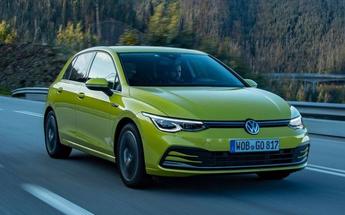
But keen car-watchers will spot the Golf 8.5's new front and rear bumpers, tweaked headlight and tail-light treatment, new alloy wheel designs and an illuminated bonnet badge on everything bar the Style variant.
Oh, and retro design gets a look in this time, too, with the alloys on the GTI bearing a striking resemblance to those on the iconic Golf 5 GTI from the early part of this century and, arguably, the car that gave the Golf concept the shot in the arm that sees it still around today.
.jpg)
.jpg)
.jpg)
.jpg)
.jpg)
.jpg)
.jpg)
.jpg)
.jpg)
.jpg)
.jpg)
.jpg)
.jpg)
.jpg)
 Volkswagen Golf 2026 review: 110TSI Life
Volkswagen Golf 2025 review
Volkswagen Golf GTI 2023 review
Volkswagen Golf R wagon 2022 review
Volkswagen Golf Wagon 2022 review: 110 TSI Life
Volkswagen Golf 2026 review: 110TSI Life
Volkswagen Golf 2025 review
Volkswagen Golf GTI 2023 review
Volkswagen Golf R wagon 2022 review
Volkswagen Golf Wagon 2022 review: 110 TSI Life

Practicality – How practical is its space and tech inside?
8 / 10
Up front, the Golf is all sensible and grown up. In fact, there’s a sniff of European boardroom simplicity and elegance and none of the gimmickry some of its competitors throw at their products in the name of looking racy or plush. Faux metallic finishes or air vents that look like jet engines? You won’t find them here. That said, if you’re looking for a bit of noise and bling, the cabin might just seem a little austere. At first glance, anyway.
Scratch a bit deeper and the practicality starts to shine through. Okay, so the new quick access buttons seem a bit scattered, but we won’t class that as a criticism, because the alternative where those same functions are buried under multiple menus on a touchscreen is vastly less appealing and ergonomically 'right'.
_0.jpg)
The centre console is home to a pair of cupholders and a 12-volt output socket, and there is a pair of USB charging ports tucked under the ledge of the lower part of the dashboard. The sun visors each feature a lit vanity mirror and the lower doors house deep and large pockets capable of holding a full-sized bottle.
Back in the rear seat, there’s decent foot room and very generous headroom, but knee-room might be a bit limited if the person directly in front is tall. In fact, any front-seater getting on for 180cm will be asked to move their chair forward by any person of roughly similar stance attempting to sit in the back. But the rear seat itself is good, although, like so many cars, the rear-centre position is last place in the comfort stakes.
_0.jpg)
A fold-down armrest is available if the fifth (centre) seat is not in use, and it also hides a pair of cupholders. Assuming those knees allow, there are three pockets in the back of each front seat as well as a good sized door pocket on each side. The rear seat also includes centre air vents, reading lights and a pair of USB charge-points.
With the rear seat in place, VW claims a luggage capacity of 374 litres with a reasonable loading lip height of 675mm. Fold the rear seat down and there’s a huge space for cargo, but if you still need one rear seat, the backrest is split 60/40 and also includes a ski-port, allowing access to the luggage from the rear seat. The luggage area also houses three top-tether restraint fixing points and there’s a space-save spare tyre under the floor. Four tie-down points are also located in each corner of the cargo area.
.jpg)
.jpg)
.jpg)
.jpg)
Under the bonnet – What are the key stats for its engine and transmission?
8 / 10
All Golfs apart from the GTI and R (so that’s the Life, Style and R-Line, then) get the familiar 1.4-litre turbocharged four-cylinder engine which makes 110kW of power and 250Nm of torque. It’s a well known unit that provides adequate performance and better than average levels of refinement and smoothness. Based on previous experience, it’s actually more engaging than those bald numbers suggest.
In either case, it drives through an eight-speed conventional automatic transmission driving the front wheels. That word 'conventional' is important, too, and distinguishes the unit from the allegedly sportier (and previously troublesome) dry-clutch dual-clutch transmission.
.jpg)
The GTI, of course, offers much more performance and does so with the latest version of the perhaps the even more familiar 2.0-litre turbocharged four-cylinder. This time, however, it’s been tuned up to provide more power (195kW this time) and the seven-speed (wet) dual-clutch transmission also makes a return. There’s no manual gearbox option and the GTI remains front-wheel drive as one of its major differentiators from the all-wheel drive Golf R.
But don’t go thinking front-wheel-drive plus big power and torque equals an unruly drive. Because the GTI has a pretty sophisticated front differential which, based on past experience, does a good job of sending torque to the wheel that can best handle it, as well as helping the car corner more effectively. Plenty of people have driven more recent Golf GTIs and wondered aloud if the all-wheel drive of the Golf R is really necessary.
.jpg)
Part of that is the variable steering assistance and ratio of the GTI that can lighten up the steering for low-speed moves, and then add weight for high-speed stability. The rest of the secret lies in the electronically operation of the diff that allows it to lock and unlock quickly and effectively depending on the grip available and the torque being fed through it at the time. Like the adaptive dampers, VW claims the differential has been tweaked and improved over the Golf GTI 8.0 which also featured this tech.
Volkswagen also claims an electronic differential for the Life, Style and R-Line models, but in reality (and while it does offer advantages) it’s a braking-based system that can brake individual front wheels to maintain traction, rather than an actual limited-slip differential.
Efficiency – What is its fuel consumption? What is its driving range?
8 / 10
Without the extra weight of an SUV, it’s no surprise to learn the new Golf is a fuel sipper. The 1.4-litre variants all claim an official combined cycle (urban/extra-urban) fuel consumption number of 6.3 litres per 100km. And thanks to the efficiency of the entire platform, you’ll probably get closer to that in the real world than a lot of cars do to their own official number. Take it as read that you’ll be comfortably into the sixes on a highway cruise and perhaps even knocking on the door of a five.
And that’s just as well, because the VW requires 95-octane fuel which (depending on the price of diesel on the day) is about the second most expensive per-litre brew you’ll find at the bowser.
Based on the 50-litre tank fitted, the range of the 1.4-litre Golf should be comfortably beyond 700km.
.jpg)
The extra power of the GTI, of course, as well as the greater capacity, dictates that it will use more fuel. And it does with a government number of 7.2 litres per 100km. But the other thing to consider is that you’ll almost certainly drive it harder, too, at which point it can start to use even more fuel.
That said, a spirited strop on an alpine road during the launch drive netted a fuel number in the mid-10s, while our overall score after a long day on the road equalled 8.5 litres per 100km.
So it’s hardly a greedy car given the performance on tap. Again, 95-octane ULP is the order of the day. And that same 50-litre tank should be good for at least 600km between visits to the servo.
.jpg)
Driving – What's it like to drive?
9 / 10
The Golf has, for at least a decade or more, been at the absolute top of the small-hatchback tree when it comes to driving sophistication. And whatever else you think about the product, a lack of refinement and driver involvement has not been missing from the formula.
This time around, VW claims to have tweaked the suspension rates slightly for the Life, Style and R-Line and it’s hard to argue with the result. Just as all Golfs for the last couple of decades have, the 8.5, even in its simplest specification, rides and corners with a combination of balance and ride quality that few small cars - and pretty much no mainstream hatchback - under $50,000 can match.
.jpg)
It sounds like a big statement, but the first few kilometres will convince you this is how all good cars should steer and handle bumps and lumps. There’s no sense that the Golf will ever run out of suspension travel, nor any suggestion it’s anything other than an entertaining and engaging thing to drive.
The same goes for the engine. Peak power of 110kW mightn’t sound like a whole lot, but the torque is always where you need it and the zesty, zingy feel of the little engine makes you want to work it even harder; something it absolutely loves.
.jpg)
While the eight-speed automatic suggests a slightly lazier experience than a dual-clutch, this time around, the differences in shift speed and smoothness between the two types of trasmission are all but eliminated. Not only that, the Golf’s conventional automatic now obeys the paddle-shifter's commands with a degree of relentless faithfulness that makes you think it’s a dual-clutch after all.
Just as the more mainstream models have been class leaders dynamically, so too has the Golf GTI shown the way to the rest of the hot-hatch pack. This time around, though, there’s a sense it’s a more serious performance car than ever, and that has consequences.
.jpg)
While previous GTIs have felt immediately rewarding and flattering to pretty much any driver, this time, the GTI’s performance envelope has been stretched to the point where it now kind of needs to be driven faster than ever to offer those rewards.
It’s certainly not unfriendly at low speeds, nor an uncommunicative car by any means, rather the limit is now so sky-high, it seems a shame not to tap into it. Which means you need the right time and the right place to most enjoy what the car has to offer.
.jpg)
But let’s not ignore the fact the GTI has so much poise, grip and general ability up its sleeve that it will make any driver look like a superstar, and a good driver look like Oscar Piastri. The paddle-shifters are foolproof, the power delivery exacting and relentless and the steering and handling designed to never let you get in over your head. Which is not to say the GTI is uncrashable, but it has more ability than most drivers will have bravery.
Even the suspension, which is now firmer than ever, is far from too stiff or too harsh.
.jpg)
In 'Comfort', only big lateral thumps will get your attention, but even in 'Sport' mode, the shift in ride firmness is subtle enough to make either mode viable on even fairly lumpy roads.
And if that brilliant front end doesn’t make you question the need for the AWD Golf R, it should.
Warranty & Safety Rating

Safety – What safety equipment is fitted? What is its safety rating?
8 / 10
The Golf 8 (of which this car is a mild facelift) was tested according to Euro NCAP test standards back in 2019 where it scored the full five stars for safety. It hasn’t been tested locally, nor is it likely to be. Compared with the car that scored five stars in 2019, this new version is probably even safer, thanks to the inclusion since then of a ninth air bag; a centre one for the front seats to prevent head clashes in a side impact crash.
Driver aids include autonomous emergency braking that includes collision warning and can identify pedestrians. There’s also blind-spot monitoring and lane keeping assistance, although I found the lane keeping function a little insistent at times. And you need to dive through a couple of menus to turn it off, and you need to do that every time you fire the car up. Blame the NCAP test protocols.
The Golf in any trim level also gets adaptive cruise-control, park-assist, a driver-attention monitoring system, front and rear parking sensors and a reversing camera. What’s missing? A tyre-pressure monitoring system would be nice.
.jpg)
Ownership – What warranty is offered? What are its service intervals? What are its running costs?
7 / 10
The facelifted Golf carries VW Australia’s five-year/unlimited-kilometre warranty. Servicing intervals are every 15,000km or 12 months which ever comes first and there will be capped price servicing, but the actual cost had not been revealed to us as we published this review.
But for reference, the previous Golf could be had with capped price servicing at around $2100 for the first five years which is not exactly the cheapest out there when compared with its logical rivals.
It also pays to remember that even though the engines are both quite efficient, you will need to stump up for the more expensive 95-octane stuff every time you fill up.


Verdict
Modern cars tend to be judged on what they cost and what’s included in that price. Of course, that’s car-buying 101, but in the case of something like the new Golf, there’s an almost-intangible that must come into the final reckoning. Both the 1.4-litre models and the Golf GTI have a certain accessibility and ability to satisfy your transport needs and your appreciation of quality at the same time. Not every mainstream car manages this.
The refinement is unquestionable and the dynamics of either Golf variant speak of engineering that is sophisticated beyond the price-tag, certainly when compared with the cars the Golf is destined to sell against. Against that, prices on all but the entry-level car have risen, and even that car has lost some standard equipment. It’s also worth saying that not everybody who buys a new car is going to notice this ethereal notion of quality and sophistication. And if that’s the case, there are other cars out there that will do just as good a job. But if you can appreciate a car with a bit of soul, the Golf is truly a class-leading proposition that also happens to be able to hold its own on most other fronts.
Note: CarsGuide attended this event as a guest of the manufacturer, with accommodation and meals provided.
Pricing Guides


.jpg)
.jpg)
.jpg)
.png)
.jpg)
.png)
.jpg)
.jpg)


.png)


.jpg)