What's the difference?
Straight off the bat, let's just acknowledge that there's nothing new about the Toyota Kluger large SUV for 2025 – but that might not be a bad thing.
In a world where there seems to be some new fangdangled piece of car tech out there that works on paper but not in reality - like keyfobs that don't unlock the car properly, or multimedia systems that are just too darn smart for their own good.
There is something quite charming about the familiar specs and on-road comfort of the mid-spec Toyota Kluger GXL seven-seater we're family testing this week. In true Toyota style, it has a healthy mix of the tradition thrown in with workable technology.
It's newer seven-seat SUV rivals might try to tell you that the old Kluger is starting to fall behind, but is it? Or will simplicity win out for tired parents who just want an SUV to do what it says it will?
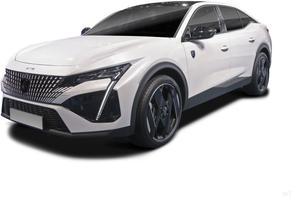
Unveiled globally in 2022 before arriving here in late 2024 as a plug-in hybrid GT, the Peugeot 408 has been a niche player for the long-established French brand with less than 100 examples finding homes here last year.
But 2025 marked the transition to a new ‘plug-less’ mild-hybrid powertrain for the mid-size crossover-style SUV with the hope it may take a bigger swing at segment heavyweights.
We spent a week with the current 408 GT Premium Hybrid to see if its efficiency-focused petrol-electric set-up has what it takes to win a spot on your upscale five-seat SUV shopping list.
The Toyota Kluger GXL Hybrid has been the ultimate SUV this week, as it fits my gear and family in comfort, the on-road handling is excellent and the fuel usage makes owning this long term actually feasible.
This is a great example of a mid-spec seven-seater that is both functional and comfortable. There’s lots to satisfy here and even though it hasn’t been updated, it may be a case of ‘if it aint broke, don’t fix it’.
The Peugeot 408 GT Hybrid delivers heaps of standard equipment and safety tech for what is now a much more competitive price. It’s also super fuel-efficient, which is right for these turbulent times, offers thoughtful practicality and the wagon-fastback-crossover-SUV look is striking. The price paid for miserly economy is a peaky small-engine powertrain and the ownership promise isn’t exactly class-leading. That said, it deserves consideration in its new, even more competitive under $60K mid-size SUV segment.
The Kluger epitomes what a large SUV was originally meant to look like. A big body and with enough ground clearance to earn the tag, but the shape is all long lines and gently curving panelling and that makes it look sleek rather than rugged.
Make no mistake, the Kluger is large at 4966mm long, 1930mm wide and 1755mm tall. It's only only 24mm shorter in its length than its big 4WD Toyota Prado cousin. It's size and road presence assures you that it's capable, but it's not trying to convince you it's a 4WD.
Despite not seeing any design updates, the Kluger still feels relevant and more than holds its own when it comes to kerbside handsomeness.
On the inside, the black synthetic leather trims, softly padded touchpoints and interesting dashboard make the cabin both pleasant to look at and spend time in.
The 12.3-inch multimedia display looks lovely with its clear graphics, but it’s still nice to see some traditional elements - like the gear selector, analogue instrument cluster (with a 7.0-inch digital display) and lots of buttons and dials to play with.
Interestingly, there isn’t a traditional transmission tunnel, which means you get a practical flat floor in the middle row and, thus, more legroom for middle seaters.
It's a forgiving cabin that lots of different drivers will find something to like in.
Peugeot Design Director Matthias Hossann has been guiding the brand’s look and feel since 2020 and the result is a recognisable approach across the range with enough flexibility to give each model its own personality.
Recurring themes include the dramatic, fan-like grille with body-colour elements, narrow angled LED daytime running lights (DRLs) slicing through the outer edges of the nose and sinister tapered headlights set into the front corners.
The rear end maintains the visual drama with a stacked, angular treatment sectioning off the ‘Claw Effect’ LED tail-lights (the Peugeot brand mark is a Lion), chamfered mid-section and chunky bumper.
And among what increasingly feels like a mass of same-same newcomers the 408’s sloping turret and high, wide haunches give the car a distinctively sporty fastback look.
The interior is classy and clean although the almost uniformly grey colour palette is unrelenting.
The two-tier dash adds visual interest and a combination of sweeping curves and clean, straight lines around the cabin lift the tone. Nappa leather trim with the ribbed seat centre panels using perforated hide also looks classy.
But then we come to the ‘iCockpit’ instrument display and steering wheel combination. It’s based on the idea that reducing the size of the steering wheel and lowering its position while flattening its top and raising the location of the instrument binnacle is a better solution than the traditional look-through-the-steering wheel approach.
It doesn’t work for everyone and it doesn’t work for me. As noted in previous Peugeot reviews, after more than a decade in existence various members of the CarsGuide editorial staff continue to struggle with the arrangement, while others love it.
For me, the wheel feels too low, yet the top of it obscures the lower part of the instrument panel. While it may work well for others I see it as the answer to a question no one was asking.
The Kluger is both practical and comfortable for passengers as each row gets a great amount of head- and legroom – yes, even third-rowers, but the low level of amenities in that row will render it a 'sometimes seat' for adults or older kids.
The 208mm ground clearance, wide door apertures and low-sitting seats makes it a very easy SUV to get in and out of, even for kids. The access to the third row is also good as the 60/40 split middle bench seat can be slid forward.
The electric front seats offer lots of adjustments, including lumbar support on the drivers side, but both seats get heating. They’re also well-padded and quite comfortable on a longer journey.
The outboard seats on the middle row offer the most comfort as they have longer under-thigh support, but the entire row benefits from heavy padding and the seat backs can recline.
The third row offers a curious 60/40 split and is wide enough for two adults to not be squished like sardines.
Although the Kluger is a seven-seater, families will be bummed that there are no child seat anchor points in the third row. But the middle row has two ISOFIX child seat mounts and three top-tether anchor points. It is more than wide enough to accommodate three seats side by side and you’ll have enough room for the front passenger when a rearward facing child seat is installed, too.
Individual storage is above average for the class, but the front row gets the best of it. There are two handy shelves built-into the dash, a glove box, a deep middle console (that swallows my arm) and cubbies in the centre console that include a phone cradle and two cupholders. There's also a sunglasses holder and little cubby beside the driver's knee.
In the middle row, you get two map pockets, two cupholders in a fold down armrest, and a drink holder in each door. While the third row gets a couple of cupholders.
Amenities are well-rounded for the most part, with the three-zone climate control and well-positioned directional air vents in the roof for the back two rows. Middle-rowers also get reading lights and two USB-C ports.
Technology is easy to use and looks great as the 12.3-inch display uses the same multimedia system as Lexus. The built-in satellite navigation is simple to set up and shows clear directions with lots of route customisations available.
There is wired Android Auto and wireless Apple CarPlay, but you do have to initially connect the CarPlay via a cable.
Rounding out the cabin is the great-size boot that offers 241L with all seats in use, but that can jump up to 552L when the third row is stored.
The level loading space makes it easy to slide larger items in and out of, and there’s a handy underfloor storage compartments for smaller items. You get a full-size spare tyre underneath the car and a powered tailgate in this model.
At close to 4.7m long, around 1.9m wide and a bit less than 1.5m tall with a 2790mm wheelbase, the 408 sits in the middle of the typical mid-size five-seater footprint.
Ample room in the front, although the lower section of the two-tier dash protrudes a fair way towards the driver and front passenger and the centre console is broad so it feels snug rather than airy.
Storage includes generous door bins with room for larger bottles, a lidded (and illuminated) bin between the seats that doubles as a centre armrest, two cupholders in the console with an oddments tray ahead of them and a decent glove box with an extra pocket built into the lid.
Switching to the rear, sitting behind the driver’s seat set for my 183cm position, there’s loads of leg- and headroom and enough width for three adults when required and more than enough for a trio of up to mid-teenage kids. Centre rear is less of a short-straw position, too, thanks to a relatively low and flat central tunnel.
The lack of a fold-down rear centre armrest is a miss mainly because it means there are no cupholders in the rear. But there are decent door bins with a space for smaller bottles, netted map pockets on the front seatbacks and a storage cubby at the back of the front centre console.
Speaking of which, individual air vents in the back of that console are a welcome addition.
The boot is large for the class at 508 litres (VDA) with the rear seat upright and 1583 litres with the 60/40 split-folding backrest folded down. The power tailgate (with foot sensor and pedestrian detection) also makes life easier.
Other thoughtful touches include four load tie-down anchors, a netted pocket on the right-hand side, elasticised straps on the left-hand side, specific lighting and a pair of bag hooks.
Power and connectivity options include two USB-C sockets, a 12-volt outlet and a wireless phone charging pad in the front, another two USB-Cs in the back and a second 12V plug in the boot. So no problems with charging capacity for phones and other devices.
Maximum braked trailer towing capacity is a useful 1300kg (750kg unbraked) but we have to put a big black mark against provision of a repair/inflator kit rather than a physical spare. Not good enough for the Aussie market.
You have to love a simple three-grade line up with variant names that aren't hard to say! The Kluger starts with the base GX, mid-spec GXL and then the flagship Grande model.
All Kluger models share the same all-wheel-drive hybrid powertrain, and our test model is the mid-spec GXL, which is priced from $70,440 before on-road costs.
Its price positions it in the middle of its seven-seat hybrid rivals; the Hyundai Santa Fe Elite ($65,000 MSRP) and the Kia Sorento GT-Line AWD ($73,330 MSRP), but it should be noted that the Sorento hybrid is only offered in one high-spec grade level and the Kluger can’t always match the Sorento’s plush features.
The GXL is still fairly well-specified and includes eight-way powered front seats with heating, adjustable lumbar support (driver's seat), black synthetic leather upholstery, a powered tailgate, rain-sensing wipers, dusk-sensing LED headlights, keyless entry/start and a full-sized spare tyre.
There is also 12 months of complimentary access to Toyota Connected Services, which allows you remote access, via the myToyota Connect app, to safety and security features, multimedia connect and driving insights.
The other technology is well showcased in the 12.3-inch multimedia display that has touchscreen functionality, in-built satellite navigation, wired Android Auto, wireless Apple CarPlay, Bluetooth and digital radio. You also get a single USB-A port, three USB-C ports, two 12-volt sockets and three-zone climate control.
The previous plug-in version of the current 408 Hybrid was a 1.6-litre, turbo-petrol, four-cylinder paired with a relatively large electric motor and cost-of-entry sat at $67,990, before on-road costs.
A shift to this car’s mild-hybrid powertrain, built around a 1.2-litre, turbo-petrol, three-cylinder engine matched up with an appreciably smaller battery and electric motor coincided with a 15 per cent ($10,000) price reduction to $57,990, BOC.
Convenience or consequence? Either way, it’s opened up a new competitive set with the focus shifting from the likes of the Lexus NX, Mazda CX-60 PHEV and Volvo XC60 to a fresh batch of sub-$60K rivals.
Think Honda CR-V e:HEV RS ($59,900, drive-away), Hyundai Tucson AWD 1.6 Hybrid Premium ($58,350, BOC), Kia Sportage GT-Line HEV FWD ($57,370, BOC), Nissan X-Trail Ti e-Power 5 seat AWD ($58,215, BOC), Subaru Forester AWD Hybrid Touring ($55,990, BOC) and the Toyota RAV4 XSE Hybrid AWD ($59,015, BOC).
Suddenly the Peugeot’s included features list sits in a new context and aside from the performance and safety tech we’ll get to shortly, standard equipment highlights include dual-zone climate control air, full-grain Nappa leather seat trim, a leather-trimmed (heated) steering wheel, Alcantara door trim, 3D satellite navigation and 10-speaker 690-watt Focal audio (with digital radio) as well as wireless Android Auto and Apple CarPlay.
Then there’s power-adjustable driver (eight-way) and front passenger (six-way) seats that are also heated with a ‘multi-point’ massage function, keyless entry and start, a 10-inch digital 3D instrument panel, a 10-inch multimedia touchscreen, auto LED matrix headlights, eight-colour ambient lighting, chrome trimmed pedals, a power tailgate, heated power-folding exterior mirrors, a panoramic glass sunroof, 19-inch alloy wheels, auto rain-sensing wipers and more.
Then you can add over-the-air updates, access to remote services via the ‘MyPeugeot’ app and ‘Ok Peugeot’ voice recognition.
That’s an impressive basket of fruit for an under-$60,000 car.
All Kluger grades are all-wheel-drives with a smooth continuously variable transmission. They share the same 2.5-litre four-cylinder hybrid powertrain that produces up to 184kW of power. Toyota does not quote a combined torque output.
At first look, these outputs may look underwhelming, but the on-road experience has shown that it’s more than enough to move the Klugers big body around without it feeling underpowered.
The Kluger has a braked towing capacity of up to 2000kg, which means you can hook up most of your weekend adventure toys!
The Peugeot 408 Hybrid is powered by a 1.2-litre, turbo-petrol, three-cylinder engine producing 100kW at 5500rpm and 230Nm at 1750rpm.
This compact, all-alloy, direct-injection unit works in concert with a single 15.6kW/51Nm 48-volt electric motor integrated into the six-speed dual-clutch auto transmission and energised by a 0.9kWh lithium-ion battery.
Drive goes to the front wheels only and Peugeot claims a 0-100kmh sprint time of 9.4 seconds.
The Kluger may be massive but it has an excellent combined fuel cycle usage of just 5.6L/100km because of its hybrid powertrain.
Combined with its large 65L fuel tank, you should see a theoretical driving range of up to 1160km, which is really good for a family SUV and rivals diesel models of the same size.
I’ve been super pleased with the fuel usage of our test model because despite doing quite a few long distance trips, which is where hybrids are usually the most inefficient, I’ve managed a real world usage of only 5.8L/100km! That is a great result.
The Kluger only accepts a minimum 95RON unleaded premium petrol.
The 408 Hybrid’s official fuel consumption figure for the combined (urban/extra-urban) cycle is 4.5L/100km, the 1.2L turbo triple emitting 102g/km of CO2 in the process.
And it’s important to point out those official (ADR 81/02) numbers for the 408’s consumption and emissions are better than any of the direct competitors we’ve called out in the ‘Price & Features’ section above.
Over a week of mainly city and suburban running with some freeway sections thrown in, we recorded an on-test average of 6.0L/100km. Impressive for a mid-size crossover weighing in at a bit over 1.4 tonnes.
Brim the 52-litre tank with minimum 95 RON premium fuel (ethanol blends not recommended) and using our real-world figure you can expect a handy driving range in excess of 860km.
The engine can sound like it’s under pressure, but that doesn’t translate to underwhelming power delivery. The GXL has enough grunt to make it a comfortable open-roader that’s confident on hills and overtaking.
The steering is light for such a big SUV, but with its 11.4m turning circle, it’s every parents dream when doing the school run or navigating small lanes or parks for after-school activities. It’s almost stupidly easy to drive and feels much smaller than what it is, even in the city.
Visibility is mostly good because of the large windows, but the B-pillar is larger than I’d like and I found myself checking my blind spots carefully.
The ride comfort is really good and suspension is forgiving on the worst of the bumps without feeling like it floats on the road. Road noise is low, even at higher speeds, but occasionally you get a weird wind whistle through the air vents.
Even those usually put off by a large SUV, should find this comfortable to get around in. Parking it is the only time you really notice its bulk. While the reversing camera is great quality, a 360-degree view system would have been much better.
Even with the assistance of an electric motor in the transmission and a turbo on the engine, a 1.2-litre, petrol three-cylinder powering a more than 1.4-tonne five-seat car is always going to be an interesting equation.
And in practice, although the small triple’s peak torque (230Nm) is available from just 1750rpm it lacks the smoothness of larger capacity mild- and full-hybrid combinations. Especially at slower speeds, the powertrain feels relatively edgy and agitated.
Outright acceleration is fine (claimed 0-100km/h acceleration is 9.4sec) with decent mid-range pulling power for confident overtaking or decisive lane changing (a 15.6kW/51Nm boost from the motor playing its part) and the dual-clutch auto is a more polished example of what can be a fractious device.
But engineering and tuning for maximum fuel-efficiency has an impact on driveability. For example, we noticed the air-conditioning system’s output softened at standstill, which led to some mild window fogging in stop-start traffic on a particularly humid morning. Haven’t seen that for a while.
The strut front, torsion beam rear suspension delivers a compliant ride and responsive handling in classic Peugeot fashion. The steering in particular points accurately and provides good road feel.
We’ve covered the intricacies of the i-Cockpit instrument and steering wheel configuration in the Design section as its shortcomings (for me, anyway) are more ergonomic than dynamic.
The car is relatively quiet, thanks in part to sound-dampening acoustic glass and the Michelin e.Primacy tyres (205/55) which also grip persistently if you decide to slice through your favourite set of corners. Push the engine harder and it’s revvy note and exhaust rasp will start to make their presence felt.
Regenerative braking is helpful and the physical brakes (ventilated discs and the front and solid rotors at the rear) are nice and progressive.
The front seats are firmer than the Peugeot norm but remain comfy enough and they provide enough side support to keep you well located.
Despite the swoopy fastback design, all-around vision is surprisingly good and an overall length under 4.7m, an acceptable 11.2m turning circle, a clear reversing camera and a 360-degree camera view make parking straightforward.
The Toyota Kluger has a maximum five-star ANCAP safety rating from testing done in 2021 and scored highly across its individual assessment scores. However, it only features seven airbags, which is a bit low for a car of this size, but the curtain airbags extend to the third row, which is good.
The Kluger has lots of safety equipment, including daytime running lights, hill-start assist, seatbelt warning (all seats), lane departure alert, lane-keeping aid, traffic sign recognition, rear cross-traffic alert, blind-spot monitoring, a reversing camera (with guidelines) and front and rear parking sensors.
The Kluger does miss out on family friendly safety items, like child-presence alert and side exit assist. The adaptive cruise control isn’t as well tuned as I’d like as it doesn't hold it's speed all that well, slows down too soon behind a vehicle, and sometimes can be sluggish to return to a normal speed once a vehicle has left its 'radar'.
The GXL has AEB with car, pedestrian, cyclist and junction turning assist and is operational from 10-80km/h (up to 180km/h for car), but it is usual to see that starting point sit closer to 5.0km/h.
The 408 has a maximum five-star ANCAP rating from assessment in 2022 with active crash avoidance tech including Auto emergency braking (AEB) with pedestrian and cyclist detection, junction assist and backover detection, adaptive cruise (with stop & go), lane departure warning and lane keep assist, blind spot monitoring, traffic sign recognition, a 360-degree camera view, rear cross-traffic alert, forward collision warning, driver fatigue monitoring and tyre pressure monitoring as well as front and rear parking sensors.
If a crash is unavoidable there are six airbags onboard (front, front side and side curtain) but a front centre bag is notable for its absence.
On the upside, an active bonnet helps protect impacted pedestrians from striking hard engine parts under the bonnet and multi-collision brake minimises the chances of subsequent impact after an initial crash.
For child seats there are three top tether points across the second row with ISOFIX anchors in the outer positions.
The Kluger is offered with Toyota’s five-year/unlimited-kilometre warranty, but that can be extended to seven years if you service on time and with a Toyota service centre, which makes it competitive against some rivals.
There’s a five-year capped-price servicing program available, with services costing just $285, which is cheap for the class. Servicing intervals are reasonable at every 12 months or 15,000km, whichever occurs first.
Peugeot covers the 408 with a five-year/unlimited kilometre warranty, which is perilously close to sub-par in 2026 with an increasing number of brands at seven, eight and up to 10 years conditional. The battery warranty at eight years/160,000km matches the market.
Roadside assistance is included for five years, service is recommended every 12 months/15,000km and pre-paid servicing is offered across three-, four- or five-year plans, with the latter at $2070.
That’s a not insubstantial average of $414 per workshop visit, which Peugeot says will save you $893 compared to pay-as-you-go over the five years.
For reference, a Toyota RAV Hybrid service for any of the first five years is $260, although pricing steps up after that period.
Peugeot has a well established network of 31 dealers mainly covering major cities and key rural areas, primarily on the east coast. Currently, no presence in Tassie or the Northern Territory, while Perth and Adelaide are the only representation in WA and SA.