What's the difference?
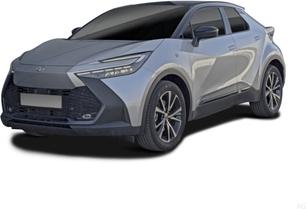
According to the chief engineer for the Toyota C-HR, a second generation was never guaranteed for this uncharacteristically (for Toyota) design-led small SUV.
After the Corolla Cross came into existence, the top brass didn’t think the brand needed two similarly sized models in the line-up. So, why is it here, and is it any good?
The first question is easy to answer - the team drew the new C-HR up as a European model, built in hybrid-only and with enough key differences from the Corolla Cross to avoid the models competing.
The second question? Let’s find out.
This is the new Tesla Model Y L, of course, but before we even start I need to ask you a very important question.
How often, honestly, do you use all seven seats in your seven-seater? Or if you only have five seats, how often is there a human in every single one?
Rarely, if ever?
Yep, me too. So stick around, because this is, by far, the best family SUV seating layout. And one where there’ll finally be no fighting over who gets stuck with the dodgy seat.
And as a result, the six-seat Tesla Model Y L might just be among the best all-electric SUV offerings around.
There’s not much in terms of practicalities that are going to convince you the C-HR is a better option than Toyota’s other small SUV, the Corolla Cross.
Even other ‘stylish’ small SUVs like the Mazda CX-30, fuel savers like the electric MG ZS EV, or performance small SUVs like the Hyundai Kona N are more affordable than the GR Sport version of the C-HR.
In the case of this car, unlike most of its Toyota stablemates, buyers will likely be making a decision from the heart based on exterior styling and its interior rather than value or practicality.
And who would anyone be to tell you not to buy a car you like for its styling?
If you like the five-seat Model Y, then you'll like the six-seat L version even more. I think this the best example of Tesla's electric SUV to date, and the cabin layout just makes a lot of sense, and would suit plenty of families who don't need to squeeze someone into a compromised middle seat.
Note: The author, Andrew Chesterton, is a co-owner of Smart As Media, a content agency and media distribution service with a number of automotive brands among its clients. When producing content for CarsGuide, he does so in accordance with the CarsGuide Editorial Guidelines and Code of Ethics, and the views and opinions expressed in this article are solely those of the author.
There’s a fair bit going on here compared to most of Toyota’s other products, much like the first generation, but being designed with Europe as the key market and Australia as a secondary means the styling team needed to take on some fairly fashionable brands.
All three variants of the C-HR are relatively close in aesthetics, with major differences being two-tone paint or specific trim elements for the top-spec GR Sport.
It uses new Toyota design elements that have been seen on some models already, the ‘c-shape’ lights have been used on the new Prius, which we no longer get in Australia, for example.
The black roof was also available on the previous generation, where this car has carried over the ‘egg-like’ silhouette from.
The overall relatively aquatic styling and shape must be for aerodynamic advantage - its chief engineer told us the drag coefficient is just 0.318Cd - but the removal of the rear wiper to lower drag might have been unnecessary for a city-focused small SUV.
The cabin isn’t as wild as the outside, which may be a let-down in some ways, though it’s still a little more visually interesting than its more mainstream stablemates.
The 64-colour ambient lighting changes based on settings including time of day or drive mode, but can be set to a specific single colour if you wish.
The centre stack on the dash is gently angled towards the driver with a small separation between it and the passenger, creating a slight ‘cockpit’ feeling.
Seats are made from different materials depending on the grade, though no real leather is used even in the GR Sport, where synthetic suede and leather are the main upholstery.
The cloth textiles are made from entirely recycled materials, while the synthetic suede is made from a little less than half recycled materials.
They don’t look cheap, but they also don’t look particularly luxurious.
Spoiler alert - it looks a lot like a five-seat Model Y, doesn’t it, albeit a slightly bigger one. And you’d have to be a bigger Tesla head than me to immediately spot the differences at a glance.
The wheelbase is longer, the rear doors are bigger as are the rear 3/4 panels and the roof line is higher, helping with headroom in the third row.
Still, safe to say if you like the look of the five-seat Model Y, you’ll like this one. And if you hate it, well, good luck.
The alloys are 19-inch and shaded by the aerodynamic caps and there are light bars front and rear which debuted on the updated five-seat Model Y when it arrived mid-last year.
The bigger changes are inside, of course. I promise we’ll get to the second and third rows in the Practicality section, but let’s talk about the look and feel first.
There’s a love/hate relationship with Tesla’s stripped-back aesthetics, and I’m probably somewhere in the middle. I like the airiness of the space in the cabin, and I think it feels nicely put together, and I really dig the contrasting fabric used on the doors and dash which add a little visual interest to the cabin.
But I hate using the central screen to select a gear and I hate not being able to see how fast I’m going without turning my head. A head-up display would work wonders in the Model Y L cabin.
When it comes to interior layout and ergonomics, there’s never much to criticise in a Toyota, unless playing it safe is a downside for you.
The buttons you’re most likely to use regularly, across the climate control, centre console and steering wheel, are all very obvious and easy to find, if a little uninspiring, as is wheel design itself - form definitely doesn’t sacrifice function here.
Welcome are the two large screens, the multimedia touchscreen a large 12.3-inch unit and the driver display either 7.0-inch or another 12.3-inch version depending on variant.
Toyota’s software is simple and accessible, using a few main menu sections, though many will likely bypass this with wireless phone mirroring.
Everything’s in a sensible place: a tall bottle in the cupholders won’t block access to anything, the phone charging pad is tucked away to minimise distraction, and Toyota has kept things like the gear selector and stalks behind the steering wheel relatively traditional.
While the interior feels a little dated by its many buttons and some of its simple graphics, there’s certainly something to be said for a welcome change from distracting screens and menus - if the aim was to not exclude Toyota’s older market, it seems like mission accomplished.
In terms of comfort and space, the C-HR makes pretty good use of its interior from the front, the seats are relatively comfortable and visibility is fine, though the back seat starts to feel a bit cramped.
While cupholders and door bottle storage is plentiful in the front, there’s no armrest and no bottle storage in the rear, only relatively shallow cupholders on the armrests in the doors.
Visibility is also relatively poor with high windows, a narrow rear window, and not a lot of light unless there’s a sunroof.
Behind that, with the seats up, the C-HR’s boot has a claimed VDA capacity of 388 litres in the GXL and Koba, or 362L in the GR Sport. Total volume with the seats down is 1154L and 1490L respectively.
Captain’s chairs are simply a more luxurious version of second-row seating. With that there is no argument and the heated and cooled chairs that occupy the second row of the Model Y L are pretty good examples of them.
Space, both knee and headroom, is ample, and you can adjust each seat individually if you want to grant a bit more space to any third row occupants. Armrests deploy at the push of a button — as do the two hidden cupholders — and it really is easy to settle in and get comfy.
The third row is a bit more hit and miss. I’m 175cm and found I had enough legroom and headroom, but the big plastic mouldings that emerge from each side of the Model Y (which house a cupholder) are a miss. They end up pushing you into the seat next to you, and I can foresee a lot of arm rubbing with anything like two adults back there.
Also confusing is how to actually get out of it. You can fold the seat in front of you flat, but then you have to climb over it. I found it easier to just walk out between the seats.
There are another two USB-C ports in the rear row and you get air vents but no temperature controls.
The Model Y L stretches 4969mm in length, 1668mm in height and 2129mm in width, which is roughly 18cm longer and 4.5cm taller than the five-seat model. The extra space doesn’t sound like that much, but start dropping rows and you find a heap of storage space.
Both the second and third row stow electronically from the boot, but with them in place you’ll find 420 litres of storage in the double-layer boot. Drop the third row, and that number grows to 1076 litres. With the third row folded there is a massive 2423 litres of space. The frunk serves up another 116 litres.
There’s also room (and the ISOFIX attachment points) for four child seats.
While a Corolla Cross starts at $33,980 before on-roads, or $36,480 for a hybrid, the C-HR is just under $43K in its lowest spec.
And even though you’re paying more for a new hybrid drivetrain and some fun Euro styling, the Corolla Cross’ drivetrain isn’t far behind, and it still looks good enough to sell quite well.
So what’s the C-HR got going for it that the Cross doesn’t?
The base GXL starts from $42,990 plus on-road costs and comes with a bit more than you might expect from a base variant Toyota.
A 12.3-inch touchscreen, a 7.0-inch driver display and wireless Android Auto and Apple CarPlay have things covered for multimedia, while dual-zone climate, keyless entry and start, rain-sensing wipers, and USB-C and 12-volt ports and chargers cover off convenience.
The GXL has manually adjustable seats with recycled fabric - which I’ll come back to later - plus a synthetic leather-accented steering wheel.
The Koba, at $49,990, scores heated sports seats with synthetic suede trim, plus power adjustment for the driver seat and a digital rearview mirror as well as cabin ionisation via the climate control.
A wireless smartphone charger, a head-up display above a larger 12.3-inch driver display, plus adaptive high-beam all add to the convenience, while a nine-speaker JBL sound system and 64-colour ambient lighting add to the vibes.
Atop the range is the GR Sport, which starts from $54,990.
As well as being more powerful - we’ll come back to that, too - it gets unique styling outside, plus synthetic leather-accented and suede seats inside, aluminium scuff plates, and a heated GR Sport steering wheel.
The Model Y L sits smack bang between the $68,900 Long Range AWD and the $89,400 Performance, setting you back $74,900, before your on-road costs. It’s also the only three-row option in the Tesla family.
Aside from people movers, we’re not swimming with options in the three-row electric space, either. The Kia EV9 will get it done from $97,000, the Hyundai IONIQ 9 starts from around $120K and the Volvo EX90 is more expensive again (from $124,990).
Anyway, in Tesla land, the Model Y L rides on 19-inch alloy wheels, has a glass roof, automatic wipers and Tesla’s smartphone access key, as well as the little credit-card swipe.
Inside, there’s a 16.0-inch central screen that handles everything. And I mean everything. It's your gear selector, your speedometer, and everything else, too. There’s no Apple CarPlay or Android Auto, but you can access things like Spotify and podcasts through the in-built apps and the on-board navigation system is a good one, too.
All of that pairs with a 19-speaker sound system, and there are dual wireless charge pads. All three rows of seats are heated, while the first and second row get ventilation, too.
A second 8.0-inch touchscreen in the middle row then handles things like the seat heating or cooling, music and games to amuse the kids. And the Model Y L also debuts V2L, or Vehicle to Load, for Tesla in Australia, using a connector in the external charger.
The difference in boot space is likely because the hybrid-only C-HR comes with two drivetrain options, depending on which variant you have.
The GXL and Koba both use Toyota’s 1.8-litre four-cylinder engine aided by a front-mounted electric motor to produce a 103kW output at the front wheels via a continuously variable transmission.
The GR Sport, however, gains a rear electric motor (taking up some boot space) and a more powerful front motor, helping a larger 2.0-litre four-cylinder petrol engine make a total 146kW - still via a CVT.
Don’t expect to be getting to 100km/h from a standstill in any less than 8.0 seconds in either variant, but both have a claimed top speed of 170km/h.
The Model Y L gets Tesla’s dual-motor AWD powertrain, with two electric motors producing a total 378kW and 590Nm. That’s enough, Tesla says, to knock off the sprint to 100km/h in five seconds flat.
Toyota says the C-HR uses just 4.0L/100km on the combined cycle test, which is 0.3L less than the previous generation’s claim, but it should be noted the 2.0-litre in the GR Sport drinks a claimed 4.1L/100km.
During testing on the launch drive, but without being able to measure properly from fill to fill, one quite spirited leg of driving netted a 6.9L/100km reading on the trip computer, while a more sedate drive returned 5.4L/100km.
Tesla is always a little vague when it comes to the size of its batteries, but reports point to the Model Y L carrying a 84Wh (useable) NMC battery.
Whatever the specifics, the range is strong, with Tesla promising a 681km driving range on the WLTP combined (urban/extra-urban) cycle.
It’s also set up for 250kW DC fast charging, which should see you take on 288km in 15 minutes, according to Tesla.
There’s nothing particularly offensive about the way the new C-HR drives, but there’s nothing riveting either.
If you’ve driven anything on the Toyota TNGA platform, this will feel familiar to you - and that’s not a bad thing, it’s generally pretty stable, comfortable and controlled.
The modified Corolla platform it rides on is a very good thing, but the C-HR doesn’t have anything in the way of sporting tendencies its styling might suggest.
The hybrid drivetrain in the two 1.8-litre versions of the small SUV don’t offer up a whole lot in terms of keen acceleration, but even the GR Sport and its 146kW drivetrain need a push to get things feeling properly quick on a twisty road.
The added stability of the all-wheel drive in the top variant is noticeable, the front-drive variants feeling a little less planted when pushed.
Steering is on the slightly lighter side of still being well-weighted - it doesn’t wow, but Toyota’s engineers know what they’re doing and it does everything it needs to in terms of communicating feeling to the driver.
Some particularly rough roads on the test drive showed the suspension to handle short, sharp bumps well and not feel crashy over larger imperfections.
The suspension has been retuned in this TNGA-C platform to be stiffer for more control but also more compliant in terms of comfort.
But it’s around urban and suburban streets where the C-HR will spend most of its time, and neglected streets, speed bumps, or tram lines won’t shake you too much from in the cabin.
Honestly, it feels like the Tesla Model Y has grown up. I didn’t love earlier iterations of this car and I found the Performance to be fast but lacking any emotional fizz.
This one, though, feels solid and composed, and the power on tap (of which there is ample) is more about effortless progress than it is attempting to offer sports car excitement.
The steering is now nicely weighted and feels direct enough without being too sharp, and the cabin is well insulated, with often the slightly off-putting sort of rubbing noise the steering wheel makes when you turn it the only intrusive sound.
One drawback is a ride that definitely errs on the side of firm. This Model Y L gets electronic damping designed to iron out some of the more jagged stuff, but it still feels brittle in places, and you can definitely feel some sharpness in the cabin. Now, to be fair, it’s not too firm for me, but it might be for you.
Another is a bizarre turning circle which constantly reminds you you’re driving a big bus, especially when you try to complete a tight three-point turn.
But despite its stretched dimensions, I found the Model Y L easy to drive and park in the city, and once you're up to speed with Tesla's operating system (there's no Apple CarPlay or Android Auto), then the screen is pretty easy to use, too.
All three variants of the C-HR come with a version of the Toyota Safety Sense suite of tech which includes things like pre-collision, active cruise control, speed limit sign assist, a surround-view parking camera, plus all the expected inclusions like ABS, blind-spot monitoring and rear cross-traffic alert.
The rear outboard seats are equipped with ISOFIX tethers, too, while the ADR-necessary top tethers are also present.
It hasn’t been tested by ANCAP, but in the case of a collision the C-HR does have a pretty decent airbag count of 10.
The Model Y L gets the same maximum five-star ACNAP safety rating as the rest of the Model Y range, with nine airbags (up from seven in the five-seat model), and things like AEB (Auto Emergency Braking), lane-keeping assist, 'Forward Collision Warning' and blind-spot monitoring all along for the ride.
Interestingly, the curtain airbags from the five-seat version haven't been replaced, with coverage still only extending to the second row. New airbags have instead been added for third-row occupants.
One more analogue quirk of the Tesla Model Y L is the thick B-pillar, which does a good job of almost completely obscuring driver-side blind-spot checks (for those of us who still like to do those manually).
Toyota has a five-year/unlimited-kilometre warranty which covers the C-HR, as well as capped-price servicing for the first five years or 75,000km, whichever comes first, with each 12-month/15,000km service costing $250.
The C-HR also comes with a 12-month subscription to Toyota Connected Services, with features accessible through the myToyota Connect smartphone app.
Tesla warranty is a these-days-underwhelming five years and unlimited kilometres, while the high-voltage battery is covered for eight years or (a wildly specific) 192,000km.
There’s also five years' of roadside assistance, including puncture repair (a good thing, given the lack of a spare wheel). I also couldn’t find a puncture repair kit and later research suggests Tesla sells them, rather than provides them as standard.
Tesla servicing is condition-based, so there’s no fixed schedule, with a summary on the car’s touchscreen providing a record of when vehicle maintenance was last carried out and prompts for when they should be performed next.
In the absence of a combustion powertrain the emphasis is on things like wheel rotation, balancing and alignment, brake fluid testing, air-con servicing, camera precision, radiator cleaning and high-voltage battery maintenance.
Expecty a ‘Vehicle Health Check’ to come in under $300 with ‘General Diagnosis’ at around $270 per hour.