What's the difference?
Few cars have had the sheer staying power of the Suzuki Swift.
Except for a four-year hiatus as the original Ignis from 2001, the Japanese supermini has been a segment mainstay since 1983, winning over consumers worldwide as an inexpensive, economical and reliable yet fun option in the Toyota Yaris class.
In Australia, its impact has been even more profound, providing Holden with its famous “beep-beep” Barina for two early iterations from 1985, while also introducing us to the pocket rocket decades before the Volkswagen Polo GTI, with the Swift GTi of 1986.
Now there’s this – the sixth-gen model in 41 years if you exclude that Ignis – doing what the little Suzuki has always done: offering buyers a great budget alternative. But this time, in this new-electrification era, where precious few attainable choices remain.
Is it any good? Let’s dive straight in.
Spoilt. That's what we are. If you're in the market for a hot hatch, you can have your pick of German-built and French ones from as little as $27,000. There isn't a dud among them now that the VW Polo GTI has had a bit of an update and you can pick and choose your style. Audi's S1 is aiming to be king of the kids with its stiffly-priced S1.
Set the finances aside and consider for a moment what's on offer. As it turns out, a lot.
So, there you have it. A brief look at the new, sixth-gen Swift.
Better where it needs to be, the supermini survivor still remains competitively priced, with loads of new efficiency and safety tech that buyers will appreciate.
But, most of all, the Suzuki still feels, drives and rewards like the old model used to. It just does so with more sophistication.
As inexpensive city cars continue to fade, the new Swift continues 41 years of providing a fun, affordable and dependable solution, in a vibrant and desirable package.
Cars this small shouldn't be this fast and useable at the same time, but the Audi S1 is. It isn't without its problems - the ride is harder even than the Fiesta ST which might weary some prospective buyers.
It's also a bit difficult to justify the price - in its basic form it's missing a few creature comforts that you'd expect in a $50,000 car - reversing camera, high-res screen, that sort of thing.
However, in the hot hatch world, those things don't matter. It has the bragging rights, the tech and the outright blinding speed to take on the bonkers Focus ST and equally zany Megane RS. And even the Audi S3.
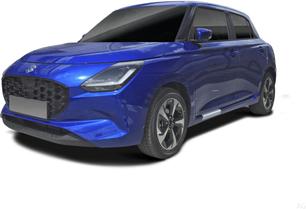
At first glance, the new one looks a lot like the old one. Short overhangs, long wheelbase, upright A-pillars, that signature 'floating' roof. This could be nothing else but a Swift.
Obviously, though, every single panel has changed, resulting in a stronger, quieter and more aerodynamic body.
Helping communicate this is a new and very definite crease line added to create a more-pronounced shoulder. The bonnet seems to be more clamshell-like and the nose is squarer, too. Indeed, everything about the overall styling seems to be more upright.
Debate is already raging in some circles. Is the new Swift too fussy? Too conservative? Has it lost the playful boldness of the proceeding version's gently-sculptured sides and hidden rear-door handles? Are the proportions slightly out now? Has the previous design integrity and oneness of vision been diluted? Does the 2017 predecessor look better?
Underneath, the platform is essentially the same, while overall dimensions are largely identical except for a 20mm stretch and 25mm roof lift. Length, width, height and wheelbase numbers 3860mm, 1735mm, 1520mm and 2450mm, respectively.
Happily, the aesthetic changes inside are likely to please rather than perplex, and even delight rather than divide opinion.
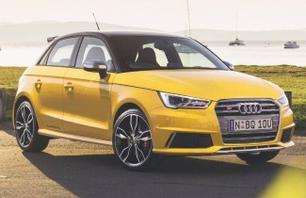
The A1 is so small it starts to strain Audi's design language. When you cram on the S-style bumpers and raccoon-eyed trim on the hatchback, it's starts to look a bit busy.
It isn't quite a shrink-wrapped A3 - Ingolstadt's designers know better than that - but it's full of Audi design cues, such as the strong, light-catching character lines, distinctive LED daytime running lights and fondness for big wheels.
Inside is along the themes of the A3, with what are becoming Audi's trademark; round eyeball air-con vents, the manual fold-down screen familiar to Q3 owners (but smaller) and a good clear dash. The handbrake jars slightly as it feels cheap to hold and wobbles a bit.
The S Sport seats are big and comfortable, and the top half of the backs are capped in plastic, which was colour-coded on our car. The rear passengers will certainly get an eyeful of whatever terrifying hue you've chosen, so choose wisely.
Despite the five doors, the back seats are occasionals, like the Mini the A1 is gunning for, and the boot is very small, but okay for shopping for couples or singles.
So. Why are there so few affordable city-sized superminis like the Swift?
Just 10 years ago, the Swift had at least 25 rivals under $25,000. Today that’s phonetically as well as literally down "t(w)o" "three" – namely, the ageing but still-surprisingly-spry Mazda2 and intriguing all-new MG 3, as well as Australia’s sole sub-$20K new car, Kia's darling Picanto.
Many of the Class of 2014 have since morphed into pint-sized crossover hatchbacks like Suzuki’s soon-to-be-discontinued Ignis, the Hyundai Venue and Kia Stonic. And if you must, there are also the cheerless MG ZS and ancient Mitsubishi ASX biggish-small SUVs – but they’re cheapo for a reason.
Unlike the latest Swift... which, from $24,490 drive-away, is more than reasonably cheap, since it introduces some electrification tech across the whole range, while still being around the same price as the old base GL.
This now makes the new Swift Australia’s cheapest 'hybrid'.
Granted, despite wearing the Hybrid badge on every grade, it’s just a mild hybrid system, but one that provides extra electrification to usefully boost performance and economy for the all-new powertrain and revised transmissions. More on all that later.
What else? The base Swift at last gains LED lights, telescopic as well as tilt steering adjustment and important driver-assist safety like Autonomous Emergency Braking (AEB), along with lane-support systems, adaptive cruise control and rear parking sensors.
Also included now are keyless entry/start, a 9.0-inch touchscreen as part of a new multimedia set-up, wireless for Apple CarPlay (but not for the Android Auto), a digital radio, heated mirrors, traffic sign recognition, auto high beams and an alarm.
And there's more. The entry-level Swift Hybrid is also class unique in offering a manual gearbox. Good on you, Suzuki.
Not for you? Don't worry, because the Hybrid auto that is expected to be the bestseller starts from $26,990, drive-away. For the record, that’s only about $1000 more than the equivalent old version but with all that extra gear to boot.
But, beware, the base-model Hybrid alone lacks a few items that may or may not have been standard in the outgoing Swift, such as a driver’s seat-height adjuster, leather-wrapped steering wheel, privacy glass, alloy wheels, front passenger vanity mirror, front-seat map pockets, multiple USB charging outlets and a spare wheel (though you can pay extra for one as the wheel-well remains).
All of the above, except the missing spare, are included in the new Hybrid Plus auto grade, from $28,490 drive-away, along with heated front seats and additional driver-assist tech like a blind-spot monitor. We’ll get into more detail in the Safety section below.
Finally, there’s the Hybrid GLX auto, with its wireless phone charger, folding exterior mirrors, steering wheel paddle shifters, climate control, glossy alloys and more from $29,490, drive-away.
Sadly, the terrific old GLX 'BoosterJet' three-cylinder turbo is no more, and there might not even be a new Swift Sport to continue the GTi hot-hatch legacy.
Still, Suzuki’s managed to keep the entire range under $30K drive-away, despite big changes inside and out. Let’s check those out.
Starting at $49,900, Audi S1 is by far the priciest of the small-hatch based hotties, at least until Mini's madcap JCW arrives. This price is just almost double that of VW stablemate's forthcoming 2015 Polo GTI.
Standard on the manual-and-five-door-only S1 is a ten speaker stereo, climate control, ambient lighting, remote central locking, cruise control, satnav, headlight washers, auto headlights with xenon low beams, partial leather seats, leather-bound steering wheel, auto wipers and rear parking sensors.
Our Misano Red ($990 option) came with two extra packs. The Quattro Exterior Package ($3990) adds bi-xenon headlights with red trim, red brake calipers, spoiler, quattro logos on rear doors (ahem!) and five-spoke 18-inch alloys that are part matt black, part polished.
The Quattro Interior Package ($2490) adds S Sport front seats with Nappa leather and red backrest capping with quattro logo (ugh), more nappa around the cabin with contrast stitching, flat bottom steering wheel and red rings on the air vents.
There's an S Performance Package that brings the best of these two packs together for $4990, saving about $1500 and the embarrassment of the quattro logos.
Our test car also had aluminium air vents ($220), black contrasting boot lid ($300) and black roof ($720).
The A1 is so small it starts to strain Audi's design language
The grand total is a sobering $58,610. There's a couple more options that'll easily pop you over $60,000.
Audi's MMI is dash-mounted in the A1 as there's no room on the narrow centre console. As ever, it works well and doesn't take much getting used to. The satnav is a bit grainy on the smaller screen but is otherwise a competent unit.
Sound is from a ten-speaker stereo and you can stream across Bluetooth or plug in a memory card. The sound was good but the system did take a while to find the phone whenever we came back to the car.
If there’s one area where Suzuki shines, that’s in making sweet little engines, and the new, chain-driven, 1197cc 1.2-litre mild hybrid three-cylinder petrol unit is no exception.
Now, on paper, 61kW at 5700rpm and 112Nm at 4500rpm may seem slightly lacking. A Mazda2 manages to make nearly 35 and 30 per cent more power and torque, respectively.
But the Swift's new 'ISG' integrated starter/generator/electric motor unit delivers an additional 2.3kW and 60Nm.
Combined with the hatchback's comparative lightness, it makes for a sufficient power-to-weight ratio of between 63 and 66kW per tonne.
Or, in other words, it provides some welcome extra low-down muscle.
Drive is naturally sent to the front wheels, via either a light-yet-positive shifting five-speed manual gearbox, or new CVT auto. Both have been heavily revised in their new roles serving the mild-hybrid powertrain.
This is where the action is. The S1's tiny body packs a 2.0-litre turbocharged four-cylinder producing 170kW and 370Nm of torque. The S1 will streak to 100km/h in 5.9 seconds thank to the traction aid of quattro all-wheel drive.
All Audi S1s come with a six-speed manual
Despite a pretty solid hammering during its week with us, including more time than we'd have liked in Sydney traffic, the stop-start function helped deliver a pretty reasonable 10.2L/100km, however that's a long way over claimed 7.1L/100km.
All Audi S1s come with a six-speed manual, so dual-clutch haters can save the whining. The only downside from not having a self-shifter is the ECU can't deliver the boy racer farts, parps and crackles of the other S cars.
No Swift since 2004’s new-millennium redesign has been anything less than fun to punt around. A focus on driving pleasure and superior dynamics has helped make each version a cut-above most rivals.
Losing the smooth old 1.2-litre four-cylinder engine in the name of low consumption and emissions is a noble move. But how does this translate out in the real world, especially with a Swift fan behind the wheel?
It's mostly great, actually.
Losing a cylinder results in a slightly less creamy power delivery, especially as it’s accompanied by a distinctive three-cylinder exhaust-note thrum. But that’s still in keeping with the Swift’s endearingly sporty character.
Better still, even with all the examples we tested showing barely more than delivery mileage on the odometer, there seems to be more than enough grunt to please driving enthusiasts.
While not wanting to tax engines that weren’t even run-in yet, the charming revvy eagerness and instant throttle response remains, along with a discernible extra kick when accelerating away from standstill.
Even being so new, our Swifts proved to be lively, lusty and surprisingly rapid performers. We can’t wait to test run-in examples!
The five-speed manual is deliciously well-oiled and precise, immersing the driver into the Swift experience on another level compared to the CVT auto, which still manages to impress by responding quickly and effortlessly, without feeling laggy or droney. A lot like the old version.
Suzuki is making a lot of noise over how agile yet comfortable the newcomer’s handling and ride qualities are, as a result of improved rigidity and noise-dampening measures.
The Swift’s MacPherson-style front struts and torsion beam rear suspension systems have been revised with stronger and quieter mounts for better performance, while the electric steering has been retuned for greater feel and linearity.
The result? Even our limited time behind the wheel revealed tactile and precise steering, composed handling and extraordinary isolation from the road below for a car barely weighing 950kg (at most).
Combined with the nuanced driver-assist safety tech that rarely interrupted the fun, the latest Swift is a cheerfully animated, nimble and rewarding experience... and one that stands out all the more for evolving while so many other like-minded rivals like the Ford Fiesta have sadly fallen away.
Bravo, Suzuki. Generation Number Six remains the enthusiast driver’s choice, and a hybrid bargain to boot.
If you're buying the S1 as a comfortable urban runabout with a cool badge, you're half right. While the seating for front passengers is certainly supportive, the hard suspension tune will ensure you're well aware of road surface imperfections.
The S1 is a rocket
Thankfully, what it missed out on in the ride department it makes up for in every other way - the S1 is a rocket. The 2.0-litre turbo jammed under the bonnet has almost no lag and is paired with a slick six-speed manual that is terrific fun to manhandle through the gears.
The way the S1 picks up speed when it's on boost is addictive and licence-endangering. A flattened accelerator in second or third will obliterate just about anything this side of $100,000 and you'll be having more fun in this than big brother S3 because the chassis is more adjustable and there's a bit more life.
You can hear the turbo sing to accompany the bassy exhaust growl. Hit the massive brakes hard and the car remains stable even over rutted roads. Turning the wheel brings almost-instant turn-in, mashing the throttle again a fun little wriggle. It's superb.
It's tremendous fun point-to-point on a twisty road
You'll have to be a bit patient with the throttle to get the wriggle, though - give it too much too early and it will want to push wide, the quattro system shuffling power around to try and quell understeer while the electronic diff fiddles with the braking system to do the same thing. It gets there in the end, but you're better off meting out the power with your right foot for maximum rewards.
It's tremendous fun point-to-point on a twisty road - despite being a bit heavy for its size (1415kg), it's as chuckable as the next best thing, the Fiesta ST.
The latest, sixth-generation Swift has yet to be crash-tested by ANCAP.
Even the base Hybrid now includes driver-assist safety like AEB that includes night and day pedestrian and cyclist detection as standard, along with lane-departure warning, lane-keep assist, 'Weaving Alert' (a driver-drowsiness warning prompt), rear parking sensors, traffic-sign recognition, a reverse camera, automatic high beams and adaptive cruise control.
You’ll need to go Hybrid Plus for rear-cross traffic alert and blind-spot warning tech, though.
Note that Suzuki does not supply information about the AEB and other driver-assist tech’s operating parameters.
Also fitted are six airbags (dual front, dual front side and curtain), electronic stability control, anti-lock brakes with electronic brake-force distribution and brake-assist.
The rear seats also contain a trio of child-seat tether anchorages, as well as an outboard pair of ISOFIX attachments.
Six airbags, stability and traction control, ABS, brake assist and distribution all add up to a five star ANCAP rating.