What's the difference?
The sixth-generation of Subaru’s Forester has landed and while the new hybrid versions constitute the biggest news of this batch, the petrol-only variants should not be ignored.
The five-seat mid-size SUV has a 2.5-litre four-cylinder 'boxer' engine, Subaru’s well-regarded 'symmetrical all-wheel drive' system and some new changes inside and out.
So, does the top-spec Touring offer the best value-for-money in the petrol Forester line-up?
Read on.
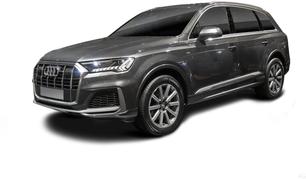
The Audi Q7 has come in for its second facelift as it enters its ninth year of production while the younger Q8 is in for its first refresh.
But these two aren't like the Mitsubishi ASX and Eclipse Cross pair; Audi's MLB underpinnings were cutting edge at their launch 2015 and remain stand-out in the class with advanced suspension and chassis tech, connectivity and refinement.
A host of small visual and performance tweaks aim to make the range-topping SQ7 we're driving even better. But should you make the sensible seven-seat decision or go a little rogue and choose the sloping-roofed SQ8?
The MY26 Subaru Forester packs plenty of punch in terms of standard features, a roomy and functional interior and overall driveability. Sure, it’s not the most exciting vehicle to drive on- or off-road but to get stuck on that is to miss the point entirely. This is a decent all-rounder with a solid background and an AWD system that long ago set the gold standard for vehicles of this type.
In a tough mid-size SUV market segment aimed more at those intent on driving through car parks rather than adventuring through national parks, the Forester offers greater versatility than most and should not be ignored.
There are newer options than the current Audi SQ7 and SQ8, including those which use the same platform, but don't write these luxury large SUVs off just yet.
It's a rare thing that a vehicle costing $200,000 has an air of pragmatism about it, but the SQ7 does. Its sensible leather upholstery, decent practicality, towing capability and near-excess of interior space make it a great family wagon.
As a counterpoint, the sharper looking SQ8 has minimal trade-off in comfort and interior room (at least for five) and is the kind of statement piece you'd expect for the price — especially in one of its loud paint colours.
Whichever way you leap, it's true that while the SQ7 and SQ8 are ageing, they are doing so gracefully and remain a superb option in this segment.
Note: CarsGuide attended this event as a guest of the manufacturer, with accommodation and meals provided.
This Forester is 4655mm long (with a 2670mm wheelbase), 1830mm wide and 1730mm high.
The new generation retains more than enough of the previous Forester – blocky profile included – to remain clearly recognisable.
Traditionalists may chafe at the slicker, more citified appearance of this Forester over previous generations but the overall package is inoffensive enough to not elicit any howls of outrage from passers-by on the street.
The Forester’s interior maintains a similar cabin look and feel as before but with a 11.6-inch portrait-oriented multimedia touchscreen dominating up front, a mix of physical and on-screen buttons, as well as soft-touch surfaces and durable plastics.
If you're getting an SQ7, you'll want to tick the 'Black Pack' box because otherwise there are a lot of high-gloss silver details, especially at the rear that don't suit this tall and slightly awkward SUV.
The SQ8 is more convincing, appearing wider on the road with its new 'singleframe' grille design seemingly sucking it even closer to the tarmac like some kind of overgrown Audi RS3.
Both get an attractive new 2D design for the Audi rings and L-shaped grille details. These aid the SQ7's front end which is more muscular and purposeful than before.
The attractive lights have moved higher up the front end for enhanced presence, too. You get Matrix LEDs as standard but these candles are the hardcore HD Matrix items that feature laser light for further even longer light throw at night. They are simply awesome.
Fresh 22-inch alloy wheels and minor changes to badges finish off the exterior treatment for both cars.
The SQ8's bold specification — finished here in 'Sakhir Gold' — sets it apart from other SUVs as the metallic gold paint shimmers in the sunlight. The SQ8 is also available with whopping great 23-inch alloy wheels that you see here.
Inside, both cars share a similar architecture with 10.1-inch touchscreen for the multimedia and an 8.6-inch item below for heating and ventilation settings.
The SQ7 is a great example of a design ageing without dating, its confident horizontal lines and well-proportioned cabin features are as attractive as they were at launch, if less impressive than the related VW Touareg's whopping 15-inch screen or the minimalist Range Rover Sport.
Adding to the feeling of quality is that signature Audi smell — a combination of leather and the Sensory Package's perfume, no doubt. The SQ7 keeps a round-bottom steering wheel which remains one of the best in the business, it's just the right size and diameter trimmed with dimpled leather.
Final flourishes include the optional contrast red stitching and seatbelts as well as eye-catching turned aluminium trims.
The Forester is quite roomy for a mid-size SUV and this is the top-spec variant so there’s leather everywhere.
The interior layout is neat and tidy and lands firmly on the correct side of being practical and familiar, with all controls easy to locate and operate.
The touchscreen offers mostly simple intuitive functionality with infrequent need to cycle through numerous menus and sub-menus to access what you want.
The aforementioned mix of physical and on-screen buttons, as well as soft-touch surfaces and durable plastic are welcome here because, you know... real life.
The front seats offer ample support and the driver is able to dial-in their preferred position via power controls on the eight-way power-adjustable seat (with dual memory). The front passenger has an eight-way power-adjustable seat. Both seats are heated and ventilated.
The 60/40 split folding second-row seats aren’t too shabby either, in terms of comfort and amenities, with a fold-down arm-rest with cupholders and directional air vents etc.
Cargo volume is 496 litres (with rear seat in use) and 1174 litres (with the rear seat down, 1667 litres to ceiling.
The tailgate is powered and hands-free with a kick sensor (apparently). But I never tried that, instead opting for the tailgate-mounted button to open and close it.
The difference between aged and dated is best summed up, though, by the excellent usability of the SQ7's cabin controls.
The separate screen for ventilation, for example, makes it simple to adjust seat or vent temperatures without interrupting the main screen's navigation instruction or other media systems.
When using wireless Apple CarPlay and Android Auto the top screen is entirely devoted to the other software with no remnants of Audi's system. It runs smoothly at all times.
Switching back to Audi's system, and there's a lack of contrast to the dark main screen and navigation. The touch targets are huge, though, and the satisfying click of the haptic feedback is welcome when driving. It seems expensive and natural in a world of feel-free touch operation.
Audi's 12.3-inch digital driver's display remains one of the best in the business. Legible and customisable with bespoke sport modes and the ability to show a full-size map, if you wish.
You can keeping devices charged with a wireless pad or there are two USB-C ports under the cushy centre armrest. A 12-volt socket is also available, and two more charge points are found in the back.
If there's one criticism in the front, it's the fairly limited storage. The door bins are big enough for a 600mL bottle but not much more and beneath the armrest the tray is shallow. The only other storage spots are the two cupholders which are the perfect size for a small take-away coffee.
While on the critiques, the drive mode selector is awkwardly hidden near the passenger below the touchscreen.
The seats are amazingly comfortable with ample support and power adjust for everything, including under-thigh length and bolsters. Several massage programs can be accessed through the menus, too.
Continuing the comfortable seating, the SQ7's second row is capacious with plenty of head, leg and toe room even for those over 180cm.
The bench slides forwards and backwards manually and the backrest is adjustable. A fold-down armrest contains two more small cupholders, and there are two separate climate zones, two vents and heated outboard seats.
However, folding and unfolding the second row is a bit complex and quite heavy work with a strange mix between electric and manual movement to access the third row — a Nissan Pathfinder does this better.
Once back there, the third row is passable for adults providing the second row is slid forward.
There are ISOFIX ports and top tether anchors for both power-deployed third row seats, so you can fit up to five children's seats in an SQ7.
The SQ8's second row is still generous but you do lose a small amount of headroom owing to the sloping roof design.
You also sacrifice some boot space, at 608L with five seats and 1755L with the second row folded. That's still a lot but the spacious SQ7's 793L/1921L figures are even better and 295L with all seven seats up is respectable. Both have sturdy 40/20/40 split-fold rear seats.
As the vehicles are equipped with air suspension, owners can raise or lower the boot floor to make it easier to load bulky objects if needed. A power tailgate is standard on both models.
A retractable luggage cover, netted pocket, boot lights and some underfloor storage complete the boot, however both cars lack a spare tyre of any sort. A tyre inflation kit is included.
The Forester AWD Touring (petrol) is priced at $50,990 MLP while its hybrid sibling is $55,990.
Standard features include an 11.6-inch multimedia touchscreen (with wireless Android Auto and Apple CarPlay), 18-inch alloy wheels, auto LED headlights, dual-zone climate, heated front seats and electric folding rear seats as well as a wireless phone charger.
Top-grade additions include a sunroof, low-profile roof rails, a digital driver display, leather-accented seats, a leather auto-shifter, ventilated front seats and a 10-speaker Harman Kardon audio system.
It also has power-adjustable front seats, sat-nav, auto-dipping and folding door mirrors and a hands-free tailgate.
Exterior paint choices include 'Crystal White Pearl', 'Ice Silver Metallic', 'Magnetite Grey Metallic', 'Crystal Black Silica', 'Crimson Red Pearl', 'Brilliant Bronze Metallic', 'Daybreak Blue Pearl', 'Sapphire Blue Pearl', 'Cashmere Gold Opal', 'Autumn Green Metallic' and 'River Rock Pearl'.
Audi's range of Q7 and Q8 large SUVs starts at $117,284 for the 45TDI and there's a plug-in hybrid version from $152,284, both before on-road costs. The flagship SQ7 and SQ8 are $174,815 and $178,815, respectively.
The pair is a rare example of a discounted new car, albeit by a slim $585, so you'd expect these behemoths to offer comprehensive standard specification.
Features such as 22-inch alloy wheels, ambient interior lighting, soft close doors, power-adjust heated and ventilated seats, quad-zone climate control, 'Valcona' leather upholstery, a 17-speaker Bang & Olufsen sound system, full-length sunroof, navigation and a head-up display are included.
Naturally, options are available in packs and standalone choices with all vehicles we drove featuring at least one of the expensive box-ticks.
The 'Sensory Pack' seems a logical choice, bundling a 23-speaker, 1920-watt sound system with raising tweeters, 'Dinamica' headlining, massage seats, heated rear seats, Audi's air ioniser and interior perfume, extended leather upholstery and rear sun shades for $14,400.
Another major option is the $10,900 'Dynamic Package' with active roll stabilisation and Quattro Sport rear differential.
Stand-out stand-alone options include HD Matrix LED and Laser headlights combined with customisable OLED rear signatures ($3950) and the black exterior styling packages ($1850, or $2550 for the Plus version).
The as-tested price for the tow pack-equipped ($1500) 'Daytona Grey' car we spent most time in was rather high at $209,215 before on-road costs — that's over $30K worth of extras.
The Forester has the line-up’s 2.5-litre four-cylinder naturally aspirated boxer engine (producing 136kW at 5800rpm and 247Nm at 3700rpm) matched to a constantly variable transmission (CVT), which some people detest, and some people couldn’t give a rat’s whether it’s there or not.
Also onboard is Subaru’s all-wheel drive system, driving modes (including 'Normal', 'Deep snow/Mud', and 'Snow/Dirt') and 'X-Mode' “that constantly monitors the traction available to each wheel and centralises the control of key components including the engine, transmission, drivetrain and brakes to help manage slippery conditions”, according to Subaru.
The SQ7 and SQ8 both use a 4.0-litre twin-turbo 'hot vee' V8 petrol after the diesel SQ7 was abandoned in mid-2022.
It is the same engine you'll find in just about every application of this MLB platform, including the Porsche Cayenne, Bentley Bentayga and Lamborghini Urus — though it makes more power elsewhere.
In Audi's two medium-sporty SUVs it produces 373kW at 5500rpm and 770Nm between 2000-4000rpm.
In practice, it's a swelling, punchy engine without much top-end sparkle — though 4.1 seconds to 100km/h is nothing to scoff at.
The V8 also produces a rather splendid soundtrack, striking the right balance between Detroit burble and motorsport bark for this application.
An eight-speed torque converter auto transmission has been retuned for improved shift logic and it remains buttery smooth. It's pleasing enough just manoeuvring slowly around a car park, where you can feel just well calibrated the long travel throttle and transmission logic are.
Official fuel consumption on the combined (urban/extra-urban) cycle for the Forester is 7.9L/100km and it uses 91RON 'standard' unleaded petrol at a minimum.
On this test, I recorded 8.1L/100km. But fuel consumption was as low as a dash-indicated 1.7L/100km while driving the Forester with adaptive cruise control engaged.
The Forester has a 63-litre fuel tank, so, going by our on-test fuel-use figures you could reasonably expect a driving range of almost 780km from a full tank. However, as with any vehicle, once you’ve loaded the Forester with any real-world burdens (e.g kids, dogs, camping gear, etc) you’ll soon see the fuel consumption increase.
With 2340kg to heave around, not even the 48-volt mild hybrid system can save the SQ7's fuel consumption — it's a thirsty beast.
The rated ADR combined cycle (urban, extra-urban) figure is 11.8L/100km and indulging in the ample performance resulted in 16.5L/100km on the trip computer. The SQ8 was much the same.
The SQ7 is certified to tow up to 3500kg (braked), equal to a Toyota LandCruiser or Nissan Patrol.
A fairly large 85L tank gives the SQ7 a theoretical driving range of around 720km from a fill-up. Naturally, 98 octane unleaded is required.
The Forester feels comfortable and composed on sealed surfaces and offers some degree of dynamism to the driving experience – so in line with previous generations.
It feels more refined, sharper to steer and more responsive than before. There’s ample visibility to the front but a substantial B pillar obscures the driver’s vision back over their right shoulder.
The Boxer engine and CVT work well together, power and torque outputs are more than adequate in this package, and that much-maligned transmission is not intrusive if the Forester is driven with care and common sense.
However, acceleration from a full stop is sluggish.
The suspension set-up – MacPherson struts up front and double wishbones at the rear – yields a firm but not jarring sense of ride and handling.
The 1662kg Forester proved nimble to manoeuvre around the Big Smoke, the suburbs and in the bush (more about that soon) with a neat 10.8m turning circle.
All-wheel drive vehicles are capable of tackling off-road adventures in their own right but, for safety’s sake, AWD drivers should avoid anything beyond well-maintained dirt tracks in dry weather. AWD cars are designed for use on bitumen roads with some dirt or light-duty off-road use.
And so it was with our test of this Forester. On-test off-road terrain equalled firm-packed sand and gravel/dirt bush tracks in dry weather, although we did drive through one shin-deep mudhole with no trouble.
The Forester has a listed 220mm of ground clearance, the suspension held up well over a brief stint on mild corrugations and Subaru AWD proved more than up to the task when things became a little trickier, providing improved grip and traction in slippery conditions that demanded to be driven at very low speeds.
If push comes to shove, it’s capable of more than light off-roading, but the Forester’s ground clearance and off-road angles ultimately limit its off-road capabilities.
The Forester’s 'all season' tyres – Falken Ziex Z001A A/S (225/55 R18 98V) – are fine for light to moderate off-roading but anything more difficult than that and you’ll need to get a set of more aggressive all-terrain tyres. It does have a full-sized spare onboard.
It has maximum towing capacities of 750kg (unbraked trailer), 1800kg (braked) and a maximum towball download of 180kg. GVM is 2223kg; GCM is 4023kg.
Some niggles: The driver awareness system is annoyingly over-reactive.
Our drive loop started in South-East Sydney where the SQ7's burbly V8 and air suspension fitted right in, easily soaking up the worst of the concrete expansion joints and sharp-edged potholes.
It is a joy to waft around in the refined SQ7 with its remarkably good vision out the front and back (with 360-degree cameras to help elsewhere). Standard rear-wheel steer allows the back tyres to rotate up to 5.0 degrees, giving the 5072mm long SQ7 a better turning circle (12.5m) than a Q3 small SUV.
Its driven home further by the excellent drive mode customisation. Along with the standard programs, you can set an 'Individual' mode up with various selections for the suspension, steering, powertrain response and exhaust noise.
Following the SQ7, our time in the SQ8 took in some more twisting roads and the combination of 23-inch alloys with firmer suspension settings meant that, even in 'Comfort', 'Auto' or 'Balanced' drive modes, the coupe-styled model had a busier ride.
Both SQ7 and SQ8 featured 'Sport' adaptive air suspension, sitting 15mm lower than normal with the ability to drop the ride height up to 40mm in 'Dynamic' mode or raise it 50mm in lift mode to get out of sticky situations.
Audi chose not to specify the Dynamic pack on the SQ8, though, and the difference is noticeable compared to the SQ7. The coupe SUV rolls a little more in hard cornering and doesn't engage the rear end in quite the same way.
Back in the SQ7, turn in may feel a little less sharp owing to the taller height but the active roll stabilisation and Quattro electronically-controlled limited-slip differential splitting power between the two rear wheels makes for a more confident vehicle with better punch out of corners.
Grip is prodigious and the SQ7 is always in control with 285/35R22 Bridgestone Turanza T005 tyres.
A 2.4-turn lock-to-lock steering system is well-judged, remaining light in Comfort but adding enough weight and precision in Dynamic.
The brakes — 400mm front rotors clamped by six-piston calipers with optional ceramics — are reassuring and feel Autobahn ready.
The Audi SQ7 with Dynamic Pack is like an Olympic swimmer that's put on some kilos and had a few kids but can still gap his teenage son in a 50-metre freestyle race.
This is perhaps the perfect expression of Audi's 'S' models USPs, being totally normal when pottering despite huge reserves of talent.
The Forester has the maximum five-star ANCAP safety rating from testing in 2024.
It has nine airbags (dual front, dual front side, dual curtain, driver’s knee, far side and front passenger seat cushion), adaptive cruise control, emergency lane-keep and centring (with departure warnings), pre-collision braking, auto emergency steering, a 360-degree view monitor system, and a driver monitoring system which includes a ‘safe stop’ feature that – if the vehicle detects that the driver is non-responsive – will bring the vehicle to a gradual, you guessed it, safe stop.
The Audi SQ7 is currently unrated by local ANCAP safety authority but Euro NCAP awarded a Q7 50TDI a maximum five stars in 2019.
It features eight airbags, adaptive cruise control, lane-keep assist, blind-spot monitoring, rear cross-traffic alert, surround-view monitor and exit-warning system to stop occupants dooring cyclists.
The adaptive cruise control is smooth and natural, although we found the lane-keep and lane-trace programs to be a little overbearing. Both can be easily disabled by holding the button at the end of the indicator stalk for about five seconds.
The MY26 Subaru range is covered by a five-year/unlimited kilometre warranty, five-year/75,000km capped price servicing, and 12 months roadside assistance.
A service is required every 12 months or 15,000km, whichever occurs soonest. After your free “1 Month Health Check and Chat”, cost per service is $347.95 (at the 15,000km/12 month mark), $520.45 (30,000km or 24 months), $393.10 (45,000km or 36 months), $679.30 (60,000km or 48 months) and $358.20 (75,000km or 60 months). Average over the five years is $459.80.
Subaru Australia has more than 140 dealerships across the country with a decent spread over metro and regional areas. Foresters may be serviced at those dealers or by approved mechanics.
Audi recommends SQ7 and SQ8 owners bring their car in for a service every 12 months or 15,000km.
Service pricing is not cheap, with a five-year package costing $4600 for either model. For reference a basic service plan for a BMW X5 costs $3450 for five years.
Audi has moved to a five-year, unlimited kilometre warranty with owners able to extend that (for a fee) up to nine years with Audi Advantage. An extra two years of warranty and scheduled servicing costs $4360 for the SQ7 and $4160 for SQ8.
Additionally, customers get access to Audi's loyalty programs with event invitations, ambassador experiences and discounts offers from select partner companies.