What's the difference?
Are you the kind of person who doesn’t mind standing out? You like to go against the flow?
Well, if so, you might be exactly the kind of person who buys the all-new Renault Symbioz, the French brand’s new small SUV.
“It stands out in a sea of same-same SUVs,” is how Renault Australia General Manager Glen Sealey sums up the Symbioz.
The problem for Renault, is that it is a very big sea it finds itself in the middle of. The small SUV segment is the second biggest part of the local new car market in 2026, behind only mid-size SUVs and ahead of utes.
And it is full of well-known and popular models including the best-selling Chery Tiggo 4 Pro, Hyundai Kona, GWM Haval Jolion, Jaecoo J5, Mazda CX-30, MG ZS, Toyota Corolla Cross and the list goes on.
Certainly from a looks perspective the Symbioz stands out. But it also stands out for other reasons, such as being a bit more expensive than many of its rivals and because it is the last French brand left in the Australian market following the decline of Citroen and Peugeot.
Sealey said he expects the Symbioz to be the best-selling Renault model in Australia, and it arrives in the middle of a major product overhaul that will see six new or updated models arrive in the span of 18 months.
But does the Symbioz really have what it takes to stand out from the pack and win over those not afraid to try something different, or will it be lost in a vast sea of SUVs?
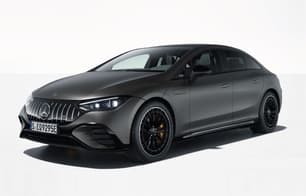
Mercedes-Benz has released an all-electric sedan which is the equivalent of its iconic E-Class.
It has the looks and technology to rival any EV on the market but what about the practicality for a family? Will this be the luxury electric sedan families have been hoping for?
I've been driving it for a week with my little family of three to find out.
There’s certainly a lot to like about the Renault Symbioz. It may cost more than its direct competition, but it looks, feels and drives with an edge on many of its rivals. And the integration of the Google system will no doubt appeal to some, especially a younger audience which craves the latest tech.
But the extra cost coupled with the image problem French cars have had in Australia - justified or not - will make it a hard sell. The small SUV market is dominated by the big name brands and cut-price models - and the Symbioz is neither.
Renault Australia has no ambition for this to out-sell the Tiggo 4 Pro and Kona, but even attracting modest sales in such a highly competitive segment will be a hard slog.
If you’re willing to make an unconventional choice, though, you will likely enjoy your time with this little French alternative.
Note: CarsGuide attended this event as a guest of the manufacturer, with accommodation and meals provided.
The Mercedes-Benz EQE350 4Matic is an electric sedan that will comfortably house your family. My son really liked this one, the ambient lighting in particular!
It has enough power to satisfy the drivers out there and a driving range that will make you feel at ease. But the boot is small and this car will suit families whose kids are out of the pram stage best. I really like the safety and standard features on the EQE but the ongoing costs are a bit expensive for an EV.
The Symbioz effectively replaces the Captur in the local range and brings with it the French firm’s latest design language; which debuted on the recently launched Scenic.
Certainly, compared to some of the more conservative and simple models in the small SUV contest the Renault stands out. It has the look and feel you expect from a European car, on the outside and in the cabin.
One of the reasons for this is Renault Australia is offering seven colours, but only Flame Red is standard rather than the typical white and the other more muted hues cost an additional $900.
In terms of its size and where it fits into Renault’s slightly crowded SUV line-up, the Symbioz is 4412mm long, while the all-electric Scenic E-Tech is 4470mm, the more rugged Duster is 4345mm and the Megane E-Tech is 4200mm. So they’re all quite close, but thanks to unique designs and powertrains (and the fact the Duster isn’t designed to be a Renault), they fit together to form a cohesive line-up for you to choose from.
Love it or leave it, the swoopy design of the EQE sedan is decidedly modern with a shiny black grille that features a repeated Mercedes-Benz star motif and the aerodynamic covers on the 20-inch alloy wheels.
The nose is snubby and dips down too low for it to look sexy but the rear earns some design points with its elegant proportions, 3D ‘helix’ LED lights and cute spoiler.
The chrome accents around the windows and the illuminated flush door handles add some pizzazz, too.
I’m not a massive fan of its exterior looks but the interior is gorgeous! The dashboard features an 12.8-inch touchscreen multimedia system and a 12.3-inch digital instrument panel that pull your focus with their crystal-clear graphics but they need to, because the dashboard has a whole lotta empty space which looks a tad boring.
The side air vents are styled like jet turbines but are a little finicky to manoeuvre.
The black suede-like headliner creates a plush aesthetic but when you open the panoramic sunroof, the cabin is downright airy.
The door panels, which double as a grab handle, house the window and side mirror controls and its super handy to have the seat-configurator and memory functions on the door itself, rather than the side of the seat. This positioning makes them much easier to see!
Mercedes has added LED ambient-strip lighting around a lot of the interior, including the front seats, which has a massive wow factor at night time.
The ambient lighting can be adjusted up to 64-ways and also features a dynamic element where the lights pulse (under certain selections) when you accelerate.
There are two elements that really stand out inside the Symbioz when it comes to practicality and technology, and how they are integrated.
The first element is that Renault has partnered with Google and this new model features the latest Google Automotive Services (GAS) which includes integrated Google Maps as well as access to the Google Play Store for downloading apps, but does so much more. Google Assistant is offered by default but you can also upgrade (via an over-the-air update) to Gemini, the tech giant’s artificial intelligence (AI).
This means with a simple ‘Hey Google’ voice command you can search for not only an address but anything you might need when you’re behind the wheel. So, if you are driving and want to stop for a coffee, you can ask Google Assistant or Gemini to find you a suitable spot to stop.
We were able to sample both systems and there is a clear difference between the two, with Gemini able to provide more detailed answers. But you have the freedom to choose if you want AI in your car or not, and can simply decline to update and stick with Assistant.
The second stand out feature is the amount of physical switchgear used throughout. Despite the switch to Google, Renault has stuck with physical controls for all the key functions - climate control, stereo, etc - which adds to the cost but makes for a much easier and safer driving experience.
While it may be a small SUV in size, Renault’s designers have created a surprisingly spacious and well-considered interior.
Up the front there are plenty of small item storage spaces, with an emphasis on small. But what they lack in size they make up for in quantity. There is a small ledge ahead of the stubby gear selector, with the wireless charging pad hidden underneath it. There are two cupholders and a small lidded console box as well, plus small door pockets.
In terms of space for people, up front the seats are comfortable and roomy, while in the rear the back of the driver and passenger seats have been heavily sculpted out to create a good amount of kneeroom.
As for the boot, Renault claims it is one of the best in the segment thanks to the back seats being on a slider, which allows you to trade-off rear passenger space for more cargo capacity. It means the mild hybrid has between 563-695L depending on the rear seat position, while the full hybrid is smaller, between 460-592L; with the difference attributed to the different position of the spare tyre.
The fact both models include a temporary spare tyre is notable in itself, as it’s something increasingly rare in this segment and very much a welcome addition in Australian conditions.
Mercedes uses the term ‘saloon’ for its sedans and this term highlights the space each passenger will enjoy in the EQE sedan! There is plenty of head and legroom up front and you don’t feel like you’re on top of your co-pilot, either.
The electric front seats are comfortable with their adjustable lumbar control and extendable under-thigh support. The kinetic function on both also make longer journeys an absolute pleasure.
The rear seats are well-padded and you get limo-like legroom but the swoopy roofline does cut into the headspace. I’m comfortable enough with my 168cm (5'6") height but someone with a few inches over six-foot may not be.
You’re spoiled for choice when it comes to individual storage options with large middle and centre consoles, the latter can be made even larger because the two cupholders are retractable.
There is a massive shelf underneath them that has a handy elastic strap for larger items, like a handbag. The glove box is on the shallow side but both doors have a drink bottle holder and storage bin.
In the rear, individual storage is also decent with two map pockets, two retractable cupholders in the fold-down armrest, as well as a drink bottle holder and storage bin in each door.
The other amenities in the rear are good with a couple of reading lights and directional air vents. I would have preferred to have seen climate control, too, but there’s enough here to satisfy.
The technology looks high-end but is relatively simple to operate once you get used to the Mercedes-Benz operating system.
The touchscreen multimedia screen has haptic feedback, which just means it vibrates when you touch it, and built-in satellite navigation with an augmented reality feature.
The digital instrument panel is customisable and the coloured head-up display is easy to see.
It is simple to connect to the wireless Apple CarPlay and there is also wired Android Auto.
Charging options are fantastic throughout the car with four USB-C ports and a wireless charging pad to choose from up front.
However, it’s annoying to use the charging pad if you’re also using the cupholders as its awkward to try and get a phone in and out of the housing. In the rear there are another two USB-C ports.
For the class, the boot isn’t massive at 430L and the wheels do cut into the width but it’s been big enough for my shopping errands.
You get a tyre puncture repair kit in the EQE sedan and I like the way you can electrically fold the rear seats if you need extra storage space. Having the hands-free powered boot lid is very convenient.
There are three variants of Symbioz available from launch, with two different powertrains to choose from - the Techno with a mild hybrid and conventional hybrid available in either the Techno or Esprit Alpine trim.
The Techno mild hybrid kicks off the range at $36,990, plus on-road costs, then the Techno hybrid starts at $42,990 and the Esprit Alpine hybrid caps the line-up at $45,990.
That positions the Symbioz roughly $5000 more than its main rivals in the small SUV segment, the Hyundai Kona and Toyota Corolla Cross, which both start at around $37,000 for their entry-level full hybrids.
However, that means it is at the more premium end of the market, well above the likes of the Chery Tiggo 4 Pro, Jaecoo J5 and MG ZS, which all start well below $30,000.
The most direct rivals to the Symbioz are the slightly more premium options, such as the Honda HR-V (from $32,990) and Mazda CX-30 (from $34,360), so against those the price comparison is better.
They come fairly well-equipped for the asking price, featuring 18-inch alloy wheels for the Techno models and 19-inch rims for Esprit Alpine, plus a wireless smartphone charger, heated steering wheel, automatic climate control and auto headlights. There’s also a 10.25-inch digital driver display and 10.4-inch central multimedia touchscreen connected to a six-speaker sound system, with Apple CarPlay and Android Auto included, as well as Google Automotive Services.
The Esprit Alpine adds a nine-speaker Harman Kardon sound system, performance seats that are heated and electronically adjustable, red white and blue stitching on the steering wheel plus a power tailgate and chrome exterior trim.
There are three models for the EQE sedan and our test model is the mid-spec 350 4Matic grade, which will cost you $144,900, before on-road costs. It manages to slide into being the most affordable compared to its rivals and it has a tonne of features.
Front occupants enjoy creature comforts like heated and electrically-adjustable front seats that feature four-way lumbar support, extendable under-thigh support, as well as, three-position memory function. They also have a ‘kinetic’ function which I liken to gentle stretching.
Premium items include a panoramic sunroof, black headliner, dual-zone climate control, AMG floor mats, 360-degree view camera system, Burmester 3D sound system, hands-free powered boot lid and electrically folding rear seats (access to the controls are via the boot lid).
The built-in satellite navigation also features an augmented reality feature, which shows dynamic directions overlaid on a video feed. Some might call this gimmicky but it does help navigating a city with all of the little laneways!
On the exterior you get 20-inch alloy wheels with aerodynamic covers and a glossy black grille that features a repeated Mercedes-Benz star motif.
There are a few cool lighting features on the EQE like the Mercedes-Benz logo projected from the side mirrors, a 64-way coloured ambient lighting system and something that Mercedes calls ‘Digital Light’ – which are LED HD adaptive projector-like headlights.
As mentioned earlier, Renault is offering two powertrains - a mild hybrid and a conventional hybrid. Remarkably, despite this being 2026, this is the first time Renault has ever offered a hybrid powertrain in Australia.
It’s a decent hybrid option too, making a respectable 116kW and 265Nm from its 1.8-litre four-cylinder petrol engine and electric motor.
Meanwhile, the mild hybrid features a 1.3-litre four-cylinder petrol engine and makes a more modest 104kW and 245Nm.
The 350 4Matic is an all-wheel drive with two electric motors that have a combined power output of 215kW and a massive 765Nm of torque. The lithium-ion battery has a large 90.5kWh capacity.
The 350 4Matic has a 0-100km/h sprint time of only 6.3-seconds but it feels gusty and you get a tummy-sucking sensation when you have to put your foot down.
Renault Australia management was keen to push the convenience of a traditional hybrid, which requires no outside charging and is therefore easier to use - even if that means it can’t match the efficiency of a plug-in hybrid.
According to the company, the so-called ‘multimodal hybrid gearbox’ is the key to its efficiency. On paper it’s a four-speed automatic, but it’s integrated with the engine, motor, starter and generator, which means the engine and electric motor can both drive the front-wheels, while also helping the Symbioz return a claimed 4.7L/100km.
The battery is quite small at just 1.4kWh battery, but there is an ‘E-Save’ button that allows you to prioritise the petrol engine if you want to hold on the silent power for later.
With a 48-litre fuel tank and the 4.7L return, the Symbioz has a theoretical driving range of more than 1000km on a single fill.
As for the mild hybrid, it gets a more conventional seven-speed dual-clutch transmission and has a claimed fuel economy rating of 6.4L/100km.
It has the same fuel tank, so its theoretical range is 750km, which is still a good return but obviously not as attention grabbing as the full hybrid.
The 350 4Matic has an official energy consumption figure of 17.6kWh. My average sat round 16.9kWh and that is after a lot of open road driving. Happy with that.
With a driving range of up to 590km, I didn’t feet any range anxiety!
The charging port is a Type 2 CCS which will accept up to 170kW on DC, which means you can charge it from 10 - 80 per cent in 33 minutes. On an 11kW system, you can see that time jump to just under 10hrs.
If you’re going to pay a premium for your non-conformist small SUV, one of the perks should be an above-average driving experience and thankfully the Symbioz delivers in this regard.
It’s not that it channels the iconic Renault Sport hot hatches of the past, or even sets a new dynamic benchmark for the class, but amid the sea of more-affordable models the Symbioz feels more composed on the road.
It’s responsive to your inputs as the driver and inspires confidence that not all of its rivals do. A big part of that is likely down to the tyres, with Renault avoiding the trap of cheaper, less impressive rubber that detracts from some of its competitors and instead offer Continental tyres on the Techno and Michelin rubber on the Esprit Alpine.
The ride is firmer than average, which helps with the responsiveness but means you can feel bumps in the road a bit more sharply than some, although it’s never uncomfortable.
It’s worth noting that we did see a trip computer fuel economy figure below the claimed 4.7L/100km, but an extended stretch of our drive was on motorways, which obviously helps keep that number down.
With the amount of power the 350 4Matic model has, it’s no wonder I enjoy driving it! The motor is responsive and the car doesn’t shift around when you have to put your foot down, either.
The EQE handles beautifully on the road where it feels stable and sure of itself. It tackles corners without breaking a sweat and the steering is crisp.
The ride comfort is high quality with suspension that smooths out bumps without feeling floaty. The cabin space is quiet even at higher speeds.
There are three levels of regenerative braking – none, normal or strong – ‘strong’ enables a one-pedal driving experience.
It’s responsive enough that you’re confident using it in stop/start city traffic but it wigs me out how the brake pedal moves by itself when activated!
I have kept the level at the default ‘normal’ setting but do tend to turn it off whenever I need to reverse because it can cause a ‘bunny hop’ effect at lower speeds.
The EQE is super easy to park with a clear 360-degree camera system, as well as, front and rear parking sensors.
There is some mixed news on the safety front with the Symbioz. Starting with the positives, it has all the modern safety systems you should expect, including driver attention monitoring, autonomous emergency braking and lane keeping assist. And generally those systems work pretty well and feel like they have been properly calibrated, certainly better than many small SUV rivals.
But if you really don’t like those systems, Renault has included a button labelled ‘Perso’ which allows you to customise the safety settings you want on or off at the press of that single button. So even though they are required to default to on whenever the car turns on, it doesn’t require navigating the menu to turn them off.
However, the bad news on the safety front is the Symbioz has not been rated by ANCAP but has a four-star crash test score from Euro NCAP. This was from a 2024 test, when the Symbioz went on sale in Europe, and was a result of missing points in several areas, notably some specific occupant protection (the driver’s chest protection was rated as “weak”) with no centre airbag or knee airbags for the driver or front passenger.
While short of the top score from the safety body, it is important to put the result into context and four stars does not mean the Symbioz should be considered unsafe in any way.
The EQE comes jammed pack with safety features and I think the 'Pre-Safe' systems are cool.
For example, a pre-crash audio tone will transmit through the speaker system when an imminent collision is detected. It elicits a reaction from your inner ear that dampens sound when the accident occurs.
Other features that come standard, are LED daytime running lights, forward collision warning, rear cross-traffic alert, lane keeping aids, lane departure warning, intelligent seat belt reminders, front and rear parking sensors, 360-degree view reversing camera, traffic sign recognition, driver fatigue monitor, and adaptive cruise control with stop and go functionality.
The EQE also has rear collision emergency stop and stolen vehicle tracking. The autonomous emergency braking with car, pedestrian, and rear detection is operational from 7.0-80km/h (up to 250km/h for car detection).
The EQE achieved a maximum five-star ANCAP safety rating from testing done in 2022. There are a whopping 10 airbags, including a front centre airbag and drivers knee bag.
Back seat passengers also get side chest airbags, whereas its usual to only see these on the front row.
Families will be happy to see ISOFIX child seat mounts on the rear outboard seats and three top tethers, but two seats will fit best. There’s plenty of room for front passengers when you install a 0-4 rearward facing child seat.
The Symbioz is covered by Renault’s standard five-year/unlimited km warranty, which was fine a few years ago but when more affordable models are offering seven years and longer, it feels like a missed opportunity for the French firm.
The company offers ‘Assured Servicing Pricing’ which covers the first five years or 150,000km - whichever comes first. Intervals are every 12 months/30,000km and cost $2715 for the hybrid and $2695 for the mild hybrid.
Renault, which is looked after by an independent distributor in Australia, has 52 dealerships spread across the country.
On the EQE you’ll enjoy a five-year/unlimited km warranty and the battery is covered by a 10-year or up to 250,000km warranty (whichever occurs first) – which is better than most.
You can pre-purchase either a three-, four-, or five-year servicing plan and the five-year plan costs a flat $3555, or an average of $711 per service.
That’s quite expensive for an EV and the servicing intervals are more in line with a fuel-based car than an EV at every 12-months or 15,000km, whichever occurs first.