What's the difference?
This might be the biggest gamble in Porsche's history. It's the latest version of its best-selling car, the Porsche Macan, only this one has a very big difference.
You see, this time, it’s all-electric. There is not an internal-combustion engine (ICE) in sight. And that makes climbing into an entry-level Macan significantly more expensive than ever before.
So, will this bold shift help or hinder the Macan in Australia? And is this the country’s best all-electric SUV?
There’s only one way find out.
Just in case attacking Australia's crowded SUV market with a virtually unheard of Indian brand wasn't a high enough hurdle to leap over, Mahindra had made its task even harder - think a Bollywood version of Mission Impossible - by launching its XUV500 SUV here with a diesel engine (which nobody wanted) and a manual gearbox (which few could even remember how to use).
Fortunately, it fixed one of those issues late in 2016, finally adding an automatic transmission to the line-up. And now, at long last, it's fixed the other.
This, then, is the petrol-powered XUV500 SUV. And, on paper at least, it's the most sense-making Mahindra to date.
For one, it's a ferociously cheap way into a new seven-seat SUV. For another, it's pretty well equipped, even from the base level. There's a long warranty, an equally long roadside assistance offering, and there's capped-price servicing, too.
So, should the mainstream SUV players be looking over their shoulders?
Spoiler alert: no.
There is no doubting the substance of the Porsche Macan Electric. Its ride, steering and poise make it a joy to drive on twisting roads, and it ticks the practicality boxes, too.
The only lingering question is whether enough people are ready to make the all-electric switch. Only then will we know if Porsche's Macan gamble has paid off.
Note: CarsGuide attended this event as a guest of the manufacturer, with travel, accommodation and meals provided.
This petrol-powered and well-priced XUV500 W6 might mark Mahindra's most convincing effort at cracking Australia's congested SUV market, but we're still not completely convinced.
That said, it's certainly cheap, the ownership credentials stack up and it's a very comfortable way to transport seven people.
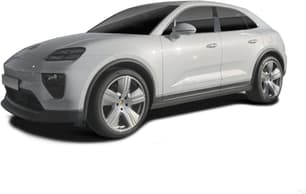
The Macan Electric looks sharp, all aerodynamic and swept-back like a range-maximising electric SUV should.
There’s functional method behind all this swoopy styling, too. The headlights look as though they’ve been chiselled into the body work, and at the grille, you’ll find active venting to help with cooling when needed.
There is also a sizeable front splitter that looks very much like the Macan is sticking its jaw out. All of which is to assist with aero and range.
It’s also a dual charging port layout with access left and right, though the latter is AC charging only, while the one on the left does both.
Step inside the Macan and you’ll find a familiar and very welcoming space. I especially like the twin-screen set-up that looks great in the way it's kind of embedded into the dash. Each is big, clear and easy to use.
I also really like the control panel that gives you quick-button access to the climate control, and the haptic feedback is next level, with the whole screen clicking in or out whenever you hit a button.
That said, in Turbo-guise you’re dropping almost $200,000, and some of the materials feel too hard and plasticky at that price point.
There's no getting away from the fact the XUV500 is not the sleekest, prettiest SUV in the pack. But it's not ugly, either. More that it looks like it's doing its best with a design philosophy hatched a generation or two ago.
Its best angle by far is when viewed straight on, where the piano-black grille, dual bonnet bulges and complicated (read: a little weird) headlight clusters all add some road presence to Mahindra's only SUV.
A side-on viewing, however, is less satisfying, where a combination of strangely placed and super-sharp body creases (including one over the rear wheelarch, which adds a Harbour Bridge-style crescent to the otherwise-straight window line) and serious rear overhang give the XUV500 an inescapable awkwardness.
Inside, expect a vast collection of rock-hard (though nicely patterned) plastics, with the ambiance rescued somewhat by the clean-looking and vertical central control unit, which is home to the media screen and air-con controls.
Ready for some hashtag real talk? There are better-looking and better-feeling seven-seat SUVs out there. But there aren't many that start at $25,990 drive-away. And I think that's Mahindra's point.
There is a little open-sesame magic at play with the Macan, and that starts at the frunk, where, if you lovingly caress the bonnet, it will automatically pop open for you, revealing an 84-litre storage space.
Rubbing the charging port will see it slide open, too, but just in case you’re not the kind of person who likes to fondle their car in public, you can use the key.
The Macan’s boot is a little more traditional, opening to reveal 540 litres (but just 480 litres in the 4S or Turbo) of storage with the rear seats in place, with a wide, flat and very useable area for your goodies.
The back seat of the Macan feels spacious enough, without being outstanding. There’s more than enough space for my 175cm frame, with enough knee and head room, but the way the middle console juts out will definitely eat into leg room for any middle-row passenger.
Elsewhere you get air-con controls with vents, along with bottle storage in each of the doors. There is also a pull-down divider that’s home to two extra cupholders.
Pretty damn practical, actually, regardless of whether you want to carry people or cargo. Carrying both at the same time, however, is tricky.
But let's start with people. There is a huge amount of room in the third row of the XUV500, a space with enough head and legroom to put plenty of its competition to shame.
Thanks to second-row seat backs that fold flat, before the the entire seat lifts up and pushes forward, climbing into seats six and seven isn't too big a drama, either.
We rarely say this about seven-seat cars, but at 175cm, I'd feel plenty comfortable back there on a longer drive. There are two air vents in the third row, too, along with bottle storage and side-seat storage for thin items.
All XUV500's are fitted with a 70-litre fuel tank.
The space in the middle row is ample as well, and you'll find three ISOFIX attachment points, one for each of the three seats. There's also a door pocket in each rear door and storage nets on the rear of the two front seats. A pull-down divider that separates the back seat is home to two cupholders, matching the two for front seat riders.
The only downside to all this people-lugging happiness is that, with the third row of seats in place, there is absolutely no room for luggage. Mahindra doesn't quote a litre storage figure when seven are seated (mostly because it would probably be embarrassing to write "one litre"), but trust us, you'll be lucky to squeeze a soft backpack in the boot with all seats in place.
Things improve considerably when you drop the third row of seats, though, which unlocks 702 litres of storage, and that number climbs to 1512 litres with the second and third row folded down.
The Macan arrives with four trim levels, the entry-level Macan, the Macan 4, Macan 4S and then the flagship Macan Turbo. The latter is just a name Porsche now applies to its go-fast models — obviously there isn’t an actual turbo in action.
The new electric range opens with the Macan, which lists at $128,400, before on-road costs. A reminder here that the old entry-level Macan with an ICE powertrain would have set you back less than six figures, so this one represents quite the jump.
Now, it should be pointed out that you can still buy the previous-generation ICE Macan, at least until supply runs dry. The brand isn’t getting any more, but suggests there are enough in the country to satisfy demand until around Q2 next year.
Next is the 4, which is $134,400 and adds a second e-motor. Then comes the 4S, yours for $149,300, before the range tops out with the Turbo, which climbs to $184,400. All prices before on-road costs.
Those are big numbers, but at least Australian-delivered cars are some of the best-specified on the planet.
That starts with the Macan, which gets a 12.6-inch digital instrument cluster, and a second 10.9-inch central touchscreen with Apple CarPlay and Android Auto.
It rides on 20-inch alloys, has synthetic-leather seats that are heated up front and Australian cars get things like the clever 'Porsche Active Suspension Management' (PASM) system as standard.
Next up is the Macan 4, which adds a second electric motor, but otherwise largely mirrors the base car’s spec. Next on the list is the 4S, which rides on a different 20-inch alloy, picks up LED matrix headlights, sports a better Bose stereo, a panoramic roof and four-zone climate control.
Finally, the Turbo is the big dog of the electric Macan range, packing serious power, but also arriving with its own 20-inch alloy wheel design (with 21-inch wheels a no-cost option) — an augmented reality head-up display, and things like the 'Porsche Electric Sport Sound', the 'Sport Chrono Package' and a performance-focused 'Sport+' drive mode.
Make no mistake, this Mahindra kills the competition on price. The entry-level W6 version will cost you a lean $25,990, while the fruited-up W8 version will set you back $29,990. You can even have an AWD W8 for $32,990. The best part? All of those are drive-away prices.
Go for the W6, and you can expect 17-inch alloy wheels, cloth seats, air-con with vents (powered by a second compressor) in the second and third row, cornering headlights with DRLs, front and rear fog lights, cruise control, rear parking sensors and a 6.0-inch multimedia screen linked with a six-speaker stereo.
Spring for the W8, and you'll add leather seats, a reversing camera, tyre-pressure monitoring and a bigger, 7.0-inch screen with standard sat-nav.
The entry-level Macan is equipped with a single rear-mounted electric motor, and it will make a total 250kW (265kW with launch control activated) and 563Nm, which is enough to push the cheapest Macan to 100km/h in 5.7 seconds.
The 4 then adds a second electric motor for AWD, upping the grunt to 285kW (300kW with the launch function) and 650Nm, and drops the sprint to a brisk 5.2 seconds.
The 4S is probably the performance sweet spot, with its dual-motor set-up generating 330kW (380kW in launch) and 820Nm, and a blistering sprint of just 4.1 seconds.
But the Macan Turbo is a true monster. We’re talking 430kW (470kW with launch control), 1130Nm and a sprint to 100km/h that’s as fast as a Carrera Cup race car – just 3.3 seconds.
It’s twin-motor, all-wheel drive and offers the kind of brutal acceleration that gives you a little facelift every time you step on the accelerator.
There's a diesel engine currently available, but the clock is ticking - Mahindra expects it to be phased out within six months. But the big news here is the new petrol engine, a turbocharged 2.2-litre unit good for 103kW/320Nm. It's paired exclusively with an Aisin-developed six-speed automatic transmission, and will send it's power to the front or all four wheels.
Mahindra doesn't quote official performance figures, but those engine outputs hardly scream excitement, do they?
Every Macan is fitted with a big 100kWh lithium-ion battery, which helps deliver a solid driving range no matter which one you choose.
The entry-level Macan will cover the most distance, at a claimed 654km, while the 4, 4S and Turbo will travel 624km, 619km and 616km, respectively.
The Macan rides on an 800V architecture, and is set up for 270kW DC high-speed charging, which will take 21min to go from 10 to 80 per cent. It will also accept 11kW AC charging, which should take 10 hours to go from empty to full.
Worth noting, though, that most home wall boxes are around 7.0kW, which means a full charge would take more like 13 hours plus.
Local numbers are yet to be confirmed, but after an admittedly vigorous local test, the on-board computers was reading 13+ litres per 100km. All XUV500's are fitted with a 70-litre fuel tank.
Porsche seemed at pains to prove that, though the all-electric Macan has lost its ICE heart, it's still worthy of the badge, and still very much a Porsche.
First stop, then, was the Norwell race circuit in Queensland, to put the Macan through its paces with 0-100km/h sprints, drifting (well drift attempts... ) on a watered-down skid pan and finally some high-speed running on the circuit.
And two things immediately became very clear. The first, and most obvious, was that, like the first men on the moon, we were likely among only a handful of people that might ever take their all-electric Porsche mid-size SUV to a race track. And second, this is one seriously sorted electric car.
Happily, for the many (read: every) owners who won't be pulling out of a pit garage at their next local track day, the Macan is actually more enjoyable on the road than it is on the track.
On the latter, there's a freedom to push too hard – what with the lack of trees, guard rails or oncoming traffic – and cracks do appear, mostly from the screaming tyres struggling with the two-tonne-plus weight.
But on public roads, where a thick fog of consequence prevents you pushing too hard, the Macan is a gem.
Porsche tends to have a knack for these things, I know, but the Macan is a seriously smooth and satisfying drive.
The ride is bang-on (comfortable enough on rougher surfaces, firm and grippy enough on twisting roads) and the steering is direct and confidence-inspiring.
Body-roll has been largely banished, too, with the Macan staying flat, stable and satisfying, even on the tighter stuff.
In much the same way the ICE Macan defined what it meant to be a driver's SUV, I think this one does the same in the EV space. And the fact that it does it with five seats and a decent boot is a sizeable bonus.
But there's no denying it lacks in the emotion department. That sense of excitement, the sound track, the hard-to-define fizz – as competent its this, and as weaponised as the EV powertrain is – it does feel a little clinical, like a tool doing its job and doing it well.
One important caveat. We've driven the 4 and Turbo to date. The entry-level Macan and the mid-tier 4S are still incoming. And I suspect I wouldn't be dropping my deposit on the Turbo.
Yes, the power is ridiculous, but I don't reckon you need it. For me, the 4 is more than enough, but I suspect the real performance sweet spot will be with the 4S.
About as old school as rocking a pair of button-up tracksuit pants with a Run-DMC cassette stuffed into your Walkman.
On a straight and unchallenging road, there's stuff to like about the petrol-powered XUV500. The engine, while gruff under heavy acceleration, doesn't feel too wheezy when you're not asking a great deal of it, and nor is the cabin overly loud at suburban speeds. It's a comfortable space for driver and passengers, too, and the gearbox performed seamlessly on our short test drive.
But that's about where the good news ends. There's an unshakeable agricultural feel to the way this Mahindra SUV goes about its business, and nowhere is that more obvious than through the steering wheel, which has only a vague and difficult relationship with the the front tyres, making it seriously tricky to approach twisting roads with anything approaching confidence.
The steering is slow and cumbersome - light when you first begin turning the wheel, with a ton of weight appearing by surprise midway through the cornering process - and it has a tendency to fight back should the front wheels find a bump or corrugation in the road, too.
The body lolls about when challenged, too, and the tyres are quick to give up their grip on tighter corners. All of which would give it a certain retro charm if it wasn't so very new, and I must admit I was cackling maniacally on some of the more twisting roads.
But it's simply not a car I could live with.
The Porsche Macan Electric is yet to be assessed by ANCAP, or by Europe’s NCAP, but it doesn’t appear to be missing any key equipment from its safety list.
That includes curtain airbags that extend all the way to the boot, AEB with pedestrian detection, lane keeping assist, a surround view camera and 'Intersection Assist'.
Expect dual front, front-side and curtain airbags (though the latter don't extend to the third row of seats), along with rear parking sensors and ESP. Stepping up to the W8 trim adds a reversing camera with dynamic guidelines. The XUV500 was awarded a four-star (out of five) ANCAP assessment when tested in 2012.
The Porsche ownership experience is frankly underwhelming by modern standards, with the brand offering just a three-year/unlimited kilometre warranty, plus an eight-year/160,000km battery warranty.
The positive, though, is that servicing should only be required every two years or 30,000km. You also buy a prepaid service plan for three, four or five years, priced at $1495, $2795, $2995.
All XUV500s are covered by a five year/100,000km warranty (though the final two years apply only to the drivetrain), along with five years of complimentary roadside assistance.
The XUV500 is also covered by Mahindra's capped-price servicing program for the first three years of ownership, and will require servicing every six months or 10,000km.