What's the difference?
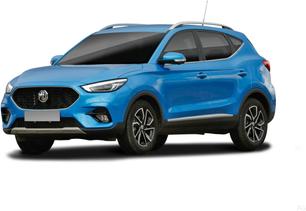
The ZST is essentially an upgraded version of MG's popular small SUV, the ZS.
The ZST sees some tweaks to the overall design and some added standard safety features. So, if you like the original, there's a good chance you'll like the ZST and I've been driving the top-grade Essence variant with my family of three.
The ZST Essence has some stiff competition from similarly specified rivals like the GWM Haval Jolion Lux and Chery Omoda 5 EX offering affordable packages and similar driving experiences. So, what makes the ZST stand out?
Smart is back.
Not with the classic ForTwo two-seater city car, oddball four-seater ForFour hatch or dinky Roadster targa top. Those were yesterday’s cars.
Today, Smart – as a 50/50 joint-venture between Germany’s Mercedes-Benz (the brand’s originator) and China’s Geely – is all about SUVs. Electric SUVs.
The boxy #1 (pronounced “hashtag-one”) is a small SUV and the sleeker #3 is the coupe-esque performance crossover version. Both are made in China and use Geely technologies.
We take a long, hard look at the range-topping #3 Brabus, the speediest, sexiest and exxiest of the lot. Let’s go.
Will the MG ZST Essence fit a small family? Absolutely, and all but the middle seat passenger will be comfortable but there are areas open for improvement. Like it's safety, laggy tech and adding a few extra items in the back seat.
Yet, it still offers a good host of features and an attractive package for a reasonable price tag. Unfortunately, my son missed having the basic amenities but did like the sun roof.
The #3 Brabus is very nearly one of the great bargains of 2024, with the sort of style, luxury, features, performance and grip you’d expect from the much-more-expensive GLA AMG 45. It’s that good.
What would make it great is a sunblock for the hot glass roof on a sunny day, Australian road tuning for the infuriating ADAS tech and a revised steering tune that didn’t make it feel inconsistent at times.
See past these, though, and the #3 Brabus exceeds expectations.
We’re glad Smart is back.
Being the newer and shinier version of the ZS, the ZST presents as a nice little package with its full suite of LED exterior lights, shiny chrome accents and its well-shaped body.
The front is distinctively different from its design muse with a darkened grille, and redesigned fog lights that feature new air intake vents. Other highlights include the 17-inch two-tone alloy wheels with sporty red brake calipers lurking behind them.
The interior is pleasant with a massive sunroof creating a light-filled space and giving the illusion that the cabin is larger than it is.
The synthetic leather upholstery and trims seem robust and perfect for families, but also feel quite plasticky under hand. The red badge embossing on the headrests is lovely, though.
The dashboard is well-proportioned and headlined by an upgraded 10.1-inch touchscreen multimedia system and fully digital instrument cluster.
The gearshift feels a tad too skinny and tall for the general aesthetic but the circular air-vents add some cute personality.
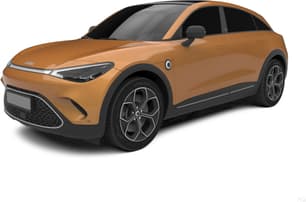
Smart says Mercedes designed the #3 and it shows.
In silhouette, or when glanced peripherally, it could be the love child of the A-Class and EQA. Only the friendly face betrays its non-Benz heritage.
Longer and wider than the #1, it is also 80mm lower – achieved via a lower ride height, flatter seats and a thinner floor.
Helped by a 35mm wheelbase stretch, it provides a nicely-balanced and proportioned crossover, with a decent drag coefficient of 0.27. The Brabus’ big wheels also fill out the arches very nicely.
Key length/width/height/wheelbase dimensions are 4400mm/1844mm/1556mm and 2785mm, respectively.
Unusually for a coupe/crossover mash-up, there’s slightly more room inside compared to the upright donor model.
Let’s take a longer look in there.
Practicality is hurt by a lack of individual storage options and a back seat that has only two USB-A ports for its amenities.
The cabin space is spacious, though, and both rows have a decent amount of leg- and headroom despite the massive sunroof.
The steering wheel features height but not reach adjustment and to accommodate I have to sit much closer to the wheel than normal thanks to my poor little T-Rex arms.
Individual storage is the best up front with a small middle console and glove box, two cupholders and two drink bottle holders. The doors also feature large storage bins, which is great to keep the cockpit feeling neat.
The rear row gets two map pockets and a small storage bin in each door. There is also a (very) shallow storage nook at the back of the middle console… think a packet of gum or small wallet size.
My seven-year old isn't as comfortable in the rear because it lacks directional air vents, reading lights and a fold-down armrest. All items which will hinder an adult's comfort, too.
The boot space is a good size at 359L but you can bump it to 1187L with the rear seats folded, the backrest featuring a 60/40 split.
The height of the floor is adjustable and when set in the lowest position creates a deep well to tuck larger items, like luggage, into.
The hard cargo cover can be awkward to shift around or store but is otherwise out of the way when it counts.
Other amenities accentuate the premium-feeling the Essence is going for with the heated front seats and electric drivers seat offering well-padded comfort but on longer journeys, I miss having adjustable lumbar support.
The rear seats aren't as comfortable as the front only because the synthetic leather feels slippery, which is accentuated when you hit corners!
In terms of technology, you get two USB-A ports in each row but the front also gets a 12-volt port. You miss out on fast and wireless charging options.
The multimedia system looks great but can be sluggish to respond and the apps can be slow to load but I like the built-in satellite navigation.
The upgraded sound system has six speakers instead of four but the sound quality is a bit tinny with music and calls.
It was simple to connect to the wired Apple CarPlay. It also has Android Auto, Bluetooth connectivity and AM/FM radio.
On first approach, you ask yourself whether the #3 is a crossover or a small-to-medium SUV. The low roof and cool frameless doors certainly suggest the former, as do the comparatively small apertures.
That said, with the windows down, those sash-less doors help entry and egress.
Once ensconced inside a long if slightly narrow cabin, the #3 offers ample room for even the tallest adults up front, as well as a reasonably spacious back seat area, though you’d call that more of a '2+1' seater given the lack of girth for three. Most folk shouldn’t struggle to find the right driving position, either.
Presumably keen to impart a generic Mercedes vibe, the #3’s interior is somewhat reminiscent of a GLA’s, albeit from last decade – down to the pronounced T-shape dash featuring a trio of circular vents in the middle, a standalone screen above and (unconvincing) metal-look plastic trim below.
Understandably, like so much of the Brabus, this might appeal to aspiring A45 AMG owners, but it seems oddly dated, given the advanced electrification going on underneath.
Likewise, none of the minimalism cleverness of the ForTwo city-car original is referenced, even digitally. A lost opportunity, really. The OG Smart is an icon.
Meanwhile, ahead of the driver, a narrow digital strip looks twee and cheap, as if ripped from a Japanese 'Kei' car. It’s a strange design detail for a $71K SUV.
Still, the #3’s cabin layout is largely a success, and much of that is due to the first-class quality and finish. Unlike some of the aforementioned Benzes of the previous decade, squeaks and rattles are notable by their absence.
Depending on your body, the racy sports seats up front are either perfectly bolstered or far-too snug, but they provide a decent level of comfort and support. And they position you just right for controlling the centre display, which dominates all.
The 12.8-inch touchscreen feels slick, responsive and right-sized for the car. At first, it can also seem like info-overload and perhaps a bit cheesy with its animal animations, but real thought has gone into it to provide an extraordinary level of functionality.
Across the top are icons for access to media, sat-nav, apps and camera view settings, while the bottom row is for various climate and trip info. While somewhat logically presented, the charging-station list seemed outdated and/or at-times incorrect in our test car.
Mercifully, the Smart has a row of short-cut buttons for 'Vehicle Modes' (including turning off the infernal lane assist and one-pedal accelerator/braking), 'Driving Mode' ('Eco'/'Comfort'/'Sport'/'Brabus'), glass demisters, climate and display-off.
Annoyingly, the latter is closest to reach, revealing the #3’s left-hand drive market bias, as the driver must stretch across to access the first two (and more important) settings.
There are also several handy screen-activated modes including 'Entertainment Mode' that temporarily leaves the accessories and climate control on; 'Rest Mode' reclines the driver’s seat down flat and dims the interior lights; 'Energise Mode' is designed to pep you up; and 'Pet Mode' keeps a climate-controlled atmosphere while deactivating all buttons that a stray paw might press. Clever.
There’s lots more besides, and using the touchscreen is better in this than most other Chinese vehicles, but it remains fiddly and distracting.
It’s also worth pointing out that the fixed glass roof needs a blockout for Australia. A Smart spokesperson said an aftermarket cover is available, but as supplied to us, sitting under it over a run of hot days is almost unbearable without a hat. This is not good enough.
Thankfully, the other basics are all A-OK.
The climate system coped well the hot sun bearing down through the glass, plenty of useful storage makes up for the disappointingly shallow glove box, while the chilled centre console and massive door bins proved especially handy.
USB access is easy, the wireless Bluetooth/Apple CarPlay performed more consistently than in any recent test vehicle and the standard Beats audio brings brilliant sound.
Out back, most people under 180cm should at least avoid scraping that glass ceiling, and there’s a reasonable amount of room for boots and long knees if the front occupants are sympathetic, but you’d be stretching the truth calling the rear seat packaging SUV-esque.
On the other hand, it’s beautifully presented, boasts a comfy and supportive backrest/cushion for outboard passengers and even a do-able centre pew for shorter-distance riders.
And it provides every expected amenity, including air vents, USB-C ports, door storage, a folding centre armrest with cupholders, and overhead handles/lighting/coat hooks.
And while we’ve already complained about the glass roof, it floods the cabin with light, to make it seem airier than it is. Narrow front seats with a see-through slit further enhance this feeling.
Further back, the 370-litre boot is reasonably long and surprisingly deep thanks to a removable upper floor that’s good for stuffing the optional home charging cables in.
And, of course, it can be extended to 1160L via the split-fold backrests to provide extra loading practicality. And there’s even a small (15L) amount of storage under the bonnet.
Maximum towing capacity is 1600kg for a braked trailer.
There are four variants for the ZST and our test vehicle is the top-spec Essence model, priced at $33,990 drive-away.
Our example's 'Pebble Black' finish is an included colour but other paintwork options can cost an extra $700.
The price point positions it right in the middle of its rivals with the Omoda 5 costing $35,990 drive-away and the Jolion sliding into the most affordable spot at $30,990 drive-away.
To highlight the value-for-money comparison, the Kia Seltos Sport+ FWD model costs $38,790 drive-away and then you start creeping up into the $40K bracket for similarly specified small SUVs.
The ZST Essence is the top-grade and it has a decent number of premium features for its price tag, like a panoramic sunroof, synthetic leather upholstery, heated front seats and an electric driver's seat, keyless entry, keyless start and a full suite of exterior LED lights.
Other standard features include wired Apple CarPlay and Android Auto, 10.1-inch touchscreen multimedia system, digital instrument cluster, one-zone air-conditioning, built-in satellite navigation, 360-degree camera system and an upgraded sound system with six speakers.
Though originally brought to market by Mercedes, Smart was never pitched as a premium brand, as it is now.
Back in the late ‘90s, Smart was an early attempt at better urban mobility. The ForTwo was a tad over 2.5 metres long by 1.5m wide and 1.5m tall.
Today, the #1 and #3 share their modular EV platform with Geely’s other small crossovers, including the Volvo EX30 and Zeekr X, while a stretched version underpins the related Polestar 4.
While the #1 starts from a sharp $54,900 (all prices are before on-road costs) for the Pro+, at the other end of the spectrum, the #3 Brabus flagship, with dual motors for all-wheel drive (AWD) and Porsche 911-style acceleration, will set you back $70,900.
Not bad, given it also includes a body kit, extra driving modes, beefier suspension, stronger brakes and retuned traction controls.
Now, that might sound steep against the growing choice of more-affordable EV alternatives out there, but consider that most of the cheaper ones are significantly slower, less sporty and/or not as highly equipped, including the Hyundai Kona Electric, Jeep Avenger and Mini Countryman.
The #3 Brabus’ fiercest foe, the bestselling Tesla Model Y in top Performance guise, is more powerful but costs $12K more and is slightly slower from 0-100km/h.
The $70K Volvo EX30 Twin Motor Performance Ultra costs $1K less and matches the Smart performance-wise as they share the same tech, but it’s considerably smaller.
Meanwhile, the closely-related Zeekr X is $6K cheaper but looks bizarre and is still largely unknown in Australia. At least Smart has that long-time Merc association to fall back on.
In fact, it is distributed by the latter’s biggest dealer group globally, LSH Automotive.
Speaking of which, how does the #3 Brabus stack up against the similar Mercedes EQA and other luxury EV rivals? The less-powerful Merc 250+ is $14K more, has less kit and is nowhere near as powerful. Same goes for BMW iX2, Lexus UX300e and Volvo C40 Recharge (alias EC40).
The #3 Brabus seems to be in a goldilocks zone of premium, performance EV SUVs. The most expensive Smart offers thoughtful value for money. For a change, the car actually lives up to its name.
Predictably, it’s also well stocked, with matrix LED headlights, electric heated/vented front seats, a 12.8-inch touchscreen, head-up display, 640W Beats audio, a foot-actuated powered tailgate, 360-degree camera views, the full advanced driver-assist safety enchilada, auto parking assist, 20-inch alloys and a panoramic glass roof.
Unfortunately, fitted on every Smart, that last one does not come with a factory built-in sunblock, which is completely unacceptable under our hot Australian sun. And no crossover or SUV should be without a spare wheel, either.
These are the #3’s only real deal-breakers.
The Essence variant has a 1.3-litre, three-cylinder turbo-petrol engine with a maximum power output of 115kW and 230Nm of torque.
It's a front-wheel drive and features a six-speed auto transmission. Overall, it has enough power to keep up with traffic on the open road but you have to be firm with the accelerator to keep your speed consistent.
The #3 Brabus employs one permanent magnet synchronous electric motor per axle, for dual-motor, all-wheel drive performance via a single-speed ‘transmission’.
They provide plenty of poke, totalling 315kW of power (115kW front, 200kW rear) and 543Nm of torque (200Nm front, 343Nm rear).
Tipping the scales at 1910kg, this means the Brabus delivers an impressive power-to-weight ratio of 165kW/tonne – enough for it to scoot from zero to 100km/h in 3.7 seconds, on the way to a 180km/h top speed.
To put those figures in perspective, the similarly-priced VW Golf R only manages 156kW/tonne and 4.8sec to 100.
The official combined cycle fuel figure is 7.3L/100km and my real-world average came in at 7.7L. That is after a good mix of urban and open-road driving, so the usage is good.
Based on the combined fuel cycle and the relatively small 45L fuel tank, expect a driving range of around 616km.
All #3s headed to Australia for now are fitted with the larger of the two battery packs available – a 66kWh lithium nickel cobalt manganese (NCM) item.
In the Brabus, it is rated to average up to 415km of WLTP-certified range, which is between 20-40km shy of the mid-spec Premium version.
Smart says the WLTP average energy consumption is 17.7kWh/100km. Our 3000km-old test car’s trip computer displayed a life-cycle average of 14.6kWh/100km since delivery.
During our week with the Brabus, we managed an average of 19.4kWh/100km, and that was over a 95km period of sustained highway driving at 114km/h with cruise control on and climate control set at 18 degrees (to combat the radiant heat from that glass roof).
With a big 22kW AC charger and 150kW DC charger capability, the former will replenish that 66kWh battery in about 32 hours using a home plug or 10 hours with an optional 7.0kW Wallbox, while the latter will need just over an hour from 10-80 per cent with a common 50kW DC charger.
The ZST Essence has an okay amount of power relative to the car's small size.
It's an adequate cruiser when I ferry just my husband and son around, but feels a full load of luggage and people.
The steering is responsive and it's an easy car to manoeuvre in tight car parks or city streets, which is great. The visibility is pretty good despite the chunkier pillars and you feel confident when checking your blind-spots.
While the suspension is fairly forgiving and ride comfort is decent, you will still notice the bumps, especially when seated in the back.
The cabin suffers from some wind and road noise and at higher speeds we had to find we raise our voices a bit to be heard. Around town, you don't notice it.
This is just a personal preference but the brake and accelerator pedals are skinnier and more centrally positioned than I prefer. You get used to it, though.
The ZST is pretty easy to park and it's great that you have a 360-degree camera system but the image quality can be grainy. You get rear parking sensors, too, but miss out on ones at the front.
Whatever notions ‘Smart’ might evoke, the #3 Brabus obliterates them. This is no buzzy little city-car runabout, but a surprisingly mature and athletic driving machine. This is a seriously rapid performer.
A trio of driving modes give you a hint of what you’re in for. Eco is lightness and fluff. Not very Brabus, but smooth and calm enough for relaxed commuting. And it’s far from slow, scooting off the line with zip and zest. Enough for most.
Comfort is actually a good all-round setting to be in, with an eager yet controlled level of performance. Strong acceleration and instant accelerator reaction show you mean business – if you’re in the mood. Still civilised and serene otherwise.
Sport ups the ante, as you’d expect, providing a decent whack of speed and immediate response. Actually, this is enough to keep up with most sports car costing thrice the price, while maintaining the driver-assist safety net. Fun without the fear.
Brabus mode is off-the-leash fury, turning the #3 into a convincing AMG alternative thanks to blistering thrust and a powerful punch across the spectrum. More (artificial) noise, more drama, more speed, more fireworks. The 'Launch Control' pins you to your seatback.
Yet even in the latter setting, the Smart behaves with a maturity beyond the brand’s reputation, capable of quick corners with exceptional (AWD-enhanced) body control and roadholding grip, without a punishing ride.
Underneath, a unique suspension tune for the MacPherson-style struts up front and multi-link rear end keep the Brabus hunkered down more effectively at speed.
And even in pouring rain, there are no complaints about the Brabus’ assured and confident handling. Yes, the suspension is firm, but it’s far from uncomfortable, so, an acceptable trade-off.
Plus, though not strictly one-pedal driving, the regenerative braking pressure is enough for slowing down and speeding up in the ebb and flow of traffic in its strongest mode.
Where we’re less happy is in the #3’s steering. It brings three weight modes to the table – but only two are useful, 'Light' and 'Standard'. Super-easy yet not totally devoid of substance, Light is great for around town and general commuting.
But when you lean on it at speed, the steering, whilst crisp and reactive, is not always linear in feel or motion, especially when accelerating at the same time, as you might when coming out of a fast corner.
Depending on how hard you are on the accelerator, there can be a visible step when turned from the straight ahead that can be quite disconcerting. It’s a bit like when slurping in a lumpy bit in a smoothie.
So, what about 'Sport' mode? Here, the steering is just as described above, but with added weight and not much more. Not worth it. Best is Standard mode.
Another disappointment is the advanced driver-assist safety (ADAS) tech’s state of tune. It’s in a state, literally.
The intrusive and apparently non-permanently switch-off-able lane-keep systems, especially, end up resisting what the driver intends, and even fight to steer the car where it thinks it needs to be. This is frustrating and potentially dangerous.
It’s been reported that Geely, and not Mercedes, undertook the development of these ADAS systems. We’re getting sick of (mostly Chinese) manufacturers rolling the arm over and imposing this sort of nannying and ultimately counter-intuitive driving interference tech.
This needs to be fixed. It stops the #3 Brabus from being a great performance bargain.
The ZST Essence has a good suite of safety features that now come standard like rear cross-traffic alert and blind-spot monitoring.
Other standard features include tyre pressure monitoring, LED daytime running lights, forward collision warning, lane departure alert, adaptive cruise control, seatbelt reminders, a 360-degree camera system and rear parking sensors.
The ZST only features six airbags, while many of its rivals sport seven, including the newer front centre airbag. The ZST variant scored four- from a possible five-star ANCAP safety rating in 2017 testing.
It's important to note that the tested ZS model did not have AEB or lane support systems at the time of testing, these were introduced from the 2020 model year onwards and the ZST has both.
There are ISOFIX child seat mounts on the rear outboard seats and three top tether anchor points but two child seats will fit best. There is enough room for front occupants when a 0-4 rearward facing child seat is installed.
The #3 range scores a maximum five-star ANCAP crash-test safety rating. It managed high-80s to 90 per cent in all disciplines – Adult Occupant Protection, Child Occupant Protection, Vulnerable Road User and Safety Assist systems.
A full suite of ADAS is fitted, from Autonomous Emergency Braking (operable from 5.0-150km/h car-to-car) with junction, cross-path, pedestrian, cyclist and motorcyclist detection (5.0-85km/h), lane-keep assist (from 65-180km/h) and cross-traffic alert (front and rear), to blind-spot warning and traffic-sign recognition tech.
You’ll also find adaptive cruise control (with stop/go function), highway and traffic jam assist, automatic parking assist, front and rear parking sensors, 360-degree camera and adaptive high beam assist.
Included, too, are seven airbags (dual front, side chest, side head and front-centre), along with two ISOFIX child-seat fixtures and child-seat anchorage points in the back seat.
The ZST Essence comes with a seven-year/unlimited km warranty, which is on par with coverage offered by a growing number of its rivals.
There is a seven-year or up to 70,000km servicing program for a total cost of $2339 or an average of $334 per service, which is very competitive for the class.
Servicing intervals are at every 12 months or 10,000km, whichever occurs first, but could be annoying if you travel a lot.
The #3 offers a (decidedly-average) five-year or (disappointing) 130,000km warranty, whichever comes first. There is also roadside assistance available for free during this period.
Given other EV manufacturers are going seven and even 10 years in the case of MG, with most including unlimited kilometres, this could be better.
Scheduled maintenance is every 12 months or every 20,000km.
Smart provides a pre-paid four-year/80,000km service plan for $3120, which comes to $780 annually. This seems quite expensive for an EV, even a premium one.