What's the difference?
MG needs a win, and the MG4 Urban may be the right car at the right time to give the Chinese brand a major boost.
It has been a rough few years for MG, with sales in decline for the past two years, which has seen it tumble from Australia’s favourite Chinese car maker to a distant fourth place behind BYD, GWM and Chery.
Part of that could be because of its rapid expansion, both in terms of its total number of models but also the size of the vehicles it’s offering. The larger QS SUV and U9 ute have both received underwhelming responses from the car-buying public.
So, MG has returned to its roots - small, affordable cars. The MG4 Urban, not to be confused with the MG4 Hatch, is its new price-leading electric car and the company’s new management hopes it leads a sales revival.
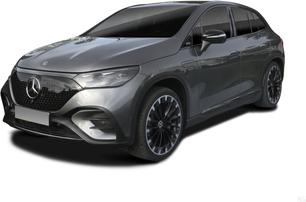
The EQE53 SUV is Mercedes-AMG's first fully-electric SUV.
That means it doesn't have a thundering V8 like a lot of its petrol-powered AMG siblings, but what it lacks in ear-splitting noise it makes up for in colossal but quietly delivered shove.
Which, when you have a sleeping child in the back, is exactly what you might need, because this after all is a family review and we're testing how good this silent beast of an SUV is when it comes to family duties.
The MG4 Urban is not only the right car at the right time, perfectly catering to buyers looking to avoid rising petrol prices, it’s also a welcome return-to-form for MG as a brand.
MG is seemingly at its best when it sticks to small cars. It has traditionally excelled with the MG3 and ZS, smaller, more affordable products that keep expectations in check and can win over customers looking for the best bang-for-their-buck rather than simply the best car.
That’s not to say the MG4 Urban isn’t a good car. It offers tremendous value for money, excellent interior space and drives nicely, so anyone who has been considering making the switch to an EV should seriously consider this new arrival.
Note: CarsGuide attended this event as a guest of the manufacturer, with meals provided.
The Mercedes-AMG EQE53 SUV has some serious tech inside and will fit the family in style. If you're after the AMG experience, you may be a little disappointed as this model leans heavily towards plush rather than sports-SUV. And it does plush extremely well but it begs the question whether the AMG factor is worth the extra cash.
MG says the design inspiration for the MG4 Urban came from the $100,000 Cyberster. While there are certainly a lot of differences between that roadster and this hatchback, the air-intakes and wheel design are indeed very similar. And I guess the badge is the same too, so there’s that…
But, comparing it to the Cyberster misses the point. What makes the MG4 Urban’s design more interesting is the bits you can’t see. While it shares the same name as the MG4 Hatch, this car has almost nothing in common with it. That’s because this new MG4 Urban is based on the brand’s newer EV underpinnings that debuted on the MGS5 EV.
That means the MG4 Urban is front-wheel drive, whereas the hatch is rear-wheel drive, and because of the way the battery is integrated into the chassis, it creates not only a bigger hatchback but also one with a different shape.
The Urban is more ‘cab forward’ (to use design parlance) meaning a shorter bonnet, which creates more cabin room. It also means there is more boot space because the powertrain is located up front.
MG does a good job with cabin presentation too. It’s another step forward for the brand, improving the overall level of fit and finish from its earlier models, to create a cabin that looks modern and doesn’t feel like it has been built to a price.
We affectionately nicknamed our test EQE53 model the Blue Tic Tac because of its… well, similarity to the mint.
While not uncommon in the EV market, the EQEs pillowy design doesn't exactly scream 'big personality'. However, it does feature some cool features like the massive 22-inch alloy wheels, red brake calipers and the AMG badging at the rear. But that's all that separates it from its non-AMG siblings.
Head inside and it features all of the plush comforts and styling you’d expect from a Merc with some of the best ambient lighting in the business and a sunroof that manages to make the cabin feel airy despite all the black trims.
Some of those trims, like the synthetic grey panels scattered liberally throughout the cabin, are found in all EQE models and don't reflect the grade level. A trim with better tactility and style would be a point of difference.
The dashboard features three screens in a ginormous panel, which surprisingly doesn’t catch the light but does show fingerprints and every spec of dust on it. Which might annoy you as it's 100 per cent the drawcard for the interior and when it's dirty, it's very obvious.
Although I'm not in love with some design choices, it's still a lovely cabin to spend time in.
As I just mentioned, the cabin is bigger than the other MG4, which creates good space in both seating rows.
Up front they’ve placed the gear selector on the steering column to create space for more storage in the centre of the car. That means there’s plenty of shelves, cubbies and cup holders to take care of your small (and not so small) items, spread across the cabin.
As for the boot, the switch to a front motor and a smaller rear suspension means a 382-litre boot with all seats up and 1266L if you drop the back seats. Plus there’s a 98L underfloor storage spot, in place of a spare wheel (with a puncture repair kit included instead).
The design of the key controls are simple and easy to use, with a digital display for the instruments ahead of the driver and a 12.8-inch multimedia screen in the centre of the dashboard.
Navigating the menus is relatively straightforward but in a victory for user-friendliness, MG has listened to feedback (and incoming Chinese government regulations) and added some physical controls. There are buttons and a dial for the air-conditioning system and a volume knob for the sound system.
The cabin of the EQE53 offers plenty of head- and legroom for its occupants. Using the armrests is also a civilised affair as there's not fighting for elbow positions!
Access to both rows is (annoyingly) more complicated than it needs to be because of the sidesteps - which are, quite frankly, useless on a car like the EQE. They hit your shins/calves when you're not using them and using them feels silly.
All seats offer a tremendous amount of comfort but the fronts benefit from heat and ventilation functions that keep you relaxed year-round. They extend everywhere you need them to to get into the best seating position.
Storage is excellent throughout the car and in the front there's an extra-deep middle console (it swallows most of my arm), a large centre console that features retractable cupholders and a big shelf underneath for bulky items, like a handbag, or as my mum joked, Saturday night’s takeout and a bottle of wine!
Each door pocket gets a dedicated bottle holder and the rear also gets two retractable cupholders and a pair of map pockets.
The boot has 520L of capacity available which is a good size for the class and the wide boot aperture and level loading space make it easy to slide things in and out. You miss out on underfloor storage in the EQE53 model but the back seat has a 40/20/40 split to open up storage options.
The technology looks daunting but is very user-friendly once you spend some time with it. The main multimedia system is responsive and you can access the menus from the steering wheel controls as well as the touchscreen.
The system has wireless Apple CarPlay and Android Auto and satellite navigation, all of which are easy to use. Charging is good with eight USB-C ports (six up front!) and a wireless charging pad.
Despite having four co-pilots this week, the additional screen in front of the passenger remained mostly unused and ended up being more of a novelty.
The real bugbear has been the air-conditioning system. Despite having a pre-climate function, it takes ages for the car to cool down and my eight-year old struggled in the rear the most. The rear vents just don't seem to pump much out, even on the top speed setting.
Once the system has cooled the cabin, though, it's like a fridge. But until it does... you really notice the 30+ degree days!
MG made its reputation in Australia by selling some of the most-affordable models on the market, filling the hole left by mainstream brands like Toyota, Hyundai and Mazda as they increased the entry-level prices in their respective line-ups. Something MG itself tried with the HS, QS and U9, as it expanded beyond the once-popular MG3, MG5 and ZS.
The MG4 Urban is a return to form in that sense for MG, with this new small car starting at just $31,990 drive-away. For context, the MG4 Hatch starts at $37,990 drive-away, so this is a much cheaper proposition. That starting price is for the MG4 Urban Standard Range, the Extended Range variant is priced from $34,990 drive-away.
That pricing does not feel accidental from MG Australia, despite what they may suggest when pressed. That’s because the new BYD Atto 2, the direct rival to the Urban, starts at $31,990 plus on-road costs. Even so, BYD has the last laugh, because it offers both the BYD Atto 1, which starts at $23,990, and the Dolphin, which is priced from $29,990 - to undercut the MG4 Urban, even if neither are considered direct competitors.
In terms of specification, both the Standard Range and Extended Range have the same equipment with the exception of the obvious - a bigger battery, and more power from the motor.
Standard equipment highlights include 17-inch alloy wheels, LED headlights and tail-lights, a leather-wrapped steering wheel, PVC seat upholstery, heated front seats, Bluetooth connectivity with wireless Apple CarPlay and Android Auto, in-built navigation and a six-speaker stereo.
The EQE SUV is available in three grade levels and the EQE53 model on test for this review here is the creme de la creme, tucking in under AMG badging, and all that implies. Sitting at $191,900, before option packs or on-road costs, positions the top model in between its high-performing electric rivals, the Audi SQ8 e-tron at $173,090 MSRP and the BMW iX M60 at $228,400 MSRP.
Our test model has the optional 'AMG Dynamic Plus Package', which adds $5691.40 to the price tag but includes a bunch of features AMG-lovers will appreciate. Items like an 'AMG Sound Experience' which gives you three motor soundscapes to choose from, a track pace function, improved motor outputs and a boosted top speed of up to 240km/h.
In terms of technology, the not-so-standard fare includes a seriously cool-looking multimedia display consisting of a 3D Burmester surround sound system and three digital screens covering the width of the dash.
The tech is rounded out by wireless Apple CarPlay and Android Auto, satellite navigation, four-zone climate control, eight USB-C ports, a wireless charging pad and digital radio.
The top model also gets some luxuries like heated and ventilated front seats featuring a three-position memory function, electrically extendable under-thigh support and a 'kinetic' function (think light stretching rather than massage).
The upholstery and trims are a good mix of black Nappa leather on the seats and doors (partial), as well as synthetic suede-like materials on accent panels throughout the car.
Practical items include a hands-free powered tailgate, rain-sensing wipers, keyless entry/start, pre-entry climate, dusk-sensing headlights and a park assist function to help in tricky car spots.
Overall, the EQE53 is fairly well packaged but does miss out on a few luxury extras in the second row, which is noticeable because its rivals cover this area a little better.
The MG4 Urban Standard Range is powered by a 110kW/250Nm electric motor that drives the front-wheels via a single-speed transmission. The Extended Range has slightly more performance, 118kW and 250Nm, but aside from that they are the same motor.
The EQE53 is an AWD and has dual electric motors - one at the front and one at the rear.
Without the optioned AMG Dynamic Plus Package, the motors produce up to 460kW and 950Nm but with the package those outputs jump up to a staggering 505kW and 1000Nm!
That means the 3.7-second 0-100km/h sprint time also improves to 3.5-seconds. Suffice it to say, it's enough to blow your hair back and considering we have no roads in Australia you can really let this thing loose on, it's more than enough power for anyone.
The biggest difference between the two MG4 Urban variants is the battery. The Standard Range has a 43kWh battery good for 316km of driving between charging, while the Extended Range gets a bigger 54kWh battery to make it capable of up to 405km.
We didn’t drive the car long enough to get a clear indication of real-world efficiency and range, but it performed well during our drive in suburban Sydney. The steady stop-start traffic gave the battery its best chance to perform well and the early indications are its range is close to claim, at least under the right circumstances. We’ll have to reserve definitive judgement until we’ve had a longer test drive.
What MG was very keen to highlight are the cost savings of buying an EV at a time of sky-high petrol prices. The company made a point that using off-peak electricity, which can be had for just 6c per kW from certain providers, means you can replenish the battery of the MG4 Urban Standard for just $3.44.
Non-AMG EQE models see decent driving ranges over the 500km mark, but the EQE53 has an official range of up to 485km which again positions it in the middle of its rivals. So, not bad, but a larger range would be welcome as the EQE53 is a comfortable road-tripper!
The EQE53 has a a claimed consumption figure range of 23.0 to 25.6kWh and a lithium-ion battery with a large 90.56kWh capacity.
After a week of open-roading, city-driving and not being shy in using its power, my average has been around 25.5kWh, which is solid for an electric performance SUV.
The EQE53 has a Type 2 CCS charging port which means you can hook it up to the faster DC chargers and it accepts up to 170kW on this type of system meaning it goes from 10-80 per cent in as little as 32 minutes. On an 11kW AC system, expect it to hit 100 per cent after 14.5 hours.
What really stood out about the MG4 Hatch is its rear-motor, rear-wheel-drive layout, which made it a very dynamic and almost sporty car. In my 2023 review I called it “a genuinely enjoyable small car to drive".
The MG4 Urban doesn’t quite leave the same impression. Again, we had only a brief and (appropriately) urban test drive around Sydney’s beachside suburbs, but the MG4 Urban proved competent rather than commendable.
But, let’s be honest, unless you’re looking for driving thrills in the wrong place (affordable, city-focused hatchbacks) the MG4 Urban does the job it is required to do. It’s as nice as any other mainstream hatch to drive from Point A to Point B.
The ride could be a little softer and more compliant, with the suspension feeling too firm at times, but with its electric motor it’s a quiet and relaxed driving experience. The electric motor provides adequate performance too, certainly more torque in less time than you’ll get in a petrol-powered hatch.
Curiously, MG Australia executives said the MG4 Urban was locally evaluated and tuned but could only offer a vague mention of ‘holistic’ changes to better suit it to local conditions, rather than pointing to any specific Australia-developed changes to the suspension, steering or powertrain.
I really wanted the AMG EQE to be crazy-fun like its petrol-powered cousins but while it has the specs to support that wish, it never feels wild.
That's not necessarily a bad thing, just unexpected for an AMG model. The 53 is still one cool customer and its composure on the road is wonderful but it's a model that a grandparent could get into and not feel overwhelmed by. Power is smoothly delivered and when you need to take off, it responds eagerly .
Steering is firm and responsive but it’s the rear axle steering that makes the EQE53 feel nimble in the city or a tight car park despite its bulky size. It corners well, without much roll and you can tackle a winding road at speed with confidence.
The ride comfort is very good with minimal outside noises finding their way inside and the suspension is plush without feeling like you’re floating on top of the road.
The visibility is mostly good but the wide A-pillar is annoyingly in the way for my driving position and I have to duck my head around it to see clearly on roundabouts.
The 360-camera system is top notch but the camera angle turns when you move the steering wheel, which takes some time to get used to. Otherwise, the EQE53 is an easy one to park.
It may be small and cheap, but that doesn’t mean MG has cut corners on safety. The MG4 Urban comes equipped with the MG Pilot and a suite of active safety features, including adaptive cruise control, autonomous emergency braking, lane keep assist, blind spot monitoring, driver attention monitoring and speed limit notification.
The latter two are the most evident, as they provide a steady soundtrack of beeps as you drive along. Take your eyes off the road for more than a few seconds as the driver attention system fires up, while the speed sign recognition gets busy in Australia’s ever-changing speed limits.
While MG has undoubtedly improved the sensitivity of some of these systems compared to other models, they are still more active than rival products. Perhaps more concerning, the speed limit recognition repeatedly beeped to tell me I was in a ‘25km/h’ zone, which is simply not a recognised speed limit on Sydney roads.
Like so many other brands, MG needs to further refine these active safety systems in order to make the driving experience more relaxed and less distracting.
MG says the MG4 Urban has secured a five-star rating from Euro NCAP, which is expected to be carried over by ANCAP.
The EQE53 hasn’t been assessed by ANCAP yet but its siblings achieved a maximum five-star safety rating in 2023.
The top model enjoys a long list of safety features, including 10 airbags which is outstanding for a family SUV.
Other systems include blind-spot monitoring, an SOS call button, driver monitoring, safe exit warning, rear occupant alert, rear collision warning, forward collision warning, rear cross-traffic alert, lane departure alert, lane keeping aid, traffic sign recognition, an intelligent seatbelt warning, adaptive cruise control (with stop/go), park assist, a 360-degree view camera system as well as front and rear parking sensors.
There are two ISOFIX child seat mounts and three top tether anchor points across the second row but two seats will fit best.
None of the safety systems intrude on daily driving either, which is great.
The MG4 Urban is covered by the brand’s 10-year/250,000km warranty, as long as you service it at an official MG service centre. If you don’t get your car serviced with the company directly, your warranty reverts to seven-year/unlimited km coverage.
Servicing intervals are every 12 months or 25,000km and will cost you $1366 over the first five years. The cheapest visit is just $149 but the major service, after four years, is a pricey $472, which does push against the idea that EVs are cheaper to service due to less moving parts.
The EQE SUV is offered with a five-year/unlimited km warranty, which is not unusual for its grade level but it has a longer-than-usual battery warranty of up to 10-years or 250,000km.
You can pre-purchase a three-, four- or five-year servicing program. The three-year program costs a flat $2240, while the four-year program costs $3525 and the five-year option costs $4085.
All pricing is pretty competitive for the class but servicing intervals are odd at every 12-months or 25,000km as it's typical to see intervals on EVs at 24 months.