What's the difference?
Yep, it’s like deja vu all over again! Yet another fresh name in the Aussie new-car market, but this time in the form of a sub-brand from a carmaker that itself feels like it’s only been around for five minutes (but has in fact been in market here for a decade or more).
We’re testing the MG IM5 Performance, the IM badge standing alone in other markets. There, as here, signifying a new level of equipment, performance and quality.
And we’ve been steering this top-spec, dual-motor AWD version of the pure-electric, five-door liftback IM5, priced and specified to challenge a rapidly expanding group of high-performance mid-size EV sedans now occupying local showrooms.
So, read on to see if this premium electric performer has what it takes to tempt you into a new option from the latest challenger brand to jump into the ever-intensifying, no-holds barred contest for your new-car dollars.
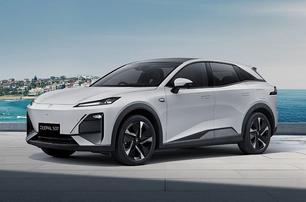
You’re getting flooded with new electric mid-size SUVs from China, I know. But if you’re struggling to recall them all, just remember – this is the good-looking one.
It’s the Deepal S07, the spearhead for the Deepal brand's new presence in Australia, and I reckon it looks damn sharp.
But is there substance to match the style? And can it take on the likes of the Kia EV5, Tesla Model Y and XPeng G6?
Let's find out, shall we?
The MG IM5 Performance is fast, comfortable, quiet and super refined. Putting some minor spec and active safety niggles to one side, it offers the features, tech and price to match it with its well-credentialled and already popular mid-size EV sedan competitors. Is there room for one more? We think there should be.
The Deepal S07 has the makings of a great family friendly EV, but with some quirks that really need to be ironed out.
Playing spot the straight line on the outside of the MG IM5 is like an automotive design version of Where’s Wally? There aren’t many, in the midst of an unrelentingly curvaceous exterior treatment.
At close to five metres long and two metres wide the IM5 is appreciably longer (+211mm), a little wider (+27mm) and a bit taller (+33mm) than a Tesla Model 3. Think BMW 5 Series in terms of overall size.
And the soft-form shape is functional; the swoopy liftback boasting an ultra-slick 0.24 drag coefficient.
That said, I’m not convinced by the ‘Periscopic’ cameras informing the driver assistance systems from the front guards. They scream tacked-on afterthought. But a touch-only initial opening function for the flush door handles is cool and makes life easier.
The curves continue inside with soft-padded surfaces around the dash and doors, but the straight edge obviously came out for the 10.5-inch central media screen and vast 26.3-inch upper display. There are next to no buttons; even exterior mirror adjustment is directed from the screen to a multi-function steering wheel control.
System software (powered by a Qualcomm ‘Snapdragon’ chip) is lightning fast with a two-finger up and down swipe shortcut function on the central screen for ventilation and other functions.
The interior is light and bright thanks to the enormous panoramic sunroof. It’s been fine in cooler winter conditions during this test but it could be interesting to revisit in the heat of an Aussie summer
There are two interior colour schemes available - the ‘Highland Grey’ of our test car or ‘Dover Beige’ for those brave enough to live life with the threat of scuff marks on your shiny new car’s glamorous but vulnerably light interior.
If you’re left a little underwhelmed from the bland same-sameness of so many new SUVs, I reckon you’d like the Deepal S07 in the metal. Because boring it ain’t.
It’s sharp and purposeful and full of lovely creases and angles, and it stands out on the road — especially in this 'Sunset Orange' colour.
Deepal says it was designed in Turin, Italy, but I'm not sure that matters much. I mean, being in Italy doesn’t guarantee design success – just look to the modern Lancia range for proof – but I guess it’s something for a newish Chinese brand to hang its hat on.
Inside, the design is lovely, too. I like the materials used, the extended dash and the size of the central screen (though it tilting towards you or the passenger is probably overkill). And the flat-bottom wheel is a nice touch.
I'd like to know where the air con was designed, though. It feels massively underwhelming on a piping hot Sydney day. The main outlet is at the bottom of the dash, which is perfectly positioned to chill absolutely nothing, and you can’t really change the direction of the vents, either. Or, at least, I couldn't figure out how to.
There’s plenty of breathing room up front and in terms of storage one of the first things worth calling out are the long but relatively narrow door bins. No good for anything above unusually slender bottles, even if they’re lying down.
No conventional glove box in the dash, but there is a large lidded box (cooled and heated) between the seats that doubles as a centre armrest. It’s supplemented by a big stowage area underneath the flying buttress style centre console.
There are two cupholders in the centre console as well as a wireless device charging pad in front of them with a vaguely phone-shaped oddments bin alongside it.
Move to the rear and the IM5’s 75mm wheelbase advantage over the Tesla Model 3 is clear. Heaps of knee and headroom for me at 183cm sitting behind the driver’s seat set to my position.
But… the seat sits low which pushes your knees up into the air to the point where my thighs are not contacting the seat cushion. Even though the rear seat reclines to a certain degree it’s a problem compounded by a chronic lack of room for your toes under the front seat. Awkward.
There are map pockets in the front seatbacks, modest bins in the doors and a fold-down centre armrest with two cupholders. Adjustable ventilation in the rear of the front centre console always makes life in the rear seat more pleasant.
The car also houses ‘Strong Magnets’ at various points around the cabin and boot, with a configurable adapter able to lock a phone or tablet into place for the entertainment of, in our case, back seaters.
Speaking of devices for entertainment, there are two USB-C sockets and a 12-volt outlet in the front and another USB-C and 12V in the back, so charging isn’t an issue.
The IM5 is a liftback so the boot aperture is generous and a capacity of 457 litres with the rear seats up is decent for a car of this size, although that’s less than the Tesla Model 3 (594L) which has an additional well under the floor.
Still, enough room for the largest (124L) and smallest (36L) suitcases from the CarsGuide three-piece luggage set with some room to spare.
The power tailgate can be operated hands-free via the key or an always welcome under bumper kick function.
Volume expands to 1290 litres with the rear seats folded and there’s a modest 18-litre ‘frunk’ under the bonnet.
The bad news is a repair-inflator kit rather than a physical spare wheel, but the better news is the IM5 Performance can tow a 1500kg braked trailer (750kg unbraked).
The IM range also features the ‘MG iSmart’ app allowing remote control of various functions including charging, checking vehicle location and route planning.
At just over 4.7m long and 1.9m wide, with a 2.9m wheelbase, the Deepal is a sizeable proposition, which means good passenger room and decent luggage space.
Starting at the boot, you’ll find 445 litres with the rear seats in place, but with the seats folded flat that number grows to 1385 litres. There’s a frunk up front, too, that holds another 125 litres.
In the back, the room is ample for full-size adults. When sitting behind my own 175cm driving position, I had more than enough knee and headroom to sit comfortably.
There’s also a heavy pulldown divider that’s home to twin cupholders, and there are two more up front, and USB connection points galore. Bonus points for the back seat riders being able to adjust their own air temps, too.
At $80,990, drive-away, the IM5 Performance sits at the top of a three-grade line-up that starts with a 75kWh RWD Premium model at $60,990, followed by a mid-spec 100kWh RWD Platinum for $69,990, both drive-away.
Its most prominent competitor is arguably the Tesla Model 3 Dual Motor AWD ($80,900), with others including the BYD Seal Performance AWD ($68,798), Hyundai Ioniq 6 AWD Epiq ($86,500) and Polestar 2 Long Range Dual Motor Performance ($80,380).
Worth noting, too, the IM6 range - essentially the same car with a taller SUV body - has the same model walk-up and identical pricing.
Once you’ve crossed the $80K threshold it’s fair to expect a decent basket of standard fruit and aside from the dynamic and safety features we’ll get to shortly, the IM5 Performance comes to the party.
Highlights include a double-glazed panoramic roof, power-adjustable (12-way driver, six-way passenger) heated and ventilated front seats (also heated in the rear), dual-zone climate control, 20-speaker audio (with digital radio), 256 colour ambient lighting, a power tailgate (with hands-free function) and 20-inch alloy rims.
There’s also adaptive cruise control, a heated steering wheel, wireless Android Auto and Apple CarPlay, LED headlights, keyless entry and start, wireless device charging (50W), a 10.5-inch central control screen and a sweeping 26.3-inch upper screen; the right side for instrumentation and car data, the (touch-sensitive) left side for multimedia and other onboard functions.
There’s more and it’s clear this car at least matches or betters its direct competitors for included equipment.
It’s easy picking in the Deepal range, given there’s one model with just the one trim level, simply called the S07.
It’s currently $58,521 drive-away in NSW, or $53,900 before on-road costs. And that’s probably about right. You can get an entry-level Kia EV5 for $56,770, though with less range and kit, or the XPeng G6 Standard Range for $54,800, though that’s before on-road costs. The new Model Y is a bit of a jump, at $63,400 on the road.
For that you get 19-inch alloys, a fixed sunroof with a sun shade, LED lighting all around and a powered boot.
Inside, there’s a giant 15.6-inch touchscreen that can swivel towards the driver or the passenger, wireless Apple CarPlay and Android Auto, a 14-speaker Sony stereo and wireless device charging.
There’s dual-zone air con, the seats (heated and ventilated up front) are trimmed in synthetic leather and there’s an interior camera with gesture control, so you can use a kind of sign language to take a photo, control the stereo or answer or hang up the phone. It's weird and makes you look like a turkey, which is why I used it once and once only, but you might like it.
The MG IM5 Performance is powered by an electric motor on each axle - the rear (372kW/500Nm) more powerful than the front (200kW/300Nm), for overall outputs of 572kW (that’s close to 770hp) and 802Nm of pulling power.
The official term for that amount of grunt is… a lot. And we’ll get to what it means on the road in the Driving section shortly.
The S07 is powered by a single 160kW/320Nm rear-mounted electric motor and it's rear-wheel drive. That’s enough output, says Deepal, to push the S07 to 100km/h in 7.9 seconds — not bad for a two-tonne-plus SUV.
The MG IM5 Performance features an 800-volt electrical architecture which means the 100kWh NCM battery can accept a DC peak charge of close to 400kW.
Only snag is the highest you’ll currently find in Australia is 350kW. But even at that rate you’ll still be looking at a 30-80 per cent charge in just over 15 minutes. Maximum AC charge rate is 11kW.
Claimed range is 575km (WLTP) which is less than the Tesla Model 3 Dual Motor AWD at 629km.
Over a week of city, suburban and some freeway running we saw average energy use of 20.6kWh/100km which is on the high side for an EV of this size but maybe not for one with this kind of performance potential.
The 79.97kWh ternary lithium battery delivers a claimed driving range of 475km. It is, however, set up for just 92kW DC fast charging, which means going from 30 to 80 per cent will take just over half an hour. That’s at an appropriate DC fast charger, of course. Your 7.0kW AC home wallbox will take 11 hours, or eight hours if you can draw 11kW.
First things first, the IM5 Performance is supercar fast. This 2.3-tonne five-seater blazes from 0-100km/h 3.2 seconds and with its dual motors combining to produce 572kW/802Nm, eye-widening performance always resides underneath your right foot.
But it’s not all about straight line speed. Ride comfort is excellent. Underpinned by an all-new platform, the IM5’s suspension is by double wishbones at the front and multi-links at the rear. But the key to its bump and rut smoothing ability is air suspension and ‘continuous control’ active damping.
Fold in double-glazing on the full-length glass roof and side windows, as well as active noise cancellation and you have a serene interior environment at any speed. Also worth noting the front seats are great; as grippy as they are comfortable.
Not only that, despite its relative heft, this mid-sizer steers well, too. Not the last word in road feel but it points accurately and the standard rear steering helps with prompt (but never jerky) cornering turn-in. Flick to ‘Sport’ mode and the IM5 is up for some enthusiastic running.
The rear wheels can turn up to 12 degrees in the opposite direction to the fronts at slow speed, which makes for a usefully tight 10-metre turning circle. But above that, at lesser angles, it adds extra stability and decisiveness in the way the car steers through even tight, twisty sections.
Rubber is top-shelf Pirelli P Zeros on 20-inch alloys (245/40 fr - 275/35 rr) and it grips hard, especially in the wet weather over much of the test period. Braking is solid, as it needs to be, with ventilated discs all around and four-piston callipers at the front.
No adjustable regen braking but you can feel the ‘Cooperative Regenerative Brake System’ (CRBS) doing its thing when you lift off the accelerator.
The physical rear view is modest thanks to the slope of the back window reducing its functional area for the driver to that of a 1950s VW Beetle. Even the interior rear-view mirror is tiny and folds up into a recess in the headliner if you’d prefer life without it.
But that’s where a rear camera view popping up on the upper screen display (accessed via the right-hand steering wheel click control) comes in handy. Side camera views are also available as is a 360-degree overhead view, which makes parking straightforward.
If you need more parking help there are various self-parking modes including a nifty ‘Curbside’ function that will realign the car hands-free if you’re parallel parked too far out from the kerb.
In a similar vein, a ‘Rainy Night’ mode projects left and right rear views onto the main screen using AI to enhance clarity and highlight pedestrians and cars.
Overall the ADAS (Advanced Driver Assistance Systems) are relatively unobtrusive but we found ourselves switching off the incessant overspeed chime that sounds for 10 seconds if you creep over the indicated speed limit, even when the system has misfired on the correct speed. For example, 40km/h school zones on a Sunday.
The over-zealous driver distraction warning also occasionally issued a visual and audible slap on the wrist when I was looking straight ahead. Tellingly, there’s a specific quick screen for turning both these functions off, but it kinda defeats the purpose of having them in the first place.
We also found the adaptive cruise control to be hesitant in multi-lane environments, reducing speed occasionally because the system seemingly believed a car was set to merge, when it wasn’t.
Binging, bonging safety systems aside, the Deepal S07's drive experience is relatively peaceful.
It can feel heavy, and isn't dynamically perfect through tighter bends, and even in the city the suspension - which does a good job ironing out most road imperfections - can clang over sharper, bigger stuff, especially if you're too enthusiastic with a speed bump.
But provided you're not asking too much of it on some twisting pass, and you're gentle enough over really big bumps, the S07 behaves much as you'd expect a big, wafty electric SUV might.
That is, with a smooth flow of power, steering that isn't overly direct, but not overly sharp either and with comfort the order of the day.
There are some annoying quirks, though, that would seem easy enough to iron out. The safety systems are often intrusive – and other Chinese brands can get them to be far less annoying – but I also found the tech and user interface annoying and fiddly, which again would be easy enough to fix.
No independent ANCAP safety assessment at this point but there’s a full suite of active safety tech onboard including AEB, lane departure warning, blind spot detection, rear cross-traffic alert & braking, forward collision warning, lane-change assist, tyre pressure monitoring and heaps more. And we touch on how it all operates in the Driving section above.
There are no less than nine HD cameras, 12 ultrasonic sensors and three millimetre-wave radars on duty.
If a crash is unavoidable there are seven airbags including full-length side curtains and a front centre bag. Multi-collision brake also minimises the chances of subsequent impacts after an initial crash. There are also three top tether points and three ISOFIX child seats anchors across the second row.
All right on the pace for this part of the market and the IM5’s competitive set.
Handing out a low score for a five-star ANCAP car seems harsh, but bear with me.
All the major bases are covered, the standard spec including auto emergency braking (AEB) with car-to-car and 'vulnerable road user' (pedestrian, backover, cyclist, motorcycle) detection, blind-spot monitoring, lane-departure warning, lane keeping assist and more. And there are front, front side (chest), side curtain and front centre airbags.
But the single biggest drawback of the Deepal experience has to be the most annoying, infuriating active (crash-avoidance) safety systems I’ve ever come across. Honestly, it has to be experienced to be believed.
For one, whenever I wear sunglasses it gives me an “occlusion” warning, which I genuinely had to Google, but that’s nothing compared to the driver attention monitor, which seems rigged to go off if you so much as blink, sending chimes binging and bonging throughout the cabin, increasing in number like a bomb about to go off.
And if you have to turn them off every time you get in, you have to wonder if they have any business being there at all.
So yes, it wears a maximum five-star ANCAP rating from assessment in January this year, but it’s a tree falling in the forest, kind of vibe, like if a car has every active safety system known to man, and you want to switch them off every time you get in, is it any safer than a car that doesn’t have any systems at all?
The MG IM5 Performance is covered by a seven-year/unlimited km warranty, which is a plus, but the catch is it’s conditional on authorised dealer servicing. Go elsewhere and the term drops to a more common five years/unlimited km. The drive battery is covered for eight years/160,000km, which is the norm in the Aussie market
Servicing is required every 12 months or 20,000km with charges averaging $586 per workshop visit for the first five years, which is on the high side for an EV, even at this price point, the average bumped up by a more than $1400 doozy at year four.
MG IM models are sold (with service available) through all of MG’s 100-plus dealerships across the country, so no concerns there.
The S07 is covered for seven years or 160,000km, while the battery is covered for eight years or 240,000km.
Servicing is required every 12 months or 10,000km, and the brand’s capped-price servicing program covers the first seven services (or eight, if you include the initial 5000km check-in, which is free), for a total $2981.43 (or an average of $426 per paid workshop visit).