What's the difference?
An SL sports car has been part of the Mercedes-Benz line-up since the early 1950s, and when I think of this model I see that golden years of Hollywood star (with the great hairstyle) Yul Brynner, in the late 1950s cruising the French Riviera in his 300SL roadster. Or Sophia Loren regularly posing with her 300SL Gullwing coupe around the same time.
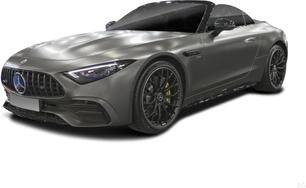
Over seven iterations and more than seven decades it has stood for performance, glamour and exclusivity. And after a two-year hiatus the Mercedes-AMG SL63 roadster has made a comeback to the Australian market.
MG needs a win, and the MG4 Urban may be the right car at the right time to give the Chinese brand a major boost.
It has been a rough few years for MG, with sales in decline for the past two years, which has seen it tumble from Australia’s favourite Chinese car maker to a distant fourth place behind BYD, GWM and Chery.
Part of that could be because of its rapid expansion, both in terms of its total number of models but also the size of the vehicles it’s offering. The larger QS SUV and U9 ute have both received underwhelming responses from the car-buying public.
So, MG has returned to its roots - small, affordable cars. The MG4 Urban, not to be confused with the MG4 Hatch, is its new price-leading electric car and the company’s new management hopes it leads a sales revival.
The new Mercedes-AMG SL63 4Matic+ is guaranteed to turn heads for decades to come. But there’s enormous design and engineering substance underpinning this car’s undoubted good looks. Stunning performance, superb dynamics and top-shelf safety make this a powerhouse GT to be reckoned with.
Note: CarsGuide attended this event as a guest of the manufacturer, with accommodation and meals provided.
The MG4 Urban is not only the right car at the right time, perfectly catering to buyers looking to avoid rising petrol prices, it’s also a welcome return-to-form for MG as a brand.
MG is seemingly at its best when it sticks to small cars. It has traditionally excelled with the MG3 and ZS, smaller, more affordable products that keep expectations in check and can win over customers looking for the best bang-for-their-buck rather than simply the best car.
That’s not to say the MG4 Urban isn’t a good car. It offers tremendous value for money, excellent interior space and drives nicely, so anyone who has been considering making the switch to an EV should seriously consider this new arrival.
Note: CarsGuide attended this event as a guest of the manufacturer, with meals provided.
Rather than a strict two-seater, this time around the SL adds the flexibility of ‘+2’ rear seating while the previous 'Vario’ folding hardtop has been binned, the new car returning to a traditional, electrically-folding and weight-saving (-21kg) soft top.
Mercedes-Benz design chief Gorden Wagener started the new model’s development from a ‘clean sheet’ and Mercedes-AMG says “not a single component comes from the predecessor SL, or any other model such as the AMG GT Roadsters”.
Always a subjective call, but I think this car’s proportions are just about perfect. The lengthy bonnet with its twin longitudinal ‘Power Domes’, raked windscreen and fat haunches create a wide stance and presence that’s almost impossible to ignore.
Aggression, as with the sinister headlights and 21-inch rims, is subtly combined with soft curves along the flanks and around the rear. Note the seamless door handles.
And it’s not all about aesthetics. Active aero has been integrated into the front apron and retractable rear spoiler. Plus the ‘Z-fold’ roof design does away with the need for a separate cover.
The interior is sub-zero cool with slick screens, an 11.9-inch display covering multimedia and a 12.3-inch unit for instrumentation ahead of the driver, being particular highlights.
Turbine-style air-vents at the leading edge of the split-level dash and alloy trim elements are a tip-of-the-hat to SLs past and the deft mix of large flat surfaces with complex curves oozes design confidence.
MG says the design inspiration for the MG4 Urban came from the $100,000 Cyberster. While there are certainly a lot of differences between that roadster and this hatchback, the air-intakes and wheel design are indeed very similar. And I guess the badge is the same too, so there’s that…
But, comparing it to the Cyberster misses the point. What makes the MG4 Urban’s design more interesting is the bits you can’t see. While it shares the same name as the MG4 Hatch, this car has almost nothing in common with it. That’s because this new MG4 Urban is based on the brand’s newer EV underpinnings that debuted on the MGS5 EV.
That means the MG4 Urban is front-wheel drive, whereas the hatch is rear-wheel drive, and because of the way the battery is integrated into the chassis, it creates not only a bigger hatchback but also one with a different shape.
The Urban is more ‘cab forward’ (to use design parlance) meaning a shorter bonnet, which creates more cabin room. It also means there is more boot space because the powertrain is located up front.
MG does a good job with cabin presentation too. It’s another step forward for the brand, improving the overall level of fit and finish from its earlier models, to create a cabin that looks modern and doesn’t feel like it has been built to a price.
In the context of a high-performance GT, practicality is pretty impressive.
At just over 4.7m long the SL is a sizeable machine and much of its lengthy (2700mm) wheelbase is devoted to making the driver and front passenger comfortable.
There’s plenty of space for that pairing and just enough storage to cope with the ‘things’ they’ll typically bring with them.
Door pockets offer enough room for a few odds and ends, although you’ll struggle with even a medium-size bottle unless you’re willing to lay it down horizontally along the top of the aperture.
A handy lidded bin between the front seats doubles as a centre armrest, there are two cupholders under a sliding lid in the centre console and the glove box is a decent size.
Power and connectivity options run to four USB-C ports, a 12-volt socket and the wireless device charging pad.
Then there are the rear ‘+2’ seats, and Mercedes makes no bones about the fact they’re intended for occasional use only, even suggesting a 1.5m occupant height limit.
And there’s no doubt they offer a handy emergency seat or a fun kids’ zone. Just ask a Porsche 911 Carrera owner how much this kind of seating arrangement increases a sports car’s flexibility.
At 183cm I gave the back seat a crack, which meant sliding the front (passenger) seat way forward with the backrest close to upright. But I squeezed in, and there was just enough legroom for a person in front at the same time.
With the roof in place there’s the added pleasure of cranking your head over to around 45 degrees. But it’s do-able!
No storage, adjustable ventilation, or power back there. But that’s fair enough, especially given there are USBs available in the front centre storage box.
Boot volume is 240 litres with the roof up and 213 litres with it folded, which is enough for some light luggage, and not too shabby when you think a Toyota Corolla hatch offers up just 217 litres (with all seats up).
There’s a 12V socket in there, but don’t bother looking for a spare, in the event of a flat your only option is a repair/inflator kit.
As I just mentioned, the cabin is bigger than the other MG4, which creates good space in both seating rows.
Up front they’ve placed the gear selector on the steering column to create space for more storage in the centre of the car. That means there’s plenty of shelves, cubbies and cup holders to take care of your small (and not so small) items, spread across the cabin.
As for the boot, the switch to a front motor and a smaller rear suspension means a 382-litre boot with all seats up and 1266L if you drop the back seats. Plus there’s a 98L underfloor storage spot, in place of a spare wheel (with a puncture repair kit included instead).
The design of the key controls are simple and easy to use, with a digital display for the instruments ahead of the driver and a 12.8-inch multimedia screen in the centre of the dashboard.
Navigating the menus is relatively straightforward but in a victory for user-friendliness, MG has listened to feedback (and incoming Chinese government regulations) and added some physical controls. There are buttons and a dial for the air-conditioning system and a volume knob for the sound system.
Priced at $373,370, before on-road costs, the new SL63 4Matic+ will be battling top-shelf performance soft tops including (in ascending dollar order) BMW’s M850i xDrive Convertible ($307,100), the Porsche 911 Carrera GTS Cabriolet ($386,900) and even exotics like the Lamborghini Huracan RWD Evo Spyder ($422,606).
Value for money is a relative concept in this part of the market, although equipment highlights include a head-up display (with augmented reality nav), 11-speaker, 650-watt Burmester surround sound audio, ambient lighting (choice of 64 colours), hectares of Nappa leather trim, dual-zone climate control, an 11.9-inch central multimedia screen (running Merc’s latest ‘MBUX’ software), 12.3-inch configurable digital instrument display and 21-inch forged alloy rims.
There’s also the ‘Digital Light System’ built around three high-power LEDs in each headlight, refracted and directed through 1.3 million ‘micro-mirrors’ to create a combined resolution of 2.6 million pixels.
The ‘Neck Scarf’ function is added to the top of the front seats to keep your neck and the back of your head warm as the temperature drops, the heated, ventilated and massaging front seats feature eight-way electric adjustment and three memories, there’s a heated steering wheel, Android Auto and Apple CarPlay connectivity, wireless device charging and more.
Worth noting the big 21-inch rims in a ‘10-twin-spoke’ design are standard issue with an alternate ‘multi-spoke’ pattern available as a no-cost option.
But if all that’s not enough you can opt for ‘AMG Performance seats’ ($2490) which grip you even more securely but delete the massage function.
Or there’s the ‘AMG Night Package’ ($6990) which adds wheels in matt black (with “high-sheen finish rim flange”), darkened head- and tail-lights, an aero package, black badging, black radiator fins and interior trim elements in black chrome.
Then you can go the whole hog with the ‘AMG Carbon Fibre Package’ ($11,990) which brings the wheels in matt black, exterior carbon elements, carbon mirrors, carbon interior trim and a steering wheel in a combination carbon-fibre and Dinamica (synthetic microsuede).
MG made its reputation in Australia by selling some of the most-affordable models on the market, filling the hole left by mainstream brands like Toyota, Hyundai and Mazda as they increased the entry-level prices in their respective line-ups. Something MG itself tried with the HS, QS and U9, as it expanded beyond the once-popular MG3, MG5 and ZS.
The MG4 Urban is a return to form in that sense for MG, with this new small car starting at just $31,990 drive-away. For context, the MG4 Hatch starts at $37,990 drive-away, so this is a much cheaper proposition. That starting price is for the MG4 Urban Standard Range, the Extended Range variant is priced from $34,990 drive-away.
That pricing does not feel accidental from MG Australia, despite what they may suggest when pressed. That’s because the new BYD Atto 2, the direct rival to the Urban, starts at $31,990 plus on-road costs. Even so, BYD has the last laugh, because it offers both the BYD Atto 1, which starts at $23,990, and the Dolphin, which is priced from $29,990 - to undercut the MG4 Urban, even if neither are considered direct competitors.
In terms of specification, both the Standard Range and Extended Range have the same equipment with the exception of the obvious - a bigger battery, and more power from the motor.
Standard equipment highlights include 17-inch alloy wheels, LED headlights and tail-lights, a leather-wrapped steering wheel, PVC seat upholstery, heated front seats, Bluetooth connectivity with wireless Apple CarPlay and Android Auto, in-built navigation and a six-speaker stereo.
This new ‘4Matic’ all-wheel-drive SL63 features AMG’s (M177) 4.0-litre twin-turbo V8, superseding the previous rear-wheel-drive SL’s similarly configured 5.5-litre unit.
Hand built by one AMG technician from start to finish, it produces 430kW (around 580hp) from 5500-6500rpm and 800Nm across a broad plateau from 2500-5000rpm.
It’s something of a mechanical masterpiece, and the previous seven-speed auto transmission, driving the rear wheels only, has been replaced by a nine-speed dual-clutch auto (with wet multi-disc start-off clutch) sending drive to all four wheels via Merc’s ‘4Matic’ AWD system.
The MG4 Urban Standard Range is powered by a 110kW/250Nm electric motor that drives the front-wheels via a single-speed transmission. The Extended Range has slightly more performance, 118kW and 250Nm, but aside from that they are the same motor.
Mercedes-AMG’s official fuel economy number for the SL63 on the combined (WLTP) cycle is 13.9L/100km, the 4.0-litre twin-turbo V8 emitting 319g/km of CO2 in the process.
On the roughly 300km launch program we covered urban, B-road and some freeway running, returning an (indicated) average of 17.5L/100km. And that reflects some enthusiastic driving along the way.
The fuel tank requires 70 litres of 98 RON premium unleaded to fill it which translates to a theoretical range of around 500km, dropping to 400km using our real-world number.
The biggest difference between the two MG4 Urban variants is the battery. The Standard Range has a 43kWh battery good for 316km of driving between charging, while the Extended Range gets a bigger 54kWh battery to make it capable of up to 405km.
We didn’t drive the car long enough to get a clear indication of real-world efficiency and range, but it performed well during our drive in suburban Sydney. The steady stop-start traffic gave the battery its best chance to perform well and the early indications are its range is close to claim, at least under the right circumstances. We’ll have to reserve definitive judgement until we’ve had a longer test drive.
What MG was very keen to highlight are the cost savings of buying an EV at a time of sky-high petrol prices. The company made a point that using off-peak electricity, which can be had for just 6c per kW from certain providers, means you can replenish the battery of the MG4 Urban Standard for just $3.44.
I recall driving the AMG SL65 around the backroads of Tassie a few years ago and that twin-turbo V12 monster famously packed 1000Nm of torque, while this car ‘only’ has 800.
But there comes a point where enough is enough… and this is enough!
With maximum torque available from 2500-5000rpm and peak power (430kW) on call from 5500-6500rpm there’s always stupendous acceleration available with a squeeze of your right foot.
Claimed 0-100km/h time is supercar fast at 3.6 seconds, while top speed is a toupe-troubling 315 km/h. And that’s electronically limited!
A typically ferocious engine noise and howling exhaust note accompany rapid progress and shifts from the nine-speed dual-clutch transmission are quick and positive, not to mention especially enjoyable using the steering wheel-mounted paddles.
There are six ‘AMG Dynamic Select’ drive programs from Comfort through to Race, the latter including a Drift Mode, which we didn’t experiment with. Nor did we dip into the ‘AMG Track Pace’ system for circuit-focused mapping and timing
However, far from drifting, the grippy Michelin Pilot Sport 4S rubber (275/35 fr - 305/30 rr) plants the car securely with the all-wheel-drive system and electronic locking rear diff playing their part.
I found the perfect set-up was in the ‘Individual’ mode with the engine, transmission and steering in racier settings and the suspension in ‘Comfort’. The adaptive damping in this configuration mixes smooth ride compliance with sharp dynamic response.
The car’s aluminium space frame chassis is part of a body structure mixing aluminium, magnesium, fibre composites and various strength steels.
Torsional rigidity is claimed to have been improved by 18 per cent and despite the lack of a roof the SL feels tight and solid.
Suspension is by alloy double wishbones front and rear with adaptive damping and active hydraulic anti-roll stabilisation standard (so, no physical anti-roll bars).
At the same time the 4Matic AWD system is able to vary torque distribution up to 100 per cent to the front or rear axle depending on where drive can be put to best use.
The speed sensitive, variable ratio, electronically controlled steering is accurate and turns in beautifully with good road feel. No doubt assisted by electric rear steering able to adjust the angle of the rear tyres by up to 2.5 degrees.
All this adds up to a hugely impressive package that, despite its 1970kg kerb weight, feels agile, athletic and able to attack corners like an overgrown hot hatch, putting its power down with unwavering authority.
While indecently fast the SL63 can also stop rapidly with the AMG high-performance braking system standard.
Huge composite ventilated and cross-drilled discs (390mm fr - 360mm rr) are clamped by six-piston fixed alloy calipers at the front and single-piston units at the rear. They wash off speed calmly and consistently with perfect pedal feel.
Even at highway speeds, particularly with the windows up, normal conversation is easy with the roof down. But if you need to raise (or lower) it, the operation takes 15 seconds and is possible up to 60km/h.
Under the heading of miscellaneous observations, the turning circle is a not insubstantial 12.8m, so beware in the car park.
A front axle lift function is a welcome standard feature, raising the car’s nose 30mm with the press of a button. And lift locations are stored in GPS data, so the car will subsequently remember to lift itself at the same place, even if you don’t!
Heating and cooling for the front seats combined with the heated steering wheel and Air Scarf neck warming makes winter top-down driving a pleasure.
The digital instrument display is not only crystal clear, it can be changed through multiple configurations, including a tunnel-like graphic for engine revs as well as specific readouts for speed, g-force, the lot.
At the same time, the central media screen’s angle can be adjusted to better cope with reflections and the windscreen wiper system Merc calls ‘Magic Vision Control’ channels fluid along the wiper arms onto the rubbers, which isn’t new, but works spectacularly well here.
What really stood out about the MG4 Hatch is its rear-motor, rear-wheel-drive layout, which made it a very dynamic and almost sporty car. In my 2023 review I called it “a genuinely enjoyable small car to drive".
The MG4 Urban doesn’t quite leave the same impression. Again, we had only a brief and (appropriately) urban test drive around Sydney’s beachside suburbs, but the MG4 Urban proved competent rather than commendable.
But, let’s be honest, unless you’re looking for driving thrills in the wrong place (affordable, city-focused hatchbacks) the MG4 Urban does the job it is required to do. It’s as nice as any other mainstream hatch to drive from Point A to Point B.
The ride could be a little softer and more compliant, with the suspension feeling too firm at times, but with its electric motor it’s a quiet and relaxed driving experience. The electric motor provides adequate performance too, certainly more torque in less time than you’ll get in a petrol-powered hatch.
Curiously, MG Australia executives said the MG4 Urban was locally evaluated and tuned but could only offer a vague mention of ‘holistic’ changes to better suit it to local conditions, rather than pointing to any specific Australia-developed changes to the suspension, steering or powertrain.
No independent ANCAP safety assessment at this stage but the SL63 is fitted with the ‘Driving Assistance Package Plus’ which includes a heap of active (crash-avoidance) tech including AEB (with pedestrian detection), active cruise control, lane keeping assist, lane change assist, traffic sign assist, ‘Active Traffic-assist’ and ‘Active Steering Assist’.
There’s also tyre pressure monitoring and the ‘Active Parking Assist with Parktronic’ self-parking system supported by a 360-degree camera view and multiple sensors.
If a crash is unavoidable the airbag count runs to eight, including side bags for rear occupants. There are ISOFIX anchor points for child seats or baby capsules in the two rear and front passenger seat positions. And an active bonnet is designed to reduce injuries in the case of a pedestrian impact.
It may be small and cheap, but that doesn’t mean MG has cut corners on safety. The MG4 Urban comes equipped with the MG Pilot and a suite of active safety features, including adaptive cruise control, autonomous emergency braking, lane keep assist, blind spot monitoring, driver attention monitoring and speed limit notification.
The latter two are the most evident, as they provide a steady soundtrack of beeps as you drive along. Take your eyes off the road for more than a few seconds as the driver attention system fires up, while the speed sign recognition gets busy in Australia’s ever-changing speed limits.
While MG has undoubtedly improved the sensitivity of some of these systems compared to other models, they are still more active than rival products. Perhaps more concerning, the speed limit recognition repeatedly beeped to tell me I was in a ‘25km/h’ zone, which is simply not a recognised speed limit on Sydney roads.
Like so many other brands, MG needs to further refine these active safety systems in order to make the driving experience more relaxed and less distracting.
MG says the MG4 Urban has secured a five-star rating from Euro NCAP, which is expected to be carried over by ANCAP.
The SL63 4Matic+ will be covered by Mercedes-AMG’s five-year/unlimited km warranty, with roadside and accident assistance included for the duration, both of which are expected in this category.
Maintenance intervals are 12 months/20,000km, and a fixed-price service plan lists an average of $1583 for each of the first three visits to the workshop. Not exactly small change, but not unheard of in this part of the market.
The MG4 Urban is covered by the brand’s 10-year/250,000km warranty, as long as you service it at an official MG service centre. If you don’t get your car serviced with the company directly, your warranty reverts to seven-year/unlimited km coverage.
Servicing intervals are every 12 months or 25,000km and will cost you $1366 over the first five years. The cheapest visit is just $149 but the major service, after four years, is a pricey $472, which does push against the idea that EVs are cheaper to service due to less moving parts.