What's the difference?
Think of a Mercedes-AMG and the first words that spring to mind are probably not - understated, efficient and restrained. And yet those are probably the best words to describe the all-new C 43.
Of course, before we go any further it’s important to note that the C 43, even in its previous six-cylinder guise, was never meant to be as wild, raucous or powerful as the C63 flagship - that’s simply not its role in the AMG line-up.
But even so, this new model is a dive into fresh territory for the brand and puts a very different spin on the AMG sports sedan as we know it.
This is a four-cylinder model, complete with a Formula One-derived electric turbocharger, so it lacks the sound and fury you expect from something carrying the ‘AMG’ badge - but that doesn’t mean it’s a bad car, as we’ll explain.
The Australian market hasn’t truly revolved around a sedan since I was a kid. These days it’s all about SUVs, and anything low-slung is easy to overlook when it comes to family hauling. Add to that the current fixation on hybrid and electric powertrains, and a mid-size petrol sedan feels almost out of step.
And yet, here’s the MG7.
It’s a mid-size fastback with a turbo-petrol engine and just one trim level. Its sharp styling is matched by an even sharper price, and it doesn’t seem particularly concerned about not fitting the current mould.
It lines up against the Toyota Camry SL, Skoda Octavia Sportline and Hyundai Sonata N Line and raises an interesting question. Is this the sedan comeback nobody saw coming? And could it remind modern families why sedans were once king?
The new AMG C 43 may lack the drama and excitement we’ve come to expect from the German performance brand, but that doesn’t mean it’s a bad car. Yes, it could be more extroverted and the ride could be improved, but this is still a sharp-looking sports sedan with loads of punch.
This is a car that speaks to its times, with ever-stricter emissions regulations making it harder and harder for car companies to produce loud, wild and charismatic cars. So Mercedes-AMG has worked within those boundaries and come up with a car that retains at least some of those core elements that has made the brand so desirable over the years.
Note: CarsGuide attended this event as a guest of the manufacturer, with accommodation and meals provided.
In a world obsessed with SUVs and electric powertrains, a mid-size petrol sedan almost feels rebellious. But the MG7 kind of is. A sleek fastback with a turbocharged engine, a sporty edge and a price that makes you look twice - it’s a compelling combination. There are some drawbacks for families in efficiency and back-seat practicality but it's not a bad offering for those wanting something a bit more fun than an SUV.
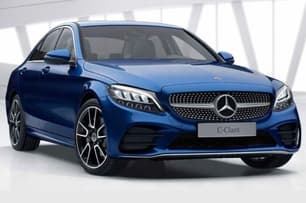
Mercedes has created something of a problem for itself with its decision to introduce AMG styling packages for the majority of its range, including the C-Class.
It means the C 43 has to walk a fine line between looking like a unique AMG model, rather than just a C300 with a bodykit and not out-doing the C63.
To that end it has AMG’s now familiar grille with vertical bars, the unique and complex-looking 20-inch alloy rims and a small lip spoiler on the boot. But otherwise it is surprisingly understated for an AMG, lacking the more obvious and muscular stance of previous AMG offerings.
Inside, there’s a similar theme, with the typical Mercedes-Benz luxury appointments but with a sportier, AMG twist. The steering wheel is chunky and comes with AMG branding, metallic shift paddles and a pair of rotary dials/buttons that allow you to alter the various drive modes and settings.
The one on the right allows you to switch between the pre-set Comfort, Sport, Sport+ and Individual modes, while the one on the left can scroll between the various individual aspects to tailor the settings to the conditions.
In typical modern fashion the design is tech-laden, with a digital display for the instrument panel (that can be switched between various graphics) and a large, tablet-style central multimedia touchscreen that controls the majority of the car’s non-driving functions.
The MG7 is genuinely good looking. The fastback roofline gives it a sleek silhouette, and there’s a confidence to the way it carries itself.
The blacked-out badging, quad exhaust outlets, 19-inch Michelin tyres and red brake calipers all lean into that sporty brief. It looks fast standing still. The frameless doors are a nice touch, and the retractable rear spoiler adds a bit of theatre and fun.
Inside, the cabin follows through on that upmarket intent. Deep burgundy leather and synthetic suede are used generously throughout, giving it a sumptuous feel. Although, my husband joked that he wouldn't be able to drive it during State of Origin... sorry, Queenslanders!
There’s less reliance on piano black trim, which I appreciate as it scuffs easily, and most surfaces look well-finished. The integrated headrests up front give the illusion of proper sports seats but I do wonder if the interior would pop half as well if it was finished in the optional black.
The dashboard is dominated by a wide digital display incorporating a 10.25-inch instrument cluster and a 12.3-inch media screen. The panoramic sunroof helps keep things light and airy, and while there aren’t many physical buttons or dials, which is usually a gripe of mine, the overall execution feels cohesive and premium for the price point.
The new C-Class has grown slightly in size compared to the model it replaces, most notably with a 26mm increase in the wheelbase which you can feel in the cabin.
The front seat space is good, with excellent adjustability for the power-adjustable seats and steering column. I had no trouble finding my ideal seating position which makes for a more enjoyable and uncompromised driving experience.
Rear space is a bit tighter (which is typical for this segment/size of vehicle), but thankfully the standard seats do have very deep sculpting in the backs which allow for more knee space and foot room.
However, at approximately 180cm (six-foot), I wouldn’t like to sit behind my seating position for long periods as my knees were touching the seat back, and headroom is compromised with the panoramic glass roof.
In terms of small item storage there’s a lidded console box in between the front seats as well as a pair of cupholders and a small tray where you can place your mobile phone.
It’s worth noting, though, that early examples of the C 43 in Australia do not have a wireless smartphone charging pad, with that reportedly being introduced from February production.
While that’s good news, it’s not really competitive in this day and age to offer a car costing six-figures without such technology.
There’s also only a single USB-C power outlet in the front, which is another disappointment, but there is a pair in the back.
Mercedes does win some points back for a respectable 455-litre boot, which has a nice wide load opening that will make packing luggage easier.
Up front is where the MG7 feels most generous. The electrically adjustable front seats are comfortable and supportive for daily driving, although extendable under-thigh support would help reduce fatigue on longer trips. You do get heating for both the seats and the steering wheel but having to dive into the media menu to activate them is annoying.
In the second row, legroom is respectable for a mid-size sedan. Headroom, however, is tighter thanks to the fastback roofline and panoramic sunroof. Tall teenagers won't feel like they can sprawl out but younger kids will be fine. The second row features two ISOFIX child seat mounts and three top-tether anchor points but two child seats will fit best. Bending down to buckle in a child will remind your back why SUVs became all the rage, but it's certainly doable.
The seats in the second row are thickly padded and comfortable, and the fold-down armrest sits at a good height to lean on. Amenities aren’t especially extensive given there’s only one grade available, but you do get a couple of cupholders, map pockets, directional air vents and two USB-C ports.
Storage in the front row is about what you’d expect for a car of this size. There’s a decent glove box, a shallow middle console, large door bins and some handy little nooks near your knee. A sunglasses holder and a dedicated phone cradle with wireless charging round things out nicely. The wireless charger can lag a little in topping up your battery, and it's quick to overheat your phone - added ventilation would be a big help here. However, there’s also a 12-volt socket and two USB-C ports if you prefer a cable.
The media system itself is responsive and largely intuitive, although the touchpad-style controls on the dash feel slightly back-to-front in use. On the plus side, it’s very easy to flick into Sport mode and open up the exhaust using the cluster controls, which adds a bit of fun to the daily drive.
The boot offers 375 litres of capacity, which is on the smaller side for the segment. Comparatively, the Sonata N Line offers 480L, the Skoda Sportline 600L and the Camry 524L. That said, it’s been perfectly usable for grocery runs and the odd road trip this week. You do need to load bulkier items further back toward the seats to work around the sloping fastback design. A powered tailgate adds convenience, and there’s a temporary spare tyre underneath, which I always prefer to a repair kit.
We’ll get to the major change under the bonnet shortly, but another significant alteration for this latest C 43 is the price.
It now starts at $134,900 (plus on-road costs), which pushes it well above its market rivals, the BMW M340i xDrive and Audi S4, which start at $104,900 and $106,200, respectively.
However, Mercedes has added more technology under the bonnet and loaded the C 43 up with standard equipment, including its '4Matic' all-wheel drive system, adaptive damping, rear-wheel steering and 20-inch alloy wheels.
In terms of creature comforts, the C 43 is well-appointed, with leather upholstery, a head-up display, augmented reality navigation, a panoramic sliding sunroof, and a Burmester 3D surround sound system.
There are two option packages for the C 43. The 'Digital Light Package' costs $2400 and adds Multibeam LED headlights with 'Ultra Range' highbeam, 'Adaptive Highbeam Assist Plus' as well as active light function and cornering light function.
The 'Performance Ergonomics Package' includes AMG Performance front seats, an AMG Performance steering wheel in Nappa leather and microfibre and the 'AMG Track Pace' system for an additional $5200.
For now, the MG7 is offered in a single grade, the Essence, priced from $44,990 before on-road costs.
That positions it just above the Skoda Octavia Sportline, which starts from $44,490 MSRP, although the Skoda doesn’t match the MG7 feature for feature. In terms of features and styling, it’s closer to the Hyundai Sonata N Line, which opens at $56,500 MSRP. And then there’s the segment darling, the Toyota Camry SL, from $53,990 MSRP, happily flexing its hybrid efficiency credentials.
On price alone, the MG7 looks competitive. On specification, it starts to look like a bit of a statement. You get leather and synthetic suede upholstery, heated and electrically adjustable front seats, memory function for the driver’s seat, a heated steering wheel, a panoramic sunroof and 19-inch Michelin tyres.
Technology feels well thought out and a large centre display houses a 12.3-inch media system, paired with a 10.25-inch digital instrument cluster that appears larger than it is thanks to the integrated touch controls. There’s wired and wireless Apple CarPlay and Android Auto, built-in satellite navigation, 256-colour ambient lighting and a 14-speaker Bose sound system.
Practicality hasn’t been overlooked either. A powered tailgate, temporary space saver spare wheel, dual-zone climate control, acoustic door glass, rain-sensing wipers and a 360-degree camera system round out the package.
The biggest talking point about this new car is the engine, with AMG downsizing from the old C 43’s six-cylinder to a 2.0-litre four-cylinder turbocharged petrol engine.
But it’s not just any turbocharged four-pot, because it is fitted with technology that Mercedes claims has been inspired directly from its Formula One team.
While the F1 team engine facility is based in England, this engine was designed and developed by the Mercedes-AMG team at its Affalterbach headquarters, but the concept of the electric turbocharger reportedly comes from the engine that powered Lewis Hamilton to multiple world championships.
The electric exhaust gas turbocharger - to give it its official name - uses a small electric motor on the turbocharger shaft to spin up the blades without having to wait for any exhaust gases to pass through it first.
To power the electric turbo the C 43 is equipped with a mild-hybrid 48-volt electrical system.
Mercedes claims this means reduced lag and improved throttle response for a sportier driving experience.
It also helps make this small engine produce big amounts of performance, with AMG extracting 300kW of power and 500Nm of torque from this 2.0-litre, which is more power than the previous six-cylinder C 43 managed.
The engine is paired to a nine-speed multi-clutch transmission, which isn’t a dual-clutch with a pair of clutches operating on every second gear ratio, but instead uses a “wet start-off clutch” for better take-offs and smoother shifting on the move (at least in theory).
Power is sent to the road via all four wheels thanks to Mercedes’ 4Matic all-wheel drive system.
The MG7 has a 2.0L, four-cylinder turbo-petrol engine producing up to 170kW of power and 380Nm of torque. That’s pretty gusty compared to its nearest rivals, although the Sonata N Line still beats it with its 213kW/422Nm outputs. The Hyundai is more of a dedicated sports model. Still, with these outputs the MG7 manages a 0 -100km/h sprint in a swift 6.5-seconds!
Power is delivered to the front wheels and the nine-speed auto transmission punches through its gears relatively smoothly. You can also flip it into Sport mode, where gear changes become more pronounced.
Overall, the whole setup creates an engaging on-road experience without lulling you into any false pretences. The MG7 is not a racer, even though it looks like one, but it holds its own.
Despite the smaller engine you can hardly call the C 43 miserly, with a claimed combined urban/highway cycle rating of 9.1-litres per 100km. That’s only a 0.2L/100km improvement over the old six-cylinder.
On test, which included a return trip from Sydney to Bathurst via motorways and some dynamic back road driving, we saw a return of 11.8L/100km on the car's onboard computer.
While hardly hybrid-worrying, it’s impressive to think that driven modestly, such a potent engine can return a single-digit fuel figure.
The MG7 has a claimed combined fuel consumption figure of 8.0L/100km. With its 65-litre fuel tank, that equates to a theoretical driving range of up to 812km.
That places it broadly in line with the Hyundai Sonata N Line, which claims 8.1L/100km, although the Hyundai delivers stronger engine outputs. The Skoda Octavia Sportline is notably more frugal at 6.1L/100km, while the Toyota Camry SL continues to dominate the efficiency conversation with its 4.0L/100km hybrid figure.
In real-world driving, expect that 8.0L/100km claim to creep up. Even after a week consisting mostly of longer highway stretches, my trip computer was sitting at 8.6L/100km. That’s not wildly unexpected for a turbo-petrol engine, and it’s hardly alarming, but efficiency is a major consideration for families. Against hybrid rivals, it doesn’t win that particular argument.
Combined CO2 (ADR 81/02) emissions sit at 183g/km, which is comparative to the Hyundai Sonata N Line but not as low as its other rivals.
Let’s start with the good news. The new Mercedes-AMG C 43 is a quick car. The engine may be small in size but the electric turbocharger does its thing and provides plenty of punch.
You can get a performance boost, too, thanks to the belt-driven starter generator, which acts as a mild hybrid and gives you a surge of 10kW for a brief period if you need a sudden burst of extra speed.
The chassis is well-sorted, too, at least from a dynamic point-of-view. The rear-wheel steering can provide up to 2.5 degrees of turning, which improves handling at speed and manoeuvrability when parking.
However, there are some less-impressive elements to the C 43, too. The obvious one is the drama, or rather the lack thereof.
As I said at the beginning, the C 43 has never been as wild or raucous as the V8-powered C 63, but when you buy an AMG there’s a rightful expectation that it will provide some thrills.
The C 43 simply doesn’t have that character about it. Yes, it’s fast, but it produces that speed with efficiency rather than excitement.
And it’s not an engine size problem, because even the 2.0-litre four-cylinder A 35 and CLA 35 offer more ‘wow factor’ than the C 43.
Yes, the engine makes noise under acceleration (and it can be altered between discreet and sporty) but even at its best it sounds muted and lacks the evocative tone of a V8 or six-cylinder engine.
Another disappointment is the transmission calibration, with the gearbox awkwardly shifting out of first gear on multiple occasions during our test drive.
In the taller gears it felt smooth enough cruising along, but given its low speed shifts we’d like to spend more time in the urban environment before passing final judgement.
The other notable element of the driving experience we struggled with was the ride quality. While fine on the smoother motorways, our test drive included time on some patchy country back roads and the C 43, even in the ‘Comfort’ suspension setting, was simply too firm.
Riding on low profile tyres, the adaptive dampers struggled to isolate the cabin from the imperfections in the road, leading to a fussy ride at times.
Overall the C 43 is a good car, but it feels like there are still some areas where Mercedes could improve it to make it really live up to the AMG badge.
Power delivery in the MG7 is smooth and responsive, and it doesn’t take long to feel confident with the turbo-petrol engine. For a bit of extra fun, flick it into Sport mode and open the exhaust; gear changes become more pronounced, and the engine note gets noticeably throatier. It’s not a performance sedan, but it’s definitely engaging on the road.
Handling is another highlight. The steering is responsive and firms up depending on your selected drive mode, and the low-slung stance helps the car feel surprisingly nimble in corners. That said, it’s not always surefooted when accelerating out of tight bends, which reminds you that the MG7 is sporty but not track-focused.
Visibility is adequate but not perfect. The thicker pillars, lower roofline, and relatively small windows do make the cabin feel a touch enclosed, and there’s some road noise, which is enough to remind you it’s not a luxury saloon, but it never becomes intrusive.
The MG7 feels agile in tighter spaces, and the 360-degree camera system is high-quality. Parking is straightforward, which frazzled parents will appreciate.
The C43 gets a comprehensive list of safety equipment that leaves little out. Obviously there are the usual passive safety items, like 10 airbags, including dual-front combined pelvic/thorax airbags and a front centre bag that drops between the front seat passengers to minimise the chances of a head clash.
Also included as standard is autonomous emergency braking front and rear (covering speeds between 7.0-200km/h), adaptive cruise control with active stop/go, a 360-degree parking camera, 'Active Parking Assist', 'Active Lane Keeping Assist', 'Blind Spot Assist' and, of course, anti-lock brakes with 'Brake Assist' and 'Adaptive Brakes' with Hold function and electronic stability control.
Also included are dusk-sensing LED lights, rain-sensing wipers and run-flat tyres with tyre pressure warning.
The C43 also comes equipped with Mercedes’ 'Driving Assistance Package Plus', which adds even more safety gear. This includes 'Active Blind Spot Assist', 'Active Brake Assist with Cross-Traffic Function', 'Active Emergency Stop Assist', 'Active Lane Change Assist', 'Active Lane Keeping Assist', 'Active Steering Assist', and 'Active Stop-and-Go Assist'.
While the C43 hasn’t been specifically crash-tested, the latest C-Class was rated by ANCAP with a five-star score for all models except the upcoming C 63 S E Performance.
The MG7 has a maximum five-star ANCAP safety rating from testing done in 2025 and scored well across its individual criteria with 88 per cent for its adult protection, 85 per cent for child protection, 80 per cent for vulnerable road user and 81 per cent for its safety assist.
Passive safety items include seven airbags including a front centre airbag and curtain airbags covering both rows. Families will like that there are two ISOFIX child seat mounts and three top-tether anchor points but realistically, two child seats will fit best. There are also powered locks for the rear windows and intelligent seatbelt reminders for all five seats. Parking is easy with the rear parking sensors and 360-degree view camera system.
Active safety includes forward and rear collision warning, lane keeping aids, lane departure warning and prevention, blind-spot detection, side exit assist and a relatively unobtrusive driver monitoring system.
Other highlights include emergency lane keeping, which will activate when there’s no response from the driver and the rear cross-traffic alert also gets assisted braking. The adaptive cruise control is fairly well-calibrated and it’s a bonus having the emergency call functionality, although it seems to connect to an MG service line, rather than directly with emergency services. And you have to select which country you’re in before it activates, which might not be a delay you want when you really need it!
There’s autonomous emergency braking with car, pedestrian and motorcyclist detection and it's operational from 4.0 – 85km/h and up to 150km/h for car detection but it is more typical to see that top figure closer to 180km/h.
The C 43 is covered by Mercedes’ five-year, unlimited kilometre warranty, which has become the new standard for the luxury car market.
Service intervals for the car are at 12 months/25,000km, which is on par with industry standard.
Mercedes-Benz Australia will offer a service plan for the C 43, prices were yet to be confirmed at the time of publication but the company has indicated it will be similar to the C300.
That means $550 for year one, $900 for year two, the third service costs $1000 and the fourth year service costs $2450 - for a total of $4900 for the first four years of ownership.
MG backs the MG7 with a seven-year, unlimited-kilometre warranty. If you service exclusively through MG service centres, that coverage can be extended to 10 years or up to 250,000km, which makes it one of the more generous warranty offerings currently available.
At the time of this review, servicing intervals and service prices haven't been set for the MG7. It's fairly easy to secure servicing for an MG, as they have around 90 service centres nationwide at the moment.