What's the difference?
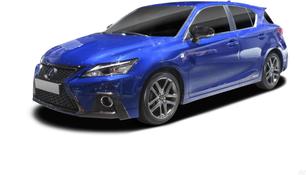
There are two ways to look at the Lexus CT200h; as either the cheapest model in the Japanese company’s range, or as a planet-saving hybrid.
Either way, the four-door, five-seat CT200h hatch – which has been updated for 2018 – differs from the rest of the Japanese luxury brand’s lineup for a number of different reasons.
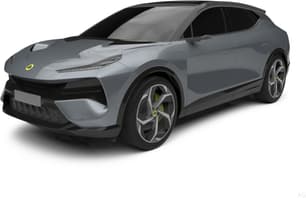
This is a Lotus - but it’s not like any Lotus you’ve ever known.
In fact, forget everything you know about Lotus, the British brand previously famous for small, lightweight sports cars is now evolving into something very different. Very, very different.
Under the control of Chinese automotive giant Geely since 2017, Lotus will shed its past and focus its future on all-electric, luxury vehicles like the Eletre we’re testing here.
The Eletre is a full-size luxury electric SUV designed to take on the likes of the Audi SQ8 e-tron, BMW iX and Mercedes-AMG EQE on the electric side, while also trying to lure buyers away from the likes of the Bentley Bentayga and Lamborghini Urus.
So, how does this radically different Lotus measure up to the brand’s reputation and stack up against its would-be competitors? Read on to find out…
The cheapest Lexus of them all isn’t chasing badge snobs with the CT200h as blatantly as Mercedes-Benz, BMW and Audi do with their entry level cars… but it’s perhaps not quite the Lexus you’d expect it to be.
It has a lovely front-of-cabin, for example, but there’s a lot of last-gen Prius in plain sight in the rear of the cabin.
The hybrid powertrain, too, is noble in concept, but the day-to-day reality is that it’s not as nice to drive, especially town to town, as a regular petrol-powered car of similar size.
The foot brake, silly multimedia joystick and odd gearshifter also spoilt the party a bit.
Empty nesters who are looking for a nice city runaround with a tinge of greenwash about it will love it… and if the current Prius is anything to go by, the next CT will be a very good thing indeed.
So, how does this radically different Lotus measure up to the brand’s reputation and stack up against its would-be competitors in the final summation? It doesn’t reset the benchmark in any area or stand out head and shoulders above its competition, but crucially for Lotus (and its overlords at Geely) it doesn’t feel behind its rivals.
For the Lotus diehards this is an unrecognisable addition to the brand’s legacy of great sports cars. But this new version of the brand is looking to reach fresh customers and the Eletre will likely grab their eye with its dramatic looks.
It’s a highly competitive luxury, performance SUV that should have anyone considering a similar sized Bentley, BMW, Mercedes, or even the Lamborghini taking it for a test drive. It has both elements - luxury and performance - that will appeal to those looking for something special.
There are some light external revisions for the latest update of the compact Lexus CT200h. New grey 17-inch alloys are unique to the Sport Luxury, along with a black roof treatment, new L-shaped LED driving lamps that match new-design LED tail-lamps, while Lexus designers have also added its new spindle grille to the brand’s smallest model.
It manages to be inoffensive, but it doesn't really reflect the brand's latest design language of 'real world concept cars' like the NX and the LC ranges.
Inside, a couple of new leather colour options are available for the CT200h, while the addition of the wide-format 10.3-inch screen to the top of the centre console is the single largest change. Interestingly, the steering wheel controls appear to have regressed a little from the previous model, no doubt brought about by the addition of the new driver aids.
The design of an electric SUV is, by its very existence, interesting as it’s something a Lotus has never been before. This is the brand’s new flagship SUV, designed to take on the likes of everything from the Bentley Bentayga to the BMW iX and even the Lamborghini Urus, so it needs to make a statement.
The design is influenced by the Evija electric hypercar, which Lotus built to kick-start its Geely era, but goes a step further with its angular design. It certainly looks more closely related to the Lamborghini SUV than any Lotus you’ve seen before.
It’s different, it looks special and will likely turn heads, but to be blunt, if you’re a Lotus lover who has an affection for the Elise, Exige and the like then this really isn’t for you.
This is a modern evolution for Lotus, created to appeal to new customers with its edgy exterior design, utterly modern interior look and premium finish.
One disappointment is the way the plethora of safety sensors and cameras can disturb the lines of the car, making it look like an unfinished prototype from some angles.
The CT200h basically replicates a small hatchback in terms of interior size. It'll seat five, but if you try to put three adults across the back, they won't be particularly happy about it.
The roofline is quite low and the car’s waistline is high, which makes the glasshouse feel small. Room in the front is adequate, but only just for taller drivers; the sunroof, as fitted to our test example, takes away a good chunk of headroom, despite the CT200h standing just 5mm lower than a Corolla overall.
The seats themselves, too, are mounted just a touch high to be comfortable for taller drivers, while rear seaters will complain bitterly about being stuck behind my (184cm) driving position. However, my more diminutive wife pronounced herself very comfortable behind the wheel and in the passenger seat.
A nice, small steering wheel sits in front of a single-dial dash that sports two digital screens either side. The left-hand screen changes when you change the drive mode dial between Eco, Normal, and Sport. And there's also a full EV mode button in handy reach.
Two cupholders are line astern between driver and passenger, although storage is at a premium thanks to the size of the car. Climate and multimedia controls - and even an old-school CD player – flow right through underneath the centre console, which steals away valuable space. There are no extras like wireless charging bays, nor is there Apple CarPlay or Android Auto.
There are bottle holders in the door, but don't try and stash anything that's over one litre in size because it just won't fit.
It's quite an austere proposition for rear-seat passengers, with no bottle holders in the doors, no cup-holders and no charging points. There are fixed vents under the front seats and on the right side of the rear area, so it's not a complete desert, and there are ISOFIX mounts for two child seats in the rear.
Another practicality issue that's unique to the CT200h is the gear shifter. It operates as a spring-loaded joystick, and unless you're watching the dash indicator, it can be tricky to know which gear you're in. Other car makers have actually recalled cars with this style of transmission stick, and it's certainly something that you have to get used to.
Likewise, the old-school foot brake is certainly an anachronism in something like a Lexus.
Based on the previous generation Prius, the nickel-metal hydride battery for the CT is hidden underneath the rear seat, so it doesn't steal away too much boot room. However, the boot floor is still quite high, and the area is rather small at 375 litres with the seats up. There is 985 litres available when you drop the seats, but the aperture is short and narrow, so larger items will be a squeeze. There is a space-saver spare nestled away underneath the boot floor, too.
Another practicality note in the negative column is Lexus's insistence on the odd joystick control for its multimedia system. It's simply not very good. It’s imprecise when compared to a touchscreen, the action and feel of our test unit was very much less than premium, and it’s just awkward and clumsy to use. The CT is not the only Lexus to use it, but we wish the company would just see the light and ditch it all together.
The modern and premium design carries over into the cabin, with the model we were testing finished in grey leather and Alcantra with gold highlights. Which, along with the fact there’s leather and carpet inside, makes this feel more polished and luxurious than any previous Lotus.
But once you look beyond that you notice it’s not quite as practical as such a large SUV could be. Yes, there are a couple of cupholders in the centre console, but one is quite small and not practical for most cups/bottles.
There’s a small shelf for the wireless smartphone charging pad and the centre console box, but aside from that, there’s no other significant storage space in the front.
On the plus side the seats are comfortable and supportive, which is also true of those in the rear. The space in the rear is excellent, with plenty of head and knee room that will allow four adults to travel in comfort (adding a fifth to the middle seat would be a squeeze).
Those in the back also get access to the small screen that allows them to adjust not only the climate control but also the front seats. The rear seats also recline and there’s a pair of cupholders and USB-C ports.
The Lotus Eletre has a generous 688-litre boot, which is wide and deep. However, it comes at the expense of a spare tyre, with only a puncture repair kit provided.
The 1.8-litre petrol-electric CT200h comes in three different flavours – the Luxury, the F-Sport as tested here, and the Sport Luxury. The range now kicks off at $40,900 (up $2150) and peaks at $56,900 with the Sport Luxury (up $810).
The F-Sport may be a little lacking in the actual ‘sport’ department, but it’s is pretty flush with flash kit, including not one but three motors (one petrol and two electric), auto lights and wipers, a wide 10.3-inch multimedia system, leather seats, dual-zone climate control and new 17-inch alloys.
At $50,400 plus on-roads, the F-Sport has jumped in price by $1960, but it’s gained a host of new gear, including a new driver aid system that adds auto emergency braking (AEB), pedestrian-detecting pre-collision warning system, lane departure warning with steering assistance and adaptive cruise control.
There are also LED headlights and taillights, as well as revised styling for the front and rear bumpers.
The CT will be cross-shopped against other premium tiddlers like the Mercedes-Benz A-Class, Audi’s A3 and the BMW 1 series. Comparing it like-for-like in the hybrid category, there’s the top spec Toyota Prius i-Tech, while Nissan’s Leaf could theoretically be lumped in both on price and on environmental grounds.
The Eletre is one of many electric vehicles to fall victim to the fluctuating market, receiving an enormous price cut before it officially went on sale in Australia.
The range was meant to start at $239,000, but the decision makers changed their minds and slashed it by a whopping $49,100 so the ‘entry-level’ Eletre is priced from $189,900, plus on-road costs.
The Eletre S, which is the subject of this review, also received a major price cut, dropping to $229,990 from its original $269,000, while the range-topping Eletre R is now priced from $279,990 rather than $315,000 as first announced by the brand.
As for what you get for that money, the Eletre comes standard with a range of premium equipment, befitting Geely’s aspirations for the Lotus brand. This includes matrix LED headlights, two-tone paint with a black contrasting roof, 20-inch alloy wheels, air suspension, keyless entry and start, a key card with NFC (Near-Field Communication) function, four-zone climate control, eight-way power adjustable front seats and heated front seats.
There’s also a KEF premium sound system, in-built eSIM card with 5G capability, a wireless charging pad as well as a 12.6-inch digital instrument panel and a 15.10-inch OLED central multimedia screen.
Stepping up to the Eletre S adds more goodies including 22-inch 10-spoke alloy wheels, an 'Active Aero Pack', 64-colour ambient lighting, automatic parking assist and a 23-speaker KEF 3D surround sound system.
At the top of the range, the Eletre R gets a more potent dual-motor powertrain, two-speed transmission, unique 22-inch alloys and a 'Quartz' interior theme.
The 1.8-litre twin-cam petrol engine makes a relatively low 73kW and 142Nm, while a 60kW, 207Nm electric motor that’s also connected to the front wheels chips in its share.
Combined, the system produces 100kW, while the torque figure translates to around the 150Nm mark. That juicy 207Nm doesn’t come into play, sadly, given that the petrol engine – which is built to run cooler than a traditional Otto cycle engine, and therefore more efficiently – does most of the work.
Throw in a transaxle for the electric motor and a power inverter, and things are getting complex. However, if the Prius is any indication, the CT200h’s drivetrain is durable and relatively serviceable, with batteries estimated to last ten years or longer.
As mentioned earlier, there are three Eletre models, with the base model and S sharing the same powertrain, while the R gets a unique set-up.
The Eletre and Eletre S punch out a very healthy 450kW/710Nm from the dual motors that provide all-wheel drive traction. Despite being a full-size SUV, the two 450kW models are able to run 0-100km/h in only 4.5 seconds.
The Eletre R gets more powerful motors that make a staggering 675kW/985Nm, and crucially also get a two-speed transmission, which helps with acceleration. Lotus claims it has enough performance for the Eletre R to launch from 0-100km/h in just 2.9 seconds, a hugely impressive time for such a big and luxurious vehicle.
Here’s the odd thing – over 220km of largely highway driving, I couldn’t get the CT200h under a dash-indicated 10.4 litres/100km, against a claimed combined fuel economy figure of 4.4L/100km.
I topped the tank off with 18 litres of fuel, which works out at a closer 8.8L/100km… but it still ain’t anything like 4.4.
Another owner I spoke to, though, said he regularly records high fives with his CT200h in mixed conditions.
It runs a 45-litre tank that’ll happily take 95 RON fuel.
Despite the different powertrains, all three Eletre models have the same 111kWh battery but the driving range varies across each one.
The entry-grade model has a claimed WLTP range of between 535-600km, the Eletre S drops to 490-535km and the Eletre R can travel between 410-450km on a single charge.
On test we found those claims to be optimistic, certainly on the higher end, and especially if you head out of the urban environment and don’t maximise the regenerative braking to keep the battery topping up.
If you've ever driven a Prius, then you'll be very familiar with the way that the CT drives. Based around a 73kW Atkinson cycle petrol engine which focuses on fuel efficiency rather than outright power, a 60kW electric motor (the pair combine to produce 100kW in total), a nickel-metal hydride battery array and a CVT gearbox, the CT200h – like the Prius – is a bit different to a regular hatch.
Under light throttle, the CT is quiet and moves along quite well, and you can even use full Electric Vehicle mode at speeds under 45km/h for a brief amount of time, (slightly less than two kilometres), and with a very gentle right foot.
The battery array is recharged via the petrol motor as well as regenerative braking (where heat energy is captured and directed back to the electric system) – but unlike a petrol-electric plug-in hybrid, there’s no way to stick a 240v cable into the CT to top up the battery.
It has the unusual whines and odd noises that you would associate with a partly electric car, but the petrol motor sounds just like a regular old four-pot petrol unit, and it’s running most of the time.
One issue with the drive of a hybrid is its ability, or the lack thereof, to get off the line in any sort of hurry. You really have to mash the throttle to get going, which takes some getting used to. There’s also some hesitation and un-Lexus like thumps from the drivetrain if you confuse it by almost stopping then taking off again.
The CT200h’s biggest bugbear is that the fourth generation Prius exists. Built on a more sophisticated newer-generation platform and with a more refined drivetrain, the new Prius is a great insight into how good the next CT will be – and what the shortcomings of the current one currently are.
The CT works well in high-traffic city environs, where a light throttle foot helps get the best out of the unusual drivetrain. Lots of lag from rest is an annoyance, as is an excess of CVT whine under hard efforts, but the CT200h pootles around town very well.
Its small size does play against it when it comes to keeping out road noise at freeway speeds, though the CT is superior to most other similarly sized cars in this regard. As an aside, its build quality is nothing short of amazing, with minimalist panel gaps, a tight interior and lashings of paint on every surface.
The challenge for Lotus, and its competitors, is to make its cars stand out from the pack despite the increasing similarities in performance brought on by electric powertrains.
Whereas in the past we could have assessed the difference between a Lotus-built V8 compared to a BMW manufactured V8 or even a Mercedes-Benz V12, these days all the electric models produce the same quiet, effortless punch.
So, it creates a generic driving experience in some regards, when what you’re hoping for at this end of the market is something special and different. And it’s important to note I don’t use the term ‘generic’ in a negative sense, but simply the Eletre has similar driving characteristics to the electric models from BMW, Mercedes-AMG and others.
Where it does give a hint to Lotus’ heritage is in its handling, where the combination of the air suspension with adaptive dampers, torque vectoring (by braking) and the British brand’s decades of experience combine to create a surprisingly direct and responsive SUV.
You won’t mistake it for an Emira, Exige or Elise, but the Eletre does have dynamic ability a cut above your average luxury SUV.
Part of the update for 2018 is the addition of several driver aid systems, including AEB across the range, lane departure control with steering and adaptive cruise control.
The F-Sport also has reversing camera and eight airbags as standard, ensuring the maximum five-star ANCAP safety score it managed in 2017.
Another major change for this new era is massive upgrades in terms of safety technology. The Eletre is packed with an array of cameras and sensors to help you avoid an accident.
There are 34 in total - four Lidar, six radar, seven HD cameras and 12 ultrasonic sensors. This all feeds a raft of features, including 'Highway Assist', which makes the Eletre the first Lotus to drive itself.
However, as part of the price cut, the Lidar hardware is removed from the entry-level model from the MY25 built examples onwards. However, if you option the Highway Assist package, they are fitted again in order for the system to work.
Standard on all Australian models is the 'Lotus Pilot Pack' which includes all the safety items that have become so common in recent years, including adaptive cruise control, autonomous emergency braking, rear cross-traffic alert, blind-spot monitoring, driver monitoring and traffic sign information.
Neither ANCAP nor Euro NCAP have tested the Eletre, as the safety authority rarely tests such expensive vehicles.
The airbag count is seven - front, front side, side curtain and far side (front centre) - and there are three top tether point and two ISOFIX positions for child seats across the second row.
Lexus sells the CT with an unusual four-year/100,000km warranty, which includes roadside service coverage. The battery pack has an eight-year/160,000km warranty, while Lexus would like to see you back for a service every 12,500km or 12 months.
It’s not just about a warranty or a service interval with Lexus, though. For decades now, its customer service record has topped all industry measures, and everyone we know who has bought a Lexus with their own money has raved about the quality of the service received.
As well, it’s a level of service that’s provided across the range. It’s a tangible benefit of buying a CT200h.
As for its ownership credentials, Lotus doesn’t offer capped price servicing, so you’ll need to discuss the on-going maintenance costs for your Eletre.
On the plus side, the new model is covered by a five-year/150,000km warranty for the car, with an eight-year/200,000km warranty for the battery.