What's the difference?
Breadth of capability. That’s the key phrase the engineers, public relations managers and even the support crew keep using when discussing the all-new Range Rover Sport SV. And with good reason.
There aren’t too many SUVs on the market that can match it for its bandwidth. Within the space of a few hours at the recent launch in Portugal, we hit 233km/h down the front straight at the Portimao race track, carved through country back roads and then drove down a muddy track, across a small creek and then conquered an off-road obstacle course.
Most of its rivals can do some of those things, but none can do all of them.
Range Rovers have always had a Swiss Army knife element to their appeal, but the Sport SV adds a new dimension with its sheer dynamic ability.
The company confidently calls it its most dynamic model yet, which isn’t saying much for a brand that’s history is focused on off-road performance rather than worrying too much about paved roads.
But not only is it clearly the most dynamic Range Rover ever, it’s also now a clear front-runner in the highly-competitive performance SUV market, capable of holding its own against the likes of the Porsche Cayenne Turbo GT, Lamborghini Urus and Aston Martin DBX.
Meet the IM6 Performance, “presented by MG”. And that last bit’s important, because while it’s marketed and sold by the Chinese mainstream player, it really is unlike any other MG going around.
Think of it as like a Lexus to Toyota, or an Audi to Volkswagen, with the Chinese brand going premium, and seemingly making a direct play for Tesla’s fan base. How so? Well, there’s only two models in IM line-up (sound familiar?) with the IM6 a rival for the Model Y, and the IM5 (which we’ve also tested) a competitor to the Model 3.
The IM6 is spacious, pretty sumptuous and ridiculously fast. And it offers up some features I’ve only ever really seen in high-end German metal. But it’s also got some quirks.
So, can MG run with the big dogs of the premium car world with the IM6 Performance? And should Tesla be worried? Let’s find out.
Range Rover proudly calls it its “most dynamic” model ever, and based on our first experience that’s most definitely true. Its ability to be genuinely exciting to drive on a race track is nothing short of remarkable for a brand whose history is all about off-road prowess.
On the road it shines just as brightly, with its potent engine and state-of-the-art suspension system working in unison to make for a stunningly dynamic large and luxurious SUV. And then, if you need to cut across a field or scramble up a slippery hill, it will do that too.
Range Rover’s claims of ‘breadth of capability’ is apt but arguably an understatement. I’d stop short of calling the Sport SV the obvious class-leader in the high-end, high-performance SUV market because it’s up against some seriously impressive rivals, but the Range Rover offers a broader range of ability than any of its competitors.
Note: CarsGuide attended this event as a guest of the manufacturer, with travel, accommodation and meals provided.
A super solid first outing from the IM brand. Don't let the pricing fool you, there is still bang for buck on offer in the IM6 Performance, even if it at times feels a bit too digital for my tastes.
Range Rover is a brand synonymous with big, imposing and off-road capable SUVs, not dynamic and sporty vehicles. But in recent years the Evoque and Velar have added a new layer of style and a sleekness to the brand’s reputation.
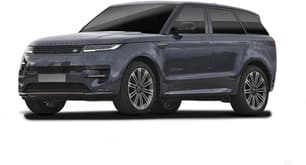
The latest generation Sport is still a big and imposing two-tonne SUV, but it’s also definitely sportier to look at and the SV changes only add to that.
It only takes a moment looking at it and it’s clear this is an SUV that means business. The 23-inch wheels fill out the guards, the air-suspension can lower the body to the ground and the aerodynamic package, including the front splitter, make for a purposeful look.
The carbon-fibre bonnet can be finished with the centre section exposed, showing off the weave of the fibres, which is a nice touch, although fake vents on the bonnet and front fenders are a bit disappointing.
I feel almost mean saying this, because there will be plenty of people who like the way the IM6 looks, and I don’t want to rain on their parade. But… I’m not one of them.
It reminds me a bit of the pre-facelift Tesla Model Y, in that it’s largely feature-less and a bit blobby, and there’s not a sharp angle anywhere to be found on the thing. Premium to me means powerful and assured — picture just about any Audi — whereas I just find this a bit bland and soft.
Anyway, I do like the big alloys, the insulated glass roof and the light treatment front and rear.
And I like the cabin. The seats aren’t leather, but they’re super thick and comfortable, and there is a genuinely premium air in the cabin, helped by the acreage of screens and the quality elements, like the little door panels.
The doors unlatch electrically, matching the pop-out door handles outside, but they can be a bit fidgety. Someone from MG told me how they worked (you kind of cover the handle and let the door come to you) but I watched everyone else who tried to open them struggle. If you're at the point where you have to explain how a door handle works, you might have over-egged the pudding.
The second screen below the main one acts a bit like a mobile phone. You can alter your home screen widgets and access the main menu, even as Apple CarPlay is synched at the top. You’ll get used to it, I’m sure, but I found it to be a bit fidgety.
Actually it reminds me a little bit of the Lexus trackpad, or whatever that hateful system was called, where you controlled the main screen via a little mousepad thing, though happily it’s nowhere near as annoying as that was.
There are two stand-out features in the cabin, beyond the standard high-level of luxury you expect from a Range Rover Sport.
The first is the SV-specific steering wheel with illuminated paddles, which feels solid in your hands. But the second is by far the most interesting, the so-called Body and Soul Seats (BASS), which Range Rover has developed in conjunction with Coventry University.
Available with either genuine leather or ‘ultra fabric’ and a 3D-print knit trim, the seats look great on the outside but it’s what’s inside them that’s special.
There are four audio transducers integrated into the seat back which can vibrate to the beat of whatever audio track you’re listening to. The system uses AI to detect the lower frequencies and then work out which beats to transmit.
This is technology used by musicians, Coldplay’s Chris Martin reportedly wears transducers integrated into a vest when he performs, but Range Rover is confident it will add to the ownership experience.
It’s certainly an interesting technology and a demonstration across different music genres highlights the way the system adapts to individual songs, but it’s hard not to feel like this is more of a gimmick than something an owner will use every day.
If you don’t like listening to music with it, the Body and Soul Seats also work with a ‘Wellness’ setting that features six audio pieces (designed by Coventry University musicians) - calm, soothe, serene, cool, tonic and invigorate.
It’s probably what you need to help settle your heart rate after you unleash the full performance potential of the Sport SV.
In the back seat there’s none of this technology but they do feature heating and ventilation as well as power recline functions. There’s also four-zone climate control, so every occupant can be comfortable.
The IM6 measures 4904mm long, 1988mm wide and 1669mm tall, and it rides on a 2950mm wheelbase, with IM describing it as a "mid-large SUV", though I expect it will be classed as a medium SUV Australia.
That said, ICE and EV mid-size electric SUVs are not cut from the same cloth, with the latter making use of a flat floor to maximise space. And so it is with the IM6, where backseat room is pretty damn impressive. I’m 175cm, and I had no problem at all with legroom or headroom, plus the same plush seats from up there are in the back, too.
There are also air vents but no temperature controls, and while there are USB ports, there is no regular household-style plug in the cabin.
The glass in the windows is laminated, while the roof is double glazed, which MG tells me is Australian summer-proof, but I guess we'll know for sure in a couple of months.
There’s no shortage of cargo room either. There’s a 32-litre frunk up front, and there’s 646 litres in the boot with the rear seats in place. They’re 60/40 split, and if you drop them, luggage space grows to 1621 litres.
The towing capacity is a braked 1500kg, too, but I don’t expect to see many of these towing a camper trailer around.
To be blunt, the Range Rover Sport SV is one of those vehicles that if you have to ask, you can’t afford. Particularly in this case, as the model has launched in a single specification level, the Sport SV Edition One, which is priced from $360,800, plus on-road costs.
That puts it into the same financial category as the likes of the Aston Martin DBX ($356,512), Porsche Cayenne Turbo GT Coupe ($364,700) and Lamborghini Urus ($409,744) - especially when we discuss some of the pricier options.
For that price the Sport SV Edition One comes with exclusive branding on the front splitter, centre console, treadplates and puddle lamps as well as a raft of standard features likely to carry-over to the 2025 model year version.
These include carbon-fibre badges, forged 23-inch alloy wheels, digital LED headlights, a carbon-fibre bonnet, 16-way electronically adjustable front seats, Meridian 'Signature' sound system, 13.1-inch multimedia touchscreen, Apple CarPlay and Android Auto and newly developed ‘Body and Soul Seats’ (more on those later).
But if you’re feeling really sporty, you can upgrade your Sport SV with lightweight carbon fibre wheels and carbon ceramic brakes.
These will cost you a staggering $16,130 and $13,500, respectively, but the wheels measure 23-inches and are the largest fitted to a production car (and are also Australian-made by Carbon Revolution in Geelong).
Unfortunately, for now at least, this is all a moot point because Range Rover Australia has already invited and sold all examples of the Sport SV Edition One, so you'll need to be patient and wait until at least 2025 to have the option to buy one.
Premium play means more premium prices, and my IM6 Performance will set you back $80,990 on the road. That might have just sent your eyebrows skyward, but keep in mind it’s faster than some Ferraris, and is swimming with high-end tech, so the bang-for-buck factor is actually still pretty good.
There are cheaper ones, too. The single-motor Premium grade is $60,990 drive-away, albeit with less power and slower charging. Then there’s the Platinum, with a bigger battery and faster charging, which is $69,990
The Performance, though, gets everything IM has to give, including an 800-volt architecture, which means super-fast charging, as well as twin motors, brutal acceleration, a decent driving range and adaptive air suspension.
Elsewhere, you get LED lighting, a big and insulated glass roof, and 20-inch alloy wheels. Inside, there are thick and soft synthetic leather seats that are heated and cooled in both rows, a banging 20-speaker sound system, and wireless charging to pair with wireless Apple CarPlay and Android Auto.
There’s also 'active noise cancellation', and a seat-aware digital assistant which is about the best, and fastest, I’ve ever used. The IM6’s speaker system can locate where a voice is coming from, so any passenger can use the assistant. For example, if you’re in the backseat and say 'hey IM, lower my window', only your window opens. It’s a technology that I specifically remember the German brands crowing about not so long ago.
There’s also a 10.5-inch central touchscreen that controls much of the vast 26.3-inch screen that runs from in front of the driver to the centre of the cabin, as well as clever little magnets embedded in the dash in front of the driver, as well as in the back of the front seat headrests, that are designed to hold phones, iPads or other little accessories.
Also cool is the IM6’s self-parking tech, but there’s also a relatively useless crab walk function, which leans on the rear-wheel steering system to drive diagonally at slow speeds. I’m still not entirely sure when you’d use that one, to be honest.
Honestly, it’s a lot of stuff, and a lot of tech.
Sadly the wonderfully evocative supercharged V8 engine from the previous generation Range Rover Sport SVR is gone.
But, thankfully, in its place is a more powerful engine that’s exclusive to the Sport SV in the Jaguar Land Rover family.
It’s a 4.4-litre twin-turbo V8 petrol engine with mild-hybrid assistance, which is actually built by BMW and based on the same powertrain as you’ll find in the M5, albeit with some specific Range Rover elements for more off-road capability.
It’s also more powerful than the old supercharged V8, making an impressive 467kW of power and 750Nm of torque, which is a 44kW and 50Nm improvement over the old engine.
It’s paired to an eight-speed automatic transmission, again with a specific SV calibration for improved performance.
And, of course, being a Land Rover, it’s also got a four-wheel drive system with full off-road systems as well as an active locking differential.
This is the real party trick of the IM6, because there’s a nuclear power plant under the metal somewhere. All up, the twin-motor setup produces a total 578kW and 802Nm, though I suspect you’re never accessing all the grunt all at once. Still, 100km/h zips by in 3.4 seconds, and the top speed is 239km/h. For the record, that’s exactly as fast the Ferrari Roma Spider I recently handed back, so yeah, it’s properly supercar quick.
Despite all the extra power, thanks to the mild-hybrid system it’s more fuel efficient and produces less emissions than the old 5.0-litre V8.
Still, it’s all relative, and as you’d expect from a twin-turbo V8 SUV it’s still thirsty and uses 11.7-12.5-litres per 100km, based on European specifications.
The mild hybrid system uses a crank-integrated starter generator instead of a conventional alternator, providing a boost of up to 20kW and 175Nm of electrical power when needed, with the energy captured during braking and stored in a 48-volt lithium-ion battery.
Also on board is a 100kWh Nickel-Cobalt-Magnesium battery that produces a WLTP driving range of 505kms. Pretty good.
Charging is strong, too. The high-tech platform allows for 396kW DC fast charging, which is faster than what is currently offered in Australia. The claim is 30-80 per cent charged in 15 minutes. There’s also an external vehicle-to-load (V2L) port.
Before driving the Sport SV you need to understand its highly complex suspension system that allows it to be so dynamically capable. Range Rover calls it a '6D Dynamic' system, because it can control the car left and right, up and down and corner to corner.
To achieve this the system uses a combination of hydraulic interlinked dampers, height-adjustable air springs and pitch control, which makes it a semi-active suspension set-up similar to the set-up Formula 1 race cars used to boast.
This allows the Sport SV to sit between 10-25mm lower than the other Sport models and with its clever suspension can actually sit flatter in the corner with less pitch and roll - which is the traditional enemy of high-riding SUVs when it comes to handling.
But the suspension is only part of the story, with the intelligent all-wheel drive, rear-wheel steering, torque vectoring and the active locking rear diff all combining to produce an SUV with incredibly impressive dynamic capability.
Put simply, there’s never been a Range Rover that deserved to be driven on a racetrack. The Sport SV changes that, and thankfully the company let us loose on the challenging Portimao circuit in Portugal to put the SV through its paces.
Range Rover management was quick to stress it doesn’t expect the Sport SV to be a race track regular for its owners, but driving it on track did highlight the extreme potential it offers.
With such a powerful engine it should come as no surprise that the Sport SV hauled down the straight, hitting 233km/h at the end of the long front straight, but with speed still rising which suggests its 290km/h claimed top speed is accurate.
Even from those speeds and with 2560kg of SUV to slow down, with the carbon ceramic brakes it was no trouble whatsoever. Instead the braking was strong and consistent across multiple laps.
The steering is the particular highlight, with the rear-wheel steering helping to turn the Sport SV sharper and more quickly than a big SUV like this should.
But while it impressed on the circuit, we also experienced it on some great winding rural roads across Portugal and this is where it shone even more brightly.
This is an SUV that you’ll genuinely enjoy driving with its ability to carve through corners and blast down anything resembling straight road.
But to ensure it lives up to the Land Rover badge on the front, we also drove it off-road. Nothing too serious at first, just muddy ruts, across some water and over some rocks.
But then we were guided through a course that showed off its articulation potential, which is far greater than the average owner will ever need.
However, to achieve this Range Rover removed the carbon-fibre front splitter, so it’s not the most off-road friendly model the brand offers.
First things first, don't get too distracted by the word "performance" here. The IM6 doesn't act like a performance car, it feels bit too plush, and bit too digital, for that.
But that's not necessarily a bad thing. Performance cars are often loud, raucous and uncomfortable, and the IM6 is none of those things. Instead, those mountains of power and torque make silky, silent progress absolutely effortless, which feels pretty premium to me.
MG makes a big deal of how much work went into insulating the cabin from noise – with active noise cancellation joined by double-paned insulated glass – and it is a properly calming and quiet space.
Also strong is the suspension, with the adaptive air setup soaking up most bumps and bruises, but I found it can clang over really solid bumps, sounding like it's bouncing off a stopper. The steering is solid, too, with a nice weight, if not overly talkative in the feedback department, while the rear-wheel steering helps eat into the turning circle for tight three-point turns.
The downside, though, is that it all feels a little too digital, and like there's been a little too much overthinking gone into it. Having to push a button to see behind you in a hurry is bonkers (see my explanation in the Safety section below), and the secondary screen is more annoying than intuitive. And there were several bings or bongs I couldn't even identify. All of which interrupts the otherwise calming nature of the drive experience.
The Sport SV comes generously equipped with safety gear, as you’d expect at this price point. There’s all the usual passive safety, including airbag coverage for all occupants, and plenty of active safety including adaptive cruise control with steering assist, remote park assist and 3D surround cameras - which are used for off-roading as well as parking.
As with the rest of the Range Rover Sport range, it has been awarded a maximum five-star rating from safety agency, ANCAP.
There is a long list of safety aids on the IM6, and I won't detail the lot here. But I will call out a couple of curious mentions.
As always, the driver distraction warning is annoying, but can be switched off. And MG also counts the IM platform, or what it calls a digital chassis, as part of the safety offering. It has its own digital brain that adapts the air suspension, the rear-wheel steering and the active safety kit on the fly.
The other curiosity is the weird way you see out the back. Rather than fit a digital rear-view mirror to counteract the almost non-existent rear vision, you instead push up on a little toggle on the steering wheel to bring up a live view of what's happening behind you on the central screen.
If you’re worrying about servicing costs, you’re probably shopping at the wrong end of the market, but as with the range-topping Range Rover model the price of the car is expected to include servicing for the first five years and roadside assistance for the same period.
It’s also covered by a five-year, unlimited kilometre warranty.
As with all Range Rovers the car will tell you when it needs a service depending on driving conditions. For example, if you hit the track or go off-roading it will likely need a visit quicker than if you're just commuting to and from work.
The IM6 is covered by a five-year, unlimited-kilometre warranty, rather than MG’S 10-year term. Capped-price servicing is offered for the first five years, with your total bill just under $3000. The service intervals are 20,000kms or 12 months.