What's the difference?
Land Rover has launched a 35th Anniversary Edition of the Discovery, a seven-seat model that’s been a familiar sight on Australian roads for decades. Sitting in the large SUV category, it’s up against a fiercely contested field where the Lexus GX and Toyota LandCruiser Prado are household favourites.
The special edition lands squarely in the middle of that pack, a space that demands serious capability and comfort while still delivering a sense of occasion.
So the question is, does it manage to do all three?
Land Rover was making SUVs before they were even called SUVs.
Range Rovers were ferrying families around in prestigious four-wheel drive comfort decades before Audi, BMW or Mercedes-Benz even thought of doing it, too.
So, even with all its rivals these days, how well does a Range Rover do modern family duties?
Well the Range Rover Autobiography came to live with my little family of four for a week. We had the seven-seater long-wheelbase version with the twin-turbo petrol V8 engine, and this is what we discovered…
The Land Rover Discovery 35th Anniversary Edition drives beautifully, with effortless power and a composed, comfortable ride. It’s elegant and well-equipped for its price, though the technology often frustrates, and it’s not as spacious as some seven-seater rivals. Small quirks in everyday use prevent it from fully standing out in a competitive segment but it does enough to be considered.
The Range Rover Autobiography long wheelbase is an outstanding SUV that is not just beautiful to drive but makes family practicality a priority, too,
The price is reasonable relative to the competition, the features list is long and complementary servicing offers peace of mind.
If you don’t need the third row, I’d consider the standard wheelbase Autobiography even if it does reduce legroom, there’s still plenty of space.
My son stopped short of giving the Range Rover Autobiography full marks "because there are no massaging seats in the second row".
The Discovery remains a handsome SUV. It isn’t as boxy or rugged-looking as some of its rivals, but it still carries a quiet confidence and a hint of adventure in its stance. The 35th Anniversary Edition gets a few subtle touches to help it stand out, including 21-inch black alloy wheels, roman-numeral anniversary badging and slim LED lighting signatures that give it a clean, sophisticated look.
Inside, everything feels solid and thoughtfully put together, with soft-touch materials in all the right places. Some of the trim finishes lean a little synthetic, but the leather upholstery is beautifully done and the dual sunroofs bring in plenty of natural light, which helps elevate the cabin ambience.
The 11.4-inch media display takes pride of place on the dash and looks premium, and there are enough physical buttons and dials to satisfy those who like some tactile-functionality. That said, the cabin doesn’t quite deliver that sense of occasion you might expect at this price. It’s nice, it’s just not especially distinctive.
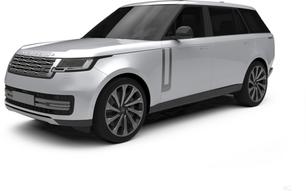
This fifth-generation Range Rover debuted in 2021 and despite its smooth, modern styling this SUV retains the familiar traditional Range Rover look with the short squared bonnet, flat roofline and tall windows.
Let’s talk about the wheelbase, because it has a huge impact on passenger space.
We had the long wheelbase which is 3197mm between the front and rear wheels - that’s 200mm more than the standard wheelbase.
Just look at those stretched rear doors in the photos - this is a go-anywhere limousine, or go-anywhere daycare centre in my case.
The overall length of the long wheelbase Range Rover is 5252mm. That’s big, but the design of this SUV doesn’t make it appear enormous.
What I don't like are the retractable door handles. They take a while to pop out and they look and feel cheap. Land Rover has used these on its other SUVs and if I had time I’d pen a letter asking the company to please stop. I’m sincerely hoping this review will do the same thing. I await your response JLR.
I think the tail-lights are pure genius. The pencil thin design is such a brave move away from the norm where brands are going over the top with LED lighting, and the simplicity is refreshing.
Inside, a traditional-looking Range Rover cabin awaits you with the flat dashboard, the low window sills contrasted by super modern touches like the displays and fully digital dials.
It’s sumptuous, luxurious, but not over the top. Again some people are looking for bling and gimmicks, but you won’t find them here - and I like that. This interior feels solid and substantial, but plush.
The Discovery’s cabin is an interesting mix - at first glance it seems to offer the right balance of space and features, but once you settle in, a few small disconnects between technology and layout become apparent.
Up front is where you want to spend most of your time. The powered seats are well-padded with long bases and excellent lumbar support. There’s plenty of room for tall drivers and passengers and elbow space is generous. The only annoyance is the heated seat function, which is buried behind the menu system and the fiddly climate dials.
The middle row highlights the Discovery’s tall-but-narrow proportions. Adult passengers can feel a little cramped side-to-side, though the flat floor gives decent leg and foot room. The third-row surprises with wider seats and deeper footwells than expected, so knees aren’t pressed against chests. Access, however, is more suited to children than adults.
Storage is abundant and thoughtfully positioned. Up front, there are dual glove boxes (one lockable), a hidden cubby behind the climate panel and underneath the sliding cupholders, a tray housing the wireless charging pad (which, in our test car, didn’t work), and the middle console fridge which is a handy touch for keeping snacks or drinks cool on long trips. The middle row gets map pockets, cupholders and bottle storage, while the third-row benefits from hinged cubbies on each wheel arch.
The boot is the standout, offering a massive 1137L when the third row is folded. Its tall and deep shape makes it practical and features like the powered tailgate, adjustable boot-lip height via air suspension, a full-size spare and a 12 volt socket round out its friendly usability.
Access is a simple step-in and step-out scenario thanks to the Discovery’s 'Auto Comfort Access' mode which, when activated, lowers the vehicle when parked. That said, the doors are heavy and need a firm push to latch properly.
Technology is a bit of a mixed bag. The media system is somewhat intuitive once you spend time with it, but newcomers may find the layout confusing. It includes sat nav, wireless Apple CarPlay, and Android Auto, though in our test car, CarPlay occasionally showed music playing without sound but re-pairing my iPhone 15 Pro Max fixed the issue. The dual-use climate dials, which control temperature, fan speed and seat heating, can feel finicky, and one rear door locked itself for four days despite troubleshooting. The rear seat fold controls also worked inconsistently.
On the plus side, amenities like four-zone climate control, multiple air vents per row, and seven USB ports scattered throughout the cabin are thoughtful touches.
Range Rovers have been a family favourite for decades and they’ve been doing school runs and trips away long before other brands even thought about producing SUVs for families.
So what you’re buying is Land Rover’s decades of knowing how to make a family SUV and you can tell by little things such as, how wide the doors open, how easy it is to get in and out of (even for little kids), the flat floor, the good visibility (thanks to low window sills), and then there’s the space and cabin storage. Stuff other brands seem to be still working out.
The second row seats in the Autobiography have electric sun shades, dual-zone climate control and the window seats are power adjustable and heated.
My eight-year old couldn’t resist playing with his electric sunshade and the seat adjustment, but fortunately the driver has an override switch which let me turn off his 'seat privileges’ as he called it.
Being the long wheelbase means the rear doors are long and heavy. So while the eight-year old could open them, he had trouble closing them.
The long wheelbase offers unrivalled legroom in the back and that meant my wife and I could put our own seats back further for our own comfort -even with a baby seat behind us.
Enormous door pockets, a giant centre console storage area, cupholders in all three rows, USB ports, wireless phone charging and in our case an optional domestic power outlet ($130) made this a comfortable, roomy, well equipped cabin.
Sure, the third row isn’t exactly spacious, but I’ve never met one that is.
The intelligent seat folding system is remarkable. From the boot or side doors you can electronically adjust the second and third rows - either to raise them or lower them so they are flat for storage.
With all seats in place there is 229 litres of cargo space still left in the boot, but with those back seats folded flat you have 713 litres of capacity - and that’s just up to the cargo cover.
The Range Rover Autobiography has air suspension and this means the SUV can lower itself to an 'Access' height to make it even easier to get in and out.
Since the launch of the 35th Anniversary Edition, the Discovery line-up has shifted, now trimmed to five diesel-powered grades. Originally based on the Dynamic SE, this special edition is based on the Gemini variant which is second from the top of the range.
Pricing starts from $132,090 MSRP, placing it above key rivals like the Lexus GX 550 Luxury ($112,607) and Toyota LandCruiser Prado VX ($87,400). In other words, it’s priced right in the middle of the family-luxury SUV battlefield.
Inside, you get heated and powered chairs up front with four-way lumbar, plus heated outboard second-row seats. There’s no heated steering wheel or front seat ventilation, which feels like a miss at this price point, but the equipment list remains generous. Standard highlights include an 11.4-inch media screen, satellite navigation, dual sunroofs (one fixed), wireless Apple CarPlay and Android Auto and a premium Meridian sound system.
Family practicality is well-covered with a hands-free powered tailgate, adjustable load height, full-size spare wheel, 360-degree camera system, five USB-C ports, two USB-A ports, two 12-volt sockets and directional vents in every row. You also get seating flexibility and family-friendly safety points: four ISOFIX mounts and five top-tether anchors across the back rows.
The Anniversary Edition builds further with rear privacy glass, a Wi-Fi-enabled media system (with data plan), colour head-up display, power-tilt/fold second-row seating, tow pack (including hitch receiver and tow assist), anniversary badging, black roof rails, centre console 'fridge' and four-zone climate control.
Our test vehicle also features the 'Capability Plus Pack' ($4910), which adds meaningful off-road hardware like a rear differential lock, twin-speed transfer case (high/low range), multi-terrain modes (including 'Grass', 'Gravel', 'Snow', 'Mud-ruts' and 'Rock Crawl') and a wading sensor. Land Rover’s 'All-Terrain Progress Control' (essentially a low-speed, off-road cruise control) is also included.
It offers a well-rounded feature set that keeps it competitive, though a handful of additional premium touches would elevate it to a more commanding position in the segment.
The Autobiography sits high in the Range Rover line-up and only the SVO (Special Vehicle Operations) models command higher prices.
Our Range Rover Autobiography was the long-wheelbase with the twin-turbo petrol V8 engine and has a list price of $312,193.
The standard features include retractable door handles with a proximity key, the LED headlights and tail-lights, a power tailgate and the panoramic sunroof.
Inside, 'Caraway' perforated semi-aniline leather seats are standard, too. So is a 13.1-inch screen with wireless Apple CarPlay and Android Auto, plus sat nav. There’s a fully digital driver display, a head-up display, wireless phone charging, and a Meridian 'Signature' sound system.
Four-zone climate control is standard and will keep the kids comfortable in the back, while the sun shades will project them from that giant fireball in the sky.
Up front there are heated and cooled seats which also massage, while the outboard rear seats are heated and power adjustable.
Our Autobiography was the seven-seater and it’s only about $1600 more than the five-seat version.
Ours had a few options fitted - there are the 23-inch wheels, the standard alloys are 22-inch, there’s also the black contrasting roof and the privacy glass which is so dark it’s almost impossible to look in.
All up the total list price for ours came to $318,603.
The 35th Anniversary Edition runs a hefty 3.0-litre, six-cylinder, twin-turbo diesel paired with a 48V mild-hybrid system. Together, they produce 257kW and 700Nm. It’s brisk, too, with a 0-100km/h sprint time of 6.3-seconds, which is impressive for such a large 4WD.
Towing is rated at 3.5 tonnes and wading depth sits at 900mm, reinforcing its credentials as a proper adventure vehicle. Our test vehicle also features the 'Capability Plus Pack', which brings low-range gearing, rear differential lock and multiple terrain modes.
Not too bad for something that looks more like a school-run luxury SUV than some of its rivals.
The 4.4-litre twin-turbo petrol V8 is a perfect match for the Range Rover Autobiography.
There’s enormous power at 390kW and a colossal 750Nm of torque, but it’s delivered so smoothly and without sounding like Armageddon is beginning.
You might here the engine referred to as the P530. That signifies it’s petrol and makes about 530 horsepower.
All that grunt means that despite weighing more than 2.7 tonnes, this SUV can hurl itself from a stand still to 100km/h in 4.8 seconds.
An eight-speed automatic sends the drive to all four wheels. And making this SUV incredibly capable off-road is an excellent four-wheel drive system with a low range gear, plus a maximum ground clearance (thanks to the adjustable air suspension) of 283mm and a wading depth of up to 900mm.
There is a six-cylinder diesel, but if you decide on that instead of the V8 then it's all over between you and me. That’s how good this V8 is.
The 35th Anniversary Edition has a claimed combined fuel figure of 7.8L/100km, and with its 89-litre tank you’re looking at a theoretical driving range of around 1141km. In the real world, I saw 9.0L/100km - that’s with one longer highway run mixed into a week of school runs and suburban errands.
It’s a touch thirstier than I’d hoped given I wasn’t towing or carrying heavy gear, but it still sits comfortably within expectations for this segment and size of vehicle.
Now, you’re going to use a lot of fuel. But that’s okay because this will probably be your last petrol car and the next one will be electric so let’s go out with a bang - last drinks at the petrol bar! Land Rover says you’ll use 11.8L/100km.
After a week of punishing my Range Rover with school drop offs, shopping centre car parks, hilly suburbs, motorways and rural roads the petrol pump told me we’d used 19.8L/100km.
I’m not shocked by that consumption. This is a 2.7 tonne all-wheel drive twin-turbo V8 SUV that was almost always ferrying around four people with a pram, garden supplies and shopping in bumper to bumper traffic. A real world fuel test.
There is that six-cylinder diesel and a hybrid version of the Range Rover, but this V8 engine suits the character of the SUV perfectly - anything else and it’s like eating reduced fat ice cream.
Power delivery in the Discovery feels effortless, with none of the laggy, heavy character you can get from some big diesels. It responds quickly when you need it to, whether you're merging into traffic or overtaking and always feels like it has plenty left in reserve.
Ride comfort is excellent. The adaptive suspension absorbs bumps and settles the body confidently through corners without feeling floaty or wallowy. Steering has a reassuring weight to it - not too light, not too heavy - which helps the Discovery feel sure-footed and composed on the road.
The cabin is impressively quiet, making it easy to chat with passengers across all three rows and reducing fatigue on longer drives. Visibility is generally strong and the high seating position gives a good command of the road. The only drawback is the middle-row headrest, which blocks the rear view. A digital rear-view mirror would be a helpful addition, especially when the car’s full.
Despite its size, the Discovery is surprisingly easy to manoeuvre, with a fairly forgiving 12.7-metre turning circle. Parking is straightforward thanks to a clear 360-degree camera system, although the display itself could be larger. Even in tight shopping centre car parks it never feels unwieldy.
Driving the V8-powered, long-wheelbase, 2.7-tonne, Range Rover Autobiography is a lot easier than it sounds. Really, it’s the Range Rover’s height above sea level which will strike you first.
You’ll lord it over other cars. The length doesn’t come into it - even for parking because the visibility is so good, the steering is so light and the engine is civilised and smooth.
This is truly an easy and enjoyable SUV to drive, with power and performance whenever you need it.
There are several drive modes from a 'Dynamic' sporty one, which makes the engine more responsive and suspension firmer, to off-road settings.
Most of the time I left the Range Rover in 'Comfort' mode for the softest ride, but with 530 horsepower lurking in the background ready to jump out and eat up hills and overtaking.
The front seats are wide, comfortable and supportive even after hours of driving.
The new Discovery hasn’t been tested by ANCAP yet and is unrated but it does come with a large suite of safety features and eight airbags which is good to see on a large 4WD.
Standard equipment includes autonomous emergency braking, blind-spot monitor, driver attention monitor, lane keeping aid, rear collision alert, rear cross-traffic alert, traffic sign recognition, speed limit warning, intelligent seatbelt warning, powered child locks, front/rear parking sensors and a 360-degree view camera system.
The adaptive cruise control is well-calibrated as it slows smoothly behind traffic and confidently builds speed again once the lane clears, without the hesitation some systems have. The only safety feature which is intrusive is the speed limit warning and unfortunately you have to slough though some menus to mute it.
There are four ISOFIX and five top-tether anchor points spread across the rear rows, which should delight families.
The Range Rover was given the maximum five-star ANCAP rating when it was tested in 2022.
For second-row child occupant protection the Range Rover scored a high 86 per cent in frontal and side impacts.
Standard safety tech includes AEB (junction and forward) with cyclists and pedestrian detection, there’s blind-spot warning, lane keeping assistance and rear cross-traffic alert, but no rear AEB.
For child seats there are ISOFIX mounts in the second row, and top tether anchor points in the second row and third rows.
Along with an entire suite of airbags it’s good to see a centre airbag up front and also head-covering curtain airbags all three rows.
The Discovery 35th Anniversary Edition is covered by a five-year/unlimited-kilometre warranty, which is fairly standard for vehicles in the luxury SUV segment. However, it's worth noting the Nissan Patrol is offered with a 10-year (conditional) warranty.
Land Rover offers a pre-paid, five-year service plan for around $3500, which is cheaper than paying for each service individually. Service intervals are well spaced at every 12 months or 20,400 km, whichever comes first. There are approximately 71 authorised Land Rover centres across Australia, so even if you live regionally, you should be able to service your Discovery fairly easily.
The warranty is good with five-years and unlimited kilometre coverage.
There’s also five years roadside assistance and a complimentary five-year/130,000km service plan.
Yep, that's complimentary, as in free servicing for five years. I didn’t believe it myself and called Land Rover to check and was told that it does indeed mean free-of-charge.