What's the difference?
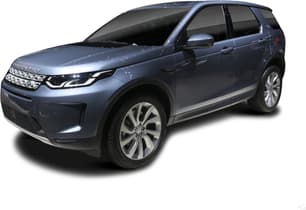
The Land Rover Discovery Sport is the sort of Land Rover you consider if you're not that serious about going off-road but still want something capable, but you don't want a car as large as it's Range Rover cousins.
Bonus points, the P300e mid-spec model I'm testing this week is a plug-in hybrid. So, you get the best of all worlds - capability, decent size and economy.
The new powertrain pits it against the Lexus NX450+, Volvo XC60, Audi Q5 and even the BMW X3 but while the P300e is great on paper, how does it stack-up in real life?
The meteoric rise of the Chinese-owned MG brand continues with the HS, a family-focused SUV stepping into the most hotly contested segment in Australia.
When the first generation HS arrived in December 2019, it should have been MG’s big sales driver, yet it sat in the shadows of the cut-price MG3 hatch and ZS small SUV as they lifted the storied MG badge into Australia’s overall top-10 sellers.
The HS has so far been MG’s missing link and that’s down to the segment being full of such strong name plates such as the Mazda CX-5 and Toyota RAV4. The mid-size SUV has also been the focus of other strong value rivals that were better, namely the GWM Haval H6.
The Land Rover Discovery Sport P300e has a beautiful and practical cabin space. The powertrain didn't always convince me on the road but it does offer decent economy, if you charge it often.
The media system left a lot to be desired and having to pay around $15K extra for all of the customisations means it's not as affordable as what it initially seems. Still, if you’re looking for a plug-in hybrid with a great cabin and on-road looks, this is a good option.
There are a few niggles with the latest MG HS, for example the annoying driver-attention monitoring and expensive maintenance costs. We’ve not had a full sample of its open-road performance yet either, which may prove more telling.
Yet the HS is shaping up to be one of the most successful product updates of recent years, second only to, I don’t know, the MG3? The family SUV is also backed by a 10-year warranty and, despite the drastic improvements, doesn’t cost a whole lot more than before.
The entry-level Vibe is our pick, there's no need to spend more. It features all manner of safety equipment and a quiet drive but with cloth upholstery that doesn't get all sticky and sweaty in the Australian climate.
The end of 2024 is the tipping point where MG goes from cheap and cheerful to a real headache for established players. Perhaps not for the strongest in the segment like the RAV4 and Nissan X-Trail, but the HS is now an easy car to recommend for a family looking for a spacious SUV that drives their dollar further. The hybrid will boost appeal further when it arrives next year.
Note: CarsGuide attended this event as a guest of the manufacturer, with meals provided.
The updated Disco Sport gets new underpinnings which are shared with the Range Rover Evoque.
The body has seen a minor facelift but honestly, it’s so slight only die-hard fans will notice anything different. Overall, it still has the styling that people know and love.
It’s once you head inside that the facelift becomes far more apparent. Gone is the more traditional looking e-shifter and in its place is a rather nubby-looking one.
The dashboard looks more streamlined and features wider padded accents and in our test model, we have the Oyster and Black upholstery which does make it look quite luxurious. There are a few too many blank spaces for me personally but it looks slick.
Accentuating the dashboard is a floating-effect multimedia system and a large digital instrument cluster – both of which look great but there are no other control buttons or dials. I’m not a fan of the fact that you’re 100 per cent reliant on the tech screens and I'll explain why in the Practicality section.
The optioned panoramic roof makes the cabin feel airy and it's cool that it has a memory function – it will close when you turn off the car but reopen upon starting again.
Though the previous HS had shapely bodywork, the wheels sat too far in-board and the rear end looked awkward. It’s not the same story with the new model which is designed as a family SUV first, rather than a converted hatchback platform.
Part of the improved looks are better proportions. The new HS is 81mm longer, 14mm wider and rides on a 45mm longer wheelbase yet sits 21mm lower for a sleeker appearance.
The front end takes cues from the new MG3 and ZS design language with a broad grille and thin LED headlights. At the back, MG’s design team references the UK’s capital with ‘Shard’ lighting signatures that also appear in the alloy wheels.
It is still fairly anonymous, though perhaps that comes from a lack of familiarity with the brand. The painted wheel arch cladding and metallic-only paint give it a premium boost.
The biggest improvement is inside, where the HS takes plenty of inspiration from the excellent MG4 electric car with the hexagonal steering wheel (though here with perforated leather finishing), high-set controls and confident lines. It’s a welcome, modern change after the old car’s bloated cabin design.
There are soft-touch rubbery materials in all sorts of prominent places, including on the dash top, front and rear door cards as well as where the driver’s knees rest on the doors and transmission tunnel.
With it's 4597mm length, 2173mm width and 1727mm height, the Discovery Sport is technically classed as a medium SUV but the cabin space is much larger than it has any right to be.
Both rows have ample head- and legroom for both my 168cm (5ft6') height and those much taller. When you have a co-pilot, you’re also not jostling for elbow room and it’s easy to slide in and out of because of the 212mm ground clearance.
The amenities up front are good with the update seeing more decent sized individual storage options.
There are two cubbies in the centre console as well as two cupholders and a medium-sized middle console. The glove box can hold more than a manual and the storage bins with their single drink bottle holders are also larger than before.
The powered front seats are comfortable and the optioned heat functions are most welcome on the cooler days we've been having lately.
The back seats also have superior padding comfort but you sit on top of, rather than in, them which is typical of an SUV.
The amenities and storage are what you would expect for the grade level with a fold-down armrest with two cup holders and small storage cubby, directional air vents, reading lights, map pockets and small storage bin in each door.
There is also an accessory hole to attach device holders on the backs of the front seats - perfect for hooking up a screen for little ones on a long journey.
The P300e loses points on its practicality with the multimedia system. You eventually get used to using it while on the go, even though the lack of buttons/dials means more time is spent with your eyes on the screen.
That's when the screen turns on. The display has cut out a few times this week and the wireless connectivity for Bluetooth and the connection for Apple CarPlay (wireless or wired) drops out a lot.
The P300e I'm driving is brand-spanking-new, so it may just be a case of something that needs calibrating but for a lot of the Land Rovers I've sampled in the past, the media system seems to be the area with the biggest teething issues.
That being said, the built-in satellite navigation is top-notch and easy to use. The directions also get displayed on the instrument cluster and optioned HUD.
The charging options are excellent with the front row getting three USB-C ports and a large wireless charging pad. The rear gets two USB-A ports and two USB-C ports plus a 12-volt socket and the boot also has a 12-volt socket. Totally spoiled for choice.
The boot is a great size at 897L with all seats in use and that jumps up to 1749L when the rear seats are folded flat. The rear row also has a 40/20/40 split, which opens up storage opens.
There is a temporary spare tyre housed underneath the flat floor and a powered tailgate comes standard in this model, which I always like.
There is nothing especially ground-breaking about the MG HS’s front cabin. The cupholders are medium-sized and the door bins have enough storage for a one-litre bottle, so this is no Skoda Karoq when it comes to clever cabin solutions.
Telling a tale of the HS’s Roewe RX5 base car’s earlier 2022 launch (and the staggering development speed of personal technology) the lack of USB-C charging ports is now frustrating with all USB ports regular old-school items. Apple CarPlay or Android Auto phone mirroring requires a cabled connection.
The centre multimedia screen is high resolution with day selectable light and dark modes. It was a little laggy to use MG’s software, however, especially when swiping across menu screens.
There are four hard shortcut buttons beneath it that can jump to the home screen, activate the HS’s front and rear demister and turn the ventilation on and off.
To adjust the temperature you need to go into the touchscreen, though there is a persistent shortcut on the main menu.
A 12.3-inch digital cluster has several selectable info displays and can show navigation mapping and directions in Excite and Essence trims.
The seats are comfortable and supportive and it's easy to find a good driving position thanks to power-adjust driver's seat and tilting/telescoping wheel adjustment. The front passenger does not get height adjust, though, and is set too high.
Where the extra size pays dividends is in the back seat which has ample room for passengers beyond 185cm, especially when it comes to leg space. The fold-out armrest is sturdy, too, with twin cupholders. Rear air vents are fitted to only the top-spec Essence.
For baby capsules or child seats the HS has ISOFIX anchors fitted to all three rear seats matched with a trio of top tether points.
The MG HS’s boot is about average for the class measuring 507 litres. It grows to 1484L with the 60:40 backrest folded. For reference, class leaders include the Toyota RAV4 (580L), Nissan X-Trail (585L) and Volkswagen Tiguan (up to 615L with rear seats slid forward).
There are few amenities, with no 12-volt socket, only one (dim) boot light and no shopping bag hooks. The carpet isn’t bargain basement and the luggage cover is sturdy with additional separated storage compartments below the floor and netted cubbies off to the side.
MG has also been smart in packaging a space saver spare tyre beneath the boot floor (and a cumbersome Styrofoam piece).
The Discovery Sport is offered in four grades and the model on test in this review is the plug-in hybrid mid-level P300e.
The P300e is priced from $102,125 before on road costs but the addition of the plug-in hybrid powertrain means that it is actually $8855 more expensive than the flagship HSE.
In terms of its rivals, the P300e sits towards the middle of the line-up with the Volvo XC60 Recharge Plus PHEV coming in as the most affordable at $92,990 before on-road costs, then the Lexus NX450+ PHEV at $93,498. Sitting at the more expensive is the Audi Q5 55 TFSIe at $106,600 and then the BMW X3 xDrive30e M Sport PHEV at $111,800.
However, our test model does have a few optioned extras which ups the price tag and its position in the pack.
Those options include:
- A Technology Pack for $4700 which adds a digital rearview mirror, head-up display, and a 360-degree camera system with wade sensors.
- A fixed panoramic roof for $3040.
- Upgraded Meridian Surround Sound System for $2220.
- Upgraded 20-inch alloy wheels for $2080.
- Heated front seats for $860.
- Home charging cable for $520.
- Titanium mesh trim for $420.
All of that brings the grand total to $117,290, before on roads. Which is no small lump of change for what is essentially just a baby Land Rover.
Standard luxury and practical features include powered front seats with a three-position memory function for the driver, synthetic leather upholstery, keyless entry, push-button start, powered tailgate, temporary spare-tyre, and dual-zone climate control.
Technology includes an 11.4-inch touchscreen multimedia system, 12.3-inch digital instrument cluster, Android Auto, wireless charging pad, Bluetooth connectivity, and DAB+ Digital Radio.
The update also sees wireless connectivity for Apple CarPlay, an Amazon Alexa app, as well as new USB-C ports, as opposed to USB-A ports from the previous model.
Shock horror, the new HS is 10 per cent more expensive than before… but that still makes it $33,990, drive-away, for the basic Vibe — easily undercutting established rivals from Honda, Mazda, Toyota and others.
You get a lot for that extra $4000, too, right down to basic presentation. There’s no fridge-like solid white paint with all six hues either metallic or pearlescent for no extra cost. MG even offers the upper trims with the option of an eye-catching tan upholstery colour.
The three-strong trim line-up starts with the Vibe: dusk-sensing LED headlights, 18-inch alloy wheels, adaptive cruise control, auto wipers, tyre pressure monitoring, a six-speaker sound system, nice cloth upholstery and six-way power adjust driver’s seat are standard.
The Excite sprinkles in 19-inch alloy wheels, perforated synthetic leather upholstery, navigation, fog lights and MG’s 'iSmart' connectivity system for a smart $36,990, drive-away.
The range-topping Essence gains a panoramic sunroof, rear privacy class, a power tailgate, front parking sensors, wireless phone charging, eight-speaker audio, 10-way power adjustable driver’s seat with memory, seat heating, dual-zone climate control, rear air vents and wireless phone charging for $40,990, on-the road.
The short of it is that, although MG’s prices are up, even the basic Vibe is a more enticing proposition on price than the new Chery Tiggo 7 Pro Urban ($39,990, drive-away) and established Mazda CX-5 Maxx (currently on offer for $37,990, drive-away).
It also is much closer to the popular GWM Haval H6 ($31,990-$37,990, drive-away) — if only MG had brought ventilated seats to the flagship Essence then this mid-sizer would be (almost) sold on paper alone.
The Discovery Sport P300e has a 1.5-litre, three-cylinder plug-in hybrid turbo-petrol engine with an eight-speed auto transmission and is an all-wheel drive.
The engine produces a combined power output of 227kW and 540Nm of torque. On paper, it’s punchy and can do a 0-100km/h sprint in 6.6 seconds but in practice, it’s not always great at using that power.
The new HS petrol has a 1.5-litre, turbo-petrol, four-cylinder engine that develops 125kW at 5000rpm and 275Nm from 3000-4000rpm, with those outputs up 6.0kW and 25Nm on the old car.
MG claims new engine features, including the variable geometry turbocharger, centre-mount variable valve timing and a lighter dual-mass flywheel, add up to a 30 per cent improvement in engine response.
More importantly, the insulation is excellent. You barely hear any unpleasant engine noises out on the road and although the four cylinder’s tone isn’t sexy at full-throttle, it is warm and pleasant enough.
The HS petrol is front-wheel drive only which may rule it out for some buyers, but there is a saving grace. The new seven-speed type dual-clutch transmission behaved itself impeccably on a brief first encounter taking in awkward hill starts and reverse manoeuvres. It’s a huge improvement over prior efforts and more refined than even a Hyundai or Kia dual-clutch.
MG claims a 0-100km/h acceleration time of 9.6 seconds, which is about right for entry-level versions of the HS’s typical rivals.
MG no longer offers a more powerful 2.0-litre turbo but a plug-in hybrid with a punchy 223kW and an all-new full-hybrid option will join the line-up in the first quarter of 2025, details of which are yet to be confirmed.
The official combined fuel cycle consumption figure is 2.1L/100km and my real-world usage sits a 4.8L/100km after doing some open-roading and lots of urban trips this week. For an SUV of this size and with it's power, that's pretty darn good.
The trick is to regularly charge it for maximum fuel economy gains and that's not always practical.
Officially, you get up to 66km of pure electric range in this but expect closer to 47km in the real world.
The P300e has a Type 2 CCS charging port which means you can hook this up to a fast charger. On a 50kW system, you can go from 0-80 per cent in as little as 30 minutes but on a 7kW system, going from 0-100 per cent jumps up to to two hours and 12 minutes.
Expect to leave it on charge overnight on a standard domestic socket.
The driving range based on the official combined fuel cycle is obscene, and I can't see it happening in real life - so, based on my fuel economy figure and the 58L fuel tank, expect a theoretical driving range of up to 1208km.
In the ADR combined (urban-extra urban) fuel efficiency cycle, the MG HS petrol is rated at 6.9L/100km, emitting 156 grams of CO2 per kilometre in the process. A 55-litre fuel tank gives the HS a theoretical driving range of around 800km.
We weren’t able to get a true read on the fuel consumption but the trip computer showed 8.1L/100km after an hour-long run. It lacks an idle start-stop system and requires 95 RON premium unleaded petrol.
The Discovery Sport P300e has the goods on paper when it comes to power and it does... once you're up to speed. That's when you can punch it and feel confident at overtaking or keeping your speed consistent on hills.
It's when you're accelerating from a full-stop that it becomes a bit lacklustre as there's serious lag between accelerating and actually moving forward. Accept that you will have to accommodate for this inaction whenever you are joining or crossing traffic from a standstill.
Besides this little hiccup in the power delivery, handling on the whole is good.
The Disco Sport is easy to manoeuvre and you don’t feel like you’re driving something big, despite the ample cabin space. It also handles itself well in corners without too much roll.
The switch between the electric and petrol components isn’t always the smoothest but when it’s in its electric mode it’s blissfully quiet. The cabin feels refined too because you don’t get a lot of external noise in the cabin at all.
The wide windows and higher ride means visibility is great and the optioned digital rearview mirror adds another viewpoint if the back window isn’t clear.
The Disco Sport proves to be nimble and easy to park with the optioned and clear 360-degree camera system, and the sensors at the front and rear are sensitive.
MG’s launch drive program was too brief to really get under the skin of the HS, which is a shame because the initial signs are extremely positive.
Compared to the old ZS, in which a gumnut hitting the roof was loud enough to distract you from your thoughts, the new car is packed with sound deadening for a vastly more premium experience.
The electronic power steering system has a natural ratio (2.6 turns lock-to-lock) and weighting in 'Comfort' and 'Sport' modes, which cannot be said for rivals such as the Chery Tiggo 7 and Haval H6.
This new HS rides nicely, too, with enough compliance from the suspension without sacrificing body control — at least around town. It has struts up from with a multi-link rear end which is not a given, even in this segment.
There were a few sharp-edged bumps that sent a shock through the body but that is to be expected on Sydney's awful roads. The new HS rides about as well as a Mazda CX-5 and believe us, that is a dramatic improvement.
Visibility out the front and sides are good as is the comfortable driving position, however I wasn’t able to move the driver’s side mirror far enough out for my liking. That’s a small blip in an otherwise strong first showing.
The Discovery Sport plug-in hybrid variant is not covered by its siblings' five-star ANCAP safety rating from 2022, so the P300e is unrated but features some good safety gear.
Standard items include AEB, blind spot monitoring, driver attention alert, tyre pressure monitoring, rear collision warning, forward collision warning, rear cross-traffic alert, lane keeping aid, traffic sign recognition, intelligent seatbelt warning, and adaptive cruise control.
The traffic sign recognition tech is dreadfully intrusive, which impacts the driving enjoyment. I turn the warning sound alerts off each time I hop in as it's like a small child is hitting the same piano key over and over again - just to give you a sense of the sound itself and resulting annoyance.
It has seven airbags but interestingly, and unusually, the seventh one is a pedestrian airbag.
This model misses out on lane departure warning but for any families, there are ISOFIX mounts on the rear outboard seats plus three top tethers and you should be able to get three seats back if they’re not too big.
The MG HS has not yet been evaluated by an independent safety testing body such as ANCAP or Euro NCAP.
MG has fitted the new HS with seven airbags, including driver and passenger, front side, side curtain and a centre airbag.
The HS has a long list of active safety and driver assistance features, such as front and rear auto emergency braking with junction detection, lane-keep assist, blind-spot monitoring, adaptive cruise control with stop and go and driver-attention monitoring.
I can’t say all the aids are perfect but the adaptive cruise control and lane-keep assist systems were less intrusive than those in Chery and Haval products.
The regularly-beeping driver-attention monitoring remains a constant frustration as it does across almost every brand at the moment.
The Discovery Sport comes with a five-year/unlimited km warranty and the battery is covered by an eight-year/ 160,000km warranty which is a usual term to see for this class now.
There is a five-year capped-price servicing program which costs a flat $2100, or $420 which is both reasonable for the class and is more affordable than a pay-as-you-go option. There is also a five-year roadside assistance program as a part of your servicing plan through Assist Australia.
Servicing intervals are great at every 12 months or 20,400km, whichever occurs first.
MG has recently moved to a 10-year/250,000km new car warranty in Australia which covers the HS and is the longest non-conditional offer in the market.
GWM/Haval, Kia and SsangYong remain at seven years while Mitsubishi requires you to service the car at a main dealer for its 10-year guarantee.
This long warranty period should help allay concerns for new MG buyers that the brand stands behind its products.
Less impressive is the cost of maintenance, which adds up to $2354 over five years/75,000km with a particularly steep $936 service at the four-year mark. There’s a big $1647 service at 120,000km, too.