What's the difference?
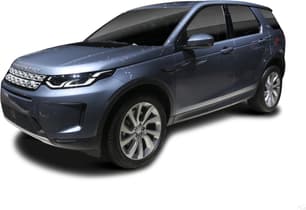
The Land Rover Discovery Sport is the sort of Land Rover you consider if you're not that serious about going off-road but still want something capable, but you don't want a car as large as it's Range Rover cousins.
Bonus points, the P300e mid-spec model I'm testing this week is a plug-in hybrid. So, you get the best of all worlds - capability, decent size and economy.
The new powertrain pits it against the Lexus NX450+, Volvo XC60, Audi Q5 and even the BMW X3 but while the P300e is great on paper, how does it stack-up in real life?
Lexus has finally brought a plug-in hybrid to the Australian market with the RX450h+, and we’ve been testing the second-from-the-top Sports Luxury grade to see how it stacks up.
Promising a blend of electric efficiency and the high-end comfort Lexus is known for, this large SUV steps into a competitive segment. But does it deliver on both fronts?
The Land Rover Discovery Sport P300e has a beautiful and practical cabin space. The powertrain didn't always convince me on the road but it does offer decent economy, if you charge it often.
The media system left a lot to be desired and having to pay around $15K extra for all of the customisations means it's not as affordable as what it initially seems. Still, if you’re looking for a plug-in hybrid with a great cabin and on-road looks, this is a good option.
The new Lexus RX450h+ Sports Luxury is packed with a wealth of premium features and strikes a solid balance between refinement and practicality. There are enough thoughtful touches that make everyday driving a little easier.
You’ll get the most out of the plug-in hybrid powertrain if you’re able to charge it regularly; ideally every day. That might not always be practical for busy people on the go, but overall, the RX450h+ manages to blend efficiency with Lexus’ signature comfort and quality.
The updated Disco Sport gets new underpinnings which are shared with the Range Rover Evoque.
The body has seen a minor facelift but honestly, it’s so slight only die-hard fans will notice anything different. Overall, it still has the styling that people know and love.
It’s once you head inside that the facelift becomes far more apparent. Gone is the more traditional looking e-shifter and in its place is a rather nubby-looking one.
The dashboard looks more streamlined and features wider padded accents and in our test model, we have the Oyster and Black upholstery which does make it look quite luxurious. There are a few too many blank spaces for me personally but it looks slick.
Accentuating the dashboard is a floating-effect multimedia system and a large digital instrument cluster – both of which look great but there are no other control buttons or dials. I’m not a fan of the fact that you’re 100 per cent reliant on the tech screens and I'll explain why in the Practicality section.
The optioned panoramic roof makes the cabin feel airy and it's cool that it has a memory function – it will close when you turn off the car but reopen upon starting again.
The RX isn’t breaking new ground with its plug-in hybrid design, but it still delivers that signature Lexus understated refinement.
The strong, flowing body lines, 21-inch alloy wheels and updated 'spindle grille' all give it presence without screaming for attention.
And in a segment where boxy and bulky designs tend to dominate, the RX’s swoopy silhouette helps it stand apart in all the right ways.
Inside, the cabin feels considered and luxurious. There's a heavy use of premium materials, including the leather and suede upholstery, plush soft-touch surfaces and the big, crisp displays that make the space feel modern and high-end.
The panoramic sunroof brings in loads of natural light, too, which is especially welcome given the dark headliner that might otherwise feel a little heavy.
If I have one gripe, it’s the thin steering wheel, which doesn’t quite match the otherwise solid, tactile feel of the rest of the interior. But overall, the cabin is a space that feels luxurious and well-executed. It's quietly confident, just like the RX.
With it's 4597mm length, 2173mm width and 1727mm height, the Discovery Sport is technically classed as a medium SUV but the cabin space is much larger than it has any right to be.
Both rows have ample head- and legroom for both my 168cm (5ft6') height and those much taller. When you have a co-pilot, you’re also not jostling for elbow room and it’s easy to slide in and out of because of the 212mm ground clearance.
The amenities up front are good with the update seeing more decent sized individual storage options.
There are two cubbies in the centre console as well as two cupholders and a medium-sized middle console. The glove box can hold more than a manual and the storage bins with their single drink bottle holders are also larger than before.
The powered front seats are comfortable and the optioned heat functions are most welcome on the cooler days we've been having lately.
The back seats also have superior padding comfort but you sit on top of, rather than in, them which is typical of an SUV.
The amenities and storage are what you would expect for the grade level with a fold-down armrest with two cup holders and small storage cubby, directional air vents, reading lights, map pockets and small storage bin in each door.
There is also an accessory hole to attach device holders on the backs of the front seats - perfect for hooking up a screen for little ones on a long journey.
The P300e loses points on its practicality with the multimedia system. You eventually get used to using it while on the go, even though the lack of buttons/dials means more time is spent with your eyes on the screen.
That's when the screen turns on. The display has cut out a few times this week and the wireless connectivity for Bluetooth and the connection for Apple CarPlay (wireless or wired) drops out a lot.
The P300e I'm driving is brand-spanking-new, so it may just be a case of something that needs calibrating but for a lot of the Land Rovers I've sampled in the past, the media system seems to be the area with the biggest teething issues.
That being said, the built-in satellite navigation is top-notch and easy to use. The directions also get displayed on the instrument cluster and optioned HUD.
The charging options are excellent with the front row getting three USB-C ports and a large wireless charging pad. The rear gets two USB-A ports and two USB-C ports plus a 12-volt socket and the boot also has a 12-volt socket. Totally spoiled for choice.
The boot is a great size at 897L with all seats in use and that jumps up to 1749L when the rear seats are folded flat. The rear row also has a 40/20/40 split, which opens up storage opens.
There is a temporary spare tyre housed underneath the flat floor and a powered tailgate comes standard in this model, which I always like.
The RX cabin is thoughtfully laid out and impressively practical, with a premium feel that doesn’t come at the cost of everyday usability.
Up front, there’s plenty of space for driver and passenger, yet the stepped dash design brings a sense of intimacy. The electric front seats are seriously comfortable, with four-way lumbar support and extra adjustment functions that make this an easy choice for long drives.
Storage options are generous, too. There’s a clever dual-opening centre console, large glove box, multiple phone-sized shelves, map pockets and a couple of cup- and drink holders in each row.
Charging is taken care of by four USB-C ports, one USB-A port and a wireless charging pad.
Tech is up-to-date and well-integrated. The upgraded 14-inch media display looks crisp, supports wireless Apple CarPlay and Android Auto, and is paired with a revamped 12.3-inch digital instrument cluster and a colour head-up display.
The cluster’s new layout is modern and much easier to read than the previous offering. The digital rear view mirror also earns its keep when the cabin’s packed with passengers or gear.
One of my favourite touches? The seat controls on the side of the front passenger seat. It makes quick work of moving the seat forward, especially helpful when you’ve got a kid clambering in with a school bag full of projects.
Access to the rear row is easy, but the stadium-style seating, where you're perched noticeably higher than those in the front, won’t be for everyone.
That said, the rear seats are plush and padded, though they lack side bolsters, which rear passengers might notice during cornering.
Legroom is generous and the hardened kickplates are a dream to clean when your child’s treating the seatbacks like a climbing wall.
My eight-year old gives the back seat a glowing review, thanks to its creature comforts, including rear climate control, directional air vents, seat heating/ventilation on the outboard seats, two USB-C ports and retractable sun-blinds, which are a crowd favourite in our household.
There are three top-tether anchor points, and the bench is wide enough to fit three child seats, though bulky booster seats might be tricky due to the raised seating height.
At the back, the boot is well set up for families, offering electrically folding rear seats, a 12-volt socket, flat loading floor, and a hands-free powered tailgate.
Under the floor, there’s a small compartment for your charging cables (Lexus throws in two!) and a usable 612L of capacity when all seats are in use. One downside, though, is the lack of a spare tyre as you just get a tyre repair/inflation kit.
The Discovery Sport is offered in four grades and the model on test in this review is the plug-in hybrid mid-level P300e.
The P300e is priced from $102,125 before on road costs but the addition of the plug-in hybrid powertrain means that it is actually $8855 more expensive than the flagship HSE.
In terms of its rivals, the P300e sits towards the middle of the line-up with the Volvo XC60 Recharge Plus PHEV coming in as the most affordable at $92,990 before on-road costs, then the Lexus NX450+ PHEV at $93,498. Sitting at the more expensive is the Audi Q5 55 TFSIe at $106,600 and then the BMW X3 xDrive30e M Sport PHEV at $111,800.
However, our test model does have a few optioned extras which ups the price tag and its position in the pack.
Those options include:
- A Technology Pack for $4700 which adds a digital rearview mirror, head-up display, and a 360-degree camera system with wade sensors.
- A fixed panoramic roof for $3040.
- Upgraded Meridian Surround Sound System for $2220.
- Upgraded 20-inch alloy wheels for $2080.
- Heated front seats for $860.
- Home charging cable for $520.
- Titanium mesh trim for $420.
All of that brings the grand total to $117,290, before on roads. Which is no small lump of change for what is essentially just a baby Land Rover.
Standard luxury and practical features include powered front seats with a three-position memory function for the driver, synthetic leather upholstery, keyless entry, push-button start, powered tailgate, temporary spare-tyre, and dual-zone climate control.
Technology includes an 11.4-inch touchscreen multimedia system, 12.3-inch digital instrument cluster, Android Auto, wireless charging pad, Bluetooth connectivity, and DAB+ Digital Radio.
The update also sees wireless connectivity for Apple CarPlay, an Amazon Alexa app, as well as new USB-C ports, as opposed to USB-A ports from the previous model.
There are four variants in the RX range, and we’re testing the 450h+ Sports Luxury AWD, which sits just below the flagship and packs in plenty of premium kit for its $123,500, before on-road costs, price tag.
That makes it slightly more affordable than its main PHEV rivals; the BMW X5 xDrive50e (from $125,885 MSRP) and the Volvo XC90 Ultra (from $124,466 MSRP).
The Volvo does offer seven seats to the Lexus’ five, which may matter for larger families, and both rivals also outdo the RX on electric-only driving range - 65km in the RX compared with 77km in the Volvo XC90 and a generous 101km in the BMW X5.
Still, the RX fights back with a seriously stacked features list. Highlights include a panoramic sunroof, 10-way powered front seats with heating and ventilation, electrically folding rear seats (also heated and ventilated in the outboard positions), and a heated, power-adjustable steering wheel. Sound is taken care of by a premium 21-speaker Mark Levinson surround system.
Technology has had a solid upgrade with the 14-inch touchscreen multimedia display, 12.3-inch digital instrument cluster, digital rearview mirror, colour head-up display, live traffic navigation, wireless Apple CarPlay and Android Auto, 4G connectivity, four USB-C ports, one USB-A port and a fast wireless charging pad.
There’s also access to the 'Lexus Connected Services' app, allowing you to remotely lock or unlock the vehicle, pre-set the cabin temperature via three-zone climate control, configure driver profiles and even use your phone as a digital key.
Practical features include keyless entry and start, rain-sensing wipers, dusk-sensing LED headlights, rear sun-blinds, intelligent seatbelt reminders for the first two rows, a child presence alert and a hands-free powered tailgate. However, due to the plug-in hybrid system there’s no spare tyre, just a tyre repair kit.
The Discovery Sport P300e has a 1.5-litre, three-cylinder plug-in hybrid turbo-petrol engine with an eight-speed auto transmission and is an all-wheel drive.
The engine produces a combined power output of 227kW and 540Nm of torque. On paper, it’s punchy and can do a 0-100km/h sprint in 6.6 seconds but in practice, it’s not always great at using that power.
Under the bonnet the RX450h+ Sports Luxury runs a plug-in hybrid powertrain that pairs a 2.5-litre four-cylinder petrol engine with a CVT auto and dual electric motors - one on each axle. Together, they produce a total of 227kW of power, though Lexus doesn’t quote a combined torque figure.
Still, it’s quick off the mark for a large SUV, with a 0-100km/h time of 6.5 seconds. There’s more than enough grunt for daily driving and overtaking, even if it doesn’t quite match the outright power of its key PHEV rivals.
The official combined fuel cycle consumption figure is 2.1L/100km and my real-world usage sits a 4.8L/100km after doing some open-roading and lots of urban trips this week. For an SUV of this size and with it's power, that's pretty darn good.
The trick is to regularly charge it for maximum fuel economy gains and that's not always practical.
Officially, you get up to 66km of pure electric range in this but expect closer to 47km in the real world.
The P300e has a Type 2 CCS charging port which means you can hook this up to a fast charger. On a 50kW system, you can go from 0-80 per cent in as little as 30 minutes but on a 7kW system, going from 0-100 per cent jumps up to to two hours and 12 minutes.
Expect to leave it on charge overnight on a standard domestic socket.
The driving range based on the official combined fuel cycle is obscene, and I can't see it happening in real life - so, based on my fuel economy figure and the 58L fuel tank, expect a theoretical driving range of up to 1208km.
The plug-in hybrid system brings solid efficiency, with claimed fuel use of just 1.3L/100km. In real-world conditions (mostly urban driving with regular recharging) I managed a respectable 4.8L/100km, which makes a strong case for the hybrid set-up.
The fuel tank holds 55 litres and it's worth noting Lexus recommends using a minimum of 95 RON unleaded petrol to fill it.
Using our real-world economy figure you can expect a range in excess of 1100km between fills.
The RX450h+ is fitted with a relatively small 18.1kWh lithium-ion battery, supporting an NEDC electric-only range of up to 65km.
While that’s fine for short daily trips, it’s shorter than you'd ideally want in a family SUV of this size and it lags behind rivals like the BMW X5 and Volvo XC90 in this department.
Charging is simple enough. The RX uses a Type 2 charging port and accepts up to 7.0kW on AC power, which means a full charge takes around 7.5 hours, perfect for overnight top-ups. Lexus also includes an at-home charging cable and second adapter cable as standard, which is a thoughtful touch.
The Discovery Sport P300e has the goods on paper when it comes to power and it does... once you're up to speed. That's when you can punch it and feel confident at overtaking or keeping your speed consistent on hills.
It's when you're accelerating from a full-stop that it becomes a bit lacklustre as there's serious lag between accelerating and actually moving forward. Accept that you will have to accommodate for this inaction whenever you are joining or crossing traffic from a standstill.
Besides this little hiccup in the power delivery, handling on the whole is good.
The Disco Sport is easy to manoeuvre and you don’t feel like you’re driving something big, despite the ample cabin space. It also handles itself well in corners without too much roll.
The switch between the electric and petrol components isn’t always the smoothest but when it’s in its electric mode it’s blissfully quiet. The cabin feels refined too because you don’t get a lot of external noise in the cabin at all.
The wide windows and higher ride means visibility is great and the optioned digital rearview mirror adds another viewpoint if the back window isn’t clear.
The Disco Sport proves to be nimble and easy to park with the optioned and clear 360-degree camera system, and the sensors at the front and rear are sensitive.
The RX450h+ delivers power that’s pert and prompt, with genuine bursts of acceleration that make driving fun. It’s always ready to go and there's no lag in stop-start traffic - which gives it a lively, dynamic feel around town.
The transition between petrol and electric power is seamless; you hardly notice the switch, which makes for a smooth, refined driving experience. The cabin is impressively quiet, even on the highway, making long trips comfortable and peaceful.
Regenerative braking isn’t adjustable and is subtle enough that many won’t notice it which is likely a plus for fans of traditional internal combustion engines who are making the PHEV leap.
The adaptive variable suspension adds a sporty edge to handling, letting you confidently take corners at speed. There’s some body roll but the RX never feels top-heavy or unsettled.
The steering carries the weight of the SUV but remains well-balanced and responsive. Overall, it’s a well-tuned machine that’s a pleasure to drive.
Maneuverability is a strong suit, too, thanks to a tight 11.8-metre turning circle and a clear, easy-to-use 360-degree camera system. Parking is easy-as-pie, which a lot of drivers will appreciate.
The Discovery Sport plug-in hybrid variant is not covered by its siblings' five-star ANCAP safety rating from 2022, so the P300e is unrated but features some good safety gear.
Standard items include AEB, blind spot monitoring, driver attention alert, tyre pressure monitoring, rear collision warning, forward collision warning, rear cross-traffic alert, lane keeping aid, traffic sign recognition, intelligent seatbelt warning, and adaptive cruise control.
The traffic sign recognition tech is dreadfully intrusive, which impacts the driving enjoyment. I turn the warning sound alerts off each time I hop in as it's like a small child is hitting the same piano key over and over again - just to give you a sense of the sound itself and resulting annoyance.
It has seven airbags but interestingly, and unusually, the seventh one is a pedestrian airbag.
This model misses out on lane departure warning but for any families, there are ISOFIX mounts on the rear outboard seats plus three top tethers and you should be able to get three seats back if they’re not too big.
The RX earned a maximum five-star ANCAP safety rating in 2022, scoring highly across all protection categories: 90 per cent for adult protection, 89 per cent for child protection, 89 per cent for vulnerable road users, and 93 per cent for safety assist systems.
Standard safety gear includes eight airbags (dual front, front side, curtains, front centre, and driver’s knee) plus a comprehensive suite of driver aids. Standout features include emergency call functionality, child detection alert, side exit assist, front and rear collision warnings, park assist and emergency steering assist.
Additional tech covers blind-spot monitoring, driver attention monitoring, tyre pressure monitoring, daytime running lights, LED cornering lights, rear cross-traffic alert, lane departure alert, lane keeping assist, traffic sign recognition, and intelligent seatbelt warnings for the front two rows.
Visibility and parking are enhanced by a 360-degree camera system and front/rear parking sensors, while adaptive cruise control adds comfort on longer drives.
The rear seats have two ISOFIX mounts plus three top tether anchors, accommodating child seats safely. Autonomous emergency braking is active from 5.0 to 80km/h for pedestrians, cyclists, and backover and up to 180 km/h for cars.
The Discovery Sport comes with a five-year/unlimited km warranty and the battery is covered by an eight-year/ 160,000km warranty which is a usual term to see for this class now.
There is a five-year capped-price servicing program which costs a flat $2100, or $420 which is both reasonable for the class and is more affordable than a pay-as-you-go option. There is also a five-year roadside assistance program as a part of your servicing plan through Assist Australia.
Servicing intervals are great at every 12 months or 20,400km, whichever occurs first.
The RX comes with a five-year, unlimited-kilometre warranty, which matches its key rivals but isn’t exactly class-leading by today’s standards.
Servicing is handled via a capped-price program, with each service costing $695. The intervals are well spaced at every 12 months or 15,000km, whichever comes first.
This Sports Luxury grade also includes a three-year complimentary 'Lexus Encore' membership, granting access to a handy phone app and member benefits at partners like Westfield and Ampol. On top of that, you get 24/7 roadside assistance for added peace of mind.