What's the difference?
There is nothing quite like a car company occasionally building a car that could be considered a risk. And there are all kinds of risks in the car business - the market isn't ready for that car, people don't identify your brand with this or that type of vehicle, the list goes on. And it's long. It's very easy for me to sit on the sidelines and say, "Pft, what were they thinking?" Few cars land on your driveway without years of thinking having already gone into their development.
The Kia Stinger is the kind of car that would have caused lots of thinking and plenty of hand-wringing at Kia HQ in Korea. Not because it was a bad idea - it wasn't. Not because it's a bad car - it is, in fact, the opposite. And not because SUVs have already changed the way we look at cars - Kia has done well out of that.
It's just that Kia has never produced a car like the Stinger. A five-door coupe-sedan, rear-wheel drive and with a focus on driver dynamics. Most of us know very well how the Stinger GT burst on to the scene in a blaze of well-deserved glory. It's not all about the GT, though. There's a whole range of Stingers and just below that very accomplished sports sedan is the Stinger GT-Line.
What’s the closest thing we have to a modern-day Holden Statesman/Caprice?
If, like General Motors, you obliterate Australia’s Own from existence altogether, you’re left with time-honoured rivals also made in this country, like the Ford Fairlane, Chrysler by Chrysler and Toyota’s Crown and Avalon.
But they’re also all in history’s dustbin (well, the American ones, anyway), leaving the humble Camry as the sole living nameplate with any connection to Australian manufacturing.
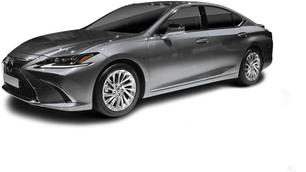
And since the Lexus ES is a close relative, we’re going to take a fresh look at the latest version, with a view of it as a bit of a survivor of a bygone era – where aspirational vehicles were created from normal family sedans.
Just like the Fairlane, Crown and of course, the Caprice.
Launched in mid 2018 but facelifted in 2021, we test the ultimate version of the seventh-generation ES, the 300h Sports Luxury – or SL, if we’re to make yet another tenuous connection to long-gone Holdens.
Let’s go!
The Stinger GT-Line is a great machine. It looks good, feels good to drive and while it's not the cheapest large sedan, it's also not a Camry. With a strong European vibe, it's a nice bridge between boring-dependable and out-of-reach European. Boasting a strong link to Europe in its chassis DNA, it has it all apart, maybe, from the badge.
But Kia has a habit of doing unexpected things and the Stinger was a bold move worth making just for the halo effect of having such a cool car in the range. It has done good things for the company's reputation, as though the rest of the range isn't proof already.
There’s no denying the Sport Luxury is imposing, spacious, plush, chock-full of kit, efficient, speedy and pleasingly relaxing up to a point.
But its interior is also dated and true ride comfort can be elusive beyond smooth roads for this top-of-the-line version to make the grade as a proper luxury sedan.
The ES 300h feels more like an aspirational Toyota than a Lexus for the (wealthier) masses, especially after recent triumphs like the latest NX and RX SUVs. The Camry DNA is difficult to disguise, as the amused strangers who sat in our test car uninvited thinking it was their Camry highlights.
Sure, the hybrid is no Chevy V8, but in many other ways, the Sport Luxury seems like the modern successor to the Holden Caprice experience.