What's the difference?
Four years is a long time in the Australian automotive sector. Back in 2022, the Kia EV6 made a big splash as a cool, edgy EV with a focus on driver engagement.
It won a bunch of awards and was praised for its dynamism and design. Kia’s first dedicated EV was a winner! But in the years since it’s been overshadowed by a gaggle of newer and cheaper electric cars, largely from China.
More than a year after it made its global debut, Kia Australia has finally launched the facelifted EV6 in Australia. It brings with it a number of changes, most notably a new front end design, as well as a multimedia and software upgrade, chassis refinements, local ride and handling tuning tweaks and bigger batteries for more driving range.
But is it too little, too late for the Kia EV6? Have buyers moved on from this once ground-breaking EV to more affordable Chinese options? Read on to find out why this EV shouldn’t be so easily forgotten.
Sometimes a name change can make all the difference.
Google used to be called “Back Rub”. The Spice Girls started off as “Touch”. And – particularly in Germany – some premium sedans became known as “coupes”, as they struggled to stay popular against SUVs.
Case in point: what is essentially a 1 Series hatchback with a boot has been more glamorously badged the “2 Series Gran Coupe” since 2020.
Still following the sedan script with four doors, it’s BMW’s tilt at Mercedes’ booted A-Class hatch, the rakish CLA, unveiled early last decade as the Concept Style Coupe and now in its third series-production iteration – though since 2019 a more conservatively styled A-Class Sedan has also existed, that goes up against Audi’s A3 Sedan.
But we digress. Now there’s a “new” 2 Gran Coupe, coded F74, though it’s really a heavy facelift of the superseded F44. Oh, and the ‘i’ no longer exists in the badge, so (M-enhanced models aside) it’s just numbers from here on in. 218. 220. M235.
Regardless of names, does it live up to the BMW promise?
It’s fair to say the Kia EV6 is not the most affordable mid-to-large electric SUV money can buy. Especially in the era of cheaper Chinese models.
It also lacks some of the practicalities of a few rivals. If that’s your focus and you’re dead set on buying a Kia, then the EV5 is the clear choice.
But that’s not the sole purpose of this car.
It doubles as family transport and a car for driving enthusiasts. It’s the sort of EV that can convert EV non-believers.
After a week with the EV6, it’s not a car I’ll forget easily. And I urge buyers looking in the EV space not to overlook this pioneering model. It’s a brilliant car to drive and the GT-Line RWD is the value pick of the whole line-up.
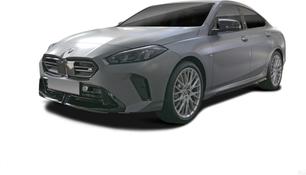
The badge might say one thing, but the 2 Series Gran Coupe sticks to the time-honoured template of being a compact yet comparatively practical three-box, four-door sedan, complete with a big boot.
More importantly, it drives and behaves like a BMW – which means sufficient-to-strident performance depending on grade, athletic dynamics and pleasing refinement on one hand, as well as a stiff price and a hard ride on the other.
A true BMW in name and nature, then..
Note: CarsGuide attended this event as a guest of the manufacturer, with travel, accommodation and meals provided.
When I first saw the Kia EV6, I have to admit I wasn’t a massive fan of the design. I was, and still am, a massive fan of the mechanically related Hyundai Ioniq 5. Perhaps one of the many reasons that model won Best Medium SUV Under $130,000 at the 2026 CarsGuide Car of the Year Awards!
But the 2026 facelift has given me a renewed appreciation of the Kia’s design.
The overall shape is the same but the front, which was arguably its least appealing angle, has been redesigned.
It’s 15mm longer thanks to the new front bumper design, and it has adopted a completely new headlight signature that's in keeping with the EV3, EV4, EV5 and EV9. The front looks meaner, more aggressive, but in a really hot way.
There’s also a new bumper at the rear but the tail-lights are pretty much the same.
Overall it’s a much sharper look, helping to breathe new life into the EV6.
The visual changes are more subtle inside, but it was already a nice cabin to begin with. The big changes include the new version of Kia’s dual-screen set-up which is more modern and centred than the previous version, and there’s more visually appealing graphics.
The other key change is the steering wheel. For GT-Line and GT grades, Kia’s dropped the polarising two-spoke wheel in favour of a sportier and more premium three-spoke, dual-tone wheel found in other models, including the EV3. The base Air retains the two-spoke wheel.
BMW is calling the F74 a new-generation 2 Series Gran Coupe, and there have been obvious and even profound changes throughout and underneath, including to some of the sheetmetal.
But this is not an all-new car by any stretch, with the glasshouse, doors and roof amongst many other body items carrying over from the F44.
That now remarkably Kia Cerato-esque nose ushers in new LED lighting motifs and an updated kidney grille, but whether they sit easily with the rest of the car is debatable. Redesigned tail-lights, different colours and new alloys make up the majority of the exterior changes.
Betraying the latest 2 Series Gran Coupe’s newness claims are near-identical dimensions, with that redesigned front end and bumpers contributing to a 20mm increase in the F74’s 4546mm length, while revised suspension and damper settings help account for the 25mm boost in height (to 1445mm). The BMW’s 1800mm width and 2670mm wheelbase remain the same.
There’s a higher level of newness to be found inside.
Under Australia’s vehicle categorisation, the Kia EV6 is classed as a large SUV. Which is not correct. Yes, it’s long and wide but it isn’t large. It’s medium. Also, is it an SUV? Or is it a low-slung coupe-style fastback? Perhaps a bit of both.
The EV6 has a decent amount of space in the cabin, but family-friendly practically might not be its strongest suit.
In the front row, headroom is limited. The sunroof is partly to blame for this, but the EV6’s front seats have always felt a little cramped for taller folks. Finding my perfect driving position took a bit longer as a result. Popping your sunglasses on your head is a no-no for a six footer like me. There is, however, plenty of space across the front of the cabin.
The front seats offer excellent upper body bolstering but could do with a little more for the thighs. But they are delightfully comfortable and look gorgeous.
The elevated centre console provides a high-set armrest and under that is a massive central bin, then there is a huge amount of open space underneath.
It houses two shallow and narrow cupholders with a phone charger, gear shifter, vehicle on/off and seat/steering wheel heating buttons. Yay buttons!
Climate control is managed via a digital panel separate to the main screen. It features smart dials that switch between air con and audio and sat-nav controls. Speaking of which, the air con flow is excellent.
Kia’s updated multimedia system brings it into line with other newer models. It’s a pleasure to use this system. Large tiles drill down into logical sub-menus, you can swipe every which way and the resolution is excellent. It’s also easy to navigate.
There are three USB-C charge ports under the centre stack.
Taller passengers might need to duck their head when getting in the second row, due to the lower sloping roofline. Once seated, the EV6 features that quirk of some older EVs where the rear seats are heavily bucketed and your knees sit up high because of the positioning of the under-floor battery. A lot of newer EVs keep the rear footwell free of battery packs to ensure more foot room and a more comfortable rear-seat experience.
There’s heaps of leg room behind my seating position, and headroom isn’t bad back there. It’s certainly better than the front. I had about 2.0cm between my head and the roof liner.
It feels a little dark back there due to the high window line, privacy glass and small rear window.
The rear seats are comfy but on the firmer side. There’s a fold-down arm rest with two shallow cupholders, and a small bottle will fit in the door.
You get two map pockets, USB-C ports on the back of both front seats, and chest-level side air vents.
You can lower the 60/40 split rear seats via a lower lever on the seat base. They fold almost flat, too. You can also lower the seats via a lever in the boot which is a handy feature.
The EV6 Air RWD’s boot can swallow 490 litres of cargo, and that drops to 480L for all other grades.
The boot area allows for a decent amount of usable space but the sloping tailgate means you won’t fit tall items.
Under-floor storage is limited but could easily fit flatter items like a charging cable. It also houses the tyre repair kit which is sadly what you get instead of any form of spare wheel. The boot also has a number of bag hooks, speakers and a light.
A front storage compartment under the bonnet can take 52 litres in the RWD grades, dropping to 20L in AWD versions.
During the media presentation at its launch, BMW described the 2 Series Gran Coupe as being almost as large as a 1990s E46 3 Series, and it is in all major dimensions except wheelbase.
Plus, being a front-drive-biased/transverse engine proposition instead of rear-wheel drive should make it roomier than the F74’s iconic ancestor.
The sense getting in is that this is certainly not too low or cramped as per a more-traditional coupe, with plenty of space for legs and shoulders, while even the optional sunroof fitted to our 218 left us with headroom to spare.
The redesigned dash is a visual and operational treat, with crisp, clear instruments, a logically presented and intuitive centre display screen offering fast and easy operation, excellent ventilation and ample storage. Full marks here.
Better still, attaining the perfect driving position is possible for most people, on brilliantly supportive front seats. This is the stuff BMW does right.
Improvement suggestions for the next update? Some people may complain about the somewhat less-than-premium feel of some of the lower-lying plastic trim; not everybody will love the swatches of colour stitching (we love it); why does the steering wheel have to be so wide-of-rim? Side and rear vision is restricted by fat pillars, rising shoulder lines and a shallow rear window; and there is quite a bit of road noise that enters the cabin at speed.
Still, even the back seat is sufficiently spacious for most users, with the sole exception of taller folk having to negotiate a sloping rear roofline. If you’re below 180cm, this should be fine. Most amenities minus overhead grab handles are also fitted.
Further back, the boot is surprisingly accommodating, with 430 litres of cargo capacity that’s enhanced by a 40:20:40 split-fold backrest, and the aperture should be big enough for bulkier loads, but the lack of a spare wheel will be bad news for many buyers. The supplied tyre-repair kit is just not good enough.
But, you know what is good enough? The engines BMW builds, that’s what.
One of the challenges for Kia and the EV6 is price and positioning. In the four years since its launch, the price of EVs of a comparable size has come down considerably.
You can get a medium-to-large electric SUV in the low-$40K range these days from one of a number of new Chinese players.
But not many of those cars have the same focus on driveability as the EV6.
Wisely, Kia has kept prices essentially as they were as part of the 2026 facelift. Each grade has only gone up by $70 apiece.
The EV6 kicks off with the Air RWD (rear-wheel drive, single motor) from $72,660, before on-road costs. The GT-Line RWD (the grade I will focus on for this review) costs $79,660 and the GT-Line AWD (all-wheel drive, dual motor) is $87,660 - an $8000 jump from the RWD.
It tops out at $99,660 for the performance-honed GT.
This pricing puts the EV6 somewhere between the new crop of affordable EVs like the BYD Sealion 7, Zeekr 7X and more premium offerings like the BMW iX3 or Audi Q4 etron.
It’s closer in price to another sporty EV, the Cupra Tavascan ($60,990-$82,490), as well as the Kia’s mechanical cousin, the Hyundai Ioniq 5 ($76,200-$115,000).
The facelift ushers in new standard gear including fresh 19 to 21-inch alloy wheel designs, vehicle-to-load (V2L) functionality, new twin 12.3-inch driver and multimedia screens, updated software with enhanced graphics, wireless Apple CarPlay and Android Auto (it was previously wired) and over-the-air updates.
Other standard gear in the base Air includes reclining rear seatbacks, synthetic leather seats, manual front seat adjustment, five USB-C ports, a wireless phone charger, a retractable cargo cover, six-speaker audio, digital radio and dual-zone climate control.
The GT-Line RWD I am testing adds a 14-speaker Meridian audio system, heated and ventilated front seats, a heated steering wheel, ambient lighting, alloy sports pedals, a sunroof, hands-free power tailgate, eight-way power driver and front passenger seats, synthetic black suede/white leather seats and remote park assist.
The flagship GT gains special sports bucket seats, two more USB-C ports in the rear, heated rear seats and a bigger dollop of performance.
When you look at the base pricing compared to the fully-loaded standard kit of the more affordable EVs, it doesn’t look like great value. But the GT-Line RWD is the pick of the EV6 grades as it isn’t missing much. You could also argue the overall build quality, gripping performance (more on that in the Driving section), reliability and Kia’s extensive dealer network is worth the extra spend.
This depends on how much you buy into this being a sporty Gran Coupe rather than a small sedan.
From $59,900 (all prices are before on-road costs), the German-made front-wheel-drive 218 base grade is slightly cheaper than the previous 218i equivalent, yet gains more kit. It also matches the A200 Sedan and costs a bit more than the (also recently facelifted) A3 Sedan, while offering similar performance and equipment to both.
Along with a host of advanced driver-assist safety (ADAS) systems like adaptive cruise control – to be covered in more detail later on – the base 2 Series Gran Coupe comes with the M Sport styling package inside and out as standard.
You’ll also find goodies like adaptive LED headlights with auto high beams, adaptive dampers, keyless entry/start, a curved all-in-one 10.25-inch instrument display/10.7-inch centre control display using BMW’s latest OS9 system offering cloud-based navigation, an M Sport steering wheel, heated sports front seats, a head-up display, surround-view camera, wireless smartphone charger, Apple CarPlay/Android Auto, BMW Connected Drive with auto emergency call and other services, artificial leather upholstery, a 40:20:40-split backrest, an electric tailgate and 19-inch M-Sport alloy wheels.
From $62,900, the 220 ditches the 218’s 115kW 1.5-litre three-cylinder turbo petrol engine for a 150kW 2.0-litre four-pot turbo, while the 233kW M235 xDrive from $86,600 adds a lot more muscle to that 2.0-litre engine, all-wheel drive, more ADAS tech, massaging front seats, a Harmon/Kardon audio upgrade, uprated brakes, a panoramic sunroof, a heated steering wheel, rear spoiler and higher-gloss trim.
Many of those items are available with a $6700 Enhancement pack on the lower grades.
These more-or-less line up with rival premium small sedans.
Note, though, that they are expensive compared to fine mainstream C-segment alternatives costing far less, like the Subaru WRX, Toyota Corolla hybrid and Mazda3. Or Hyundai’s criminally underrated Ioniq 6 EV. Labels, eh!
Still, for some folk, the 2 Series Gran Coupe’s swoopier silhouette might make it seem like more of a rival to the sleeker CLA than a mere A200/A3 competitor, and that Benz kicks off from about $15K more than the 218. If that’s you, the BMW might be construed as a bit of a bargain.
Since we’re talking about styling, let’s take a deeper dive into the F74’s newly minted looks.
The EV6 has a range of powertrains depending on the grade. The Air and GT-Line RWD have a single motor set-up offering 168kW of power and 350Nm of torque, and the GT-Line AWD dual-motor pumps out 239kW and 605Nm.
Kia has boosted power in the high-performance GT by 18 kilowatts to a bonkers 448kW.
These figures are higher than some cheaper rivals and on par with other similarly priced EVs.
The 0-100km/h sprint time for the rear-drive grades is 7.7 seconds, dropping to 5.3 seconds for the GT-Line AWD, while the GT can do it in a blistering 3.5 seconds when engaging Launch Control.
Three F74 powertrain choices are available for Australia in 2025. And none even remotely reflect what their respective badges imply on the boot.
The 218, for instance, is not powered by a 1.8-litre engine, but BMW’s long-lived B38 1.5-litre three-cylinder turbo petrol unit. Making 115kW of power at 6500rpm and 230Nm of torque between 1500rpm and 4600rpm, drive is channelled to the front wheels via a seven-speed dual-clutch transmission (7DCT).
With a kerb weight of 1420kg, the 218 has a power-to-weight ratio of 81kW per tonne, helping it achieve the 0-100km/h sprint time of 8.6 seconds, on the way to a 230km/h top speed.
Not enough? The 220 features the ubiquitous B48 2.0-litre (not a 2.2-litre) four-cylinder turbo petrol engine/7DCT combo, pumping out 150kW at 6500rpm and 300Nm from 1450-4500rpm. Tipping the scales at 1525kg for 98.4kW/tonne, its 0-100km/h time is 7.3s and top speed is 250km/h.
Want more? Stretching to the M235 xDrive sadly doesn’t mean a 3.5-litre in-line six, but a modified B48 2.0L/7DCT duo, delivering 233kW at 6500rpm and 400Nm from 2000-4500rpm to all four wheels. Result? Weighing just 50kg more than the 220, it boasts a heady 148kW/tonne, for a 0-100km/h of just 4.9s and a 250km/h v-max.
As with all of the UKL2/FAAR transverse-engine front-to-AWD platform models from non-electric Minis through to sub-X3/3 Series BMWs, you’ll find MacPherson-style struts up front and a multi-link independent rear end out back.
If you’re reading this outside of Australia, you may notice that none of the current F74 models offer mild-hybrid tech, in contrast to their European counterparts. And don’t go expecting any manual gearboxes either, unfortunately.
All EV6 grades get a bigger under-floor lithium-ion battery, up from the 77.4 kilowatt hour unit in the previous model to 84kWh.
Driving range is up more than 50km in rear-wheel drive variants to 582km in the Air and 560km in the GT-Line, according to the WLTP testing cycle.
The GT-Line AWD’s range is now 522km (up from 484km), and the range-topping dual-motor GT offers 450km of range - a 26km increase.
All EV6 grades have vehicle-to-load charging via a port under the rear seating row or by using an extender for the external CCS Type 2 charging port.
Maximum DC charging is 10.5kW but the EV6 supports AC charging infrastructure up to 400 and 800 volts.
Using a 50kW fast charger should take 80 minutes to get from 10 to 80 per cent full, while a 350kW charger takes 18 minutes. Slow AC charging at home with three-phase power should take about seven-and-a-half hours.
Official energy consumption varies between grades. The Air RWD is 15.9kWh/100km, GT-Line RWD is 16.9kWh, GT-Line AWD is 17.7kWh and GT is 20.9kWh.
The car’s trip computer recorded an efficiency figure of 19.1kW/h when I handed it back, but I engaged in some enthusiastic driving. Factoring in the usable battery capacity (80kWh), the EV6 GT-Line RWD’s theoretical range is 473km.
It has multi-mode regenerative braking that is exceptionally smooth, including one-pedal driving, various EV sounds to choose from and a utility mode function to save battery life.
There’s even a soft close function for the charge flap that’s integrated nicely in the driver’s side rear tail-light.
OK, so is the 2 Series Gran Coupe cheap to run?
BMW reckons the 218 and 220 will average 6.3 and 6.7 litres per 100km, which means combined average carbon dioxide emissions ratings of 143 and 152 grams/km respectively.
Filling the 49L fuel tank with 95 RON premium unleaded, that translates to around 775km in the 218, and 730km in the 220 between refills.
Predictably, the M235 xDrive uses more, at 7.7L/100km for a CO2 rating of 176g/km. That’s a distance of about 635km.
Over our launch run, which took us from Sydney’s Circular Quay to Wollongong, the 218’s trip meter was reading in the high 8s and about 10 for the M235.
This is where the EV6 excels. There’s a lot more competition out there now, but the good news is the EV6 still impresses on the road.
I am purely focusing on the GT-Line RWD for this section as it’s the grade I had for a week.
It’s not brutally quick from a standing start, but it offers a nice, linear build up of speed. It adds speed quite quickly when at pace and this is more than enough poke for most people.
If you are intent on more power and speed, but without stretching to the GT flagship, the GT-Line AWD might be your cup of Jarrah. Although that is an $8000 premium over the RWD.
If you want to save the cash the RWD has drive modes ('Eco', 'Normal', 'Sport', 'Snow', 'MyDrive'), so you can add some spice with Sport mode.
The EV6’s precise steering has a little weight to it and good feedback.
On dynamically engaging roads the EV6 doesn’t feel its two-tonne weight. It has loads of grip when you lean into a corner and remains flat through the twisty stuff. There’s the tiniest hint of lateral movement in the car but there’s a lack of top-heavy body roll.
Thanks to the rear-wheel drive configuration, it’s also playful. The rear flicked out briefly when turning in wet conditions, but otherwise the stability control keeps everything in check.
This car has clearly been engineerd by driving enthusiasts for driving enthusiasts.
The ride quality is a little jittery on uneven roads. It’s not cushy like the EV5. You will feel tram/train tracks, potholes and random bumps. I detected a little vibration through the steering wheel on crumby roads. The Continental Premium Contact 6 (255/45 R20) tyres have a decent sidewall but they can’t soak up everything.
As well as being dynamically excellent, it’s also a lovely cruiser on smooth freeways and roads.
Other related points - it has a large turning circle (11.6m) and visibility is impeded by enormous B- and C-pillars, small rear windows and a middle-seat headrest.
Earlier, we mentioned that the 2 Series Gran Coupe is way more expensive than fine alternative sedans like the Mazda3 and Toyota Corolla.
And while that still stands, there is a remarkable solidity and refinement difference between those and the BMW that helps justify the premium. And nowhere is this more evident than from behind the wheel.
Sat on body-hugging seats and clutching that (too chunky) steering wheel, there is a sense of sporty occasion, backed up by quality trim and an aroma of expensiveness.
For a turbo three-cylinder car weighing 1.5 tonnes, the 218 does a lot with a little, offering spirited off-the-line acceleration and pleasingly lag-free throttle responses at lower speeds. You’d never call it fast, but it is a quick point-to-point urban mover. Only the unavoidable three-pot thrum lets you know you’re in the lowest mechanical spec. And, also, the delay at freeway speeds in building momentum when overtaking.
Which is why, for less than five per cent extra, the 220 with the 2.0-litre four-cylinder turbo would probably make a better buy. Sadly, that isn’t on sale yet in Australia, so we missed out on driving it during the Sydney launch. But in the scores of other BMWs and Minis we’ve tested this in, it’s a cracking little powertrain.
Whether the big leap (nearly $25K worth) to the M235 is worth it depends on how fast you drive and how much you value/need AWD. This is a terrifically muscular machine, since it provides rapid performance via a tidal wave of power, even with the lightest flex of your right foot. On-point and on-brand, this fun and fiery flagship possesses the grand-touring spirit that the rakish design and tech-heavy engineering promise.
To that end, in both the 218 and M235, the steering makes the driver feel connected to the car, resulting in precise and controlled handling. The driver-assist safety tech is beautifully calibrated and nuanced in its intervention, and the brakes are second-to-none.
What is also on-topic for a BMW is the firm suspension, despite the adaptive dampers fitted as standard equipment.
It isn’t stiff or overly uncomfortable, but bumps are certainly always felt, and they’re accompanied by fairly constant road-noise drone over some surfaces.
As such, you’re constantly reminded that dynamic athleticism is the priority here, rather than sumptuous comfort. We’ve experienced much worse from BMW, but a magic-carpet ride isn’t what’s in store for the 2 Series Gran Coupe owner.
So, what’s our verdict then? The 218 is a rorty little tryer that never fails to involve the driver, while the M235 ushers in an elevated level of acceleration, grunt and grip. We suspect that the 220 will be the Goldilocks-zone happy medium.
For (largely) better as well as for (occasionally) worse, these drive and feel like a BMW should.
The EV6 doesn’t gain anything too new from a safety perspective with this update but it comes standard with the usual driver aids like auto emergency braking with car, pedestrian, cyclist and junction turning, lane keep assist, ‘Lane Following Assist’, blind-spot collision warning and assist with rear cross-traffic alert and assist, safe exit warning, multi-collision braking, adaptive cruise control, a speed limiter, reversing camera and front and rear parking sensors.
The lane keeping aid tugs a little at the wheel and it subtly moves the car to the left line marking on motorways, but it’s not too intrusive.
There are seven airbags including a side centre airbag, three top tether anchors and two ISOFIX points.
The EV6 was awarded a maximum five-star rating from ANCAP back in 2022 and that rating should carry over until it expires at the end of 2028.
As with any modern Kia - or Hyundai and Genesis for that matter - I turn off a bunch of the driver aids as soon as I get behind the wheel to ensure I remain sane. Thankfully, there is a configurable favourite button (a star) on the steering wheel that takes you straight to the driver safety menu, otherwise you have to dig through multiple menus.
I turn off the infuriating overspeed warning and the driver attention alert every single time I drive this car because they are so deeply annoying.
If safety features are too distracting to leave on, are they really safe?
The latest, F74 2 Series Gran Coupe scores neither an ANCAP nor EuroNCAP rating at this stage, but its F44 predecessor managed a five-star result back in 2019.
For the latest version, BMW is highlighting an elevated level of advanced driver-assist safety (ADAS), including lane-change/departure alerts, forward collision warning and automatic emergency braking tech that detects vulnerable road users like pedestrians and cyclists, rear cross-traffic warning, exit warning, adaptive cruise-control with full stop/go functionality, blind-spot monitor and traffic-sign speed-limit alerts.
No information on AEB operating parameters is available as yet for the F74, but the earlier series’ low-speed AEB worked from 8km/h to 85km/h and inter-urban AEB kicked in between 5-80km/h, while the lane-support systems functioned from 70-210km/h.
Tyre-pressure warning, 360-degree surround-view cameras and six airbags are also included, along with Parking Assistant Plus that brings sensors, automatic parking, a reverse assistant that automatically retraces the last 50 metres travelled and a drive recorder.
Note that the 218 misses out on the 220/M235 grades’ ADAS-related crossroads warning, evasion assistant tech, lane-keeping assist with active side-collision prevention and front as well as rear cross-traffic warning. These are available in the aforementioned Enhancement Pack, but at this lofty price point, they should be standard.
Finally, there are ISOFIX child-seat anchorages in the rear-seat outboard positions, along with a trio of child-seat tether latches.
The EV6 is covered by Kia’s solid seven year/unlimited kilometre warranty and it has a battery warranty of seven years or 150,000 kilometres, whichever occurs first.
The service schedule is every 12 months or 15,000km.
Kia offers service plans of three, five and seven years with pricing for Air and GT-Line of $728 for three years, $1391 for five years and $2055 for seven years.
The GT is a little pricer at $842, $1570 and $2319, respectively.
This pricing isn’t astronomical, but it is more expensive than the Cupra Tavascan and MG IM6.
Kia has 147 dealerships across the country covering metro, urban and rural areas and all of them service EVs.
Here, however, is where BMW can do a bit better.
While the five-year/unlimited-kilometre warranty is where most premium brands are, it falls short of several Asian alternatives. Roadside assistance is for just three years and there is no capped-price servicing.
Service scheduling is also condition-based, meaning the vehicle will alert the driver when a service is imminent. This may not suit everybody, and we always recommend at least every 12 months or 10,000km, just to be on the safe side.
BMW does offer pre-paid service packs that take in basic maintenance for the first five years at $2369 or $3782, including brake-pad replacement, which works out to be about $475 and nearly $760 annually respectively. There is also a cap on mileage during that time frame: 80,000km.