What's the difference?
Yet another Chinese-branded EV has arrived on our shores and if the name Jaecoo doesn’t ring a bell, that’s understandable. It’s a relatively new offshoot of Chery, making its presence felt with a growing line-up aimed squarely at everyday buyers. Think mainstream, built around accessible pricing and a decent spread of features.
Offered in a single grade, the Jaecoo J5 EV is a small SUV entering an already crowded segment. It goes up against familiar names like the BYD Atto 2, Chery E5 and MG S5 EV, all offering broadly similar promises on paper. The real question, then, is whether the J5 EV manages to carve out an identity of its own, and whether its appeal stretches beyond the price tag.
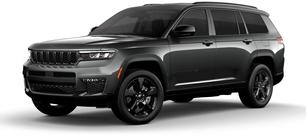
The Jeep Grand Cherokee has always been big. But if you want to carry more than five people, not big enough. Which is where the all-new, fifth-generation model comes in.
It’s the Grand Cherokee L. Jeep’s first-ever seven-seat version of its flagship SUV.
It’s set to compete with top-spec versions of mainstream models like the Hyundai Palisade and Toyota LandCruiser Prado, as well as premium full-size family trucksters like the Land Rover Discovery and Volvo XC90.
Jeep invited us to the Grand Cherokee L’s Australian launch to get a first taste of how it measures up to local conditions.
The Jaecoo J5 EV makes a strong first impression and a quieter long-term one. The J5 looks the part, feels comfortable and covers all the basics well, making it an easy choice for buyers who want an affordable, practical EV without too many compromises.
It’s a solid effort overall, though even at this lower price point a few more rear-seat features would be welcome - especially given this is the only grade currently available. However, it hits the right notes when it comes to ownership and value which will be its strongest pull.
Jeep’s aim with this car is to lift the Grand Cherkee to a more premium level, and that’s about brand equity and badge credibility as much as it is the vehicle itself.
The seven-seat L has stepped up in price, but also in practicality, refinement and equipment, while maintaining serious off-road ability.
Does it have what it takes to tempt people away from, say, the German Big Three? That’s a tough ask, but this Jeep certainly has more of what it takes to make that a real possibility.
For mine, the entry-level Night Eagle is the pick. Well equipped, heaps of safety and plenty of off-highway prowess.
Note: CarsGuide attended this event as a guest of the manufacturer, with travel, accommodation and meals provided.
The Jaecoo J5 EV is a handsome-looking small SUV. Its suite of LED lighting, 18-inch alloy wheels and upright, robust silhouette give it plenty of presence, particularly for something positioned at the affordable end of the EV market. That said, originality isn’t really its strong suit. The design, especially from the rear, feels heavily inspired by a Range Rover. Imitation may be the highest form of flattery but Jaecoo could have pushed the design in a slightly more distinctive direction.
It looks good on the road, though, and inside, the J5 has a genuinely airy feel. Light-coloured synthetic upholstery and the expansive panoramic glass roof help the cabin feel open and welcoming, particularly from the front seats. The design is modern and tech-focused, with the large 13.2-inch display taking centre stage on the dashboard.
The overall layout is clean and undeniably premium in its presentation, though it doesn’t bring a great deal of personality with it. That’s becoming a familiar theme, especially in this part of the EV market, where minimalism and screens often take priority over character.
A decade. That’s how long the previous Grand Cherokee was on sale in Australia, Which is ages, but also testament to the quality of that fourth-generation car’s design.
And there are echoes of it in this new model’s exterior. The overall proportions are similar, although the track is increased by 36mm, and the overriding impression is that key elements have been made slimmer and wider for a more contemporary look.
For example, the headlights, LED on all models, are shorter, but longer, while the signature seven-bar Jeep grille has been truncated a little and stands more upright.
Character lines along the side of the car are softer, and the rear follows the same slimline philosophy. But it’s inside where the biggest steps have been taken.
The dash layout and hardware have been transported from the relative Dark Ages to a clean and simple approach dominated by this broad centre console, topped by a sleek media screen.
The screen measures 8.4 inches in the entry-level Night Eagle, stepping up to 10.25 inches in the upper grades.
The latest, configurable, digital instrument cluster enhances the low-key tech vibe, and there’s a sensible mix of on-screen controls and physical dials and buttons. That said, there are a lot of buttons across the lower part of the centre stack and steering wheel.
The rest of the interior is a blend of simple lines and a subtle colour palette, including piano black highlights. It feels more mature and premium than the car it replaces.
The Jaecoo J5 EV's cabin is spacious with both rows offering ample head- and legroom. A flat floor also helps the middle rear seat feel more usable than usual, which is always appreciated. Up front, the seats are very comfortable, with their added adjustment, heating and ventilation making a noticeable difference on longer drives. The rear seats are well padded with decent back support, so passengers in the second row shouldn’t feel short-changed.
Access to both rows is good with wide door apertures and an easy step in/step out height. My main quibble here is the keyless entry set-up. Unless you enable proximity unlocking through the multimedia system the doors aren’t truly keyless. Even then, the system can be inconsistent. That means occasionally having to reach for the key fob, which is frustrating when your hands are full.
Storage is one of the J5’s stronger suits. Up front, it’s easy to keep things neat thanks to a large glove box and a deep, if slightly narrow, middle console. There’s also a clever open shelf beneath a centre console that houses cupholders and phone storage, including a wireless charging pad. A small hidden pocket behind the media display adds to the storage count, although I’ll admit I regularly forget it exists.
Rear passengers get a couple of map pockets, drink bottle holders and cupholders. Beyond that, amenities are limited. There’s a single directional air vent and a USB-A port, but not much else to keep older kids or adults entertained.
Technology is fairly straightforward, although almost everything is accessed through the touchscreen. The multimedia system is crisp and responsive, with wireless Apple CarPlay and Android Auto working well, however it misses out on built-in satellite navigation and any meaningful apps. That said, there is a karaoke app tucked away in the system, which will undoubtedly delight someone, somewhere.
Charging options up front include a USB-A and USB-C port, along with a 12-volt socket. There’s also a USB-A port near the rear-view mirror, which is handy if you’re planning to install an aftermarket dash cam.
Jaecoo pitches the J5 as pet-friendly, with upholstery designed to be easy to clean and resistant to wear. In practice, I’d say that claim comes with caveats. Jaecoo clearly hasn’t met my son or my German Shepherd, and it took a fair bit of elbow grease to properly clean the cabin. Staying on top of messes will be key if you want the interior to keep looking fresh.
The boot offers up to 480L of capacity, which is strong for the class, and the flat load floor makes it easy to slide items in and out. There are no power ports or sockets, which feels like an odd omission for an EV. You also get a repair kit instead of a spare tyre, despite there being enough space to accommodate one. A 35L frunk adds some extra storage flexibility, and the powered tailgate is a welcome inclusion.
When it comes to practicality, thoughtful, family-friendly touches include large door apertures, with the doors themselves opening right out to 64 degrees, as well a second row seat able to move fore and aft to balance passenger and/or cargo space.
Up front there are big bins in the doors with space for large bottles, a pair of decent size cupholders in the centre console, a two-tiered storage box between the seats that doubles as an armrest, and a covered wireless charging bay in front of the gearshift.
For connectivity and power there are two USB-A and two USB-C ports, as well as an ‘aux in’ socket, and a 12-volt outlet.
Jump into the second row, and sitting behind the driver’s seat set for my 183cm position, I enjoyed heaps of headroom and hectares of legroom, remembering it’s possible to slide the middle seat forward to give third row passenger more room, or increase load space.
Again, there are generous pockets in the doors with space for large bottles, map pockets on the front seatbacks, a fold-down centre armrest containing two cupholders, and rear seaters have their own ventilation control.
The dual USB-A and USB-C ports are repeated in the back, and there’s a 230-volt AC socket for three-pin plugs.
Access to the third row is helped by a roll and fold function in the second row, and once back there space is generous and the amenities are civilised.
I could sit bolt upright without any head clearance issues, and legroom is good. There are bottle holders on each side, adjustable ventilation in the C-pillars, small storage pockets, and yet more USB outlets.
And how’s this for a parent’s dream? ‘Fam Cam’ (optional on the Limited and standard on the Summit Reserve) is an adjustable rear seat monitoring camera able to switch between all second and third row positions. No more craning around and taking your eyes off the road to check what’s going on back there.
Even with all seven seats upright, boot space is 487 litres. Fold the 50/50 split third row and that grows to 1328L, and with the second (40/20/40 split) and third rows down you’ve got 2395L, enough room to start a boutique furniture moving business.
The loading height is user friendly, there are multiple tie-down hooks and a 12V outlet, there’s no lip to get over the top of, and a power tailgate, standard on all grades and hands-free on the Summit Reserve, is always welcome.
The Grand Cherokee L is rated to tow a braked trailer up to 2.8 tonnes, although that’s reduced to 2.3 tonnes in the Summit Reserve, partly due to the standard air suspension. And off-roaders rejoice, the spare is a full-size (18-inch) steel rim.
We’re testing the only Jaecoo J5 EV variant available at the moment, ahead of petrol and hybrid versions due to arrive later this year. Right now, it’s being offered with a limited-time drive-away price of $36,990. Once that offer expires, it reverts to a $35,990 MSRP, which sees it tie with the BYD Atto 2 Premium as the most affordable EV in its segment.
Step up from there and you reach the J5’s sister model, the Chery E5 Ultimate, priced from $40,990 MSRP. The MG S5 EV Essence 62 sits close by, starting from $40,490 MSRP.
On paper, the J5 hits a few more notes than its key rivals and that’s worth acknowledging. There’s a solid list of premium-style features, including electrically adjustable front seats with heating and ventilation, a panoramic glass roof, powered tailgate and synthetic leather-style upholstery.
Technology is similarly generous. You get a large 13.2-inch touchscreen multimedia display paired with an 8.88-inch digital instrument cluster, along with wireless Apple CarPlay and Android Auto. A 360-degree camera system is standard, as are two USB-A ports, a single 12-volt socket up front and a wireless charging pad.
That said, there’s only one USB-C port in the entire cabin, and no charging ports or power sockets in the boot, which feels like an odd omission in an electric SUV. Accessing the vehicle-to-load function also requires an adapter via the external charging port, rather than a more user-friendly internal outlet.
Despite its sharp pricing, the J5 is offered in just one high-spec grade and that raises expectations. In that context, the rear seat feels a little underdone. It misses out on several amenities you’d reasonably expect in a flagship-style model. While that’s not unusual for an EV at this end of the market, it still feels like a missed opportunity to stand out.
This three-row L, scheduled to go on sale mid-year, is the first of several versions of the Grand Cherokee set to arrive in 2022.
Our very own Chesto has driven the five-seat version in the US, specifically the plug-in hybrid 4xe, another first for the model, set to hit showrooms in the second half of the year.
But for now, the seven-seat L is the focus, offered in three grades starting at just over $80K, before on-road costs, and topping out at roughly $115,000.
This is part of Jeep’s stated aim to move upmarket, and aside from the safety and drivetrain tech covered a little later, the entry-level Night Eagle at $82,250, before on-road costs, features suede and leather-appointed seat trim, eight-way electrically-adjustable and heated front seats, a heated steering wheel, sat nav, an 8.4-inch multimedia screen, a 10.25-inch instrument display, six-speaker audio (with Apple CarPlay and Android Auto connectivity), three-zone climate control, a rear-view camera, keyless entry and start, adaptive cruise control, auto LED lights, 20-inch alloys, a power tailgate, and more.
Step up to the Limited ($87,950) and the media screen increases to 10.1-inch, the seat trim is even plusher ‘Capri’ leather, there’s a multi-memory seat function for the driver, the front seats are ventilated and the second row is heated, pull-up shades are added to the rear side windows, the audio system has three extra speakers with a 506W amp (and active noise control), plus there’s ambient interior lighting, and auto high beam.
Opt for the top-shelf Summit Reserve ($115,450) and the rims are even bigger at 21 inches, the front seats are 12-way electrically-adjustable, open pore wood trim is added to the dash, doors, and steering wheel, the climate control is four-zone, the front seats feature a configurable massage function, the stereo is pumped up to a 19-speaker, 960-watt package, there’s a dual-pane sunroof above your head, and the ‘Palermo’ leather seat trim is quilted. There’s more, from Berber floor mats to a hands-free tailgate, but you get the idea.
Overall, despite a solid asking price, generous standard equipment helps substantiate a category competitive value package.
The Jaecoo J5 EV is powered by a single electric motor sending 155kW/288Nm to the front wheels. That’s enough to see it sprint from 0-100km/h in a claimed 7.7 seconds. Those figures stack up well relative to the J5's positioning in the segment.
This isn’t a performance-led EV and it doesn’t pretend to be. Instead, the J5 delivers its power in a way that feels competent and predictable rather than 'exciting'.
All versions of the Grand Cherokee L are powered by a 3.6-litre naturally-aspirated V6 petrol engine producing 210kW at 6400rpm, and 344Nm at 4000rpm, driving all four wheels through an eight-speed auto transmission and a transfer case - single speed on the first two models and two-speed on the Summit Reserve flagship.
The evergreen Pentastar V6 is a naturally-aspirated, all-alloy, quad-cam design featuring dual variable valve timing and sequential-injection.
If you want more grunt? Yes, there’s a 5.7-litre Hemi V8 available in this new Grand Cherokee. But it’s in the States, not here. There’s no diesel option, either. But as mentioned earlier, a plug-in hybrid, the 4xe (four-by-e) is coming later in 2022.
The Jaecoo J5 EV uses a Type 2 CCS charging port and can accept up to 10.3kW on AC power via a three-phase connection, along with DC fast charging speeds of up to 130kW. On a suitable fast charger, Jaecoo claims a 30 to 80 per cent charge can be completed in as little as 28 minutes. That’s a solid result for this segment, with only the MG S5 EV offering higher DC charging capacity and quicker top-up times.
The J5 has a 58.9kWh lithium-iron phosphate battery and a 402km (WLTP) driving range. Both its sister model, the Chery E5, and the MG have slightly longer ranges. It's not surprising but it means it's an EV better suited to the city where you can keep it regularly topped up.
Official energy consumption is listed at 14.3kWh/100km. After a mix of longer drives and urban running, my average settled around 15.4kWh/100km, which is a respectable result overall and broadly in line with expectations.
Jeep’s official fuel economy figure for the Grand Cherokee L on the combined cycle is 10.6L/100km, the 3.6-litre V6 emitting 243g/100km of CO2 in the process.
Given the specific on and off-road combination of the launch drive we’ll wait until we can evaluate the car over a longer period to quote an ‘on test’ number.
Worth noting stop-start is standard, and in the name of weight saving, the car’s bonnet and tailgate are aluminium. Still weighs around 2.2 tonnes, though.
The tank holds 104 litres, which using the quoted consumption number, translates to a range of around 980km.
The Jaecoo J5 EV has plenty of power on hand, with good pick-up when you need it for hills or overtaking. It feels responsive enough for everyday driving, without ever feeling aggressive or overly eager.
Steering is light, and the suspension leans towards the softer side. Around town that works well, offering a comfortable ride. On faster roads or through corners, however, it can feel a little unsettled, and the J5 isn’t particularly convincing on the open road.
Visibility out the front and sides is strong and the driving position gives you a fairly commanding view of the road, which makes day-to-day city driving straightforward.
There are three levels of regenerative braking, but even on the lowest setting it can feel abrupt. Some passengers reported feeling queasy and maintaining a smooth, consistent speed can be tricky as the car has a tendency to lurch.
Parking is generally easy thanks to the J5’s compact footprint and a clear 360-degree camera system. That said, the aggressive regen braking can make low-speed manoeuvres, particularly reversing, more challenging than necessary, as it’s hard to get the car to creep smoothly.
In driving the new Grand Cherokee the first thing you recognise is the Pentastar V6’s characteristic induction sound. That’s not to say it’s overly loud, just familiar.
But in terms of what it delivers, nearly 90 percent of the engine's peak torque is available from 1800 to 6400 rpm, so you’ve got that mid-range pulling power which is as nice on the highway as it is around town, but also good for people that are into towing.
The eight-speed auto is nice and smooth, as well, and even though it’s a conventional torque-converter unit, manual shifts through the steering wheel paddles are quick.
Suspension is multi-link front and rear, with the top-spec Summit Reserve picking up air suspension and active damping. Major components are alloy to reduce unsprung weight but you can certainly feel the scale of this car.
It’s 5.2 metres long and weighs roughly 2.2 tonnes, so you’re guiding this sizeable machine along the road. It’s not an involving drive, we’re not in sports car territory here. But it feels stable and predictable in cornering, and body control is well buttoned-down.
The electrically-assisted steering’s weight is nice from parking speeds right up to freeway velocity, but road feel through the wheel is relatively modest.
In terms of the seating position, you do feel as though you’re sitting up and on, rather than down and in the front seats. But when it comes to support, after hours behind the wheel, including off road, the front chairs remained comfortable.
This is a big vehicle, that will often have a boat, van, or something else substantial hitched to the back of it, and the brakes are suitably specified.
Big discs are ventilated all around, clamped by two piston calipers at the front and singles at the rear, and on the off-road section of the launch drive we were by necessity leaning on the brakes for long periods of time.
You could occasionally smell that they were working hard, but the pedal remained firm all day, without a hint of fade.
Speaking of off-highway performance, as part of its development program Jeep tested this new Grand Cherokee in remote parts of Australia, with more than 60,000 km under the wheels of various prototypes. Likely a big help in setting up the local spec.
And that spec is, four-wheel drive in all models, as well as a single-speed transfer case in the Night Eagle and Limited, with the latter also featuring the ‘Selec-Terrain’ traction management system, controlling torque split (up to 100 per cent of drive to either axle), as well as the brake calibration, steering, suspension, throttle, transmission, transfer case, traction control, stability control, and ABS settings.
The Summit Reserve boasts a two-speed transfer case, with low-range reduction, as well as traction management and air suspension with electronic adaptive damping.
The air suspension incorporates five height settings - Normal, Off-road 1 (40mm lift), Off-road 2 (60mm lift), Park (46mm lower), and when in sport, Aero (21mm lower).
In typical Jeep fashion we attacked challenging fire and forestry trails on the launch drive and a couple of things emerged.
First, on street-focused tyres this car does incredibly well off-highway. And second, the ‘Quadra-Trac II’ 4x4 system with low-range capability in the Summit Reserve, combined with the crawl control function, makes a significant difference. You find yourself feeling that bit more composed and confident tackling very rough sections.
Also in the Summit Reserve, a low-set, forward facing camera allows you to see what’s actually happening at the front wheel via the central media screen, and in the Off-road 2 setting the car feels like it’s up on stilts and able to tackle anything in its way.
And for those that really want to get amongst it, the body clearance data is below.
The J5 hasn’t been assessed by ANCAP yet and is unrated but it has a good suite of safety equipment included. There are seven airbags, intelligent seat belt reminders, ISOFIX anchors, three top-tether anchor points, front/rear parking sensors and a 360-degree view camera system.
There’s also blind-spot monitoring, lane departure alert, lane keeping aid, forward and rear collision warning, side exit assist, a driver monitoring system, autonomous emergency braking and adaptive cruise control. The J5 EV misses out on emergency call capability.
Most of the driver assist systems aren’t intrusive, although the driver attention monitoring can ping more than it’s needed and the adaptive cruise control is best without the assisted steering on.
The Grand Cherokee L is yet to be assessed by ANCAP, but Jeep has upped its active safety game with standard crash-avoidance tech including, AEB with cyclist and pedestrian detection, lane keep assist, ‘Intersection Collision Assist’, adaptive cruise, as well blind-spot monitoring, rear cross-traffic alert, traffic sign recognition, tyre pressure monitoring, and ‘Drowsy Driver Detection.’
The Summit Reserve adds Level 2 driving assistance features, a 360-degree camera view, self-parking assist (parallel and perpendicular), and more.
If an impact is unavoidable, there are eight airbags on-board - dual front, front side, front knee, and full-length side-curtain.
There are three child seat top tethers across the second row, with ISOFIX anchors on all three positions. And there are top tethers on both third row seats.
Ownership is one of the J5’s stronger points. The number eight is associated with good fortune in Chinese culture and Jaecoo has clearly leaned into it here!
It's offered with an eight-year/unlimited km warranty, eight years battery cover and roadside assistance, plus eight years of capped-price servicing where workshop visits average a low $190 per visit (which is very good).
Servicing is required every 12 months or 20,000 kilometres and for now the service network is fairly small, with around 50 centres nationwide. They’re mostly found in major cities, which is something to keep in mind depending on where you live.
Jeep covers the Grand Cherokee with a five-year/100,000km warranty, which is behind the five-year unlimited kays cover which is pretty much standard in the mainstream market now.
But you do receive 12 months complimentary roadside assistance, which is renewed for another year every time you service your vehicle at an authorised Jeep dealer.
Service is recommended every 12 months or 12,000km, and capped price servicing is available for $399 annually for the first five years. Not bad for a car of this scale and complexity.