What's the difference?
There’s a school of thought that says you should always use the biggest hammer available. That’s the view of more than one van and truck manufacturer, who will point at the dual-cab utes Aussies are currently consuming at a frightening rate, and politely suggest a light truck or full-sized van might just be more appropriate.
It’s a hard argument to ignore, and for those who use their commercial vehicles to the max, perhaps a committed truck or van might make sense. After all, having the ability to tow 3.5 tonnes AND still have some payload left over for passengers and fuel is a hard argument to ignore. It’s also a line European maker Iveco is keen to push, along the lines of never taking a knife to a gunfight.
Iveco’s volume-selling light van offerings are the 42S and 50C models; vans that cross from recreational to professional user thanks to their overall size, capacity and the fact they can be driven on a normal car license in Australia.
Now revised for greater buyer reach, the 42S gains a 350kg payload boost over the 35S model it replaces, as well as more power and torque from its engine. It also boasts improved safety credentials with the addition of a range of driver aids which we take for granted in passenger cars, but are increasingly important in the commercial vehicle world thanks to a renewed focus on OH&S.
So, what else is new? Starting in the cabin, there’s now a 10-inch digital driver display unit, improved wireless and wired charging rates, changes to the chassis rails for better crash performance, an improved warranty and a pair of feature packages designed to target the end user market.
In Europe, the Daily van has plenty of competition, while in Australia, the major opponents are the Mercedes-Benz Sprinter, VW Crafter, Fiat Ducato and the emerging Chinese van threat, the LDV Deliver 9.
The electric car world has seen a few seven-seat SUVs hit the ground running recently and for good reason. The dream of lowering your emissions without sacrificing space for the family is a tempting one. But let’s be honest, there still aren’t a whole lot of options out there.
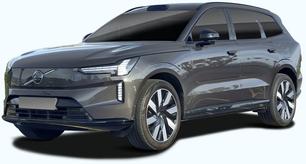
Enter the flagship Volvo EX90 Ultra Twin Motor Performance. It brings together the elegant design and thoughtful functionality Volvo is known for, now paired with a premium tech offering and a powerful new electric drivetrain.
Will it be enough to tempt buyers over the line? I've spent a week with it to find out.
The Iveco Daily van’s light-truck genetics mean it’s not as immediately familiar to the end-user as some of the competition. It’s a fair climb to get inside, for instance, and once you’re there, the cabin lacks the ambience of a more passenger-oriented machine. Its wheelbase and external dimensions, too, mean it requires plenty of parking skill and real estate, and the dynamics are surefooted but hardly athletic.
Of course, fleet managers won’t care too much about any of that, and the flip-side is those truck underpinnings point to a low maintenance, high-mileage lifespan with good warranty as a promise of less time lost in the service bay when the van could be on the road earning its keep.
Right at the moment, the Daily van appears to be forming some kind of bridge between the car and truck world in terms of safety equipment and driver assistance gear, too. And that’s got to be a good thing.
But equally, it remains a pretty specialised piece of equipment that won’t work for everybody, nor does it have a lot of cross-over appeal between the car and truck worlds. None of which, of course, will prevent it being a valuable tool of the trade in the right hands.
Note: CarsGuide attended this event as a guest of the manufacturer, with travel, accommodation and meals provided.
The new Volvo EX90 Ultra Twin Motor Performance strikes a great balance between sophistication and practicality. It looks sharp, drives beautifully, and delivers a solid range with fast charging to match. Adding to that is a comfortable, family-friendly cabin with space for seven. It’s hard not to be impressed.
There are a couple of technology beats it misses but it's still an easy SUV to live with.
One thing Iveco is very up front about is that its vans are truck-based. To some sectors of the market this is no problem whatsoever, but it means that stylistically, the end product is not likely to be as fashionable looking as some of the competition. That big, bluff front, for instance, while maybe looking a bit heavy-handed to some, will conjure up just the right amount of brute force for others.
There is also evidence Iveco doesn’t mind if the exterior appearance fails to hide how the machine works. That perhaps why the wheel arch flares are obvious and the track for the sliding door is proudly on display rather than hidden.
Even inside, the bare cargo-bay walls tell their own utilitarian story, but when you get down to actually lashing down heavy loads, that truck heritage is very much in evidence with a non-nonsense layout and presentation.
The EX90 has swathes of smooth body panelling and a closed-off grille, as we've come to expect from a modern EV. The rear roofline tapers gently, giving it a sleek profile, while the black body moulding around the base and frameless mirrors add some visual interest.
It’s a clear departure from the boxier XC90 and you won’t mix them up but it still features those signature 'Hammer of Thor' LED headlights, which I really like.
The Ultra rides on 22-inch alloy wheels which help fill the arches nicely without making the car look oversized or flashy. The soft-close doors are a luxe touch and the overall fit and finish is up there with the best in the segment.
It shares its platform and technology with the Polestar 3, so if you're familiar with that model, the dashboard and centre console layout will feel very familiar.
I’m a fan of the clean, minimalist look and it works well with the panoramic sunroof, which brings in loads of light. A future update will let you switch the roof from clear to opaque, which should be a nice touch come summer.
The ambient lighting is cleverly integrated with the birch wood trim, and there are subtle ambient lights throughout the cabin that give it a business-class vibe.
And since it’s fully electric, there’s no transmission tunnel, so the middle row gets a completely flat floor. That also means extra space, with a handy storage cubby added under the centre console.
Even within the framework of vans that are agile enough to park relatively simply, can be driven on a normal car license and are priced within reach of even recreational users, there’s still a lot going on. Think optional payloads, wheelbases and cargo volumes, just for starters.
So let’s start with the Daily 42S. Available with either a 3520mm or 4100mm wheelbase, the 42S can cope with a payload of 1872kg or 1741kg, respectively. Towing capacity is 3500kg. It stands more than 2.7 metres tall and seats three.
The 50C is the next step up the size ladder and, like the 42S, can be had with either a 3520mm or 4100mm wheelbase. But from there, the 50C just gets bigger with a choice of three overall lengths (up to almost 7.7 metres) and two distinct roof heights. Payload varies from a high of 1942kg to 1752kg and, like the 42S it also seats three and can tow 3500kg.
Iveco has stuck with single rear wheels (rather than a dual-wheel rear axle) for the 42S variant as this minimises the internal space taken up by the rear wheel arches and ensures that the van in any configuration will still swallow a standard pallet between those arches. The 50C, meanwhile, with its greater payload potential, features dual rear wheels. The other reason for the dual wheels is that the 50C can be ordered with an upscaled GVM of 5.2 tonnes, versus the standard vehicle’s 4.5 tonnes. At that point, though, the driver requires an endorsed license to stay legal.
The cabin is a master-class in finding a storage space for everything, with no less than three cubbies per door, storage bins on the dash-top and above the sun-visors, half a dozen cubbies in the dash fascia, a single glove box and a huge storage area under the flip-up cushions of the passenger’s bench seat. In standard trim, the Iveco vans seat three with a two-person bench and a single driver’s seat. That, however, doesn’t mean the vehicle has a walk-through function, and the solid cargo barrier keeps the cabin permanently separate from the cargo bay.
Access to the cargo area is via twin barn doors at the rear which open back on to the sides of the vehicle for easier fork-lift loading. There’s a single sliding side door as standard on the kerb-side, but you can option a second sliding door on the other side. There are also no less than 10 tie-down points (five per side) and they’re solid and mounted on the floor for maximum usefulness. Three LED lights illuminate the cargo area.
The EX90 nails the balance between luxury and everyday usability. Up front, there’s loads of head, leg and elbow room, and it’s easy to get in and out thanks to the 216mm ground clearance and wide door apertures.
That said, the flush door handles can be a bit temperamental as they don’t always pop out when you approach and the key card only works from the driver’s side, which can be annoying.
Once you’re in, the front seats are superb. They’re seriously comfortable, with heating, ventilation, massage and extendable thigh supports that make long trips a breeze. It’s easy to find a great driving position and just settle in.
Storage up front is clever and generous. There’s a large glove box, a deep centre console with a hidden cubby, a shelf under the floating centre stack, plus cupholders and big door bins. It's well thought out and practical.
The 14.5-inch multimedia screen looks fantastic and is responsive. Now, I’m a button girl, and usually having to rely on a screen for everything would bug me but this set-up works.
You can pin your favourite features like climate and media controls to the bottom of the display for easy access, and the voice assistant is usually really capable, so you can stay hands-free when needed.
Built-in Google Assistant, Google Maps, YouTube, Spotify, plus wireless Apple CarPlay and Android Auto make tech integration smooth. Navigation directions show up clearly in both the 9.0-inch digital instrument cluster and the colour head-up display, which is a nice touch.
I experienced a couple of tech gremlins toward the end of my week with the car. The Google Assistant stopped picking up my voice commands and calls wouldn’t route through the sound system once connected.
Thankfully, both issues seemed to resolve themselves without intervention, but it's worth noting in case it’s a software quirk that pops up from time to time.
The second-row seats are ergonomic but a little firm - still comfy enough for long trips, especially with heating for the outboard seats.
Access is easy, and my eight-year old had no trouble climbing in or out. The booster seat integration has moved to the middle seat only (instead of both outboards), which might limit flexibility for some families, but for us it works fine.
There are ISOFIX mounts on the outboard seats and three top-tether points across the second row, and yes, you can fit three child seats side by side. Amenities in the second row are excellent with two USB-C ports, air vents, dual-zone climate, map pockets, cupholders and decent storage bins.
The third row is, as expected, best for kids, as toe room is limited and the access is child-sized. Still, it’s well-appointed with two cupholders, USB-C ports, and air vents built into the C-pillars. Even better, it gets two top-tether anchor points, which is a huge bonus for big families.
Boot space is solid because even with all seats up, you get 324L, including a useful underfloor compartment. Fold the third row and it jumps to 697L.
You can also manually raise or lower the boot height thanks to the active air suspension, and the third row folds electrically. There’s also a 12-volt socket and a powered tailgate you can operate via the Volvo app or the multimedia screen.
Up front, there’s a 34L frunk which is ideal for storing charging cables or a tyre repair kit, keeping everything neat and separate.
When you start to dig into the Iveco Daily range, it soon becomes apparent there’s huge depth to the line-up. In fact, there’s everything from a four-wheel drive dual cab-chassis, a bare-bones cab-chassis and even van versions with enough GVM (Gross Vehicle Mass) to require a truck license to be driven legally.
But for most users, and certainly those that might otherwise resort to an American pick-up or some other form of dual-cab utility for their work and play requirements, the Daily variants that offer the broadest appeal are the 42S and 50C vans.
That pair gives you a choice of capacities (see Practicality section) as well as some new safety tech and some structural changes aimed at making the vehicle safer.
You also get climate-control air-conditioning, cruise-control and a tilt and height adjustable steering column. Seat trim is still cloth, the floor coverings remain vinyl and the wheels are stamped from steel. This is, after all, a truck-based vehicle and it shows in some respects.
A pair of option-packs start with the 'Business Pack' which takes fuel capacity from 70 litres to 100 litres, a new 10-inch multi-media unit, a passenger’s bench seat with table, a heated driver’s seat with suspension function, climate-control, keyless entry and go, fog-lights and an electronic park-brake.
The 'Premium Pack' adds auto headlights and wipers, LED lighting, a leather steering wheel, wireless charging, adaptive cruise-control and lane-centring.
Right at the moment, we don’t have pricing for those packs, nor do we, in fact, have confirmation of pricing for the new van range. But word on the street is that pricing – thanks to a strong exchange rate at the moment – may not be very different from the superseded range, meaning the entry-level 42S van could enter the market around the $60,000 mark plus on-road costs, while the 50C variant could top out at closer to $100,000. That’s a pretty sketchy prediction, we know, but it’s all we can offer at the moment.
There are two grades available for the new Volvo EX90, and for this review, we're testing the flagship Ultra Twin Motor Performance.
While it shares the same motor configuration as the lower Plus variant, the Ultra gets a performance tweak that improves its 0–100km/h sprint time. Naturally, it also comes with a suite of luxurious extras befitting its flagship status.
Starting at $134,990, before on-road costs, the Ultra sits comfortably in the middle of its electric upper-large SUV rivals.
It’s more expensive than the Kia EV9 GT-Line (from $121,000) but undercuts the luxury-laden Mercedes-Benz EQS 450 4Matic (from $222,400). It also only costs $6600 more than the top-spec PHEV XC90, making it a compelling step up if you require electric performance and efficiency.
With a claimed WLTP driving range of 570km, the EX90 Ultra holds its own in the segment, offering solid long-distance capability.
The Ultra is well-equipped as you’d expect with electric front seats that feature heat, ventilation and massage functions. There is a heated steering wheel, fixed panoramic sunroof and a 25-speaker Bowers & Wilkins sound system.
Volvo has confirmed the panoramic sunroof will have an adjustment setting between clear and opaque in a future update, as it currently doesn’t have a blind.
Some great practical and family-friendly features include heated rear outboard seats, powered third-row seats, a powered tailgate, a 34L frunk for charging cables and an integrated kid’s booster seat in the middle row for those transitional stages.
The well-rounded suite of technology is based on the EX90's new Polestar 3 cousin and includes four USB-C ports plus a digital key via the Volvo app. The app also allows you to check on the status of the vehicle, open and close the boot lid, remotely unlock/lock the vehicle and pre-set the internal climate.
There is a large 14.5-inch touchscreen multimedia display that features wireless Apple CarPlay and Android Auto, satellite navigation (with live traffic updates and directions that are pulled into the colour head-up display) and a 9.0-inch digital instrument cluster. The system also has a suite of built-in apps like Google Assistant, Google Maps, YouTube, Spotify etc.
While vans might be getting ever closer to passenger cars in the way they drive (stay with us) in engineering terms, there’s still a bit of 'us and them' going on. That means you kind of have to throw away a fair bit of what you thought you knew about how motor vehicles work, but it also means the Iveco is fit for purpose in a world where big loads and lots of kilometres are the norm.
Power in either the 42S or the 50C comes from a 3.0-litre, four-cylinder, turbo-diesel engine. It doesn’t sound too different from what you’d find in a dual-cab ute, but the engine uses some pretty heavy-duty tech, making it closer to a truck engine than a typical light commercial’s, including an impressive service regime. Although capacity remains the same, the Iveco’s unit is available in two tunes, both erring on the side of torque over outright power.
The 42S gets a 132kW and 430Nm version of the engine, while the 50C can be optioned up to the second-tier tune with 155kW and 470Nm. It’s not just an electronic tweak, either, and while the engine’s fundamentals remain, there are changes to the turbocharger and camshaft as well as the engine management.
Standard transmission is a ZF-made eight-speed conventional automatic and there’s electric power-steering as a nod to the chase for maximum efficiency which is perhaps even more important in the Daily’s European home market than it might sometimes be here.
However, it’s when you get to the suspension that the Daily reveals its brawny design ethos. Front suspension on the 42S is by double wishbones and torsion bars which sounds odd, but is pretty familiar in the trucking world. The 50C uses the same arrangement.
At the rear, the 42S gets a simple twin-leaf parabolic spring at each outer end of the axle, while the 50C has the same with optional air suspension and an optional driver-controlled locking differential.
All versions of the Daily also use the time-honoured (in the trucking industry) body-on-ladder-chassis construction method.
The Ultra is all-wheel drive with twin electric motors, one on each axle. Combined, they deliver a hefty 380kW of power and 910Nm of torque. That translates to a 0–100km/h sprint in just 4.9 seconds, which is seriously impressive for a big SUV.
Do we need it to be this fast? Absolutely not. But do I appreciate the gumption? You bet I do.
Fuel consumption of commercial vehicles can vary enormously depending on where they’re driven and how they’re used and loaded. As a commercial vehicle, there are no official fuel consumption claims made by Iveco according to any standard test procedure.
Our experience with this vehicle in the past, however, suggests that between nine and 10 litres per 100km is a good indication of overall consumption. Obviously, hitching a 3.5-tonne trailer to the vehicle and loading it fully will have a big effect on that number.
With the standard 70-litre tank, the Daily should be able to cover near enough to 700km between fills, while the optional 100 tank should take it closer to 1000km.
Don’t forget, either, that the new Daily requires AdBlue which is carried in a 20-litre reservoir on the vehicle, and that the cost of filling this needs to be added to overall running costs.
The official WLTP energy consumption figure for the EX90 Ultra is 16.9kWh/100km, and after a good mix of open-road and urban driving, I averaged around 20kWh/100km which isn't bad at all for a vehicle of this size.
The strong regenerative braking helps here, and if you time your deceleration right, you can enjoy a proper one-pedal driving experience, which makes city driving feel effortless.
The EX90 uses a Type 2 CCS charging port and packs a massive 111kWh lithium-ion battery, good for a driving range of up to 570km (WLTP).
Charging speeds are impressive as it supports up to 11kW on AC and a hefty 250kW on DC fast chargers. That means you can go from 10–80 per cent in as little as 35 minutes on a 250kW charger, or in around 10 hours on an 11kW home set-up.
The first impression – once you’ve managed to climb inside the cabin (a manoeuvre that requires the in-built step) is of a magnificent view ahead and to the sides. You sit high and mighty and the vast glass area means you always feel like the king of the road. The steering wheel is relatively flat compared with a passenger vehicle, but the column features tilt and reach adjustment, so you can soon get comfortable.
The engine feels a bit grumbly and coarse compared with the dual-cab utes with which many of us are more familiar. It’s not harsh, though, and soon has the Iveco accelerating, if not swiftly, then certainly with some authority and a feeling it would take something pretty solid to slow it down.
The eight-speed transmission is calibrated – perhaps deliberately – to feel a little like the robotised manuals of some bigger trucks, and as such, can feel a little stilted in the way it ever so slightly hesitates between shifts.
The brake pedal is also placed too far to the right for comfortable left-foot braking and there’s no driver’s dead-pedal or foot-rest, suggesting that overseas crash testing may have dictated its deletion and the location of the brake pedal. That said, the Daily was originally designed as left-hand-drive, so perhaps the switch from left to right has imposed some of those compromises.
The other complaint is in the form of the new-for-2026 gear selector. It uses the now common separate Park button, but until Park is engaged, the button is not illuminated or identified in any way and simply looks like another piece of black plastic on the shifter. Once you know where it is, you’re fine, but until then…
The electric power-steering poses no challenges and, in fact, is kind of a metaphor for the whole experience. It’s easy and tactile to operate and takes no time at all to feel comfortable. That’s assuming that you can learn to trust your exterior mirrors and the rear-view camera, because with the standard cargo barrier installed and the lack of an interior mirror, there’s more or less zero rear vision.
Smooth and effortlessly powerful - that’s the best way to sum up the EX90 on the road. Despite its size, you don’t feel the bulk from behind the wheel. It’s nimble when it needs to be and wickedly quick off the line. Even under hard acceleration, I always feel in control, which is a huge plus for something this punchy.
You can customise the steering feel, and I preferred it on the firmer setting as it gave the best feedback without feeling heavy. The active air suspension does a great job of absorbing rough surfaces without softening the handling, so there’s no floatiness, just a composed, comfortable ride.
Inside the cabin, it’s beautifully quiet. That signature EV silence makes the space feel refined, with just the occasional tyre rumble at higher speeds, depending on the road surface but it’s never intrusive.
Visibility is mostly great from the front and sides, but the rear window feels miles away in the mirror, and the B-pillars are a little thick, so there’s a minor blind spot to be aware of.
Parking is easier than you’d expect for something of its size. The 360-degree camera is super clear, and there are plenty of parking sensors. The 12m turning circle is pretty standard, but it still felt totally manageable in tight shopping centre car parks.
Improvements to the Daily’s safety are one of the big headlines here. Well, in Europe, perhaps, because in Australia, the upgrades kind of amount to playing catch-up. But the new driver assistance packages are the real news here and, as such, the Iveco vans now get functions such as active cruise-control, traffic-jam assist, lane centring, autonomous emergency braking (that also identifies pedestrians and cyclists), blind-spot warning and rear-cross traffic alert and assist.
The three-seat cabin features four airbags; a driver and passenger front airbag and two side-curtain bags. The Daily has been crashed tested in Europe according to NCAP protocols and scored a maximum five stars.
A new, deformable crush-box in the front structure of the Daily is designed to give the vehicle improved passenger-protection in a frontal crash.
Top tethers and ISOFIX anchors for child seats are provided with configuration varying by body type.
The EX90 hasn’t been ANCAP-tested yet, so it’s currently unrated but being a Volvo, you can bet it’s packed with safety smarts.
It features a comprehensive suite of advanced safety tech, including side exit assist, emergency call functionality and a child detection system using radar sensors to monitor for movement in the cabin after the car is locked, designed to prevent children being accidentally left inside.
The second- and third-row seats all feature top-tether points, with ISOFIX anchors on the two outer second-row positions.
There are seven airbags, including a front-centre airbag and curtain airbags that cover all three rows, which is a win for families.
On top of that, it’s equipped with Volvo’s 'Pilot Assist' suite, which includes adaptive cruise control with lane centring, lane departure alert, lane keeping aid, blind-spot monitoring with steering assist, rear cross-traffic alert with automatic braking, 360-degree camera system, front/rear parking sensors and autonomous emergency braking with forward collision warning.
Volvo is also working toward occupant sensing and driver monitoring systems that go beyond the usual alerts. The EX90 includes an interior radar system sensitive enough to detect the micro-movements of breathing, aimed at preventing hot car deaths.
It’s being pitched by Volvo as one of the more safety-forward SUVs on the market, even before it earns its official crash score.
Because they’re truck-based, the Iveco vans have meaningful service intervals as a way of keeping down-time to a minimum. In the case of the 42S and 50C models, that translates to a whopping two years or 50,000km between services, whichever comes first. We understand that relies on a particular type of engine oil being used, but even so, it’s a mighty long way between drinks.
Iveco has traditionally offered service plans of up to five years, and that will continue, but we haven’t been given pricing for that at this stage.
The standard Iveco warranty applies to these models, and that gets you six years and 250,000km worth of cover. An extended driveline warranty of up to six years and 600,000km is also offered. Again, pricing for that has not been announced.
It’s also worth noting that the Iveco van engines have been Euro 6 compliant since 2015. The facelift ushers in further changes based on regulations. That means they now need AdBlue which needs to be factored in as a running cost. But because they’re designed for a European audience where emissions are arguably a much bigger issue than here, the AdBlue technology is very advanced and rules out the need for a Diesel Particulate Filter in the exhaust system; something that will appeal to a lot of would-be owners.
The EX90 is covered by a five-year/unlimited km warranty, which is on par with most rivals, though Kia still has the edge with its longer coverage. Servicing intervals are every 12 months or 15,000km, whichever comes first.
As for costs? For the first five years, servicing is included in the purchase price, so while it’s technically not ‘free,’ it does mean no extra out-of-pocket expenses for scheduled maintenance during that time and that’s pretty solid value in this segment.