What's the difference?
Giant carmakers seem like pretty sober sorts of places. Everything goes through endless committees, every decision has to be signed off, sent in, sent back, subjected to endless scrutiny to make sure it will make money.
Sometimes, a brand will do something odd like BMW's i3 which is like sending up a flare to get people talking.
Hyundai, for many years, seemed to be trying to emulate Toyota. After a brief flourish in the '90s when it did for curves on cars what Kim Kardashian did for curves on grubby internet sites, the company lost its bottle and tried to go full mainstream. Never go full mainstream, that's for the old folks.
Then, out of the blue, came the Veloster. It's probably one of the most wilfully weird cars in decades (apart from various Citroens, but that's a special case).
One long door on the driver's side, two shorter doors on the passenger side. When BMW did something similar with the Mini Clubman, right-hand drive markets didn't get their own version of the kerb-side door, but Hyundai isn't like that.
Making the Veloster properly in right-hand drive is a wonderful gesture from a company that worked out being itself was a better idea than being Toyota.
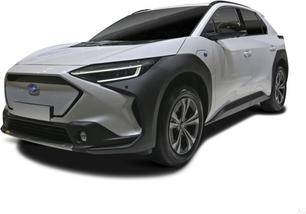
Car companies don’t normally overhaul a vehicle so rapidly and comprehensively. But the updated Subaru Solterra EV is an exception. It had to be done and this isn’t just an update, it’s an act of survival for Subaru… and Toyota.
You knew the Solterra’s identical twin is the Toyota bZ4X, right? Together Subaru and Toyota developed an electric SUV. Subaru’s is the Solterra, Toyota’s is the bZ4X - same car, different styling, mostly.
The problem was the vehicle couldn’t compete with rivals like the Zeekr 7X and Tesla Model Y on price, driving range, power or charging speed.
Subaru and Toyota knew this had to be fixed ASAP. And so we now have the new Solterra. But is this revised version good enough? Read on to find out.
Another good bit of Berry wisdom was the idea that the Turbo is the sweet spot of the range. While the Premium is indeed packed with goodies, they're not must-haves - the Turbo has everything you need while the Premium adds the wants.
So, at its core, this Turbo Premium is good warm hatch fun in a wacky, head-turning body, wrapped around a good cabin that could be a little less plasticky. Best of all, the fun design matches the fun-to-drive personality. It's a thoroughly modern Hyundai and I want (even more) to drive the full-fat bonkers N version we look like we're not going to get.
The updated Subaru Solterra is now good enough to compete with rivals such as the Tesla Model Y and Zeekr 7X. The price is right as are the driving range and motor outputs.
There's room for improvement in terms of cabin packaging. The car doesn’t cater for taller, larger people up front, with the steering wheel placement and wide centre console. Cabin storage could also be much better.
Still, the Solterra is superb to drive. One of the best EVs I’ve piloted at this price.
You do not have to find the Veloster pretty to think it's cool. You can see echoes of the i30 donor car that lurks under the more interesting metal, with a big grille, sharper headlights and plenty of black bits to up the aggro for the Turbo model.
The rear bumper sports a pair of drainpipe-sized exhausts that aren't afraid to bellow a bit.
It's different from right to left in profile, with the rear door almost disappearing into the rear haunches on the passenger side. The high rear glass may not be great for seeing out of but it helps keep the Veloster identifiable and influential - there are more than a few cars getting about sporting a similar high rump with big lights.
The cabin is, like its predecessor, fairly restrained and very i30-like. It's all put together very well and is only let down by the centre console's plastics being a bit hard, scratchy and insubstantial.
The Solterra is a mid-sized SUV with sporty coupe-like styling and this update has seen the front of the car receive a new look which to my eyes is better than the previous face.
The rest of the car’s exterior remains mainly unchanged in the design.
If you aren’t a fan of the Solterra’s look then check out Toyota’s bZ4X, which is its twin and has slightly more conservative styling, and while I do like the Subaru’s face, I think Toyota’s tail-light treatment is cleaner.
The cabin is modern with a large central media screen, a high-placed instrument display and a wide centre console with dual phone chargers. But the squareish steering wheel steals the show, completing the futuristic vibe.
This update has seen the centre console re-designed with the dual chargers added and the gear-shifter moved backwards away from the media display.
The cabin doesn’t have much in the way of glitzy touches, with dark materials dominating throughout. Hard plastics abound, but the interior still looks and feels premium.
I think the Veloster is very clever. M'colleague Richard Berry thinks the third door is a bit silly - say, like a third armpit. I'm of the opinion it's an exceptionally clever solution to a problem: how do I have a funky car without throwing the baby out with the bathwater?
Something like a three door hatch (yes, I know they're out of vogue) makes moving people about difficult even if you only do it occasionally. The Veloster's third door provides relatively easy access to the two back seats for people under about 150cm, and you can get okay access to a baby seat. Try that in an 86.
The new door aperture is quite a bit bigger than the old car and there is a bit more rear headroom which I'd still call marginal for my 179cm frame. Leg and knee room are okay, sitting behind my own driving position.
The boot is a useful if not staggering 303 litres. You have four cupholders across the two rows and door pockets in the front doors. Ahead of the gear selector you'll find a tray with the Qi charging pad and two USB connections, but only one will work with the stereo and is marked as such.
The steering wheel’s square design is like that for a reason - it’s designed to provide the driver with a clearer view of the instrument cluster. But as noted in the past with other vehicles that choose this set up, the ergonomics don’t work for everybody - especially if you’re tall like me (I’m 189cm).
In my case the top of the steering wheel obstructs my visibility of the display, which shows vehicle speed among other crucial info.
There’s also a problem with the clearance of the steering wheel and my legs. This is caused by a combination of my height, the low steering wheel and the limitations of how much it can be raised, the low-hip point in the seating position and the shape of the wheel.
Add an overly wide centre console and space for larger and taller drives becomes even more cramped.
Moving the shifter back in this update also makes it more difficult to use for me and the mechanism is quite clunky.
Second row space is a much better story, with a flat floor, good headroom and lots of legroom even for me behind my driving position. The rear door aperture isn’t great and this has made installing child car seats and the corresponding child difficult.
Cabin storage could also be better. There’s no glove box, but there is space under the centre console, although this is now where the large driver’s manual lives. There’s a large centre console bin, big door pockets and four cupholders (two up front and two in the second row).
The second row has directional air vents and USB ports. There are USB ports up front, too.
Boot capacity isn't enormous at 421 litres in the entry-grade and 410 litres in the Touring. There’s no front boot, either. Under the bonnet is the Solterra’s front motor and electrical hardware.
The Solterra is a five seater SUV, so no third row here.
Remarkably, Hyundai has just dropped the second-generation Veloster in Australia. I was convinced it would be a one-hit wonder, but here we are with the replacement for the SR Turbo of the first-generation, the $41,990 Veloster Turbo Premium with a seven-speed dual-clutch auto transmission.
It also has 18-inch alloys with sticky Michelin Pilot Sport 4 tyres, an eight-speaker stereo, sat nav, electric windows and mirrors, keyless entry and start, climate control, reversing camera, rear parking sensors, auto LED headlights, auto high beam, auto wipers, heated and ventilated electric front seats, sunroof, Qi wireless charging pad, head-up display, leather trim and a space-saver spare.
A 7.0-inch screen on the dash runs the media system, with a sat nav, Apple CarPlay and Android Auto. It all works very nicely and the generally ho-hum Infinity speakers do a solid if unspectacular job of filling the cabin with noise.
The updated Solterra is offered in two grades. An entry-grade model, simply called Solterra, lists for $63,990 and above that is the Solterra Touring for $69,990. That’s up to seven thousand dollars more affordable than pre-update.
We tested the top-of-the-range Touring, which comes loaded with standard features, the only option being leather seats.
If you were wondering if you needed to spend the extra money on the Touring you might be pleased to know both grades have exactly the same powertrain and the entry-grade comes with plenty of standard features.
Coming standard on the entry grade Solterra are 18-inch alloy wheels, LED headlights and LED tail-lights, power mirrors, puddle lamps, a powered tailgate with kick-sensor (new with the update) and roof rails.
There’s also synthetic leather seat trim, heated and eight-way power-adjustable front seats, a heated leather steering wheel, heated second row seats, dual-zone climate control, a 14-inch multimedia touchscreen (new) and 7.0-inch driver display, wireless Android Auto and Apple CarPlay, dual wireless phone chargers (new) and a six-speaker sound system.
The Solterra Touring comes standard with all this but adds 20-inch alloy wheels, a panoramic sun roof, ventilated front seats (new) and a 10-speaker Harman Kardon sound system.
The Touring also features a 220V vehicle-to-load (V2L) power outlet.
The 1.6-litre turbo-petrol four-cylinder is a familiar sight in Hyundais, in this case offering up 150kW at 6000rpm and 265Nm between 1500 and 4500rpm, which is a nice wide torque curve. Power goes to the front wheels via a seven-speed dual-clutch automatic transmission.
Performance is swift rather than startling, with the Veloster's 1350kg cracking the ton in the 7.1 seconds, 0.6 seconds quicker than the manual.
The Solterra has two electric motors and as before there is one driving the front wheels, and one driving the rear wheels for all-wheel drive. Toyota’s bZ4X twin can be had in two-wheel drive and AWD.
The big news is the motors are now more powerful. Much more powerful. Combined output is 252KW (up from 160kW). That’s a huge increase but power is still less than the output of a Model Y or Zeekr 7X.
The front motor now makes 167kW/268Nm, while the rear motor produces 88kW/169Nm. Acceleration from 0-100km/h is about five seconds and that’s almost two seconds faster than the old version.
Hyundai claims you'll get 6.9L/100km on the combined cycle. As ever, Hyundai is unusually close to real world figures, with my indicated average landing at a very respectable 8.2L/100km in a fairly urban kind of week.
The updated Soltera’s battery size has increased to 74.7kWh. That’s up from 71.4kWh and means driving range has increased.
The new, larger lithium ion battery delivers a range of 566km (WLTP) in the entry-grade Solterra (up from 414km). That addresses a big concern about the old car. The Touring has a range of 517km and any range above 500km is acceptable in my book.
Also big news is the increase in maximum AC charging capacity from 11kW to 22kW. DC charging capacity is the same at 150kW with 0-80 per cent charge in about 30 minutes.
Consumption officially ranges from about 14.6kWh/100km in the entry-grade Solterra to 16.0kW/100km in the Touring. The Touring we tested was reporting 17.0kW/100km according to the trip computer after 163km of testing in mainly urban conditions.
I was fortunate enough to have some time on my hands, so I volunteered to take the base spec Veloster to Hyundai to swap into the Turbo. And look, it's fine, but in the same way the second-to-last-Celica was fine - nothing to write home about, more show than go. Comfortable, quiet, hatchy.
And the Turbo is many of those things. Except, as in the i30, when you step up to the turbo engine it wakes up a chassis that is truly terrific.
While it rides really, really well, it also piles through corners with even more enthusiasm than a similarly powered i30 N-Line, which is no slouch.
The Veloster is lower and slightly lighter, adding to the fun. And it doesn't spend half the time hitting the bump stops like the old car.
There are almost no duds in the Hyundai range when it comes to ride and handling, but the steering is in another league compared to the outgoing model's.
It's quick and points the car where you want, the front end digging in and tracking clean and true. It's terrific fun.
But, like just about every other Hyundai, its compliance and daily drivability is super-impressive. Only bad roads upset the rear suspension but the front is largely unflappable.
Flappable is the dual-clutch transmission. It occasionally hunts around looking for a gear and I spent a lot of time pulling the paddles to get it to do the right thing.
It was particularly recalcitrant downshifting without manual intervention, no matter what drive mode I chose. It can also clunk a bit when it's confused. I reckon I'd take Richard's advice and stick with a manual.
The Solterra may slightly lag behind rivals in some areas such as range and power output, but where most rivals can barely touch it is when it comes to driving.
Currently there aren’t many electric vehicles that are good to drive, except for more prestige offerings from brands such as BMW, Mercedes-Benz and Porsche.
The Solterra is one of the best electric vehicles I have driven at this price point and it’s down to the outstanding platform it shares with the Toyota bZ4X which provides superb ride comfort, great handling and excellent steering.
Acceleration is strong and traction from the all-wheel drive is good.
Sure, while the driving position needs improvement, the car itself is excellent to drive.
Visibility is also good and sound intrusion is minimal. We noticed some materials making noises in the cabin. Although this is common, with no engine to mask it, it becomes more noticeable in EVs.
This Veloster arrives with six airbags, ABS, stability and traction controls, lane keep assist, blind spot warning, rear cross traffic alert, forward collision warning and forward AEB with pedestrian detection.
Although not rated by ANCAP at the time of writing, the Turbo and Turbo Premium are likely to score a maximum five stars.
The lower grade - as with other newer Hyundais with the lower spec AEB - is probably going to drop a star.
Both rear seats score an ISOFIX and top tether anchor point.
The Solterra has been awarded the maximum five-star ANCAP rating - but that was given under 2022 testing criteria and the bar has been raised quite a lot higher since then.
Still, the level of safety technology is high with AEB, lane keeping assistance, blind spot warning and rear cross traffic alert onboard.
Front and rear parking sensors are standard on both grades, as is a 360 degree camera view. Auto parking is standard on the Touring.
A digital rear vision mirror is also standard on both grades providing a clear and unobstructed view.
There are seven airbags present, including a front centre bag. And there are three child seat top tether points across the second row with ISOFIX anchors in the two outer positions.
As always, Hyundai's solid five year/unlimited kilometre warranty is along for the ride. Slightly annoyingly, you'll need to return to your dealer every 12 months or 10,000km for scheduled service and prices are capped.
Four of the five services cost $299 with the fourth year at $375. Over the first five services, you'll average $314.
The Solterra is covered by Subaru’s five-year, unlimited-kilometre warranty which is falling behind the seven-year warranty offered by many now. The battery is covered by an eight-year, 160,000km warranty.
There is also five years of capped price servicing with each yearly/15,000km service costing between $130-$300. That’s a very reasonable price.