What's the difference?
Hyundai is reaching for new heights with the Ioniq 9. And I don't just mean that literally – though it's certainly true that this three-row electric SUV is an absolute giant of a vehicle. I mean because it's also the most expensive car, electric or otherwise, to ever wear the Hyundai badge.
With it, Hyundai steps into premium air – the Volvo EX90 starts at around the same money, as does the Audi Q6 e-tron, albeit with fewer seats.
And because Hyundai has only brought in one flagship variant, the Ioniq 9 is also miles above the cheapest Kia EV9. But will its customers rise with it?
Let's find out.
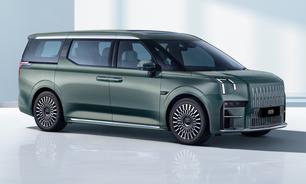
If Rolls-Royce was to make a Kia Carnival then the Zeekr 009 would probably be it, but without the stratospheric price tag.
Zeekr is Volvo’s sister from China under its massive Geely parent company and the 009 is a fully electric, luxury people mover that arrived in Australia to join the small X hatch and the forthcoming 7X mid-sized electric SUV.
The Zeekr 009 we tested is the seven-seater version and with a price of $135,900, before on-road costs, it's double the price of the fanciest Kia Carnival. Then again, the 009 is about $85,000 cheaper than the Lexus LM500h hybrid people mover.
If you are a family with more than two or three children, or a chauffeur service operator, then the 009 could be a much more practical and luxurious alternative to a high-end SUV. And, as I'll show you, even at this price it's a bargain.
The Hyundai Ioniq 9 is a big, comfortable and powerful SUV that ticks lots of boxes. Sadly, though, the electric power that makes it such a treat to drive is probably the same thing that will keep it off plenty of shopping lists. For now, at least.
Note: CarsGuide attended this event as a guest of the manufacturer, with accommodation and meals provided.
The Zeekr 009 is difficult to fault. It's a luxurious, practical vehicle that's easy and enjoyable to drive. There's no SUV on the planet that can compete with its practicality, whether it's room for people and their cargo, or just getting in and out of the vehicle. The only thing I would change about the 009 in terms of family use are the captain's chairs in the second row; a bench seat here for three people would be more practical for a family. If, however, you are using the 009 as a chauffeur car then the captain's chairs would provide the comfort and luxury jet-setting executives would welcome.
I'm going to sound like a bad football coach here, but the Ioniq 9 is a tale of two halves, at least when it comes to the exterior.
And I mean that literally. The front half is lovely, with a smooth, rounded nose, two stacks of LED lights that build the horizontal on top of the vertical and a clean, modern road presence.
The back half, however, isn't. It took me a while to put my finger on it, but it suddenly dawned on me that it gives off old-school station wagon vibes that, for me at least, don't gel with the rest of the design.
Inside, though, it is a complete picture, with my only complaint that the steering wheel feels a touch too big – though I like it's more minimalist design.
Elsewhere, the materials are lovely to look at and touch – even the dash panel insert that reminds me a bit of snakeskin pants – the seats are comfortable and the tech works well.
One word on the digital wing mirrors, though. They are one cost option I wouldn't be ticking the box for. I find them off-putting, not least because they seem to zoom-in so close to the car behind that you can almost see what part of the people behind's breakfast is residing between their teeth. It feels invasive.
Plus, all you're really doing is swapping a large mirror outside the car for a big screen inside it. Conventional mirrors for the win.
You might think that there's only so much you can do to make a people mover good looking but Zeekr’s futuristic and alien-like take is inspired.
I love to sheer bluntness of the face. I love the chiseled looking bonnet, the LED running lights and the little show they put on every time you walk to or from the car. Even the side profile of the car sitting low and planted on its air suspension looks sleek and stylish. And I love the roulette-wheel-style alloys wheels.
I was impressed by the interior of the Lexus LM500h but the interior of the 009 exceeds even that with modern and youthful styling wrapped in beautiful soft leather upholstery. The second-row seats are just absolutely sumptuous and every single touch point throughout the cabin feels luxurious.
The 009 doesn't match the size of the gigantic entertainment screen in the second row of the LM500h but I found the drop down 17-inch 3K entertainment to have an even more modern look and feel.
It’s a big unit, the Ioniq 9, measuring more than five metres long, just under two metres wide and around 1.8 metres high. Weight is a hefty 2.7 tonnes at its heaviest, too, while braked towing capacity is pegged at 2.5 tonnes.
So, big numbers and a big vehicle with big storage. With all three rows in place, you get 338 litres of boot space. But treat it like a five-seater and that increases to 908 litres. Drop both rows, and you’ll have a massive 2410 litres at your disposal.
The room in the middle row is ample for full-size adults, especially if you tick the box for the cushy six-seat layout, and the rear doors feel massive, so when opened you can step through to the third row with ease, too.
Once in there, you'll find an impressively luxe space. The room isn't ridiculous, but my 175cm got in easily enough, and then fit pretty easily, too. And the addition of USB charge ports, air vents, speakers and an automatic recline function for the third row will lift the mood for whoever you put back there.
When it comes to practicality, no SUV on the planet can beat a people mover for space, storage and utility. The Zeekr 009 is beautifully luxurious with outstanding practicality.
Air suspension can lower the vehicle to an entry height that is just a small step into a cabin through the power sliding doors and while space in the second row is outstanding, entry to the third row is easy with the second-row seats folding forward at the touch of the button.
This third row by the way is the most spacious I have encountered with excellent leg and headroom.
Gigantic door pockets, a folding table between second-row seats, great storage under the floating centre console and in the centre console bin, cupholders in all three rows along with wireless charging pads and USB ports everywhere make this a practical and versatile cabin for families or executives.
Boot capacity with all seven seats in place is 574 litres and with the third row folded flat there's 2979 litres of volume.
A front boot can be found under the bonnet but will probably just fit the charging cable.
So, we know it's not cheap, the Ioniq 9. In fact, it’s Hyundai’s most expensive car ever, outshining even the bonkers and brilliant Ioniq 5 N.
How much are we talking? Well, you can only get one Ioniq 9 — the flagship Calligraphy trim — and it’s yours for $119,750, before on-road costs.
There are just a couple of options from there, with the six-seat version an extra two thousand bucks, which I know sounds weird, to pay more for less, but you are essentially swapping the three-seat middle row for two more luxurious captain’s chairs. The digital side mirrors, which I hate, will cost you $3000, and matt paint will set you back $1000, or $250 more than the premium paint ask. Tick everything, and your Ioniq 9 is more like $125,000.
As to how many Hyundai will sell, suffice it to say the brand doesn’t expect it to be a huge contributor to its totals, acknowledging the EV market is stagnant and that most EV buyers are upgrading an electric vehicle, rather than stepping out of an ICE vehicle, which makes the purchase pool pretty shallow. Still, Hyundai is on track to sell around 150 of the six-figure Ioniq 5 Ns this year, so there are clearly some EV buyers with deep pockets.
Anyway, you get just about everything Hyundai can throw at a vehicle, including full LED lighting, 21-inch alloys, a big panoramic sunroof and a hands-free powered boot.
Inside, there are real Nappa leather seats, tri-zone climate, heated and ventilated seats in the first and second rows, a heated steering wheel and what Hyundai calls 'premium relaxation' seats up front.
There’s a big multimedia screen with Apple CarPlay and Android Auto, a digital dash and a head-up display, a 14-speaker Bose stereo and a total six USB connections. But no vehicle-to-load, which means you forgo the household-style power outlet found in some EVs.
There are also a couple of first for Hyundai, including the ability to load your digital key into your phone’s wallet, meaning you can unlock and drive just using your device, and it’s the first time Hyundai has deployed active noise cancellation, too.
The list price of the Zeekr 009 seven-seater is $135,900 before on-roads. There is also a six-seat version for $139,900 which swaps out the third-row bench seating for two separate, more luxurious seats.
We’ve tested the seven-seater version here but the standard features on both are almost identical.
Coming standard on the seven-seat 009 are LED headlights and LED tail-lights, power sliding side doors, a power tailgate and 20-inch alloy wheels clad in Michelin Pilots for EV tyres.
Inside, seven seats come standard with two captain’s chairs in the second row with heating, ventilation and massaging functions, and of course these are also fully power adjustable.
Standard, too, is a 30-speaker 3000W Yamaha sound system with speakers in the head rests. While I’m no audiophile, I have experienced the best sound systems offered by carmakers and this is up there with the most exceptional - Mark Levinsons included.
Folding out of the ceiling is a 17-inch 3K OLED screen for second and third-row passenger entertainment.
There’s four-zone climate control, sun shades for all side windows, a glass roof, and an 8.6-litre fridge large enough for six cans of drink.
Up front the seats are power adjustable, heated and ventilated too, there’s a 15.05-inch media screen, a 10.25-inch instrument cluster, a 35.95-inch augmented reality head-up display, sat nav, Apple CarPlay and Android Auto.
If you're wondering how all this adds up to $136,000 you can't forget that the Zeekr 009 has one of the largest batteries available in a production car. The 116kWh battery is only matched by Mercedes-Benz's EQS and BMW's i7 and these cars cost hundreds of thousands of dollars.
Batteries account for a large portion of the cost of an electric car and so at under $140K, and with all of the features it has as well, the Zeekr 009 is a relative bargain.
There's only the one configuration available here, with Australia's Ioniq 9 a dual-motor AWD producing a combined 314kW and 700Nm – the latter ensuring this heavy EV never feels dull or sluggish.
Overseas, our powertrain is called the Ioniq 9 Performance, and it produces the fastest zero to 100km/h time of just 5.2 seconds.
The Zeekr 009 has two electric motors - one at the front and one at the rear - with a combined output of 450kW and 693Nm. That's Lamborghini Huracan stuff! Almost identical power, but this has more torque.
Not only does this provide all-wheel drive and fantastically controlled traction, but the way the power and torque is delivered is simply superb. This is a seven-seater rocket that will never leave the ground - hopefully.
The nature of electric motors - especially these ones - are the perfect fit for this vehicle, providing a serenely quiet, luxurious and effortlessly powerful experience.
The Hyundai Ioniq 9 is essentially sitting atop a massive 110.3kWh battery, which produces a claimed WLTP driving range of 600km.
Be warned, though, the digital dash has a live read out of your minimum and maximum driving range, presumably judged on your driving inputs, and there is a vast gap between the two numbers. In short, if you want to maximise range, go easy on the accelerator.
Its 800V architecture unlocks 233kW DC fast charging, which the brand says will take you from 10 to 80 per cent charged in 24 minutes.
Plugging in at home, though, will be much slower than that – something like 10 hours using 10.5kW wallbox.
The Zeekr 009 has a 116kWh battery which is enormous - almost the biggest you can get in Australia currently. This lithium-ion battery has a range of 582km (WLTP). There are petrol cars that can’t go that far on a tank.
The battery has an AC charging capacity of 11kW and DC charging capacity of 205kW, allowing you to charge from 10-80 per cent in 39 minutes.
Energy consumption is officially 19.5kWh/100km and we’ve been getting an average of 23.5kWh/100km.
That’s because this thing is so heavy at 2.9 tonnes.
It's a proper surprise packet, the Ioniq 9, because you approach it with a pretty good idea of how a big, heavy and equipment-soaked seven-seat SUV is going to behave on a twisting road. Short answer? Not well.
But somehow, through some kind a wizardry, the opposite is true. Rather than feel stupendously big and heavy, the Ioniq 9 shrinks around you, feeling far smaller, more dynamic and more capable than you'd expect.
I'd maybe forgo the tightest of tight switchbacks in favour of more sweeping, undulating bends, but honestly, you can squeeze plenty of fun out of the Ioniq 9 on the right road.
Happily, it's no one-trick pony, either. It's quiet in the cabin, even at freeway speeds, it's comfortable in the city and there's plenty of space and tech on board.
The key take-away here is I like the way Ioniq 9 drives, another big vehicle helped massively by electric motors. Sometimes in big ICE-powered SUVs you can feel just how much work is going into getting them up and moving, but that's not the case here.
Instead, because there are no transmissions or turbochargers to deal with, the Ioniq delivers a rich flow of power and torque every time you push the accelerator. No lag, no whining, it just goes.
But here's the really interesting bit. It almost doesn't matter how good I say this car is, or how well I think it drives, this car will remain a niche seller. And Hyundai's executives seem to know it. And all of that's a shame, because it's really very good on the road, this Ioniq 9.
The Zeekr 009 is one of the largest vehicles on the Australian market at almost three tonnes and 5.2 meters long but it's also one of the most comfortable, and one of the easiest and most enjoyable cars I've driven.
This is for three main reasons. The first is the air suspension which provides a beautifully comfortable and composed ride.
The next is those electric motors which provide so much grunt but in a very predictable way that's smooth, silent and instant, allowing you to move through traffic or drive confidently on a motorway.
Finally the visibility, steering and pedal feel all combined to provide an effortless piloting experience through narrow laneways, carparks or while parking.
Adding to the enjoyment of driving this people mover is a comfortable, plush interior that's so well insulated that you'll coast serenely through traffic.
As for handling, I have also driven the 009 on a race track at Sydney Motorsport Park. I pushed it through a couple of corners where even some sports have cars struggled to maintain their composure and this massive people move performed surprisingly well, staying planted through the corners.
I've also taken the 009 onto a skid pan and intentionally tried to slide the vehicle and even under these controlled conditions it showed no sign of roll or loss of control.
Having taken the 009 through probably the widest range of testing I've ever put a car through I'd say that it feels safe and secure in pretty much any real-world condition you will experience.
The Ioniq 9 is yet to be assessed by ANCAP, but the results will soon be published for its European test, and the result will be adopted here. Hyundai says it’s shooting for a maximum five stars.
Elsewhere, there are 10 airbags and just about every active safety system you can poke a stick at, all wrapped up in Hyundai’s 'SmartSense' suite of technologies, including the new-for-the-brand 'Highway Driving Assist 2', which acts as a lane-centre 'Smart Cruise Control' but that can also take evasive action should someone swerve into your lane.
The Zeekr 009 hasn’t been tested by ANCAP yet, but it comes with auto emergency braking (AEB), front and rear cross-traffic alert, lane keeping assistance, auto parking, and blind spot warning. You’ve got airbags covering all three rows and a centre airbag up front.
For child seats there are four ISOFIX points in the second and third rows and four top tether points.
Five years with unlimited kilometres is still the underwhelming warranty norm at Hyundai. The battery is covered for eight years or 160,000km.
Happily, servicing is infrequent, with intervals pegged at two years or 30,000km. As a result, the first six years of servicing will cost a total $2005, or an average $334 per year.
The 009 is covered by Zeekr’s five-year/unlimited kilometre warranty. The battery is covered by an eight-year/160,000km warranty.
Servicing is recommended every 40,000km or every two years, whichever comes first. There’s also five years/unlimited kilometres of roadside assistance and five years of connected services as standard.